LEADER 03369nam a22005055i 4500
001 829755
003 TR_AnAIT
005 20260131050735
007 cr nn 008mamaa
008 151214s1986 xxk| s |||| 0|eng d
020 |a9781349070008|9978-1-349-07000-8
024 7 |a10.1007/978-1-349-07000-8|2doi
041 |aeng
049 |aTürk Tarih Kurumu Kütüphanesi
050 4|aDA1-995
072 7|aHBJD1|2bicssc
072 7|aHIS015000|2bisacsh
072 7|aNHD|x1DD|2thema
082 04|a941|223
090 |aDK/30846
100 1 |aDrescher, Seymour.|eauthor.|4aut|4http://id.loc.gov/vocabulary/relators/aut
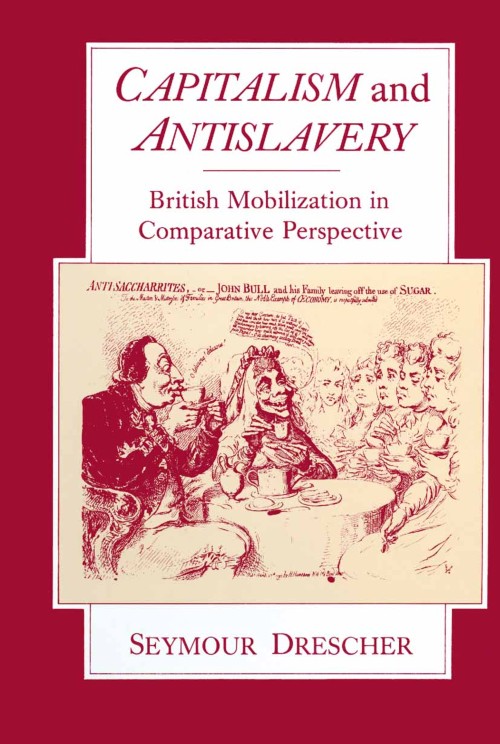
245 10|aCapitalism and Antislavery|h[electronic resource] :|bBritish Mobilization in Comparative Perspective /|cby Seymour Drescher.
250 |a1st ed. 1986.
264 1|aLondon :|bPalgrave Macmillan UK :|bImprint: Palgrave Macmillan,|c1986.
300 |aXV, 300 p.|bonline resource.
336 |atext|btxt|2rdacontent
337 |acomputer|bc|2rdamedia
338 |aonline resource|bcr|2rdacarrier
347 |atext file|bPDF|2rda
520 |aThree hundred years ago Britain was what she is again, a mid-sized island off the coast of Eurasia. Between then and now she became the centre of a world economy. And just midway upon this imperial passage the people of the Empire, free Britons and colonial slaves, secured the destruction of slavery and hastened its demise throughout the world. Those who were part of Britain's Atlantic economy but free of direct economic dependency were the most effective agents in that process. The great novelty of this process therefore lay in the fact that for the first time in history the nonslave masses, including working men and women, played a direct and decisive role in bringing chattel slavery to an end. Seymour Drescher's study focuses attention on the period when popular pressure was effectively deployed as a means of altering national policy, and at those fault-lines in British society which seem to have partly determined the timing and intensity of abolition.
532 8 |aAccessibility summary: This PDF is not accessible. It is based on scanned pages and does not support features such as screen reader compatibility or described non-text content (images, graphs etc). However, it likely supports searchable and selectable text based on OCR (Optical Character Recognition). Users with accessibility needs may not be able to use this content effectively. Please contact us at accessibilitysupport@springernature.com if you require assistance or an alternative format.
532 8 |aInaccessible, or known limited accessibility
532 8 |aNo reading system accessibility options actively disabled
532 8 |aPublisher contact for further accessibility information: accessibilitysupport@springernature.com
650 0|aGreat Britain|xHistory.
650 0|aPolitical science.
650 14|aHistory of Britain and Ireland.
650 24|aPolitical Science.
710 2 |aSpringerLink (Online service)
773 0 |tSpringer Nature eBook
776 08|iPrinted edition:|z9780333362099
776 08|iPrinted edition:|z9781349070015
776 08|iPrinted edition:|z9781349070022
856 40|uhttps://doi.org/10.1007/978-1-349-07000-8
912 |aZDB-2-PSD
912 |aZDB-2-SXS
950 |aPalgrave Social & Cultural Studies Collection (SpringerNature-41148)
950 |aSocial Sciences (R0) (SpringerNature-43726)