LEADER 03892nam a22006015i 4500
001 829905
003 TR_AnAIT
005 20260131050427
007 cr nn 008mamaa
008 150923s1990 xxk| s |||| 0|eng d
020 |a9781349208029|9978-1-349-20802-9
024 7 |a10.1007/978-1-349-20802-9|2doi
041 |aeng
049 |aTürk Tarih Kurumu Kütüphanesi
050 4|aJQ1758-1852
072 7|aJP|2bicssc
072 7|a1FB|2bicssc
072 7|aPOL059000|2bisacsh
072 7|aJP|x1FB|2thema
082 04|a320.956|223
090 |aDK/30996
100 1 |aTibi, B.|eauthor.|4aut|4http://id.loc.gov/vocabulary/relators/aut
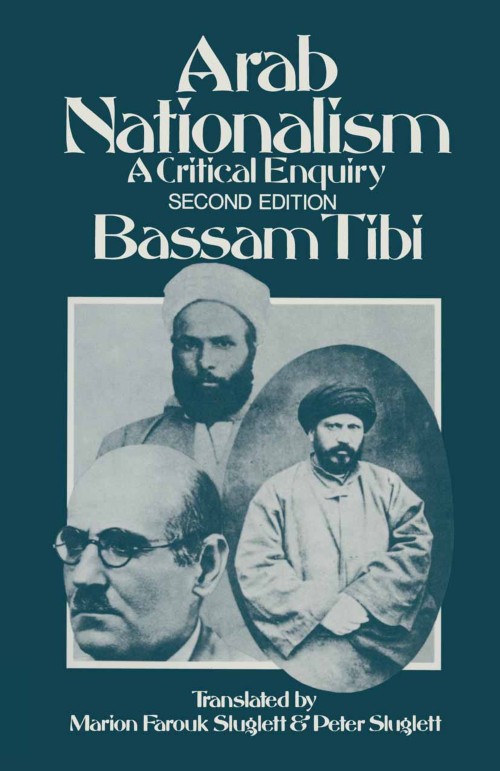
245 10|aArab Nationalism|h[electronic resource] :|bA Critical Enquiry /|cby B. Tibi, ed, trans Marion Farouk-Sluglett, Peter Sluglett.
250 |a2nd ed. 1990.
264 1|aLondon :|bPalgrave Macmillan UK :|bImprint: Palgrave Macmillan,|c1990.
300 |aXVIII, 325 p.|bonline resource.
336 |atext|btxt|2rdacontent
337 |acomputer|bc|2rdamedia
338 |aonline resource|bcr|2rdacarrier
347 |atext file|bPDF|2rda
520 |aIn this new edition Professor Tibi analyses the impact and function of nationalism and its contribution to social and political change in the Third World, taking the rise of nationalism in the Middle East as a historical example. He concentrates on the period after the First World War, when many Arab intellectuals became disillusioned with Britain and France as a result of the occupation of their countries. Professor Tibi's careful study of the writings and influence of Sati' al-Husri illustrates the connection between modern Arab nationalism and nineteenth century German Romantic nationalism, which will be of particular interest to the English reader. Professor Tibi concludes that while nationalism has played a necessary and important role in the movement for national independence in the Middle East, it has since developed into an ideology which seems to obstruct further social and political emancipation. This book will be of particular interest to historians and social scientists as well as to specialists in the area itself.
532 8 |aAccessibility summary: This PDF is not accessible. It is based on scanned pages and does not support features such as screen reader compatibility or described non-text content (images, graphs etc). However, it likely supports searchable and selectable text based on OCR (Optical Character Recognition). Users with accessibility needs may not be able to use this content effectively. Please contact us at accessibilitysupport@springernature.com if you require assistance or an alternative format.
532 8 |aInaccessible, or known limited accessibility
532 8 |aNo reading system accessibility options actively disabled
532 8 |aPublisher contact for further accessibility information: accessibilitysupport@springernature.com
650 0|aMiddle East|xPolitics and government.
650 0|aCulture.
650 0|aPolitical science.
650 14|aMiddle Eastern Politics.
650 24|aSociology of Culture.
650 24|aPolitical Theory.
650 24|aPolitical Science.
700 1 |aed.|eauthor.|4aut|4http://id.loc.gov/vocabulary/relators/aut
700 1 |aFarouk-Sluglett, trans Marion.|eauthor.|4aut|4http://id.loc.gov/vocabulary/relators/aut
700 1 |aSluglett, Peter.|eauthor.|4aut|4http://id.loc.gov/vocabulary/relators/aut
710 2 |aSpringerLink (Online service)
773 0 |tSpringer Nature eBook
776 08|iPrinted edition:|z9780333518465
776 08|iPrinted edition:|z9780312042349
776 08|iPrinted edition:|z9781349208036
776 08|iPrinted edition:|z9781349208043
856 40|uhttps://doi.org/10.1007/978-1-349-20802-9
912 |aZDB-2-PSD
912 |aZDB-2-SXS
950 |aPalgrave Social & Cultural Studies Collection (SpringerNature-41148)
950 |aSocial Sciences (R0) (SpringerNature-43726)