LEADER 03767nam a22005895i 4500
001 830351
003 TR_AnAIT
005 20260131045506
007 cr nn 008mamaa
008 160314s2002 xxu| s |||| 0|eng d
020 |a9781349635504|9978-1-349-63550-4
024 7 |a10.1007/978-1-349-63550-4|2doi
041 |aeng
049 |aTürk Tarih Kurumu Kütüphanesi
050 4|aLC189-214.53
072 7|aJN|2bicssc
072 7|aJHB|2bicssc
072 7|aEDU040000|2bisacsh
072 7|aJN|2thema
072 7|aJHB|2thema
082 04|a306.43|223
090 |aDK/31442
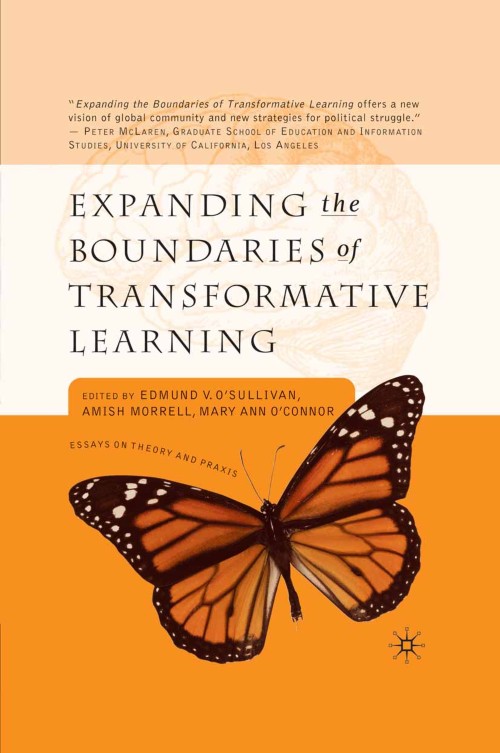
245 10|aExpanding the Boundaries of Transformative Learning|h[electronic resource] :|bEssays on Theory and Praxis /|cedited by E. O'Sullivan, A. Morrell, M. O'Connor.
250 |a1st ed. 2002.
264 1|aNew York :|bPalgrave Macmillan US :|bImprint: Palgrave Macmillan,|c2002.
300 |aXX, 280 p.|bonline resource.
336 |atext|btxt|2rdacontent
337 |acomputer|bc|2rdamedia
338 |aonline resource|bcr|2rdacarrier
347 |atext file|bPDF|2rda
520 |aTransformative learning involves experiencing a deep, structural shift in the basic premises of thought, feelings, and actions. It is a shift of consciousness that dramatically and permanently alters our way of being in the world. Such a shift involves our understanding of ourselves and our self-locations; our relationships with other humans and with the natural world; our understanding of relations of power in interlocking structures of class, race and gender; our body awarenesses; our visions of alternative approaches to living; and our sense of possibilities for social justice and peace and personal joy. The editors of this collection make several challenges to the existing field of transformative learning - the first is to theoreticians, who have attempted to describe the nature of transformative learning without regard to the content of transformative learning. The editors argue that transformative learning theory cannot be constructed in a content-neutral or context-free way. Their second challenge, which assumes the importance content for transformative learning, is to educators as practitioners. The editors argue that transformative learning requires new educational practices consistent with the content. Arts-based research and arts-based teaching/learning practices are one example of such new educational practices. Education for the soul, or spiritual practices such as meditation or modified martial arts or indigenous peoples' forms of teaching/learning, is another example. Each article in the collection presents a possible model of these new practices.
650 0|aEducational sociology.
650 0|aEducation and state.
650 0|aChemistry, Organic.
650 0|aAstronomy.
650 0|aEducation|xPhilosophy.
650 14|aSociology of Education.
650 24|aEducational Policy and Politics.
650 24|aOrganic Chemistry.
650 24|aAstronomy, Cosmology and Space Sciences.
650 24|aPhilosophy of Education.
650 24|aEducational Philosophy.
700 1 |aO'Sullivan, E.|eeditor.|4edt|4http://id.loc.gov/vocabulary/relators/edt
700 1 |aMorrell, A.|eeditor.|4edt|4http://id.loc.gov/vocabulary/relators/edt
700 1 |aO'Connor, M.|eeditor.|4edt|4http://id.loc.gov/vocabulary/relators/edt
710 2 |aSpringerLink (Online service)
773 0 |tSpringer Nature eBook
776 08|iPrinted edition:|z9780312295073
776 08|iPrinted edition:|z9781349635528
776 08|iPrinted edition:|z9781349635511
856 40|uhttps://doi.org/10.1007/978-1-349-63550-4
912 |aZDB-2-PSD
912 |aZDB-2-SXS
950 |aPalgrave Social & Cultural Studies Collection (SpringerNature-41148)
950 |aSocial Sciences (R0) (SpringerNature-43726)