

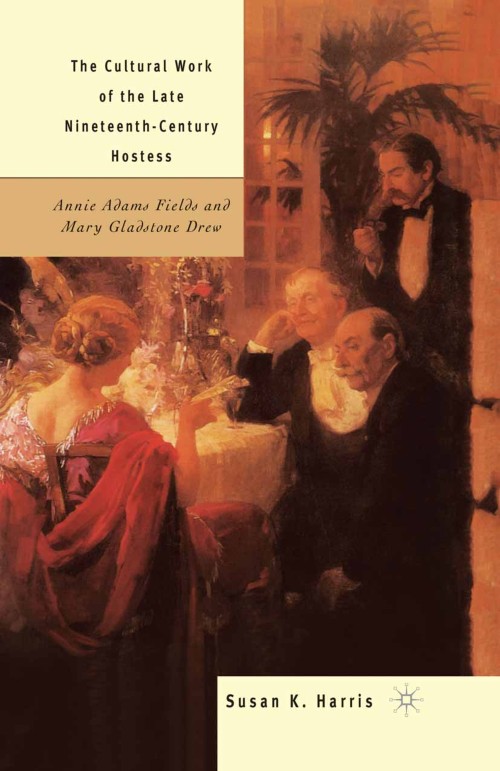
The Cultural Work of the Late Nineteenth-Century Hostess [electronic resource] : Annie Adams Fields and Mary Gladstone Drew / by S. Harris.
Erişim Adresi
ISBN
9781137116390
Dil Kodu
İngilizce
Yer Numarası
DK/31986
Yazar
Basım Bildirimi
1st ed. 2002.
Yayın Bilgisi
New York : Palgrave Macmillan US : Imprint: Palgrave Macmillan, 2002.
Fiziksel Niteleme
XVII, 192 p. online resource.
Özet, vb.
The Cultural Work of the Late Nineteenth-Century Hostess explores the influence well-placed, energetic women had on literary and political culture in the U.S. and in England in the years 1870-1920. Fields, an American, was first married to James T. Fields, a prominent Boston publisher; after his death she became companion to Sarah Orne Jewett, one of the foremost New England writers. Gladstone was a daughter of William Gladstone, one of Great Britain's most famous Prime Ministers. Both became well known as hostesses, entertaining the leading figures of their day; both also kept journals and wrote letters in which they recorded those figures' conversations. Susan K. Harris reads these records to exhibit the impact such women had on the cultural life of their times. The Cultural Work of the Late Nineteenth-Century Hostess shows how Fields and Gladstone negotiated alliances, won over key figures to their parties' designs, and fought to develop major cultural institutions ranging from the Organization of Boston Charities to London's Royal College of Music.
Konu
Literature __ Philosophy.
Culture __ Study and teaching.
America __ Literatures.
Clinical psychology.
Literature, Modern __ 19th century.
Sex.
Literary Theory.
Cultural Theory.
North American Literature.
Clinical Psychology.
Nineteenth-Century Literature.
Gender Studies.
Culture __ Study and teaching.
America __ Literatures.
Clinical psychology.
Literature, Modern __ 19th century.
Sex.
Literary Theory.
Cultural Theory.
North American Literature.
Clinical Psychology.
Nineteenth-Century Literature.
Gender Studies.
Kurum Adı
