LEADER 03919nam a22005295i 4500
001 831896
003 TR_AnAIT
005 20260131035552
007 cr nn 008mamaa
008 151203s1994 xxk| s |||| 0|eng d
020 |a9781349232499|9978-1-349-23249-9
024 7 |a10.1007/978-1-349-23249-9|2doi
041 |aeng
049 |aTürk Tarih Kurumu Kütüphanesi
050 4|aPN849.E87-.E872
072 7|aDS|2bicssc
072 7|a1D|2bicssc
072 7|aLIT004130|2bisacsh
072 7|aDS|x1D|2thema
082 04|a809.894|223
090 |aDK/32987
100 1 |aFraser, Robert.|eauthor.|4aut|4http://id.loc.gov/vocabulary/relators/aut
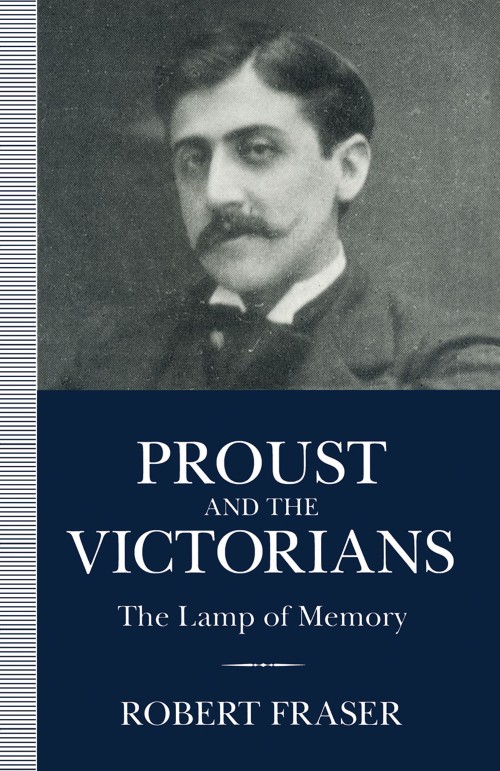
245 10|aProust and the Victorians|h[electronic resource] :|bThe Lamp of Memory /|cby Robert Fraser.
250 |a1st ed. 1994.
264 1|aLondon :|bPalgrave Macmillan UK :|bImprint: Palgrave Macmillan,|c1994.
300 |aXV, 320 p.|bonline resource.
336 |atext|btxt|2rdacontent
337 |acomputer|bc|2rdamedia
338 |aonline resource|bcr|2rdacarrier
347 |atext file|bPDF|2rda
520 |aIn 1899 Marcel Proust read a translation of Ruskin's The Lamp of Memory in a Belgian magazine. Fourteen years later he back-projected the experience onto the narrator of Du cote de chez Swann who describes himself as a boy reading the self-same piece in the garden at Combray. In between lay a period of intermittent enthusiasm for Victorian writing: a period which saw the refurbishment of Proust's method and a fundamental rethinking of his views. Much of this reassessment was achieved in relation to English writers whom Proust adopted, absorbed and then as often as not discarded. The end result was to enable him to pass from one aesthetic to another. It is the contention of this book that the clue to this process can be found not only in Proust's evolving views on memory and time but also in his progression through a three-fold typology of form: from 'mimetic form' (art-imitating-the-real) through 'mnemonic form' (art-imitating-memory) to 'abstract form' (art-imitating-itself). The progress from one to another is illustrated through Proust's reactions to Carlyle, Darwin, Emerson, Ruskin, George Eliot, Hardy, Stevenson, Wells and Wilde. There is also a chapter on the connection in Proust's mind between literary and art criticism and his delayed response to the Ruskin-Whistler trial of 1878. A final chapter relates these matters to the current debate as to the parallel between the nineteenth century fin-de-siecle and our own.
532 8 |aAccessibility summary: This PDF is not accessible. It is based on scanned pages and does not support features such as screen reader compatibility or described non-text content (images, graphs etc). However, it likely supports searchable and selectable text based on OCR (Optical Character Recognition). Users with accessibility needs may not be able to use this content effectively. Please contact us at accessibilitysupport@springernature.com if you require assistance or an alternative format.
532 8 |aInaccessible, or known limited accessibility
532 8 |aNo reading system accessibility options actively disabled
532 8 |aPublisher contact for further accessibility information: accessibilitysupport@springernature.com
650 0|aEuropean literature.
650 0|aLiterature|xHistory and criticism.
650 14|aEuropean Literature.
650 24|aLiterary History.
710 2 |aSpringerLink (Online service)
773 0 |tSpringer Nature eBook
776 08|iPrinted edition:|z9780333584736
776 08|iPrinted edition:|z9780312103644
776 08|iPrinted edition:|z9781349232505
776 08|iPrinted edition:|z9781349232512
856 40|uhttps://doi.org/10.1007/978-1-349-23249-9
912 |aZDB-2-PPA
912 |aZDB-2-SXL
950 |aPalgrave Literature & Performing Arts Collection (SpringerNature-41149)
950 |aLiterature, Cultural and Media Studies (R0) (SpringerNature-43723)