LEADER 03605nam a22005895i 4500
001 831901
003 TR_AnAIT
005 20260131035520
007 cr nn 008mamaa
008 151212s1997 xxk| s |||| 0|eng d
020 |a9781349252190|9978-1-349-25219-0
024 7 |a10.1007/978-1-349-25219-0|2doi
041 |aeng
049 |aTürk Tarih Kurumu Kütüphanesi
050 4|aPN45-57
072 7|aDSA|2bicssc
072 7|aLIT006000|2bisacsh
072 7|aDSA|2thema
082 04|a801|223
090 |aDK/32992
100 1 |aDash, J. Michael.|eauthor.|4aut|4http://id.loc.gov/vocabulary/relators/aut
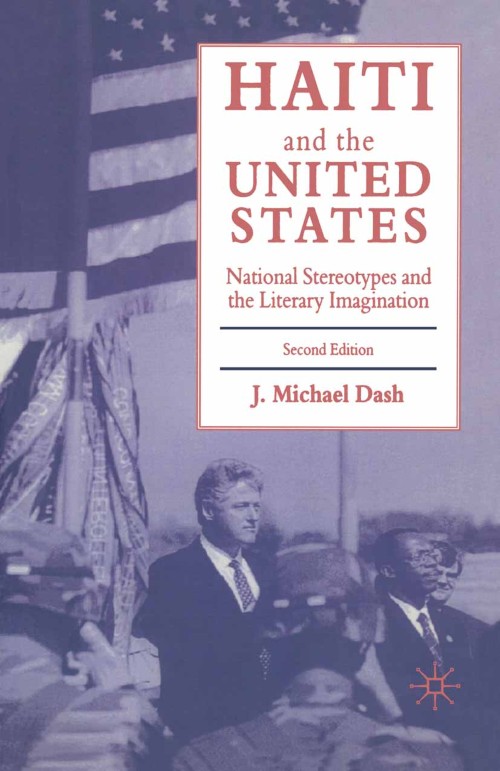
245 10|aHaiti and the United States|h[electronic resource] :|bNational Stereotypes and the Literary Imagination /|cby J. Michael Dash.
250 |a2nd ed. 1997.
264 1|aLondon :|bPalgrave Macmillan UK :|bImprint: Palgrave Macmillan,|c1997.
300 |aXVII, 182 p.|bonline resource.
336 |atext|btxt|2rdacontent
337 |acomputer|bc|2rdamedia
338 |aonline resource|bcr|2rdacarrier
347 |atext file|bPDF|2rda
520 |aImaginative literature, argues Michael Dash, does not merely reflect, but actively influences historical events. He demonstrates this by a close examination of the relations between Haiti and the United States through the imaginative literature of both countries. The West's mythification of Haiti is a strategy used to justify either ostracism or domination, a process traced here from the nineteenth-century until it emerges with a voyeuristic fierceness in the 1960s. In an effort to resist these stereotypes, Haitian literature becomes a subversive manoeuvre permitting Haitians to 'rewrite' themselves. The Unites States 'invented' Haiti as a land of savagery and mystery, a source of evil and shame. Weaving together text and historical context, Dash discusses the durability of these images, which continue to shape official policy and popular attitudes today.
532 8 |aAccessibility summary: This PDF is not accessible. It is based on scanned pages and does not support features such as screen reader compatibility or described non-text content (images, graphs etc). However, it likely supports searchable and selectable text based on OCR (Optical Character Recognition). Users with accessibility needs may not be able to use this content effectively. Please contact us at accessibilitysupport@springernature.com if you require assistance or an alternative format.
532 8 |aInaccessible, or known limited accessibility
532 8 |aNo reading system accessibility options actively disabled
532 8 |aPublisher contact for further accessibility information: accessibilitysupport@springernature.com
650 0|aLiterature|xPhilosophy.
650 0|aCulture|xStudy and teaching.
650 0|aLiterature, Modern|x19th century.
650 0|aLiterature, Modern|x20th century.
650 0|aInternational relations.
650 14|aLiterary Theory.
650 24|aCultural Theory.
650 24|aNineteenth-Century Literature.
650 24|aTwentieth-Century Literature.
650 24|aInternational Relations.
710 2 |aSpringerLink (Online service)
773 0 |tSpringer Nature eBook
776 08|iPrinted edition:|z9780333680179
776 08|iPrinted edition:|z9780333680186
776 08|iPrinted edition:|z9781349252206
776 08|iPrinted edition:|z9780312164904
856 40|uhttps://doi.org/10.1007/978-1-349-25219-0
912 |aZDB-2-PPA
912 |aZDB-2-SXL
950 |aPalgrave Literature & Performing Arts Collection (SpringerNature-41149)
950 |aLiterature, Cultural and Media Studies (R0) (SpringerNature-43723)