LEADER 03569nam a22006015i 4500
001 832092
003 TR_AnAIT
005 20260131034508
007 cr nn 008mamaa
008 160219s2004 xxu| s |||| 0|eng d
020 |a9780230100800|9978-0-230-10080-0
024 7 |a10.1057/9780230100800|2doi
041 |aeng
049 |aTürk Tarih Kurumu Kütüphanesi
050 4|aPN843-846
072 7|aDS|2bicssc
072 7|a1KB|2bicssc
072 7|aLIT004020|2bisacsh
072 7|aDS|x1KB|2thema
082 04|a809.897|223
090 |aDK/33183
100 1 |aSandin, L.|eauthor.|4aut|4http://id.loc.gov/vocabulary/relators/aut
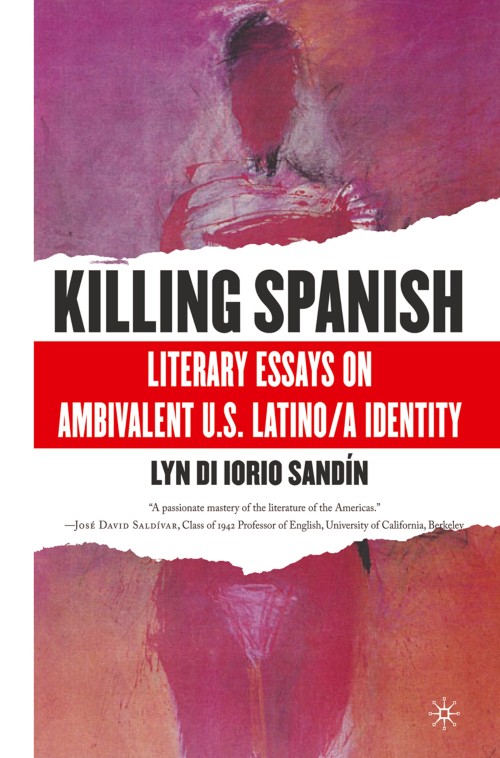
245 10|aKilling Spanish|h[electronic resource] :|bLiterary Essays on Ambivalent U.S. Latino/a Identity /|cby L. Sandin.
250 |a1st ed. 2004.
264 1|aNew York :|bPalgrave Macmillan US :|bImprint: Palgrave Macmillan,|c2004.
300 |aX, 167 p.|bonline resource.
336 |atext|btxt|2rdacontent
337 |acomputer|bc|2rdamedia
338 |aonline resource|bcr|2rdacarrier
347 |atext file|bPDF|2rda
520 |aIn this intelligent monograph for women's studies, literature and Latin American studies, Lyn Di Iorio Sandin asserts that there is a significant ambivalence surrounding identity that is present in the works of Latino writers such as Cristina Garcia, Edward Rivera, and Abraham Rodriguez. Sandin incorporates the theories of allegory and 'double identity' to talk about fragmentation of the Latino psyche. What Sandin finds compelling is that in all of the works of this diverse group of writers, there is a common theme of anxiety about origins that manifests itself through the symbols of dead women, ghosts, or madwomen. Using specific examples from literature ranging from Cuban American Cristina Garcia's The Aguero Sisters to Puerto Rican Rosario Ferre's Maldito amor , Sandin finds that fragmented ethnic identification is an area that is just beginning to be explored within the analysis of U.S. Latino fiction.
532 8 |aAccessibility summary: This PDF is not accessible. It is based on scanned pages and does not support features such as screen reader compatibility or described non-text content (images, graphs etc). However, it likely supports searchable and selectable text based on OCR (Optical Character Recognition). Users with accessibility needs may not be able to use this content effectively. Please contact us at accessibilitysupport@springernature.com if you require assistance or an alternative format.
532 8 |aInaccessible, or known limited accessibility
532 8 |aNo reading system accessibility options actively disabled
532 8 |aPublisher contact for further accessibility information: accessibilitysupport@springernature.com
650 0|aAmerica|xLiteratures.
650 0|aSex.
650 0|aEthnology|xLatin America.
650 0|aCulture.
650 0|aRace.
650 0|aLiterature|xPhilosophy.
650 14|aNorth American Literature.
650 24|aGender Studies.
650 24|aLatin American Culture.
650 24|aRace and Ethnicity Studies.
650 24|aLiterary Theory.
710 2 |aSpringerLink (Online service)
773 0 |tSpringer Nature eBook
776 08|iPrinted edition:|z9781403963949
776 08|iPrinted edition:|z9780230617513
776 08|iPrinted edition:|z9781349732203
856 40|uhttps://doi.org/10.1057/9780230100800
912 |aZDB-2-PPA
912 |aZDB-2-SXL
950 |aPalgrave Literature & Performing Arts Collection (SpringerNature-41149)
950 |aLiterature, Cultural and Media Studies (R0) (SpringerNature-43723)