LEADER 02335nam a22004815i 4500
001 832365
003 TR_AnAIT
005 20260131033420
007 cr nn 008mamaa
008 151204s2003 xxk| s |||| 0|eng d
020 |a9780230597624|9978-0-230-59762-4
024 7 |a10.1057/9780230597624|2doi
041 |aeng
049 |aTürk Tarih Kurumu Kütüphanesi
050 4|aPN760.5-769
072 7|aDSBF|2bicssc
072 7|aLIT024040|2bisacsh
072 7|aDSBF|2thema
082 04|a809.034|223
090 |aDK/33456
100 1 |aMahoney, C.|eauthor.|4aut|4http://id.loc.gov/vocabulary/relators/aut
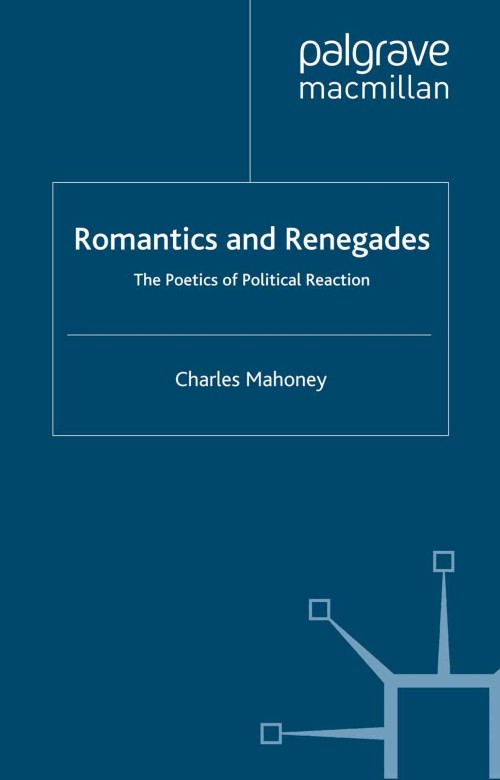
245 10|aRomantics and Renegades|h[electronic resource] :|bThe Poetics of Political Reaction /|cby C. Mahoney.
250 |a1st ed. 2003.
264 1|aLondon :|bPalgrave Macmillan UK :|bImprint: Palgrave Macmillan,|c2003.
300 |aX, 266 p.|bonline resource.
336 |atext|btxt|2rdacontent
337 |acomputer|bc|2rdamedia
338 |aonline resource|bcr|2rdacarrier
347 |atext file|bPDF|2rda
520 |aRomantics and Renegades examines the abiding crux of romantic criticism: the political apostasies of the Lake poets (Wordsworth, Coleridge, and Southey) as they renounced the revolutionary Jacobinism of their youth in the 1790s in order to claim the high ground of Regency Toryism in the 1810s. Central to this scandal is the figure of William Hazlitt, the literary critic who policed their betrayals in his vigilant exposure of their political and poetical inconsistencies. Mahoney's analysis provides new insight into this abiding critical riddle through close historical and figural readings of the rhetoric of romantic apostasy.
650 0|aLiterature, Modern|x19th century.
650 0|aEuropean literature.
650 0|aPoetry.
650 14|aNineteenth-Century Literature.
650 24|aEuropean Literature.
650 24|aPoetry and Poetics.
710 2 |aSpringerLink (Online service)
773 0 |tSpringer Nature eBook
776 08|iPrinted edition:|z9780333968499
776 08|iPrinted edition:|z9781349428540
776 08|iPrinted edition:|z9781349428557
856 40|uhttps://doi.org/10.1057/9780230597624
912 |aZDB-2-PPA
912 |aZDB-2-SXL
950 |aPalgrave Literature & Performing Arts Collection (SpringerNature-41149)
950 |aLiterature, Cultural and Media Studies (R0) (SpringerNature-43723)