LEADER 02672naaaa2200421aa54500
001 834440
003 TR_AnAIT
005 20260310101653
006 a||||e |||| 001 0d
007 ta
008 260309s2026 ne ||||e |||| 001 0deng c
020 |a9789004700437|q(hardback)
020 |a9789004700444|q(ebook)
040 |aTTK
041 |aeng|hfre
049 |aTürk Tarih Kurumu Kütüphanesi
090 |aA.X/1956
100 1 |aTouati, Houari.
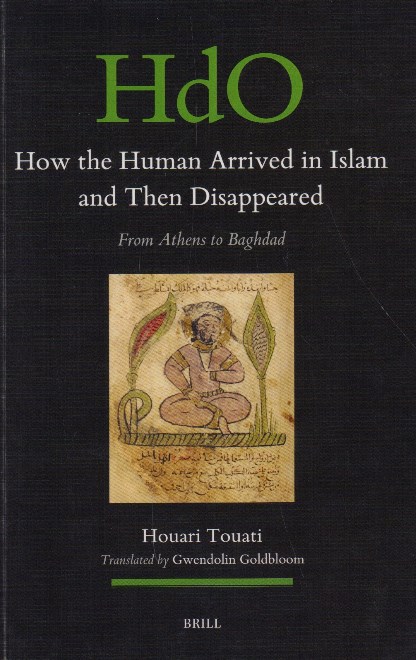
245 10|aHow the human arrived in Islam and then disappeared :|bfrom Athens to Baghdad /|cby Houari Touati ; translated by Gwendolin Goldbloom.
246 1 |aFrom Athens to Baghdad
260 |aLeiden ;|aBoston :|bBrill,|c©2026.
300 |aviii, 544 sayfa ;|c24 cm.
490 1 |aHandbook of Oriental Studies =|aHandbuch der Orientalistik. Section one. The Near and Middle East,|x0169-9423 ;|vvolume 195
500 |aİndeks s. [541]-544.
504 |aBibliyografya s. [503]-540.
505 |tAbbreviations --|tIntroduction --|tThe Rational Biped --|tThe Being with a Double Language --|tBecoming Human --|tWomen and Men Are Equally Human --|tHumans Are Their Laughter --|tHands That Have No Equal --|tHuman Diversity --|tThe Political Animal --|tThe Capable Living Being --|tThe End of the Human Being --|tEpilogue : the Impossibility of the Human Being --|tBibliography --|tIndex.
520 |a“This book argues that while the concept of the human being was a Greek invention, its reinvention was Arab before it was European. Born in Greece in the fourth century BCE, this concept of the human being disappeared at the end of Late Antiquity, before reappearing in the Abbasid Near East. It was Muslim rationalist theologians who revived it in their theodicy of a just God who can only be just by recognizing the agency of human beings in their voluntary acts. Later, Arabic-speaking philosophers gave it a space of its own under the name of 'human sciences,' in the 9th century. But a traditional theology got the better of it. Its reappearance had to wait for the European Renaissance, while retaining its Arab origins.“ --|cArka kapak.
650 4|aTeolojik antropoloji|xİslam.
650 4|aİslam|xDoktrinler|xTarih.
650 4|aİnsanlar|xDoktrinlerin tarihi.
650 4|aCinsiyet kimliği|xDini yönler|xİslam.
650 4|aFelsefe|yOrta Çağ.
700 1 |aGoldbloom, Gwendolin,|eçeviren.
830 0|aHandbook of Oriental Studies.|nSection 1,|pThe Near and Middle East ;|vvolume 195.
830 0|aHandbuch der Orientalistik.|nSection 1,|pThe Near and Middle East ;|vvolume 195.
830 0|aHdO. I ;|vvol. 195.
830 0|aHdO. 1 ;|vvol. 195.