LEADER 03234naaaa2200349aa54500
001 839269
003 TR_AnAIT
005 20260629095426
006 aobd|e |||| 001 0d
007 ta
008 260626s2025 tu obd|e |||| 001 0deng c
020 |a9786258520002
040 |aTTK
041 |aeng
049 |aTürk Tarih Kurumu Kütüphanesi
090 |aA.X/2212
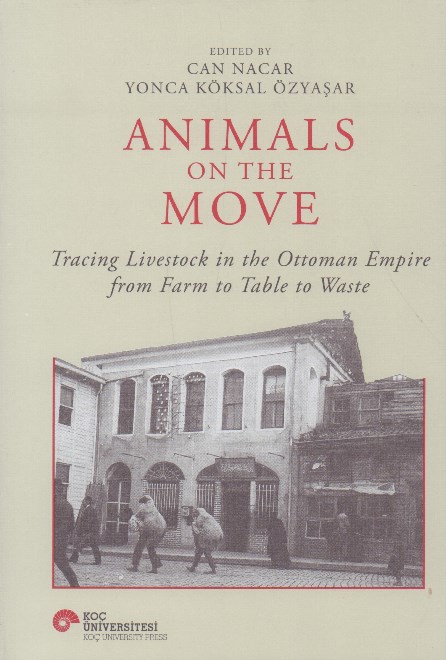
245 00|aAnimals on the move :|btracing livestock in the Ottoman Empire from farm to table to waste /|cedited by Can Nacar, Yonca Köksal Özyaşar.
246 1 |aTracing livestock in the Ottoman Empire from farm to table to waste
250 |a1ˢᵗ edition.
260 |aİstanbul :|bKoç University Press,|c2025.
300 |ax, 270 sayfa :|bresim, harita, grafik, tıpkıbasım, tablo ;|c24 cm.
490 0 |aKoç University Press ;|v364
500 |aİndeks s. 265-270.
504 |aBibliyografya makale sonlarındadır.
505 |tIntroduction /|rCan Nacar and Yonca Köksal Özyaşar.|gPART I.|tRURAL ECONOMIES, DISASTERS, AND TRADE NETWORKS.|tDisasters in the Core Ottoman Lands : Cattle Plague and Drought in the Early Tanzimat Period /|rİrfan Koldaş --|tBreed, Meat Provisioning, and Money : An Early History of Merino Sheep in the Ottoman Lands (1827-44) /|rAnıl Aşkın --|tStruggles for Pastures in Northwestern Anatolia during the Late Ottoman Era : The Case of Çamandıra /|rFatma Melek Arıkan --|tSheep Farming and Trade in the Ottoman East (1860-1914) : Actors, Networks, and Patterns /|rYener Koç --|tGoverning the Herd : Livestock Policy and Reform : in the Late Ottoman Empire /|rYonca Köksal Özyaşar --|gPART II.|tURBAN LANDSCAPES : PUBLIC HEALTH, SANITATION AND LIVESTOCK INDUSTRIES.|tPurification or Commodification? Milk, Chee, and Hygiene in Late Ottoman Istanbul /|rCan Gümüş-İspir --|t“The Most Beneficial Work“ : The Politics of Centralization of Slaughter in Late Ottoman Istanbul /|rCan Nacar --|tDead Animals of the Ottoman Capital : Carcass Disposal and Urban Life in Nineteenth-Century Istanbul /|rOnat Ozan Ata.
520 |a“From the bustling streets of late Ottoman Istanbul to the vast pastures of Anatolia and the Balkans, Animals on the Move explores the intertwined lives of humans and livestock in a world undergoing profound transformation. Far from being silent resources, sheep, cows, and oxen shaped-and were shaped by-the forces of empire: state-building, capitalist expansion, urbanization, and environmental upheaval.
Bringing together eight original studies, this volume shows how livestock sustained rural economies, trade networks, and urban industries while also bearing the brunt of displacement, disease, and disaster. By placing animals at the center of historical inquiry, Animals on the Move reveals how the destinies of humans and nonhumans alike were bound to the shifting dynamics of environment, economy, and empire in the Ottoman world” --|cArka kapak.
650 4|aGıda zinciri, hayvancılık|zOsmanlı İmparatorluğu.
650 4|aHayvancılık|zOsmanlı İmparatorluğu|xTarih.
650 4|aHayvanlar|zOsmanlı İmparatorluğu|xTarım ve hayvancılık.
700 1 |aNacar, Can,|eeditör.
700 1 |aÖzyaşar, Yonca Köksal,|eeditör.