

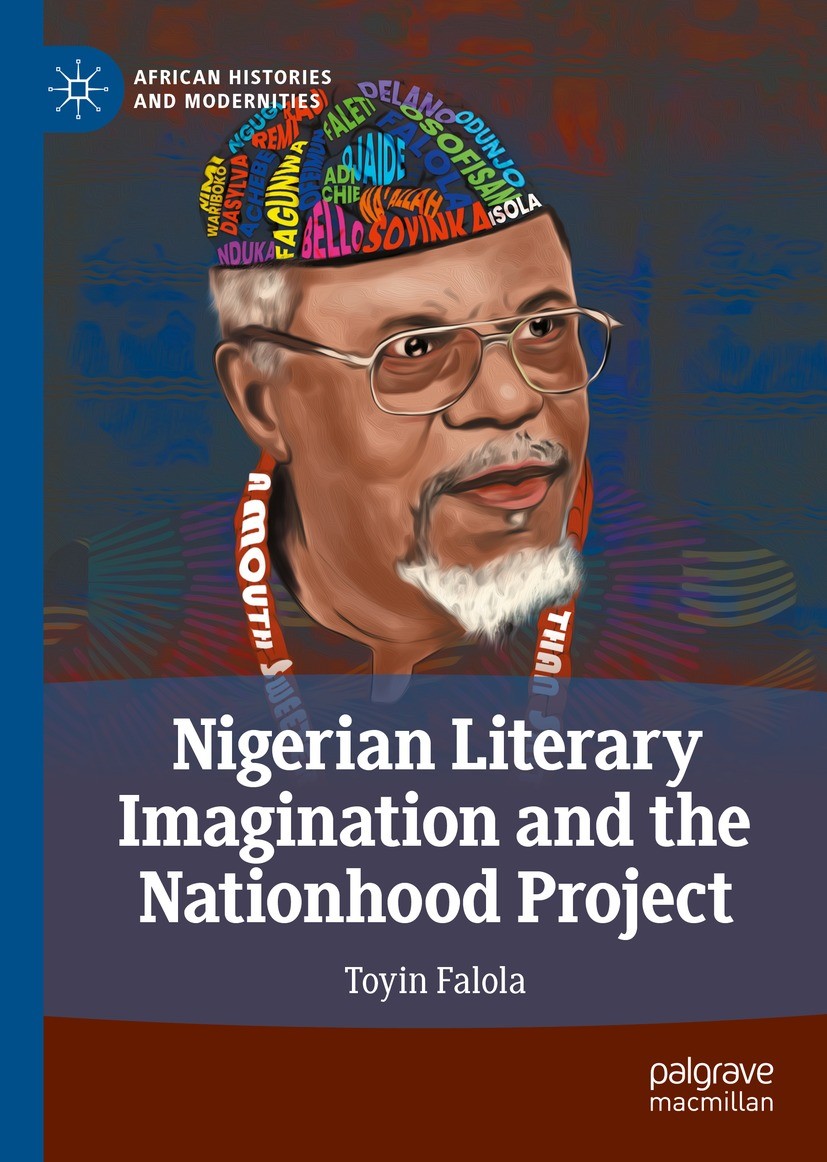
Nigerian Literary Imagination and the Nationhood Project [electronic resource] / by Toyin Falola.
Erişim Adresi
ISBN
9783031019913
Dil Kodu
İngilizce
Yer Numarası
EK/5613
Basım Bildirimi
1st ed. 2022.
Yayın Bilgisi
Cham : Springer International Publishing : Imprint: Palgrave Macmillan, 2022.
Fiziksel Niteleme
XXI, 286 p. 21 illus. online resource.
Dizi
African Histories and Modernities, 2634-5781
İçindekiler Notu
1 Introduction: Nation as Fiction/Fictionalizing the Nation -- PART I: COLONIAL PHASE -- 2 Literature and the colonized nation -- 3 Literary Founding Fathers and ideas of Nationhood -- 4 Women writers and the (Post)colony: (Writing) The Colony in Nigerian Women’s Works -- PART II: POST-COLONIAL PHASE -- 5 Postcolonial Modernity and Literary Imagination -- 6 Contemporary Women Writers and the Representations of Postcolonial Nigeria -- 7 Literature and Nigeria in the Digital Age -- PART III: CONCLUDING THOUGHTS -- 8 Shifts and Ambiguities: Unstable Literature or Unstable Nation?.
Özet, vb.
This view of Nigerian Literature puts the ideological contentions and contradictions of old in perspective. Toyin Falola, in this effusion, not only charts the course for the reinvention and invention of the Nigerian Nation through its literature but troubles the literary taboos as well as the theoretical postures and leanings in the art of Nigerian literary artists. -Adedoyin Aguoru, President, African Association for Japanese Studies This fascinating and original piece of scholarship by Nigeria’s most celebrated historian has successfully linked the wide and varied Nigerian literature to the complexities of the nation. The indomitable Toyin Falola maps cogently the cultural, elitist, ideological, feminized and the fetishized aspects of the Nigerian experience. The book masterfully shows us a space that is complicated, inhabited by enigmatic people who see their country as peculiar and unique. - Bosede Funke Afolayan, University of Lagos, Nigeria, and editor of Nigerian Female Dramatists: Expression, Resistance, Agency This book explores how modern Nigerian fiction is rooted in writers’ understanding of their identity and perception of Nigeria as a country and home. Surveying a broad range of authors and texts, the book shows how these fictionalized representations of Nigeria reveal authentic perceptions of Nigeria’s history and culture today. Many of the lessons in these works of literature provide cautionary tales and critiques of Nigeria, as well as an examination of the lasting impact of colonialism. Furthermore, the book presents the nation as both the framework and subject of its narrative. By conducting literary analyses of Nigerian fiction with historical reference points, this work demonstrates how Nigerian literature can convey profound themes and knowledge that resonates with audiences, teaching Nigerians and non-Nigerians about the colonial and postcolonial experience.The chapters cover topics on nationhood, women’s writing, postcolonial modernity, and Nigerian literature in the digital age. Toyin Falola is the Jacob and Frances Sanger Mossiker Chair in the Humanities and a Distinguished Teaching Professor at the University of Texas at Austin, USA. He is a recipient of many distinguished awards, including 16 honorary doctorates.
Konu
African literature.
Prose literature.
Africa, North __ History.
Imperialism.
African Literature.
Narrative Text and Prose.
History of North Africa.
Imperialism and Colonialism.
Prose literature.
Africa, North __ History.
Imperialism.
African Literature.
Narrative Text and Prose.
History of North Africa.
Imperialism and Colonialism.
Kurum Adı
Eseri Alıntıla
Referansları kullanmadan önce gözden geçirmeniz ve varsa gerekli düzeltmeleri yapmanız önerilir.
Dijital Kaynak
MARC Görünümü
LEADER 04908nam a22005535i 4500
001 839776
003 TR_AnAIT
005 20260715041841
007 cr nn 008mamaa
008 220714s2022 sz | s |||| 0|eng d
020 |a9783031019913|9978-3-031-01991-3
024 7 |a10.1007/978-3-031-01991-3|2doi
041 |aeng
049 |aTürk Dil Kurumu Kütüphanesi
050 4|aPL8009.5-8014
072 7|aDS|2bicssc
072 7|a1H|2bicssc
072 7|aLIT004010|2bisacsh
072 7|aDS|x1H|2thema
082 04|a809.896|223
090 |aEK/5613
100 1 |aFalola, Toyin.|eauthor.|0(orcid)0000-0001-9512-1021|1https://orcid.org/0000-0001-9512-1021|4aut|4http://id.loc.gov/vocabulary/relators/aut
245 10|aNigerian Literary Imagination and the Nationhood Project|h[electronic resource] /|cby Toyin Falola.
250 |a1st ed. 2022.
264 1|aCham :|bSpringer International Publishing :|bImprint: Palgrave Macmillan,|c2022.
300 |aXXI, 286 p. 21 illus.|bonline resource.
336 |atext|btxt|2rdacontent
337 |acomputer|bc|2rdamedia
338 |aonline resource|bcr|2rdacarrier
347 |atext file|bPDF|2rda
490 1 |aAfrican Histories and Modernities,|x2634-5781
505 0 |a1 Introduction: Nation as Fiction/Fictionalizing the Nation -- PART I: COLONIAL PHASE -- 2 Literature and the colonized nation -- 3 Literary Founding Fathers and ideas of Nationhood -- 4 Women writers and the (Post)colony: (Writing) The Colony in Nigerian Women’s Works -- PART II: POST-COLONIAL PHASE -- 5 Postcolonial Modernity and Literary Imagination -- 6 Contemporary Women Writers and the Representations of Postcolonial Nigeria -- 7 Literature and Nigeria in the Digital Age -- PART III: CONCLUDING THOUGHTS -- 8 Shifts and Ambiguities: Unstable Literature or Unstable Nation?.
520 |aThis view of Nigerian Literature puts the ideological contentions and contradictions of old in perspective. Toyin Falola, in this effusion, not only charts the course for the reinvention and invention of the Nigerian Nation through its literature but troubles the literary taboos as well as the theoretical postures and leanings in the art of Nigerian literary artists. -Adedoyin Aguoru, President, African Association for Japanese Studies This fascinating and original piece of scholarship by Nigeria’s most celebrated historian has successfully linked the wide and varied Nigerian literature to the complexities of the nation. The indomitable Toyin Falola maps cogently the cultural, elitist, ideological, feminized and the fetishized aspects of the Nigerian experience. The book masterfully shows us a space that is complicated, inhabited by enigmatic people who see their country as peculiar and unique. - Bosede Funke Afolayan, University of Lagos, Nigeria, and editor of Nigerian Female Dramatists: Expression, Resistance, Agency This book explores how modern Nigerian fiction is rooted in writers’ understanding of their identity and perception of Nigeria as a country and home. Surveying a broad range of authors and texts, the book shows how these fictionalized representations of Nigeria reveal authentic perceptions of Nigeria’s history and culture today. Many of the lessons in these works of literature provide cautionary tales and critiques of Nigeria, as well as an examination of the lasting impact of colonialism. Furthermore, the book presents the nation as both the framework and subject of its narrative. By conducting literary analyses of Nigerian fiction with historical reference points, this work demonstrates how Nigerian literature can convey profound themes and knowledge that resonates with audiences, teaching Nigerians and non-Nigerians about the colonial and postcolonial experience.The chapters cover topics on nationhood, women’s writing, postcolonial modernity, and Nigerian literature in the digital age. Toyin Falola is the Jacob and Frances Sanger Mossiker Chair in the Humanities and a Distinguished Teaching Professor at the University of Texas at Austin, USA. He is a recipient of many distinguished awards, including 16 honorary doctorates.
650 0|aAfrican literature.
650 0|aProse literature.
650 0|aAfrica, North|xHistory.
650 0|aImperialism.
650 14|aAfrican Literature.
650 24|aNarrative Text and Prose.
650 24|aHistory of North Africa.
650 24|aImperialism and Colonialism.
710 2 |aSpringerLink (Online service)
773 0 |tSpringer Nature eBook
776 08|iPrinted edition:|z9783031019906
776 08|iPrinted edition:|z9783031019920
776 08|iPrinted edition:|z9783031019937
830 0|aAfrican Histories and Modernities,|x2634-5781
856 40|uhttps://doi.org/10.1007/978-3-031-01991-3
912 |aZDB-2-LCM
912 |aZDB-2-SXL
950 |aLiterature, Cultural and Media Studies (SpringerNature-41173)
950 |aLiterature, Cultural and Media Studies (R0) (SpringerNature-43723)
001 839776
003 TR_AnAIT
005 20260715041841
007 cr nn 008mamaa
008 220714s2022 sz | s |||| 0|eng d
020 |a9783031019913|9978-3-031-01991-3
024 7 |a10.1007/978-3-031-01991-3|2doi
041 |aeng
049 |aTürk Dil Kurumu Kütüphanesi
050 4|aPL8009.5-8014
072 7|aDS|2bicssc
072 7|a1H|2bicssc
072 7|aLIT004010|2bisacsh
072 7|aDS|x1H|2thema
082 04|a809.896|223
090 |aEK/5613
100 1 |aFalola, Toyin.|eauthor.|0(orcid)0000-0001-9512-1021|1https://orcid.org/0000-0001-9512-1021|4aut|4http://id.loc.gov/vocabulary/relators/aut
245 10|aNigerian Literary Imagination and the Nationhood Project|h[electronic resource] /|cby Toyin Falola.
250 |a1st ed. 2022.
264 1|aCham :|bSpringer International Publishing :|bImprint: Palgrave Macmillan,|c2022.
300 |aXXI, 286 p. 21 illus.|bonline resource.
336 |atext|btxt|2rdacontent
337 |acomputer|bc|2rdamedia
338 |aonline resource|bcr|2rdacarrier
347 |atext file|bPDF|2rda
490 1 |aAfrican Histories and Modernities,|x2634-5781
505 0 |a1 Introduction: Nation as Fiction/Fictionalizing the Nation -- PART I: COLONIAL PHASE -- 2 Literature and the colonized nation -- 3 Literary Founding Fathers and ideas of Nationhood -- 4 Women writers and the (Post)colony: (Writing) The Colony in Nigerian Women’s Works -- PART II: POST-COLONIAL PHASE -- 5 Postcolonial Modernity and Literary Imagination -- 6 Contemporary Women Writers and the Representations of Postcolonial Nigeria -- 7 Literature and Nigeria in the Digital Age -- PART III: CONCLUDING THOUGHTS -- 8 Shifts and Ambiguities: Unstable Literature or Unstable Nation?.
520 |aThis view of Nigerian Literature puts the ideological contentions and contradictions of old in perspective. Toyin Falola, in this effusion, not only charts the course for the reinvention and invention of the Nigerian Nation through its literature but troubles the literary taboos as well as the theoretical postures and leanings in the art of Nigerian literary artists. -Adedoyin Aguoru, President, African Association for Japanese Studies This fascinating and original piece of scholarship by Nigeria’s most celebrated historian has successfully linked the wide and varied Nigerian literature to the complexities of the nation. The indomitable Toyin Falola maps cogently the cultural, elitist, ideological, feminized and the fetishized aspects of the Nigerian experience. The book masterfully shows us a space that is complicated, inhabited by enigmatic people who see their country as peculiar and unique. - Bosede Funke Afolayan, University of Lagos, Nigeria, and editor of Nigerian Female Dramatists: Expression, Resistance, Agency This book explores how modern Nigerian fiction is rooted in writers’ understanding of their identity and perception of Nigeria as a country and home. Surveying a broad range of authors and texts, the book shows how these fictionalized representations of Nigeria reveal authentic perceptions of Nigeria’s history and culture today. Many of the lessons in these works of literature provide cautionary tales and critiques of Nigeria, as well as an examination of the lasting impact of colonialism. Furthermore, the book presents the nation as both the framework and subject of its narrative. By conducting literary analyses of Nigerian fiction with historical reference points, this work demonstrates how Nigerian literature can convey profound themes and knowledge that resonates with audiences, teaching Nigerians and non-Nigerians about the colonial and postcolonial experience.The chapters cover topics on nationhood, women’s writing, postcolonial modernity, and Nigerian literature in the digital age. Toyin Falola is the Jacob and Frances Sanger Mossiker Chair in the Humanities and a Distinguished Teaching Professor at the University of Texas at Austin, USA. He is a recipient of many distinguished awards, including 16 honorary doctorates.
650 0|aAfrican literature.
650 0|aProse literature.
650 0|aAfrica, North|xHistory.
650 0|aImperialism.
650 14|aAfrican Literature.
650 24|aNarrative Text and Prose.
650 24|aHistory of North Africa.
650 24|aImperialism and Colonialism.
710 2 |aSpringerLink (Online service)
773 0 |tSpringer Nature eBook
776 08|iPrinted edition:|z9783031019906
776 08|iPrinted edition:|z9783031019920
776 08|iPrinted edition:|z9783031019937
830 0|aAfrican Histories and Modernities,|x2634-5781
856 40|uhttps://doi.org/10.1007/978-3-031-01991-3
912 |aZDB-2-LCM
912 |aZDB-2-SXL
950 |aLiterature, Cultural and Media Studies (SpringerNature-41173)
950 |aLiterature, Cultural and Media Studies (R0) (SpringerNature-43723)
Materyaller
Depodan talep edilen materyal sadece kütüphane içerisinde kullanılmaktadır.
Materyal dışarıya ödünç verilmemektedir.
Materyal dışarıya ödünç verilmemektedir.
