

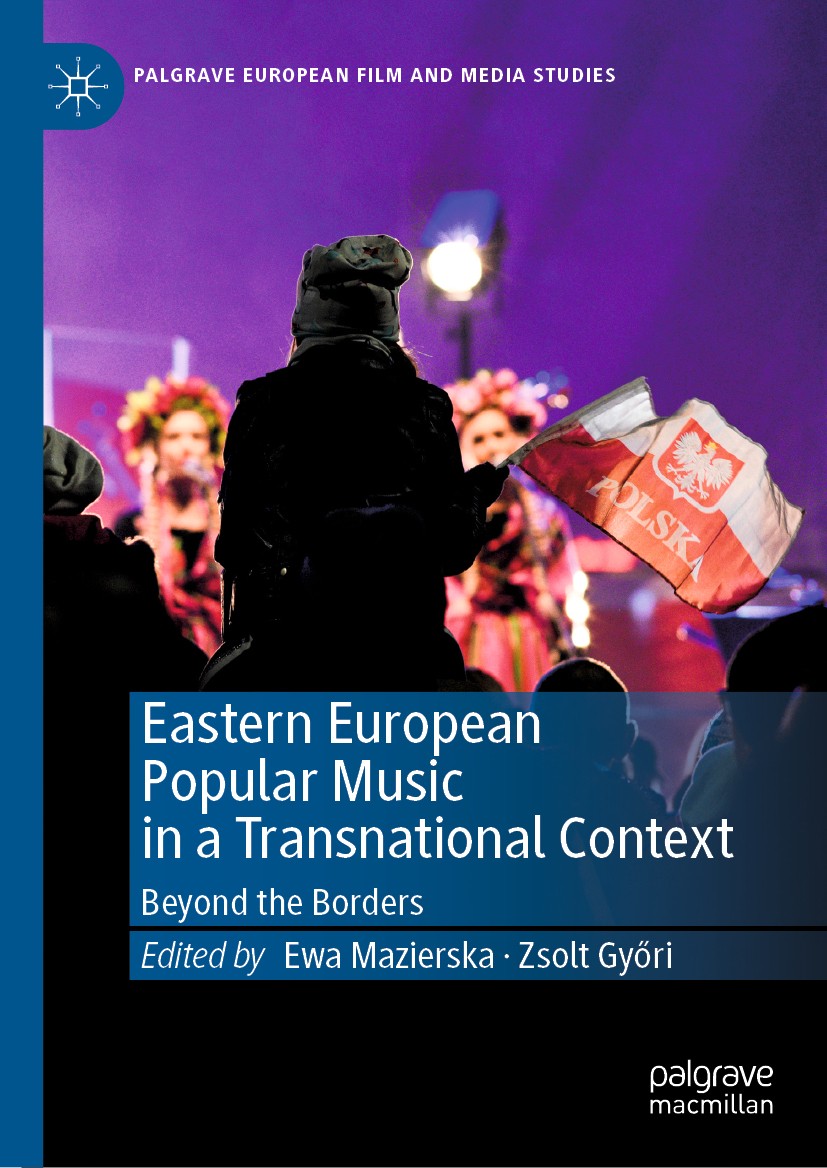
Eastern European Popular Music in a Transnational Context [electronic resource] : Beyond the Borders / edited by Ewa Mazierska, Zsolt Győri.
Erişim Adresi
ISBN
9783030170349
Dil Kodu
İngilizce
Yer Numarası
EK/5640
Basım Bildirimi
1st ed. 2019.
Yayın Bilgisi
Cham : Springer International Publishing : Imprint: Palgrave Macmillan, 2019.
Fiziksel Niteleme
XII, 243 p. 19 illus., 12 illus. in color. online resource.
Dizi
Palgrave European Film and Media Studies, 2634-6168
İçindekiler Notu
1. Introduction: Crossing National and Regional Borders in Eastern European Popular Music, Ewa Mazierska and Zsolt Győri -- Part 1: Bringing Foreign Music to the European East -- 2. Loopholes in the Iron Curtain: Obtaining Western Music in State Socialist Czechoslovakia in the 1970s and 1980s, Adam Havlik -- 3. Quiet Fanaticism: The Phenomenon of Leonard Cohen’s Popularity in Poland, Ewa Mazierska and Xawery Stańczyk -- 4. Authenticity and Orientalism: Cultural Appropriations in Polish Alternative Music Scene in the 1970s and 1980s, Xawery Stańczyk -- 5. Eastern Europe as Punk Frontier, Aimar Ventsel -- Part 2: Eastern European Music Crossing the Borders -- 6. Success, Failure, Splendid Isolation: Czesław Niemen’s Career in Europe, Mariusz Gradowski -- 7. Yugo-Polish: The Uses of Yugoslav Music by Polish Musicians, Ewa Mazierska -- 8. Balkan High, Balkan Low: Music Production between Hybridity and Class Struggle, Slobodan Karamanić and Manuela Unverdorben -- Part 3: Liminal Spaces of Eastern European Music Festivals -- 9. The Intervision Song Contest: A Commercial and Pan-European Alternative to the Eurovision Song Contest, Dean Vuletic -- 10. Between Utopia and the Marketplace: The Case of the Sziget Festival, Zsolt Győri -- 11. A Tale of Two (Or #EverMore) Festivals: Electronic Music in a Transylvanian Town, Ruxandra Trandafoiu.
Özet, vb.
This volume examines the transnational character of popular music since the Cold War era to the present. Bringing together the cross-disciplinary research of native scholars, Eastern European Popular Music in a Transnational Context expands our understanding of the movement of physical music, musicians and genres through the Iron Curtain and within the region of Eastern Europe. With case studies ranging from Goran Bregović, Czesław Niemen, the reception of Leonard Cohen in Poland, the Estonian punk scene to the Intervision Song Contest, the book discusses how the production and reception of popular music in the region has always been heavily influenced by international trends and how varied strategies allowed performers and fans to acquire cosmopolitan identities. Cross-disciplinary in nature, the investigations are informed by political, social and cultural history, reception studies, sociology and marketing and are largely based on archival research and interviews. .
Konu
Music.
Ethnology __ Europe.
Culture.
Popular Culture.
Music.
European Culture.
Popular Culture.
Ethnology __ Europe.
Culture.
Popular Culture.
Music.
European Culture.
Popular Culture.
Diğer Yazarlar
Kurum Adı
Eseri Alıntıla
Referansları kullanmadan önce gözden geçirmeniz ve varsa gerekli düzeltmeleri yapmanız önerilir.
Dijital Kaynak
MARC Görünümü
LEADER 04344nam a22005415i 4500
001 839795
003 TR_AnAIT
005 20260715041827
007 cr nn 008mamaa
008 190715s2019 sz | s |||| 0|eng d
020 |a9783030170349|9978-3-030-17034-9
024 7 |a10.1007/978-3-030-17034-9|2doi
041 |aeng
049 |aTürk Dil Kurumu Kütüphanesi
050 4|aM1-5000
072 7|aAV|2bicssc
072 7|aMUS000000|2bisacsh
072 7|aAV|2thema
082 04|a780|223
090 |aEK/5640
245 10|aEastern European Popular Music in a Transnational Context|h[electronic resource] :|bBeyond the Borders /|cedited by Ewa Mazierska, Zsolt Győri.
250 |a1st ed. 2019.
264 1|aCham :|bSpringer International Publishing :|bImprint: Palgrave Macmillan,|c2019.
300 |aXII, 243 p. 19 illus., 12 illus. in color.|bonline resource.
336 |atext|btxt|2rdacontent
337 |acomputer|bc|2rdamedia
338 |aonline resource|bcr|2rdacarrier
347 |atext file|bPDF|2rda
490 1 |aPalgrave European Film and Media Studies,|x2634-6168
505 0 |a1. Introduction: Crossing National and Regional Borders in Eastern European Popular Music, Ewa Mazierska and Zsolt Győri -- Part 1: Bringing Foreign Music to the European East -- 2. Loopholes in the Iron Curtain: Obtaining Western Music in State Socialist Czechoslovakia in the 1970s and 1980s, Adam Havlik -- 3. Quiet Fanaticism: The Phenomenon of Leonard Cohen’s Popularity in Poland, Ewa Mazierska and Xawery Stańczyk -- 4. Authenticity and Orientalism: Cultural Appropriations in Polish Alternative Music Scene in the 1970s and 1980s, Xawery Stańczyk -- 5. Eastern Europe as Punk Frontier, Aimar Ventsel -- Part 2: Eastern European Music Crossing the Borders -- 6. Success, Failure, Splendid Isolation: Czesław Niemen’s Career in Europe, Mariusz Gradowski -- 7. Yugo-Polish: The Uses of Yugoslav Music by Polish Musicians, Ewa Mazierska -- 8. Balkan High, Balkan Low: Music Production between Hybridity and Class Struggle, Slobodan Karamanić and Manuela Unverdorben -- Part 3: Liminal Spaces of Eastern European Music Festivals -- 9. The Intervision Song Contest: A Commercial and Pan-European Alternative to the Eurovision Song Contest, Dean Vuletic -- 10. Between Utopia and the Marketplace: The Case of the Sziget Festival, Zsolt Győri -- 11. A Tale of Two (Or #EverMore) Festivals: Electronic Music in a Transylvanian Town, Ruxandra Trandafoiu.
520 |aThis volume examines the transnational character of popular music since the Cold War era to the present. Bringing together the cross-disciplinary research of native scholars, Eastern European Popular Music in a Transnational Context expands our understanding of the movement of physical music, musicians and genres through the Iron Curtain and within the region of Eastern Europe. With case studies ranging from Goran Bregović, Czesław Niemen, the reception of Leonard Cohen in Poland, the Estonian punk scene to the Intervision Song Contest, the book discusses how the production and reception of popular music in the region has always been heavily influenced by international trends and how varied strategies allowed performers and fans to acquire cosmopolitan identities. Cross-disciplinary in nature, the investigations are informed by political, social and cultural history, reception studies, sociology and marketing and are largely based on archival research and interviews. .
650 0|aMusic.
650 0|aEthnology|xEurope.
650 0|aCulture.
650 0|aPopular Culture.
650 14|aMusic.
650 24|aEuropean Culture.
650 24|aPopular Culture.
700 1 |aMazierska, Ewa.|eeditor.|4edt|4http://id.loc.gov/vocabulary/relators/edt
700 1 |aGyőri, Zsolt.|eeditor.|4edt|4http://id.loc.gov/vocabulary/relators/edt
710 2 |aSpringerLink (Online service)
773 0 |tSpringer Nature eBook
776 08|iPrinted edition:|z9783030170332
776 08|iPrinted edition:|z9783030170356
776 08|iPrinted edition:|z9783030170363
830 0|aPalgrave European Film and Media Studies,|x2634-6168
856 40|uhttps://doi.org/10.1007/978-3-030-17034-9
912 |aZDB-2-LCM
912 |aZDB-2-SXL
950 |aLiterature, Cultural and Media Studies (SpringerNature-41173)
950 |aLiterature, Cultural and Media Studies (R0) (SpringerNature-43723)
001 839795
003 TR_AnAIT
005 20260715041827
007 cr nn 008mamaa
008 190715s2019 sz | s |||| 0|eng d
020 |a9783030170349|9978-3-030-17034-9
024 7 |a10.1007/978-3-030-17034-9|2doi
041 |aeng
049 |aTürk Dil Kurumu Kütüphanesi
050 4|aM1-5000
072 7|aAV|2bicssc
072 7|aMUS000000|2bisacsh
072 7|aAV|2thema
082 04|a780|223
090 |aEK/5640
245 10|aEastern European Popular Music in a Transnational Context|h[electronic resource] :|bBeyond the Borders /|cedited by Ewa Mazierska, Zsolt Győri.
250 |a1st ed. 2019.
264 1|aCham :|bSpringer International Publishing :|bImprint: Palgrave Macmillan,|c2019.
300 |aXII, 243 p. 19 illus., 12 illus. in color.|bonline resource.
336 |atext|btxt|2rdacontent
337 |acomputer|bc|2rdamedia
338 |aonline resource|bcr|2rdacarrier
347 |atext file|bPDF|2rda
490 1 |aPalgrave European Film and Media Studies,|x2634-6168
505 0 |a1. Introduction: Crossing National and Regional Borders in Eastern European Popular Music, Ewa Mazierska and Zsolt Győri -- Part 1: Bringing Foreign Music to the European East -- 2. Loopholes in the Iron Curtain: Obtaining Western Music in State Socialist Czechoslovakia in the 1970s and 1980s, Adam Havlik -- 3. Quiet Fanaticism: The Phenomenon of Leonard Cohen’s Popularity in Poland, Ewa Mazierska and Xawery Stańczyk -- 4. Authenticity and Orientalism: Cultural Appropriations in Polish Alternative Music Scene in the 1970s and 1980s, Xawery Stańczyk -- 5. Eastern Europe as Punk Frontier, Aimar Ventsel -- Part 2: Eastern European Music Crossing the Borders -- 6. Success, Failure, Splendid Isolation: Czesław Niemen’s Career in Europe, Mariusz Gradowski -- 7. Yugo-Polish: The Uses of Yugoslav Music by Polish Musicians, Ewa Mazierska -- 8. Balkan High, Balkan Low: Music Production between Hybridity and Class Struggle, Slobodan Karamanić and Manuela Unverdorben -- Part 3: Liminal Spaces of Eastern European Music Festivals -- 9. The Intervision Song Contest: A Commercial and Pan-European Alternative to the Eurovision Song Contest, Dean Vuletic -- 10. Between Utopia and the Marketplace: The Case of the Sziget Festival, Zsolt Győri -- 11. A Tale of Two (Or #EverMore) Festivals: Electronic Music in a Transylvanian Town, Ruxandra Trandafoiu.
520 |aThis volume examines the transnational character of popular music since the Cold War era to the present. Bringing together the cross-disciplinary research of native scholars, Eastern European Popular Music in a Transnational Context expands our understanding of the movement of physical music, musicians and genres through the Iron Curtain and within the region of Eastern Europe. With case studies ranging from Goran Bregović, Czesław Niemen, the reception of Leonard Cohen in Poland, the Estonian punk scene to the Intervision Song Contest, the book discusses how the production and reception of popular music in the region has always been heavily influenced by international trends and how varied strategies allowed performers and fans to acquire cosmopolitan identities. Cross-disciplinary in nature, the investigations are informed by political, social and cultural history, reception studies, sociology and marketing and are largely based on archival research and interviews. .
650 0|aMusic.
650 0|aEthnology|xEurope.
650 0|aCulture.
650 0|aPopular Culture.
650 14|aMusic.
650 24|aEuropean Culture.
650 24|aPopular Culture.
700 1 |aMazierska, Ewa.|eeditor.|4edt|4http://id.loc.gov/vocabulary/relators/edt
700 1 |aGyőri, Zsolt.|eeditor.|4edt|4http://id.loc.gov/vocabulary/relators/edt
710 2 |aSpringerLink (Online service)
773 0 |tSpringer Nature eBook
776 08|iPrinted edition:|z9783030170332
776 08|iPrinted edition:|z9783030170356
776 08|iPrinted edition:|z9783030170363
830 0|aPalgrave European Film and Media Studies,|x2634-6168
856 40|uhttps://doi.org/10.1007/978-3-030-17034-9
912 |aZDB-2-LCM
912 |aZDB-2-SXL
950 |aLiterature, Cultural and Media Studies (SpringerNature-41173)
950 |aLiterature, Cultural and Media Studies (R0) (SpringerNature-43723)
Materyaller
Depodan talep edilen materyal sadece kütüphane içerisinde kullanılmaktadır.
Materyal dışarıya ödünç verilmemektedir.
Materyal dışarıya ödünç verilmemektedir.
