LEADER 03280nam a22004695i 4500
001 839928
003 TR_AnAIT
005 20260715041709
007 cr nn 008mamaa
008 201020s2020 sz | s |||| 0|eng d
020 |a9783030438197|9978-3-030-43819-7
024 7 |a10.1007/978-3-030-43819-7|2doi
041 |aeng
049 |aTürk Dil Kurumu Kütüphanesi
050 4|aPN1995.9.P7
072 7|aAP|2bicssc
072 7|aPER004010|2bisacsh
072 7|aAT|2thema
082 04|a792.0233|223
090 |aEK/5697
100 1 |aPagello, Federico.|eauthor.|4aut|4http://id.loc.gov/vocabulary/relators/aut
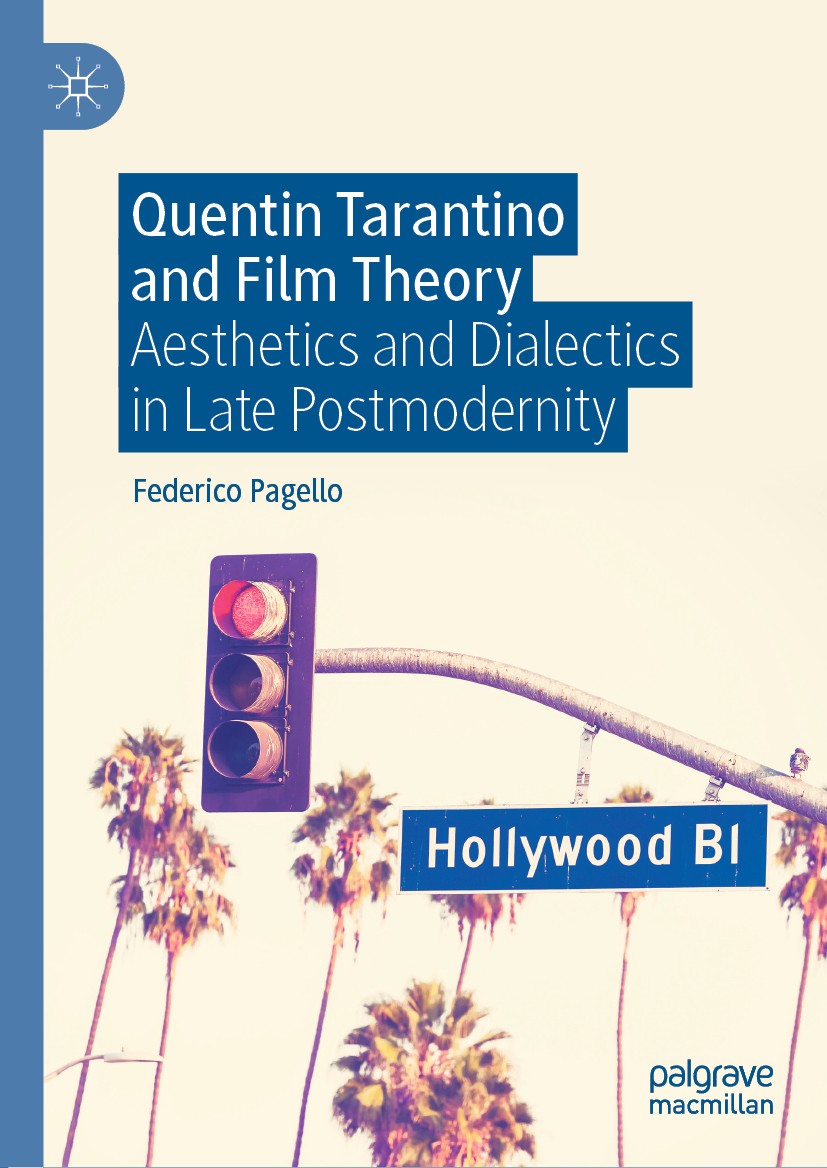
245 10|aQuentin Tarantino and Film Theory|h[electronic resource] :|bAesthetics and Dialectics in Late Postmodernity /|cby Federico Pagello.
250 |a1st ed. 2020.
264 1|aCham :|bSpringer International Publishing :|bImprint: Palgrave Macmillan,|c2020.
300 |aVIII, 210 p. 1 illus.|bonline resource.
336 |atext|btxt|2rdacontent
337 |acomputer|bc|2rdamedia
338 |aonline resource|bcr|2rdacarrier
347 |atext file|bPDF|2rda
505 0 |aIntroduction – From High to Late Postmodernism -- Part One – The Aesthetics of Late Postmodernism -- Chapter 1 – Absolute Style -- Chapter 2: Space as History -- Chapter 3 – Time as Language -- Part Two – The Return of Dialectics -- Chapter 4 – Narrative and Subjectivity -- Chapter 5 – The “Vanishing Point” of Sexual Difference -- Chapter 6 – The Endless End of History -- Conclusion – Godard with Tarantino: Cinema as Enjoyment.
520 |aThis book examines a set of theoretical perspectives that critically engage with the notion of postmodernism, investigating whether this concept is still useful to approach contemporary cinema. This question is explored through a discussion of the films written and directed by Quentin Tarantino, largely regarded as the epitome of postmodern cinema and considered here as theoretical contributions in their own right. Each chapter first presents key ideas proposed by a specific theorist and then puts them in conversation with Tarantino’s films. Jacques Rancière’s theory of art is used to reject postmodernism’s claims about the ‘death’ of the aesthetic image in contemporary cinema. Fredric Jameson’s and Slavoj Žižek’s dialectical thinking is mobilized to challenge simplistic, ideological readings of postmodern cinema in general, and Tarantino’s films in particular. Finally, the direct influence of Carol Clover’s psychoanalytical approach to the horror genre on Tarantino’s work isdiscussed to prove the director’s specific contribution to a theoretical understanding of contemporary film aesthetics. .
650 0|aMotion pictures|xProduction and direction.
650 0|aMotion pictures.
650 14|aDirecting.
650 24|aFilm Theory.
710 2 |aSpringerLink (Online service)
773 0 |tSpringer Nature eBook
776 08|iPrinted edition:|z9783030438180
776 08|iPrinted edition:|z9783030438203
776 08|iPrinted edition:|z9783030438210
856 40|uhttps://doi.org/10.1007/978-3-030-43819-7
912 |aZDB-2-LCM
912 |aZDB-2-SXL
950 |aLiterature, Cultural and Media Studies (SpringerNature-41173)
950 |aLiterature, Cultural and Media Studies (R0) (SpringerNature-43723)