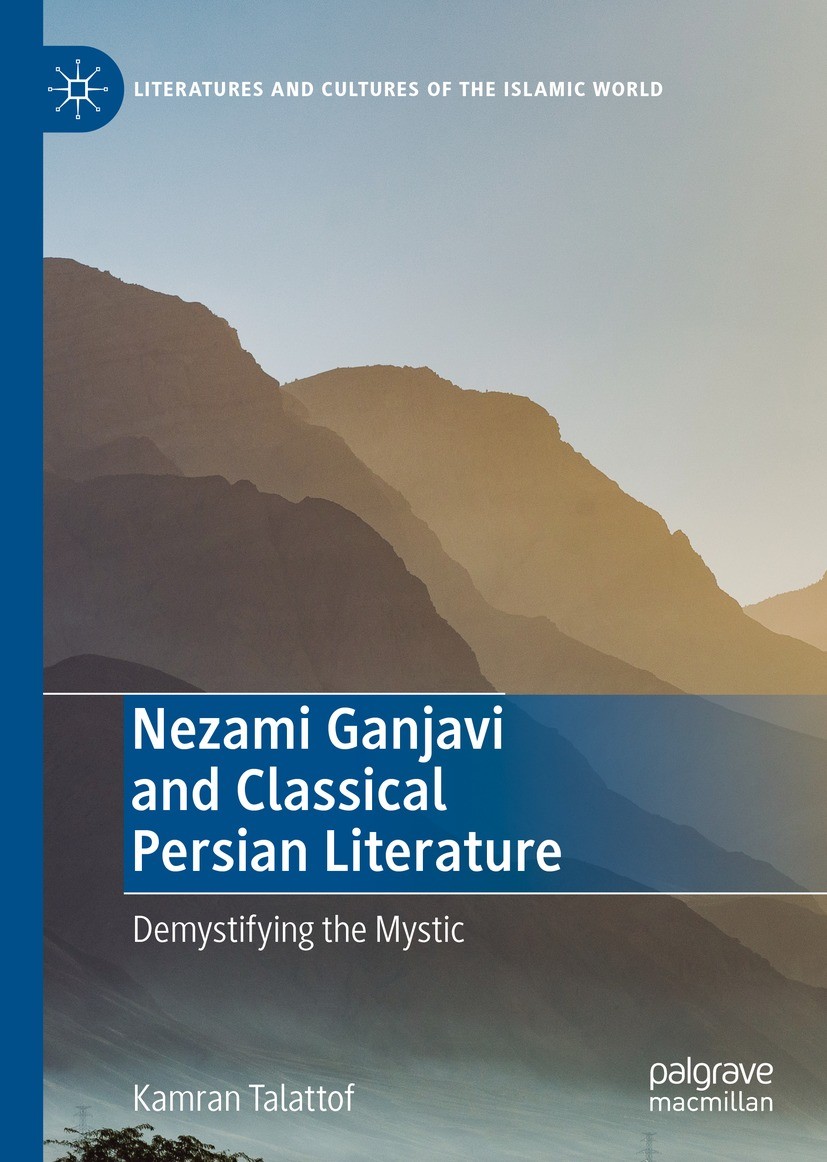
Nezami Ganjavi and Classical Persian Literature [electronic resource] : Demystifying the Mystic / by Kamran Talattof.
Erişim Adresi
ISBN
9783030979904
Dil Kodu
İngilizce
Yer Numarası
EK/5820
Yazar
Basım Bildirimi
1st ed. 2022.
Yayın Bilgisi
Cham : Springer International Publishing : Imprint: Palgrave Macmillan, 2022.
Fiziksel Niteleme
XII, 284 p. 7 illus. online resource.
Dizi
Literatures and Cultures of the Islamic World, 2945-7068
İçindekiler Notu
1. Nezami Ganjavi and Classical Persian Literature -- 2. Nezami, the Persian Wordsmith: The Concept of Sakhon in Classical Persian Poetry -- 3. Women and Love in the Works of Nezami, Ferdowsi, and Jami -- 4. Faith, Facts, and Fantasy: Stories of Ascension and Nezamian Allegory -- 5. Wine and Identity in the Works of Nezami and Rudaki -- 6. Nezamian Pictorial Allegory in Layli o Majnun -- 7. In Search of Religion and Dantean Moments in "The Story of Mahan" -- 8. Sublime Metier, Literary Techniques, and Allegory.
Özet, vb.
This book offers new insights into the twelfth-century Persian poet Nezami Ganjavi. Challenging the dominant interpretation of Nezami’s poetry as the product of mysticism or Islam, this book explores Nezami’s literary techniques such as his pictorial allegory and his profound conceptualization of poetry, rhetoric, and eloquence. It employs several theoretical and methodological approaches to clarify the nature of his artistic approach to poetry. Chapters explore Nezami’s understanding of rhetoric and literature as Sakhon, his interest in literary genres, the diversity of themes explored in his Five Treasures, the sources of Nezami’s creativity, and his literary devices. Exploring themes such as love, religion, science, wine, gender, and philosophy, this study compares Nezami’s works to other giants of Persian poetry such as Ferdowsi, Jami, Rudaki, and others. The book argues that Nezami’s main concern was to weave poetry rather than to promote any specific ideology. Kamran Talattof is Professor of Persian Literature and Iranian Culture at the School of Middle Eastern and North African Studies and affiliated with the Department of Gender and Women’s Studies at the University of Arizona, USA. He is also the Founding Chair of the Roshan Graduate Interdisciplinary Program in Persian and Iranian Studies. He has published widely across literature (modern and classical), Iranian and Middle Eastern culture, history and cinema, as well as Persian language pedagogy and translation.
Konu
Middle Eastern literature.
Literature, Medieval.
Poetry.
Islam and culture.
Middle Eastern Literature.
Medieval Literature.
Poetry and Poetics.
Islamic Cultural Studies.
Literature, Medieval.
Poetry.
Islam and culture.
Middle Eastern Literature.
Medieval Literature.
Poetry and Poetics.
Islamic Cultural Studies.
Kurum Adı

Eseri Alıntıla
Referansları kullanmadan önce gözden geçirmeniz ve varsa gerekli düzeltmeleri yapmanız önerilir.
Dijital Kaynak
MARC Görünümü
LEADER 05268nam a22006735i 4500
001 839944
003 TR_AnAIT
005 20260715041703
007 cr nn 008mamaa
008 220928s2022 sz | s |||| 0|eng d
020 |a9783030979904|9978-3-030-97990-4
024 7 |a10.1007/978-3-030-97990-4|2doi
041 |aeng
049 |aTürk Dil Kurumu Kütüphanesi
050 4|aPJ305.2-489
072 7|aDS|2bicssc
072 7|a1FB|2bicssc
072 7|aLIT004220|2bisacsh
072 7|aDS|x1FB|2thema
082 04|a809.8956|223
090 |aEK/5820
100 1 |aTalattof, Kamran.|eauthor.|4aut|4http://id.loc.gov/vocabulary/relators/aut
245 10|aNezami Ganjavi and Classical Persian Literature|h[electronic resource] :|bDemystifying the Mystic /|cby Kamran Talattof.
250 |a1st ed. 2022.
264 1|aCham :|bSpringer International Publishing :|bImprint: Palgrave Macmillan,|c2022.
300 |aXII, 284 p. 7 illus.|bonline resource.
336 |atext|btxt|2rdacontent
337 |acomputer|bc|2rdamedia
338 |aonline resource|bcr|2rdacarrier
341 0 |bTable of contents navigation|2onix
341 0 |bSingle logical reading order|2onix
341 0 |bShort alternative textual descriptions|2onix
341 0 |bUse of color is not sole means of conveying information|2onix
341 0 |bUse of high contrast between text and background color|2onix
341 0 |bNext / Previous structural navigation|2onix
341 0 |bAll non-decorative content supports reading without sight|2onix
347 |atext file|bPDF|2rda
490 1 |aLiteratures and Cultures of the Islamic World,|x2945-7068
505 0 |a1. Nezami Ganjavi and Classical Persian Literature -- 2. Nezami, the Persian Wordsmith: The Concept of Sakhon in Classical Persian Poetry -- 3. Women and Love in the Works of Nezami, Ferdowsi, and Jami -- 4. Faith, Facts, and Fantasy: Stories of Ascension and Nezamian Allegory -- 5. Wine and Identity in the Works of Nezami and Rudaki -- 6. Nezamian Pictorial Allegory in Layli o Majnun -- 7. In Search of Religion and Dantean Moments in "The Story of Mahan" -- 8. Sublime Metier, Literary Techniques, and Allegory.
520 |aThis book offers new insights into the twelfth-century Persian poet Nezami Ganjavi. Challenging the dominant interpretation of Nezami’s poetry as the product of mysticism or Islam, this book explores Nezami’s literary techniques such as his pictorial allegory and his profound conceptualization of poetry, rhetoric, and eloquence. It employs several theoretical and methodological approaches to clarify the nature of his artistic approach to poetry. Chapters explore Nezami’s understanding of rhetoric and literature as Sakhon, his interest in literary genres, the diversity of themes explored in his Five Treasures, the sources of Nezami’s creativity, and his literary devices. Exploring themes such as love, religion, science, wine, gender, and philosophy, this study compares Nezami’s works to other giants of Persian poetry such as Ferdowsi, Jami, Rudaki, and others. The book argues that Nezami’s main concern was to weave poetry rather than to promote any specific ideology. Kamran Talattof is Professor of Persian Literature and Iranian Culture at the School of Middle Eastern and North African Studies and affiliated with the Department of Gender and Women’s Studies at the University of Arizona, USA. He is also the Founding Chair of the Roshan Graduate Interdisciplinary Program in Persian and Iranian Studies. He has published widely across literature (modern and classical), Iranian and Middle Eastern culture, history and cinema, as well as Persian language pedagogy and translation.
532 8 |aAccessibility summary: This PDF does not fully comply with PDF/UA standards, but does feature limited screen reader support, described non-text content (images, graphs), bookmarks for easy navigation and searchable, selectable text. Users of assistive technologies may experience difficulty navigating or interpreting content in this document. We recognize the importance of accessibility, and we welcome queries about accessibility for any of our products. If you have a question or an access need, please get in touch with us at accessibilitysupport@springernature.com.
532 8 |aNo reading system accessibility options actively disabled
532 8 |aPublisher contact for further accessibility information: accessibilitysupport@springernature.com
650 0|aMiddle Eastern literature.
650 0|aLiterature, Medieval.
650 0|aPoetry.
650 0|aIslam and culture.
650 14|aMiddle Eastern Literature.
650 24|aMedieval Literature.
650 24|aPoetry and Poetics.
650 24|aIslamic Cultural Studies.
710 2 |aSpringerLink (Online service)
773 0 |tSpringer Nature eBook
776 08|iPrinted edition:|z9783030979898
776 08|iPrinted edition:|z9783030979911
776 08|iPrinted edition:|z9783030979928
830 0|aLiteratures and Cultures of the Islamic World,|x2945-7068
856 40|uhttps://doi.org/10.1007/978-3-030-97990-4
912 |aZDB-2-LCM
912 |aZDB-2-SXL
950 |aLiterature, Cultural and Media Studies (SpringerNature-41173)
950 |aLiterature, Cultural and Media Studies (R0) (SpringerNature-43723)
001 839944
003 TR_AnAIT
005 20260715041703
007 cr nn 008mamaa
008 220928s2022 sz | s |||| 0|eng d
020 |a9783030979904|9978-3-030-97990-4
024 7 |a10.1007/978-3-030-97990-4|2doi
041 |aeng
049 |aTürk Dil Kurumu Kütüphanesi
050 4|aPJ305.2-489
072 7|aDS|2bicssc
072 7|a1FB|2bicssc
072 7|aLIT004220|2bisacsh
072 7|aDS|x1FB|2thema
082 04|a809.8956|223
090 |aEK/5820
100 1 |aTalattof, Kamran.|eauthor.|4aut|4http://id.loc.gov/vocabulary/relators/aut
245 10|aNezami Ganjavi and Classical Persian Literature|h[electronic resource] :|bDemystifying the Mystic /|cby Kamran Talattof.
250 |a1st ed. 2022.
264 1|aCham :|bSpringer International Publishing :|bImprint: Palgrave Macmillan,|c2022.
300 |aXII, 284 p. 7 illus.|bonline resource.
336 |atext|btxt|2rdacontent
337 |acomputer|bc|2rdamedia
338 |aonline resource|bcr|2rdacarrier
341 0 |bTable of contents navigation|2onix
341 0 |bSingle logical reading order|2onix
341 0 |bShort alternative textual descriptions|2onix
341 0 |bUse of color is not sole means of conveying information|2onix
341 0 |bUse of high contrast between text and background color|2onix
341 0 |bNext / Previous structural navigation|2onix
341 0 |bAll non-decorative content supports reading without sight|2onix
347 |atext file|bPDF|2rda
490 1 |aLiteratures and Cultures of the Islamic World,|x2945-7068
505 0 |a1. Nezami Ganjavi and Classical Persian Literature -- 2. Nezami, the Persian Wordsmith: The Concept of Sakhon in Classical Persian Poetry -- 3. Women and Love in the Works of Nezami, Ferdowsi, and Jami -- 4. Faith, Facts, and Fantasy: Stories of Ascension and Nezamian Allegory -- 5. Wine and Identity in the Works of Nezami and Rudaki -- 6. Nezamian Pictorial Allegory in Layli o Majnun -- 7. In Search of Religion and Dantean Moments in "The Story of Mahan" -- 8. Sublime Metier, Literary Techniques, and Allegory.
520 |aThis book offers new insights into the twelfth-century Persian poet Nezami Ganjavi. Challenging the dominant interpretation of Nezami’s poetry as the product of mysticism or Islam, this book explores Nezami’s literary techniques such as his pictorial allegory and his profound conceptualization of poetry, rhetoric, and eloquence. It employs several theoretical and methodological approaches to clarify the nature of his artistic approach to poetry. Chapters explore Nezami’s understanding of rhetoric and literature as Sakhon, his interest in literary genres, the diversity of themes explored in his Five Treasures, the sources of Nezami’s creativity, and his literary devices. Exploring themes such as love, religion, science, wine, gender, and philosophy, this study compares Nezami’s works to other giants of Persian poetry such as Ferdowsi, Jami, Rudaki, and others. The book argues that Nezami’s main concern was to weave poetry rather than to promote any specific ideology. Kamran Talattof is Professor of Persian Literature and Iranian Culture at the School of Middle Eastern and North African Studies and affiliated with the Department of Gender and Women’s Studies at the University of Arizona, USA. He is also the Founding Chair of the Roshan Graduate Interdisciplinary Program in Persian and Iranian Studies. He has published widely across literature (modern and classical), Iranian and Middle Eastern culture, history and cinema, as well as Persian language pedagogy and translation.
532 8 |aAccessibility summary: This PDF does not fully comply with PDF/UA standards, but does feature limited screen reader support, described non-text content (images, graphs), bookmarks for easy navigation and searchable, selectable text. Users of assistive technologies may experience difficulty navigating or interpreting content in this document. We recognize the importance of accessibility, and we welcome queries about accessibility for any of our products. If you have a question or an access need, please get in touch with us at accessibilitysupport@springernature.com.
532 8 |aNo reading system accessibility options actively disabled
532 8 |aPublisher contact for further accessibility information: accessibilitysupport@springernature.com
650 0|aMiddle Eastern literature.
650 0|aLiterature, Medieval.
650 0|aPoetry.
650 0|aIslam and culture.
650 14|aMiddle Eastern Literature.
650 24|aMedieval Literature.
650 24|aPoetry and Poetics.
650 24|aIslamic Cultural Studies.
710 2 |aSpringerLink (Online service)
773 0 |tSpringer Nature eBook
776 08|iPrinted edition:|z9783030979898
776 08|iPrinted edition:|z9783030979911
776 08|iPrinted edition:|z9783030979928
830 0|aLiteratures and Cultures of the Islamic World,|x2945-7068
856 40|uhttps://doi.org/10.1007/978-3-030-97990-4
912 |aZDB-2-LCM
912 |aZDB-2-SXL
950 |aLiterature, Cultural and Media Studies (SpringerNature-41173)
950 |aLiterature, Cultural and Media Studies (R0) (SpringerNature-43723)
Materyaller
Depodan talep edilen materyal sadece kütüphane içerisinde kullanılmaktadır.
Materyal dışarıya ödünç verilmemektedir.
