

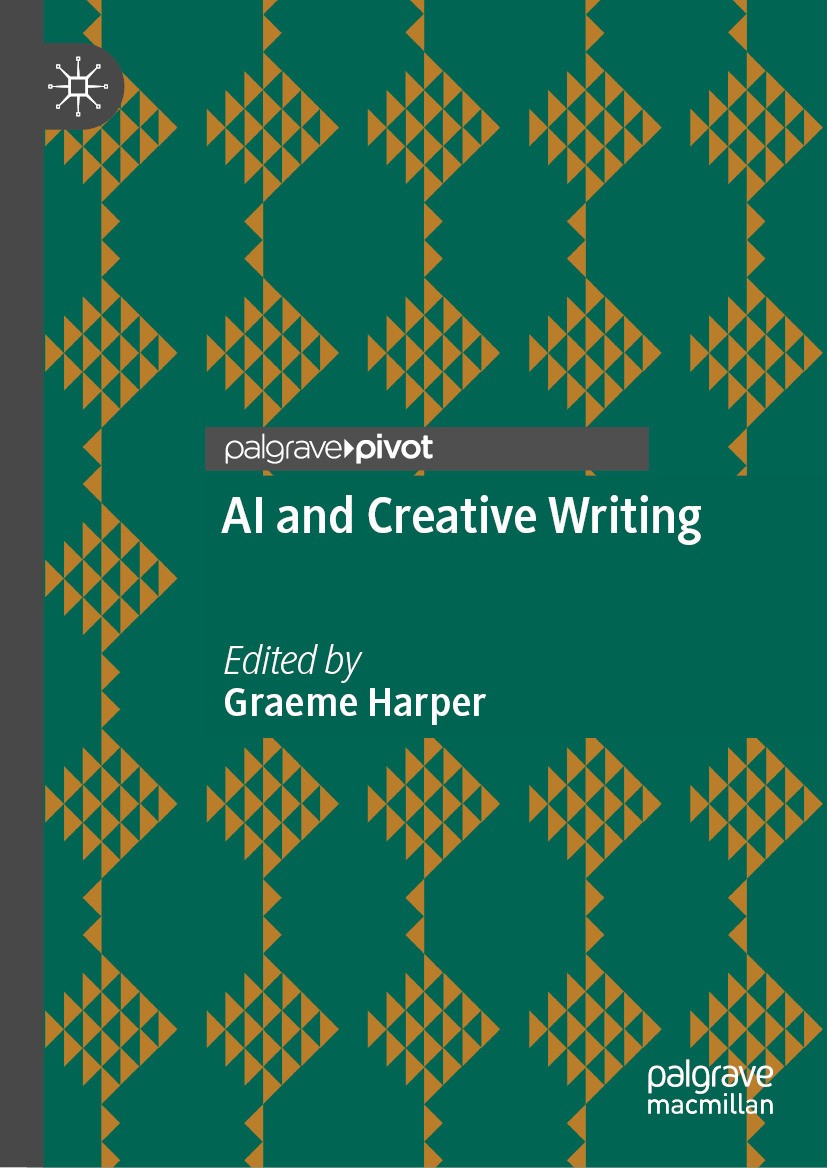
AI and Creative Writing [electronic resource] / edited by Graeme Harper.
Erişim Adresi
ISBN
9783031991011
Dil Kodu
İngilizce
Yer Numarası
EK/5914
Basım Bildirimi
1st ed. 2025.
Yayın Bilgisi
Cham : Springer Nature Switzerland : Imprint: Palgrave Macmillan, 2025.
Fiziksel Niteleme
X, 182 p. 6 illus., 1 illus. in color. online resource.
İçindekiler Notu
Chapter 1: Shady Cosgrove -- Chapter 2: Darrin Hanna -- Chapter 3: Kristina Wright -- Chapter 4: Brooke Biaz -- Chapter 5: Michael Dean Clark -- Chapter 6: Katy Ilonko Gero -- Chapter 7: Craig Jordan-Baker -- Chapter 8: Nikunj Jain -- Chapter 9: Josie Barnard -- Chapter 10: Sam Kemp -- Chapter 11: Nabeel Gillani -- Chapter 11: Dominique Hecq.
Özet, vb.
AI and Creative Writing explores the transformations, risks, and possibilities that are brought about by the interaction of artificial intelligence and creative writing. Offering a variety of opinions and thoughts, this book directly considers AI’s impact on our creative writing practices. More generally, it references the impact of AI on types of human knowledge and varieties of human understanding. The focus is on what currently is as well as on what is emerging, while the wider context is the emergence of AI over time, especially since World War II (noting particularly the work of Alan Turing). “AI” in relation to creative writing refers mostly to the training of Large Language Models (LLMs); that is, to the use of chatbots such as ChatGPT. This collection, however, is not so much concerned with specific chatbots. The discussion here is far more about our actions, reactions and expectations, focusing on the ways in which AI and creative writing communicate and might in the future communicate, and why, and to what ends. The result is a stimulating guide to what might or might not be on the horizon for AI’s impact on creative writing. Graeme Harper is Dean of the Honors College and Professor of Creative Writing at Oakland University, USA. He is the author of The Desire to Write (Palgrave, 2019) and editor of the forthcoming Empathy in Creative Writing (Palgrave), among other critical works. An award-winning fiction writer, writing as Brooke Biaz, his works of fiction include Small Maps of the World (2006), Moon Dance (2008), Camera Phone (2009), The Invention of Dying (2015) and The Japanese Cook (2018); Releasing the Animals was published in 2023, and Robots and Other Stories is forthcoming – all from Parlor Press. He is Editor in Chief of New Writing: The International Journal for the Practice and Theory of Creative Writing. It is, however, on AI today and AI in the future that this book focuses – .
Konu
Creative writing.
Artificial intelligence.
Digital humanities.
Creative Writing.
Artificial Intelligence.
Digital Humanities.
Artificial intelligence.
Digital humanities.
Creative Writing.
Artificial Intelligence.
Digital Humanities.
Diğer Yazarlar
Kurum Adı
Eseri Alıntıla
Referansları kullanmadan önce gözden geçirmeniz ve varsa gerekli düzeltmeleri yapmanız önerilir.
Dijital Kaynak
MARC Görünümü
LEADER 05298nam a22006255i 4500
001 839962
003 TR_AnAIT
005 20260715041644
007 cr nn 008mamaa
008 260102s2025 sz | s |||| 0|eng d
020 |a9783031991011|9978-3-031-99101-1
024 7 |a10.1007/978-3-031-99101-1|2doi
041 |aeng
049 |aTürk Dil Kurumu Kütüphanesi
050 4|aPN171.4-239
072 7|aCBV|2bicssc
072 7|aLAN005000|2bisacsh
072 7|aCBV|2thema
082 04|a808.02|223
090 |aEK/5914
245 10|aAI and Creative Writing|h[electronic resource] /|cedited by Graeme Harper.
250 |a1st ed. 2025.
264 1|aCham :|bSpringer Nature Switzerland :|bImprint: Palgrave Macmillan,|c2025.
300 |aX, 182 p. 6 illus., 1 illus. in color.|bonline resource.
336 |atext|btxt|2rdacontent
337 |acomputer|bc|2rdamedia
338 |aonline resource|bcr|2rdacarrier
341 0 |bPDF/UA-1|2onix
341 0 |bTable of contents navigation|2onix
341 0 |bSingle logical reading order|2onix
341 0 |bShort alternative textual descriptions|2onix
341 0 |bUse of color is not sole means of conveying information|2onix
341 0 |bUse of high contrast between text and background color|2onix
341 0 |bNext / Previous structural navigation|2onix
341 0 |bAll non-decorative content supports reading without sight|2onix
347 |atext file|bPDF|2rda
505 0 |aChapter 1: Shady Cosgrove -- Chapter 2: Darrin Hanna -- Chapter 3: Kristina Wright -- Chapter 4: Brooke Biaz -- Chapter 5: Michael Dean Clark -- Chapter 6: Katy Ilonko Gero -- Chapter 7: Craig Jordan-Baker -- Chapter 8: Nikunj Jain -- Chapter 9: Josie Barnard -- Chapter 10: Sam Kemp -- Chapter 11: Nabeel Gillani -- Chapter 11: Dominique Hecq.
520 |aAI and Creative Writing explores the transformations, risks, and possibilities that are brought about by the interaction of artificial intelligence and creative writing. Offering a variety of opinions and thoughts, this book directly considers AI’s impact on our creative writing practices. More generally, it references the impact of AI on types of human knowledge and varieties of human understanding. The focus is on what currently is as well as on what is emerging, while the wider context is the emergence of AI over time, especially since World War II (noting particularly the work of Alan Turing). “AI” in relation to creative writing refers mostly to the training of Large Language Models (LLMs); that is, to the use of chatbots such as ChatGPT. This collection, however, is not so much concerned with specific chatbots. The discussion here is far more about our actions, reactions and expectations, focusing on the ways in which AI and creative writing communicate and might in the future communicate, and why, and to what ends. The result is a stimulating guide to what might or might not be on the horizon for AI’s impact on creative writing. Graeme Harper is Dean of the Honors College and Professor of Creative Writing at Oakland University, USA. He is the author of The Desire to Write (Palgrave, 2019) and editor of the forthcoming Empathy in Creative Writing (Palgrave), among other critical works. An award-winning fiction writer, writing as Brooke Biaz, his works of fiction include Small Maps of the World (2006), Moon Dance (2008), Camera Phone (2009), The Invention of Dying (2015) and The Japanese Cook (2018); Releasing the Animals was published in 2023, and Robots and Other Stories is forthcoming – all from Parlor Press. He is Editor in Chief of New Writing: The International Journal for the Practice and Theory of Creative Writing. It is, however, on AI today and AI in the future that this book focuses – .
532 8 |aAccessibility summary: This PDF has been created in accordance with the PDF/UA-1 standard to enhance accessibility, including screen reader support, described non-text content (images, graphs), bookmarks for easy navigation, keyboard-friendly links and forms and searchable, selectable text. We recognize the importance of accessibility, and we welcome queries about accessibility for any of our products. If you have a question or an access need, please get in touch with us at accessibilitysupport@springernature.com. Please note that a more accessible version of this eBook is available as ePub.
532 8 |aNo reading system accessibility options actively disabled
532 8 |aPublisher contact for further accessibility information: accessibilitysupport@springernature.com
650 0|aCreative writing.
650 0|aArtificial intelligence.
650 0|aDigital humanities.
650 14|aCreative Writing.
650 24|aArtificial Intelligence.
650 24|aDigital Humanities.
700 1 |aHarper, Graeme.|eeditor.|4edt|4http://id.loc.gov/vocabulary/relators/edt
710 2 |aSpringerLink (Online service)
773 0 |tSpringer Nature eBook
776 08|iPrinted edition:|z9783031991004
776 08|iPrinted edition:|z9783031991028
776 08|iPrinted edition:|z9783031991035
856 40|uhttps://doi.org/10.1007/978-3-031-99101-1
912 |aZDB-2-LCM
912 |aZDB-2-SXL
950 |aLiterature, Cultural and Media Studies (SpringerNature-41173)
950 |aLiterature, Cultural and Media Studies (R0) (SpringerNature-43723)
001 839962
003 TR_AnAIT
005 20260715041644
007 cr nn 008mamaa
008 260102s2025 sz | s |||| 0|eng d
020 |a9783031991011|9978-3-031-99101-1
024 7 |a10.1007/978-3-031-99101-1|2doi
041 |aeng
049 |aTürk Dil Kurumu Kütüphanesi
050 4|aPN171.4-239
072 7|aCBV|2bicssc
072 7|aLAN005000|2bisacsh
072 7|aCBV|2thema
082 04|a808.02|223
090 |aEK/5914
245 10|aAI and Creative Writing|h[electronic resource] /|cedited by Graeme Harper.
250 |a1st ed. 2025.
264 1|aCham :|bSpringer Nature Switzerland :|bImprint: Palgrave Macmillan,|c2025.
300 |aX, 182 p. 6 illus., 1 illus. in color.|bonline resource.
336 |atext|btxt|2rdacontent
337 |acomputer|bc|2rdamedia
338 |aonline resource|bcr|2rdacarrier
341 0 |bPDF/UA-1|2onix
341 0 |bTable of contents navigation|2onix
341 0 |bSingle logical reading order|2onix
341 0 |bShort alternative textual descriptions|2onix
341 0 |bUse of color is not sole means of conveying information|2onix
341 0 |bUse of high contrast between text and background color|2onix
341 0 |bNext / Previous structural navigation|2onix
341 0 |bAll non-decorative content supports reading without sight|2onix
347 |atext file|bPDF|2rda
505 0 |aChapter 1: Shady Cosgrove -- Chapter 2: Darrin Hanna -- Chapter 3: Kristina Wright -- Chapter 4: Brooke Biaz -- Chapter 5: Michael Dean Clark -- Chapter 6: Katy Ilonko Gero -- Chapter 7: Craig Jordan-Baker -- Chapter 8: Nikunj Jain -- Chapter 9: Josie Barnard -- Chapter 10: Sam Kemp -- Chapter 11: Nabeel Gillani -- Chapter 11: Dominique Hecq.
520 |aAI and Creative Writing explores the transformations, risks, and possibilities that are brought about by the interaction of artificial intelligence and creative writing. Offering a variety of opinions and thoughts, this book directly considers AI’s impact on our creative writing practices. More generally, it references the impact of AI on types of human knowledge and varieties of human understanding. The focus is on what currently is as well as on what is emerging, while the wider context is the emergence of AI over time, especially since World War II (noting particularly the work of Alan Turing). “AI” in relation to creative writing refers mostly to the training of Large Language Models (LLMs); that is, to the use of chatbots such as ChatGPT. This collection, however, is not so much concerned with specific chatbots. The discussion here is far more about our actions, reactions and expectations, focusing on the ways in which AI and creative writing communicate and might in the future communicate, and why, and to what ends. The result is a stimulating guide to what might or might not be on the horizon for AI’s impact on creative writing. Graeme Harper is Dean of the Honors College and Professor of Creative Writing at Oakland University, USA. He is the author of The Desire to Write (Palgrave, 2019) and editor of the forthcoming Empathy in Creative Writing (Palgrave), among other critical works. An award-winning fiction writer, writing as Brooke Biaz, his works of fiction include Small Maps of the World (2006), Moon Dance (2008), Camera Phone (2009), The Invention of Dying (2015) and The Japanese Cook (2018); Releasing the Animals was published in 2023, and Robots and Other Stories is forthcoming – all from Parlor Press. He is Editor in Chief of New Writing: The International Journal for the Practice and Theory of Creative Writing. It is, however, on AI today and AI in the future that this book focuses – .
532 8 |aAccessibility summary: This PDF has been created in accordance with the PDF/UA-1 standard to enhance accessibility, including screen reader support, described non-text content (images, graphs), bookmarks for easy navigation, keyboard-friendly links and forms and searchable, selectable text. We recognize the importance of accessibility, and we welcome queries about accessibility for any of our products. If you have a question or an access need, please get in touch with us at accessibilitysupport@springernature.com. Please note that a more accessible version of this eBook is available as ePub.
532 8 |aNo reading system accessibility options actively disabled
532 8 |aPublisher contact for further accessibility information: accessibilitysupport@springernature.com
650 0|aCreative writing.
650 0|aArtificial intelligence.
650 0|aDigital humanities.
650 14|aCreative Writing.
650 24|aArtificial Intelligence.
650 24|aDigital Humanities.
700 1 |aHarper, Graeme.|eeditor.|4edt|4http://id.loc.gov/vocabulary/relators/edt
710 2 |aSpringerLink (Online service)
773 0 |tSpringer Nature eBook
776 08|iPrinted edition:|z9783031991004
776 08|iPrinted edition:|z9783031991028
776 08|iPrinted edition:|z9783031991035
856 40|uhttps://doi.org/10.1007/978-3-031-99101-1
912 |aZDB-2-LCM
912 |aZDB-2-SXL
950 |aLiterature, Cultural and Media Studies (SpringerNature-41173)
950 |aLiterature, Cultural and Media Studies (R0) (SpringerNature-43723)
Materyaller
Depodan talep edilen materyal sadece kütüphane içerisinde kullanılmaktadır.
Materyal dışarıya ödünç verilmemektedir.
Materyal dışarıya ödünç verilmemektedir.
