LEADER 03493nam a22005055i 4500
001 839987
003 TR_AnAIT
005 20260715041628
007 cr nn 008mamaa
008 190116s2019 sz | s |||| 0|eng d
020 |a9783030035655|9978-3-030-03565-5
024 7 |a10.1007/978-3-030-03565-5|2doi
041 |aeng
049 |aTürk Dil Kurumu Kütüphanesi
050 4|aPN715-749
072 7|aDSB|2bicssc
072 7|aLIT024000|2bisacsh
072 7|aDSB|2thema
082 04|a809.03|223
090 |aEK/3262
100 1 |aHelms, Nicholas R.|eauthor.|4aut|4http://id.loc.gov/vocabulary/relators/aut
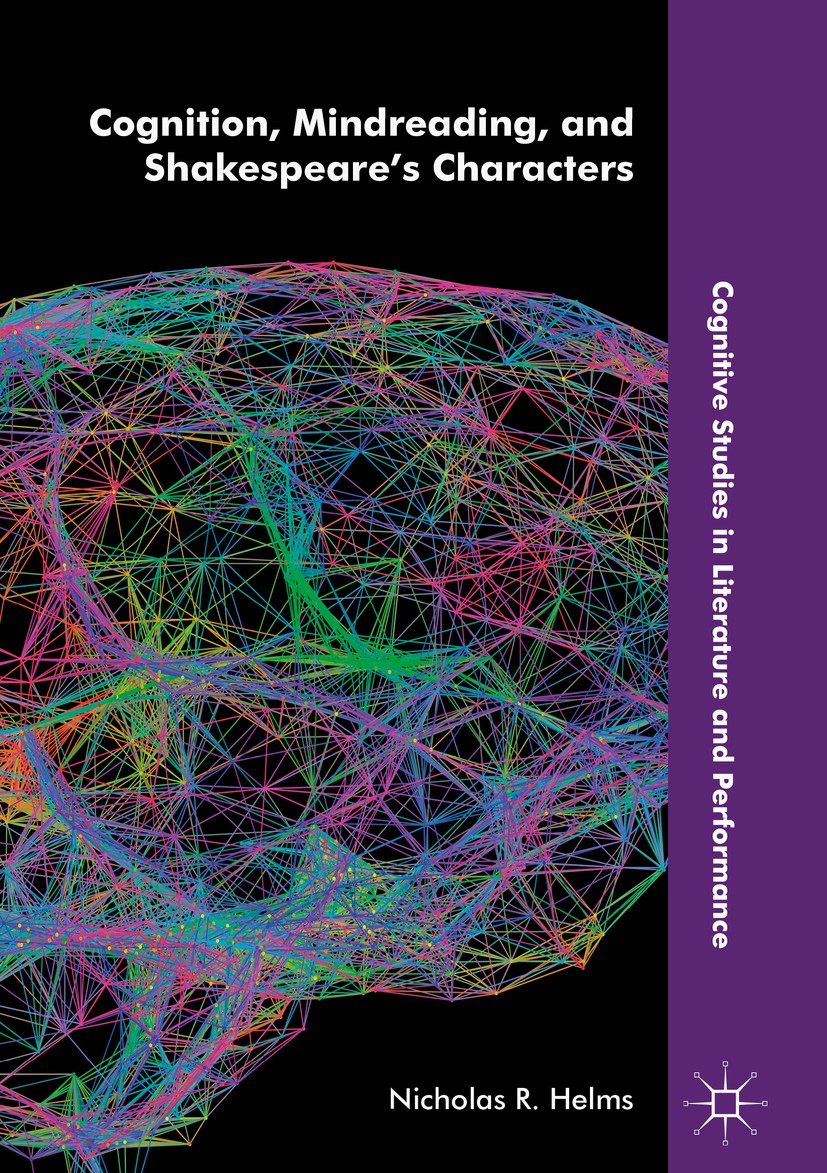
245 10|aCognition, Mindreading, and Shakespeare's Characters|h[electronic resource] /|cby Nicholas R. Helms.
250 |a1st ed. 2019.
264 1|aCham :|bSpringer International Publishing :|bImprint: Palgrave Macmillan,|c2019.
300 |aX, 229 p.|bonline resource.
336 |atext|btxt|2rdacontent
337 |acomputer|bc|2rdamedia
338 |aonline resource|bcr|2rdacarrier
347 |atext file|bPDF|2rda
490 1 |aCognitive Studies in Literature and Performance,|x2945-7300
505 0 |a1. The Mind’s Construction: An Introduction to Mindreading in Shakespeare -- 2. Reading the Mind: Cognitive Science and Close Reading -- 3. Inferring the Mind: Parasites and the Breakdown of Inference in Othello -- 4. Imagining the Mind: Empathy and Misreading in Much Ado About Nothing -- 5. Integrating Minds: Blending Methods in The King Is Alive and Twelfth Night -- 6. Finding the Frame: Inference in Romeo and Juliet -- 7. Reading Incoherence: How Shakespeare Speaks Back to Cognitive Science -- 8. Mindreading as Engagement: Active Spectators and "The Strangers' Case". .
520 |aCognition, Mindreading, and Shakespeare's Characters brings cognitive science to Shakespeare, applying contemporary theories of mindreading to Shakespeare’s construction of character. Building on the work of the philosopher Alvin Goldman and cognitive literary critics such as Bruce McConachie and Lisa Zunshine, Nicholas Helms uses the language of mindreading to analyze inference and imagination throughout Shakespeare’s plays, dwelling at length on misread minds in King Lear, Much Ado About Nothing, Othello, and Romeo and Juliet. Shakespeare manipulates the mechanics of misreading to cultivate an early modern audience of adept mindreaders, an audience that continues to contemplate the moral ramifications of Shakespeare’s characters even after leaving the playhouse. Using this cognitive literary approach, Helms reveals how misreading fuels Shakespeare’s enduring popular appeal and investigates the ways in which Shakespeare’s characters can both corroborate andchallenge contemporary cognitive theories of the human mind.
650 0|aEuropean literature|xRenaissance, 1450-1600.
650 0|aLiterature|xPhilosophy.
650 0|aCognitive psychology.
650 14|aEarly Modern and Renaissance Literature.
650 24|aLiterary Theory.
650 24|aCognitive Psychology.
710 2 |aSpringerLink (Online service)
773 0 |tSpringer Nature eBook
776 08|iPrinted edition:|z9783030035648
776 08|iPrinted edition:|z9783030035662
830 0|aCognitive Studies in Literature and Performance,|x2945-7300
856 40|uhttps://doi.org/10.1007/978-3-030-03565-5
912 |aZDB-2-LCM
912 |aZDB-2-SXL
950 |aLiterature, Cultural and Media Studies (SpringerNature-41173)
950 |aLiterature, Cultural and Media Studies (R0) (SpringerNature-43723)