

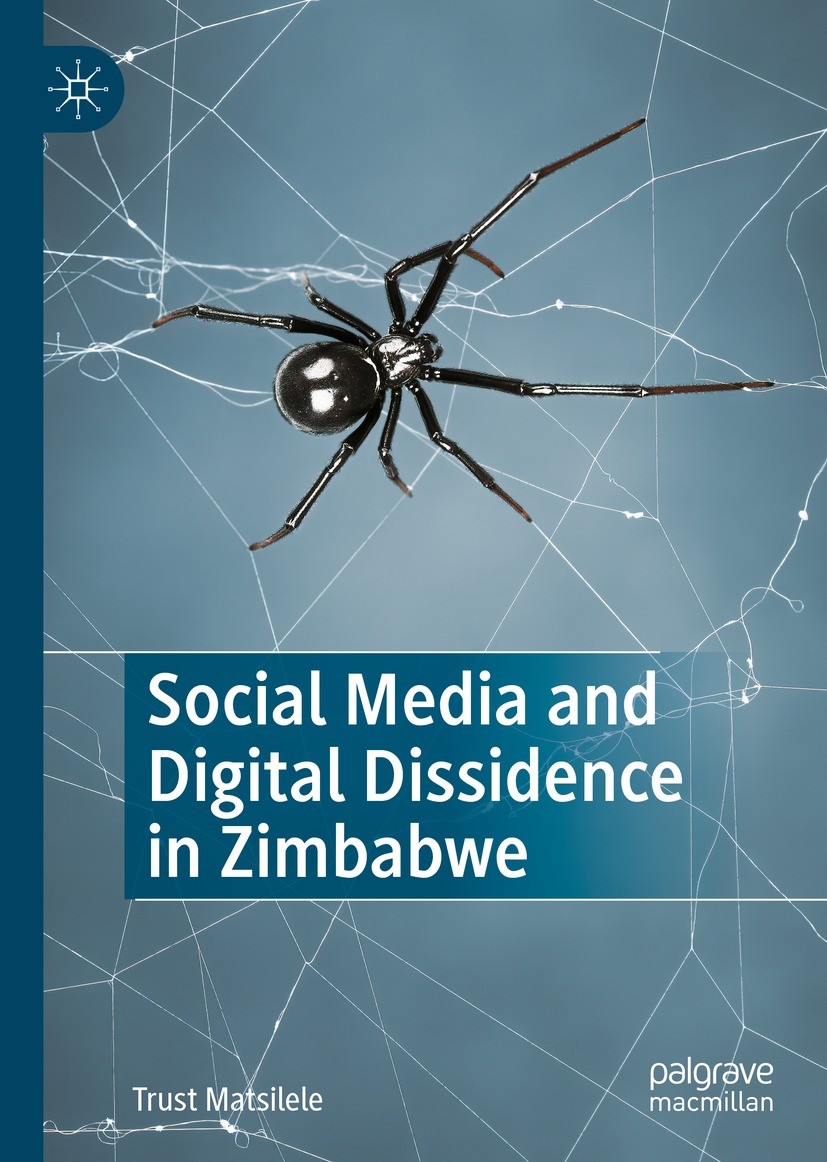
Social Media and Digital Dissidence in Zimbabwe [electronic resource] / by Trust Matsilele.
Erişim Adresi
ISBN
9783031084034
Dil Kodu
İngilizce
Yer Numarası
EK/5828
Yazar
Basım Bildirimi
1st ed. 2022.
Yayın Bilgisi
Cham : Springer International Publishing : Imprint: Palgrave Macmillan, 2022.
Fiziksel Niteleme
XIX, 165 p. online resource.
İçindekiler Notu
1 Setting the Scene -- 2 Surveying and Locating Dissidence in Zimbabwe -- 3 The Dissident Kusvereredza of @ProfJNMoyo -- 4 Baba Jukwa, #ThisFlag and #Tajamuka: Dissident Kusvereredza from the Margins -- 5 By Way of Conclusion: Thoughts on Hunhu, Social Media, Dissidentiality and Democracy -- References.
Özet, vb.
“Trust Matsilele’s Social Media and Digital Dissidence in Zimbabwe offers a highly recommended, complex and original genealogy of dissidence, situating it in the longue durée of representations of dissidence – ranging from folklore to political discourse. For Matsilele, dissidence is principally about restoring hunhu or humanity. Moving beyond the technological determinism of naïve celebrations of social media’s onslaught on the postcolonial state, this book provides a nuanced and deeply contextualized account of how social media shapes and is shaped by histories of dissidence.” — Wendy Willems, Associate Professor in the Department of Media and Communications, London School of Economics and Political Science, UK This book proposes a new theorisation when studying cyber dissidents in an African digital sphere. It argues that social media dissidents are a recent development in a long lineage of dissidents in African societies. Using Zimbabwe as a case study, the study locates contemporary dissidents in the same family with other historical dissident figures found in African orature, the Chimurenga wars, through music, poetry and other forms of expression. The book argues against techno-deterministic approaches to studying social media-born digital dissidence in Africa. It is aimed at scholars dedicated to studying social media movements in African contexts and the global south generally, prompting them to re-evaluate their earlier conclusions and adopt a more nuanced and contextspecific approach. Dr Trust Matsilele is Senior Lecturer in the Media and Public Relations department at Cape Peninsula University of Technology, South Africa, and a fellow of CPUT’s Centre for Communication Studies. He has published extensively in peer reviewed edited books and journals. His research cuts across disciplines such as social media, protest cultures, journalism and education. He is also a former senior journalist with Forbes Africa magazine and CNBC Africa and is regularly featured as a political analyst and social commentator in the media.
Konu
Social media.
Digital humanities.
Africa __ Politics and government.
Social Media.
Digital Humanities.
African Politics.
Digital humanities.
Africa __ Politics and government.
Social Media.
Digital Humanities.
African Politics.
Kurum Adı
Eseri Alıntıla
Referansları kullanmadan önce gözden geçirmeniz ve varsa gerekli düzeltmeleri yapmanız önerilir.
Dijital Kaynak
MARC Görünümü
LEADER 05219nam a22006015i 4500
001 840048
003 TR_AnAIT
005 20260715041552
007 cr nn 008mamaa
008 220829s2022 sz | s |||| 0|eng d
020 |a9783031084034|9978-3-031-08403-4
024 7 |a10.1007/978-3-031-08403-4|2doi
041 |aeng
049 |aTürk Dil Kurumu Kütüphanesi
050 4|aHM741-743
072 7|aJFD|2bicssc
072 7|aSOC052000|2bisacsh
072 7|aJBCT1|2thema
082 04|a302.231|223
090 |aEK/5828
100 1 |aMatsilele, Trust.|eauthor.|4aut|4http://id.loc.gov/vocabulary/relators/aut
245 10|aSocial Media and Digital Dissidence in Zimbabwe|h[electronic resource] /|cby Trust Matsilele.
250 |a1st ed. 2022.
264 1|aCham :|bSpringer International Publishing :|bImprint: Palgrave Macmillan,|c2022.
300 |aXIX, 165 p.|bonline resource.
336 |atext|btxt|2rdacontent
337 |acomputer|bc|2rdamedia
338 |aonline resource|bcr|2rdacarrier
341 0 |bTable of contents navigation|2onix
341 0 |bSingle logical reading order|2onix
341 0 |bUse of color is not sole means of conveying information|2onix
341 0 |bUse of high contrast between text and background color|2onix
341 0 |bNext / Previous structural navigation|2onix
341 0 |bAll non-decorative content supports reading without sight|2onix
347 |atext file|bPDF|2rda
505 0 |a1 Setting the Scene -- 2 Surveying and Locating Dissidence in Zimbabwe -- 3 The Dissident Kusvereredza of @ProfJNMoyo -- 4 Baba Jukwa, #ThisFlag and #Tajamuka: Dissident Kusvereredza from the Margins -- 5 By Way of Conclusion: Thoughts on Hunhu, Social Media, Dissidentiality and Democracy -- References.
520 |a“Trust Matsilele’s Social Media and Digital Dissidence in Zimbabwe offers a highly recommended, complex and original genealogy of dissidence, situating it in the longue durée of representations of dissidence – ranging from folklore to political discourse. For Matsilele, dissidence is principally about restoring hunhu or humanity. Moving beyond the technological determinism of naïve celebrations of social media’s onslaught on the postcolonial state, this book provides a nuanced and deeply contextualized account of how social media shapes and is shaped by histories of dissidence.” — Wendy Willems, Associate Professor in the Department of Media and Communications, London School of Economics and Political Science, UK This book proposes a new theorisation when studying cyber dissidents in an African digital sphere. It argues that social media dissidents are a recent development in a long lineage of dissidents in African societies. Using Zimbabwe as a case study, the study locates contemporary dissidents in the same family with other historical dissident figures found in African orature, the Chimurenga wars, through music, poetry and other forms of expression. The book argues against techno-deterministic approaches to studying social media-born digital dissidence in Africa. It is aimed at scholars dedicated to studying social media movements in African contexts and the global south generally, prompting them to re-evaluate their earlier conclusions and adopt a more nuanced and contextspecific approach. Dr Trust Matsilele is Senior Lecturer in the Media and Public Relations department at Cape Peninsula University of Technology, South Africa, and a fellow of CPUT’s Centre for Communication Studies. He has published extensively in peer reviewed edited books and journals. His research cuts across disciplines such as social media, protest cultures, journalism and education. He is also a former senior journalist with Forbes Africa magazine and CNBC Africa and is regularly featured as a political analyst and social commentator in the media.
532 8 |aAccessibility summary: This PDF does not fully comply with PDF/UA standards, but does feature limited screen reader support, bookmarks for easy navigation and searchable, selectable text. Users of assistive technologies may experience difficulty navigating or interpreting content in this document. We recognize the importance of accessibility, and we welcome queries about accessibility for any of our products. If you have a question or an access need, please get in touch with us at accessibilitysupport@springernature.com.
532 8 |aNo reading system accessibility options actively disabled
532 8 |aPublisher contact for further accessibility information: accessibilitysupport@springernature.com
650 0|aSocial media.
650 0|aDigital humanities.
650 0|aAfrica|xPolitics and government.
650 14|aSocial Media.
650 24|aDigital Humanities.
650 24|aAfrican Politics.
710 2 |aSpringerLink (Online service)
773 0 |tSpringer Nature eBook
776 08|iPrinted edition:|z9783031084027
776 08|iPrinted edition:|z9783031084041
776 08|iPrinted edition:|z9783031084058
856 40|uhttps://doi.org/10.1007/978-3-031-08403-4
912 |aZDB-2-LCM
912 |aZDB-2-SXL
950 |aLiterature, Cultural and Media Studies (SpringerNature-41173)
950 |aLiterature, Cultural and Media Studies (R0) (SpringerNature-43723)
001 840048
003 TR_AnAIT
005 20260715041552
007 cr nn 008mamaa
008 220829s2022 sz | s |||| 0|eng d
020 |a9783031084034|9978-3-031-08403-4
024 7 |a10.1007/978-3-031-08403-4|2doi
041 |aeng
049 |aTürk Dil Kurumu Kütüphanesi
050 4|aHM741-743
072 7|aJFD|2bicssc
072 7|aSOC052000|2bisacsh
072 7|aJBCT1|2thema
082 04|a302.231|223
090 |aEK/5828
100 1 |aMatsilele, Trust.|eauthor.|4aut|4http://id.loc.gov/vocabulary/relators/aut
245 10|aSocial Media and Digital Dissidence in Zimbabwe|h[electronic resource] /|cby Trust Matsilele.
250 |a1st ed. 2022.
264 1|aCham :|bSpringer International Publishing :|bImprint: Palgrave Macmillan,|c2022.
300 |aXIX, 165 p.|bonline resource.
336 |atext|btxt|2rdacontent
337 |acomputer|bc|2rdamedia
338 |aonline resource|bcr|2rdacarrier
341 0 |bTable of contents navigation|2onix
341 0 |bSingle logical reading order|2onix
341 0 |bUse of color is not sole means of conveying information|2onix
341 0 |bUse of high contrast between text and background color|2onix
341 0 |bNext / Previous structural navigation|2onix
341 0 |bAll non-decorative content supports reading without sight|2onix
347 |atext file|bPDF|2rda
505 0 |a1 Setting the Scene -- 2 Surveying and Locating Dissidence in Zimbabwe -- 3 The Dissident Kusvereredza of @ProfJNMoyo -- 4 Baba Jukwa, #ThisFlag and #Tajamuka: Dissident Kusvereredza from the Margins -- 5 By Way of Conclusion: Thoughts on Hunhu, Social Media, Dissidentiality and Democracy -- References.
520 |a“Trust Matsilele’s Social Media and Digital Dissidence in Zimbabwe offers a highly recommended, complex and original genealogy of dissidence, situating it in the longue durée of representations of dissidence – ranging from folklore to political discourse. For Matsilele, dissidence is principally about restoring hunhu or humanity. Moving beyond the technological determinism of naïve celebrations of social media’s onslaught on the postcolonial state, this book provides a nuanced and deeply contextualized account of how social media shapes and is shaped by histories of dissidence.” — Wendy Willems, Associate Professor in the Department of Media and Communications, London School of Economics and Political Science, UK This book proposes a new theorisation when studying cyber dissidents in an African digital sphere. It argues that social media dissidents are a recent development in a long lineage of dissidents in African societies. Using Zimbabwe as a case study, the study locates contemporary dissidents in the same family with other historical dissident figures found in African orature, the Chimurenga wars, through music, poetry and other forms of expression. The book argues against techno-deterministic approaches to studying social media-born digital dissidence in Africa. It is aimed at scholars dedicated to studying social media movements in African contexts and the global south generally, prompting them to re-evaluate their earlier conclusions and adopt a more nuanced and contextspecific approach. Dr Trust Matsilele is Senior Lecturer in the Media and Public Relations department at Cape Peninsula University of Technology, South Africa, and a fellow of CPUT’s Centre for Communication Studies. He has published extensively in peer reviewed edited books and journals. His research cuts across disciplines such as social media, protest cultures, journalism and education. He is also a former senior journalist with Forbes Africa magazine and CNBC Africa and is regularly featured as a political analyst and social commentator in the media.
532 8 |aAccessibility summary: This PDF does not fully comply with PDF/UA standards, but does feature limited screen reader support, bookmarks for easy navigation and searchable, selectable text. Users of assistive technologies may experience difficulty navigating or interpreting content in this document. We recognize the importance of accessibility, and we welcome queries about accessibility for any of our products. If you have a question or an access need, please get in touch with us at accessibilitysupport@springernature.com.
532 8 |aNo reading system accessibility options actively disabled
532 8 |aPublisher contact for further accessibility information: accessibilitysupport@springernature.com
650 0|aSocial media.
650 0|aDigital humanities.
650 0|aAfrica|xPolitics and government.
650 14|aSocial Media.
650 24|aDigital Humanities.
650 24|aAfrican Politics.
710 2 |aSpringerLink (Online service)
773 0 |tSpringer Nature eBook
776 08|iPrinted edition:|z9783031084027
776 08|iPrinted edition:|z9783031084041
776 08|iPrinted edition:|z9783031084058
856 40|uhttps://doi.org/10.1007/978-3-031-08403-4
912 |aZDB-2-LCM
912 |aZDB-2-SXL
950 |aLiterature, Cultural and Media Studies (SpringerNature-41173)
950 |aLiterature, Cultural and Media Studies (R0) (SpringerNature-43723)
Materyaller
Depodan talep edilen materyal sadece kütüphane içerisinde kullanılmaktadır.
Materyal dışarıya ödünç verilmemektedir.
Materyal dışarıya ödünç verilmemektedir.
