

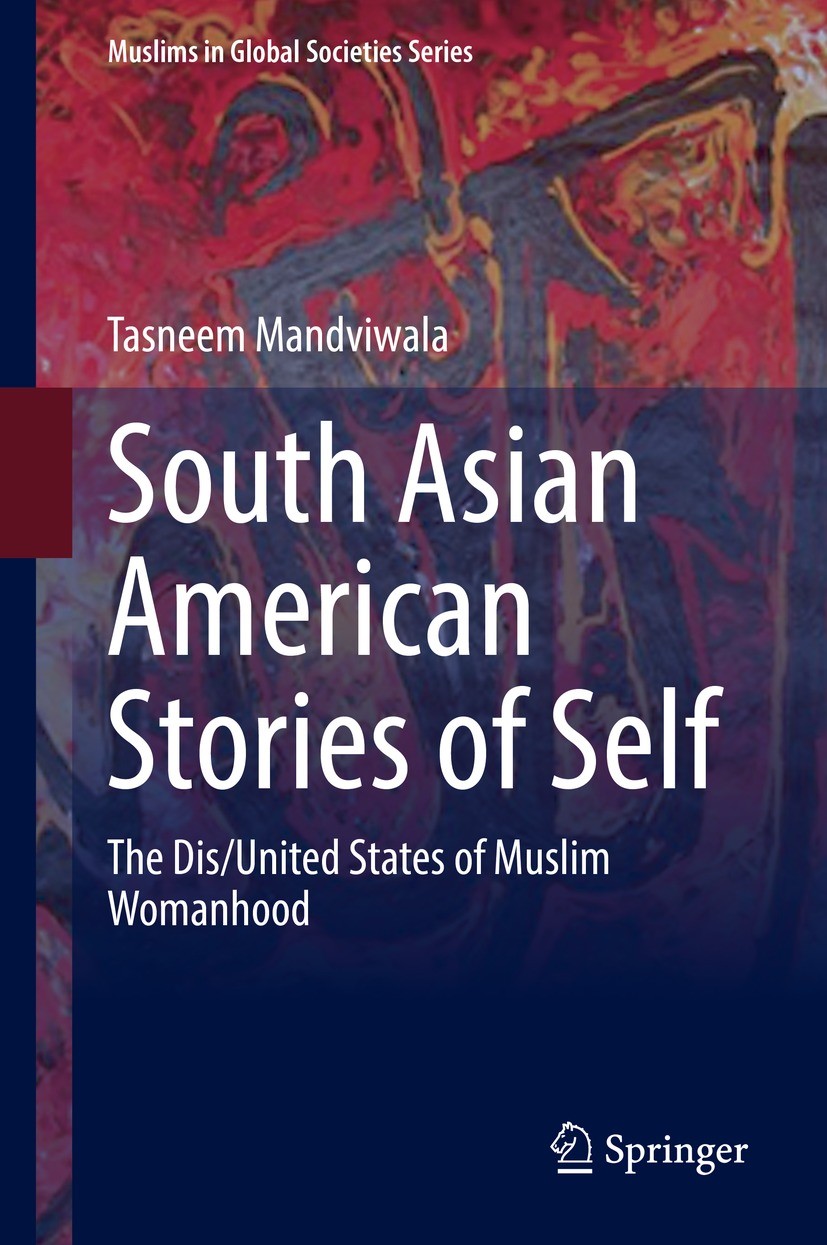
South Asian American Stories of Self [electronic resource] : The Dis/United States of Muslim Womanhood / by Tasneem Mandviwala.
Erişim Adresi
ISBN
9783031158353
Dil Kodu
İngilizce
Yer Numarası
EK/3359
Yazar
Basım Bildirimi
1st ed. 2022.
Yayın Bilgisi
Cham : Springer International Publishing : Imprint: Springer, 2022.
Fiziksel Niteleme
XIII, 184 p. 1 illus. online resource.
Dizi
Muslims in Global Societies Series, 2543-053X ; 10
İçindekiler Notu
Chapter 1. Introduction: Hello, My Name Is -- Chapter 2. The Ups, Downs, and Whatevers of Adolescence -- Chapter 3. Being while Becoming: Emerging Adulthood -- Chapter 4. Adulthood: The Final Chapter? -- Chapter 5. Looking Back to Look Forward.
Özet, vb.
This book acknowledges and discusses the now politically infamous aspects of an American Muslim woman’s life such as Islamophobia and hijab, but it more importantly examines how women actually deal with these obstacles, intentionally shifting the lens to capture a more holistic, nuanced understanding of their human experiences. This text is based on a three-year-long qualitative interdisciplinary cultural and developmental psychology and gender systems study. It uniquely organizes risks, protective factors, and coping mechanisms according to developmental life stages, from teenage to adulthood. Results show how second-generation Muslim American women’s identities develop during adolescence (11-18), emerging adulthood (19-29), and adulthood (30-39) within multiple socio-cultural contexts. Discussions regarding Muslim Americans often erroneously equate “Muslim” with “Arab” or “Middle Eastern.” By focusing on South Asian Muslim Americans, this work bluntly discusses the overlaps of South Asian culture with Islam, an important contribution to the field since the majority of immigrant Muslims in America are of South Asian descent. This study adds nuance and detail to American Muslim girls’ and women’s experiences while fighting misinformation and stereotypes. It is a significant contribution to anthropological developmental psychology and cultural psychology. The focus on a historically academically marginalized population is beneficial to students, researchers, and professionals in the field.
Konu
Religion and sociology.
Psychology and religion.
Anthropology of religion.
Islam and culture.
Sex.
Sociology of Religion.
Psychology of Religion and Spirituality.
Anthropology of Religion.
Islamic Cultural Studies.
Gender Studies.
Psychology and religion.
Anthropology of religion.
Islam and culture.
Sex.
Sociology of Religion.
Psychology of Religion and Spirituality.
Anthropology of Religion.
Islamic Cultural Studies.
Gender Studies.
Kurum Adı
Eseri Alıntıla
Referansları kullanmadan önce gözden geçirmeniz ve varsa gerekli düzeltmeleri yapmanız önerilir.
Dijital Kaynak
MARC Görünümü
LEADER 05122nam a22007095i 4500
001 840150
003 TR_AnAIT
005 20260715041336
007 cr nn 008mamaa
008 221004s2022 sz | s |||| 0|eng d
020 |a9783031158353|9978-3-031-15835-3
024 7 |a10.1007/978-3-031-15835-3|2doi
041 |aeng
049 |aTürk Dil Kurumu Kütüphanesi
050 4|aBL60
072 7|aJHB|2bicssc
072 7|aJFSR|2bicssc
072 7|aSOC039000|2bisacsh
072 7|aJHB|2thema
072 7|aJBSR|2thema
082 04|a306.6|223
090 |aEK/3359
100 1 |aMandviwala, Tasneem.|eauthor.|4aut|4http://id.loc.gov/vocabulary/relators/aut
245 10|aSouth Asian American Stories of Self|h[electronic resource] :|bThe Dis/United States of Muslim Womanhood /|cby Tasneem Mandviwala.
250 |a1st ed. 2022.
264 1|aCham :|bSpringer International Publishing :|bImprint: Springer,|c2022.
300 |aXIII, 184 p. 1 illus.|bonline resource.
336 |atext|btxt|2rdacontent
337 |acomputer|bc|2rdamedia
338 |aonline resource|bcr|2rdacarrier
341 0 |bTable of contents navigation|2onix
341 0 |bSingle logical reading order|2onix
341 0 |bShort alternative textual descriptions|2onix
341 0 |bUse of color is not sole means of conveying information|2onix
341 0 |bUse of high contrast between text and background color|2onix
341 0 |bNext / Previous structural navigation|2onix
341 0 |bAll non-decorative content supports reading without sight|2onix
347 |atext file|bPDF|2rda
490 1 |aMuslims in Global Societies Series,|x2543-053X ;|v10
505 0 |aChapter 1. Introduction: Hello, My Name Is -- Chapter 2. The Ups, Downs, and Whatevers of Adolescence -- Chapter 3. Being while Becoming: Emerging Adulthood -- Chapter 4. Adulthood: The Final Chapter? -- Chapter 5. Looking Back to Look Forward.
520 |aThis book acknowledges and discusses the now politically infamous aspects of an American Muslim woman’s life such as Islamophobia and hijab, but it more importantly examines how women actually deal with these obstacles, intentionally shifting the lens to capture a more holistic, nuanced understanding of their human experiences. This text is based on a three-year-long qualitative interdisciplinary cultural and developmental psychology and gender systems study. It uniquely organizes risks, protective factors, and coping mechanisms according to developmental life stages, from teenage to adulthood. Results show how second-generation Muslim American women’s identities develop during adolescence (11-18), emerging adulthood (19-29), and adulthood (30-39) within multiple socio-cultural contexts. Discussions regarding Muslim Americans often erroneously equate “Muslim” with “Arab” or “Middle Eastern.” By focusing on South Asian Muslim Americans, this work bluntly discusses the overlaps of South Asian culture with Islam, an important contribution to the field since the majority of immigrant Muslims in America are of South Asian descent. This study adds nuance and detail to American Muslim girls’ and women’s experiences while fighting misinformation and stereotypes. It is a significant contribution to anthropological developmental psychology and cultural psychology. The focus on a historically academically marginalized population is beneficial to students, researchers, and professionals in the field.
532 8 |aAccessibility summary: This PDF does not fully comply with PDF/UA standards, but does feature limited screen reader support, described non-text content (images, graphs), bookmarks for easy navigation and searchable, selectable text. Users of assistive technologies may experience difficulty navigating or interpreting content in this document. We recognize the importance of accessibility, and we welcome queries about accessibility for any of our products. If you have a question or an access need, please get in touch with us at accessibilitysupport@springernature.com.
532 8 |aNo reading system accessibility options actively disabled
532 8 |aPublisher contact for further accessibility information: accessibilitysupport@springernature.com
650 0|aReligion and sociology.
650 0|aPsychology and religion.
650 0|aAnthropology of religion.
650 0|aIslam and culture.
650 0|aSex.
650 14|aSociology of Religion.
650 24|aPsychology of Religion and Spirituality.
650 24|aAnthropology of Religion.
650 24|aIslamic Cultural Studies.
650 24|aGender Studies.
710 2 |aSpringerLink (Online service)
773 0 |tSpringer Nature eBook
776 08|iPrinted edition:|z9783031158346
776 08|iPrinted edition:|z9783031158360
776 08|iPrinted edition:|z9783031158377
830 0|aMuslims in Global Societies Series,|x2543-053X ;|v10
856 40|uhttps://doi.org/10.1007/978-3-031-15835-3
912 |aZDB-2-LCM
912 |aZDB-2-SXL
950 |aLiterature, Cultural and Media Studies (SpringerNature-41173)
950 |aLiterature, Cultural and Media Studies (R0) (SpringerNature-43723)
001 840150
003 TR_AnAIT
005 20260715041336
007 cr nn 008mamaa
008 221004s2022 sz | s |||| 0|eng d
020 |a9783031158353|9978-3-031-15835-3
024 7 |a10.1007/978-3-031-15835-3|2doi
041 |aeng
049 |aTürk Dil Kurumu Kütüphanesi
050 4|aBL60
072 7|aJHB|2bicssc
072 7|aJFSR|2bicssc
072 7|aSOC039000|2bisacsh
072 7|aJHB|2thema
072 7|aJBSR|2thema
082 04|a306.6|223
090 |aEK/3359
100 1 |aMandviwala, Tasneem.|eauthor.|4aut|4http://id.loc.gov/vocabulary/relators/aut
245 10|aSouth Asian American Stories of Self|h[electronic resource] :|bThe Dis/United States of Muslim Womanhood /|cby Tasneem Mandviwala.
250 |a1st ed. 2022.
264 1|aCham :|bSpringer International Publishing :|bImprint: Springer,|c2022.
300 |aXIII, 184 p. 1 illus.|bonline resource.
336 |atext|btxt|2rdacontent
337 |acomputer|bc|2rdamedia
338 |aonline resource|bcr|2rdacarrier
341 0 |bTable of contents navigation|2onix
341 0 |bSingle logical reading order|2onix
341 0 |bShort alternative textual descriptions|2onix
341 0 |bUse of color is not sole means of conveying information|2onix
341 0 |bUse of high contrast between text and background color|2onix
341 0 |bNext / Previous structural navigation|2onix
341 0 |bAll non-decorative content supports reading without sight|2onix
347 |atext file|bPDF|2rda
490 1 |aMuslims in Global Societies Series,|x2543-053X ;|v10
505 0 |aChapter 1. Introduction: Hello, My Name Is -- Chapter 2. The Ups, Downs, and Whatevers of Adolescence -- Chapter 3. Being while Becoming: Emerging Adulthood -- Chapter 4. Adulthood: The Final Chapter? -- Chapter 5. Looking Back to Look Forward.
520 |aThis book acknowledges and discusses the now politically infamous aspects of an American Muslim woman’s life such as Islamophobia and hijab, but it more importantly examines how women actually deal with these obstacles, intentionally shifting the lens to capture a more holistic, nuanced understanding of their human experiences. This text is based on a three-year-long qualitative interdisciplinary cultural and developmental psychology and gender systems study. It uniquely organizes risks, protective factors, and coping mechanisms according to developmental life stages, from teenage to adulthood. Results show how second-generation Muslim American women’s identities develop during adolescence (11-18), emerging adulthood (19-29), and adulthood (30-39) within multiple socio-cultural contexts. Discussions regarding Muslim Americans often erroneously equate “Muslim” with “Arab” or “Middle Eastern.” By focusing on South Asian Muslim Americans, this work bluntly discusses the overlaps of South Asian culture with Islam, an important contribution to the field since the majority of immigrant Muslims in America are of South Asian descent. This study adds nuance and detail to American Muslim girls’ and women’s experiences while fighting misinformation and stereotypes. It is a significant contribution to anthropological developmental psychology and cultural psychology. The focus on a historically academically marginalized population is beneficial to students, researchers, and professionals in the field.
532 8 |aAccessibility summary: This PDF does not fully comply with PDF/UA standards, but does feature limited screen reader support, described non-text content (images, graphs), bookmarks for easy navigation and searchable, selectable text. Users of assistive technologies may experience difficulty navigating or interpreting content in this document. We recognize the importance of accessibility, and we welcome queries about accessibility for any of our products. If you have a question or an access need, please get in touch with us at accessibilitysupport@springernature.com.
532 8 |aNo reading system accessibility options actively disabled
532 8 |aPublisher contact for further accessibility information: accessibilitysupport@springernature.com
650 0|aReligion and sociology.
650 0|aPsychology and religion.
650 0|aAnthropology of religion.
650 0|aIslam and culture.
650 0|aSex.
650 14|aSociology of Religion.
650 24|aPsychology of Religion and Spirituality.
650 24|aAnthropology of Religion.
650 24|aIslamic Cultural Studies.
650 24|aGender Studies.
710 2 |aSpringerLink (Online service)
773 0 |tSpringer Nature eBook
776 08|iPrinted edition:|z9783031158346
776 08|iPrinted edition:|z9783031158360
776 08|iPrinted edition:|z9783031158377
830 0|aMuslims in Global Societies Series,|x2543-053X ;|v10
856 40|uhttps://doi.org/10.1007/978-3-031-15835-3
912 |aZDB-2-LCM
912 |aZDB-2-SXL
950 |aLiterature, Cultural and Media Studies (SpringerNature-41173)
950 |aLiterature, Cultural and Media Studies (R0) (SpringerNature-43723)
Materyaller
Depodan talep edilen materyal sadece kütüphane içerisinde kullanılmaktadır.
Materyal dışarıya ödünç verilmemektedir.
Materyal dışarıya ödünç verilmemektedir.
