

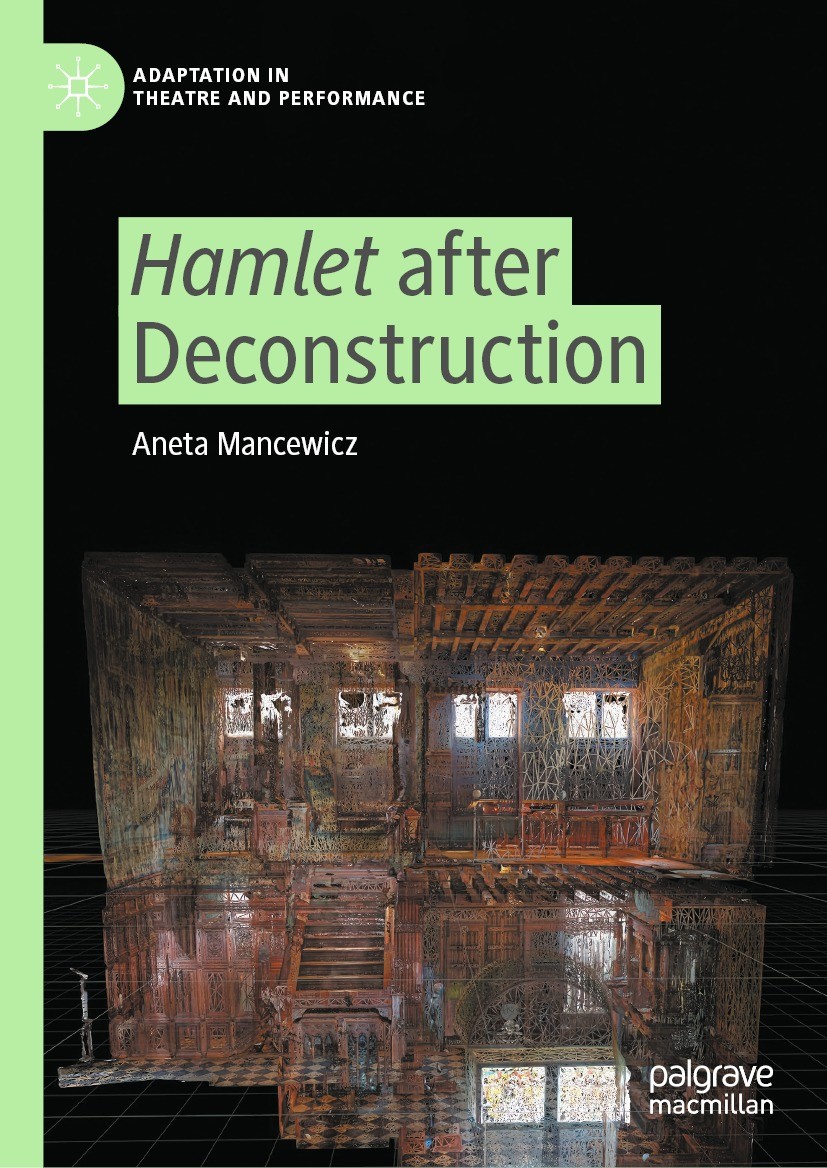
Hamlet after Deconstruction [electronic resource] / by Aneta Mancewicz.
Erişim Adresi
ISBN
9783030968069
Dil Kodu
İngilizce
Yer Numarası
EK/3392
Yazar
Basım Bildirimi
1st ed. 2022.
Yayın Bilgisi
Cham : Springer International Publishing : Imprint: Palgrave Macmillan, 2022.
Fiziksel Niteleme
XI, 237 p. 1 illus. online resource.
Dizi
Adaptation in Theatre and Performance, 2947-4051
İçindekiler Notu
Chapter 1. Introduction -- Part I. Supplements of Action -- Chapter 2. Supplement -- Chapter 3. Rosencrantz and Guildenstern are Dead, Tom Stoppard -- Chapter 4. Ophelias Zimmer, Alice Birch and Katie Mitchell -- Chapter 5. Fortinbras Gets Drunk, Janusz Głowacki -- Part II. Différance: Machines and Mixed Realities -- Chapter 6. Différance -- Chapter 7. The Hamletmachine, Heiner Müller -- Chapter 8. Hamlet’s Lunacy, CREW -- Part III. Traces of Hamlet -- Chapter 9. Trace -- Chapter 10. Kitsch Hamlet, Saverio La Ruina -- Chapter 11. Factory, Igor Bauersima -- Chapter 12. Conclusion.
Özet, vb.
Post-war European adaptations of Hamlet are defined by ambiguities and inconsistencies. Such features are at odds with the traditional model of adaptation, which focuses on expanding and explaining the source. Inspired by Derrida’s deconstruction, this book introduces a new interpretative paradigm. Central to this paradigm is the idea that an act of adaptation consists in foregrounding gaps and incoherencies in the source; it is about questioning rather than clarifying. The book explores this paradigm through seven representative European adaptations of Hamlet produced between the 1960s and the 2010s: dramatic texts, live theatre productions, and a mixed reality performance. They systematically challenge the post-Romantic idea of Hamlet as a tragedy of great passions and heroic deeds. What does this say about Hamlet’s impact on post-war theatre and culture? The deconstructive analyses offered in this book show how adaptations of Hamlet capture crucial anxieties and concerns of post-war Europe, such as political disillusionment, postmodern scepticism, and feminist resistance, revealing exciting connections between European traditions. Aneta Mancewicz is a Lecturer in Drama and Theatre at Royal Holloway, University of London, UK. Her research focuses on Shakespearean performance, digital technologies, and European theatre. She is the author of Intermedial Shakespeares on European Stages (Palgrave Macmillan, 2014) and Biedny Hamlet [Poor Hamlet] (2010). She also co-edited two collections of essays: Intermedial Performance and Politics in the Public Sphere and Local and Global Myths in Shakespearean Performance, both published by Palgrave Macmillan in 2018. As an associate dramaturg, she supported mixed reality adaptations of Shakespeare, such as CREW’s Hamlet (2017 and 2018) and Nexus Studios’ The Tempest (2020).
Konu
Theater __ History.
Theater __ Production and direction.
Theater.
European literature __ Renaissance, 1450-1600.
Theatre History.
Theatre Direction and Production.
Global and International Theatre and Performance.
Early Modern and Renaissance Literature.
Theater __ Production and direction.
Theater.
European literature __ Renaissance, 1450-1600.
Theatre History.
Theatre Direction and Production.
Global and International Theatre and Performance.
Early Modern and Renaissance Literature.
Kurum Adı
Eseri Alıntıla
Referansları kullanmadan önce gözden geçirmeniz ve varsa gerekli düzeltmeleri yapmanız önerilir.
Dijital Kaynak
MARC Görünümü
LEADER 05613nam a22006735i 4500
001 840157
003 TR_AnAIT
005 20260715041220
007 cr nn 008mamaa
008 221029s2022 sz | s |||| 0|eng d
020 |a9783030968069|9978-3-030-96806-9
024 7 |a10.1007/978-3-030-96806-9|2doi
041 |aeng
049 |aTürk Dil Kurumu Kütüphanesi
050 4|aPN2100-2193
072 7|aAN|2bicssc
072 7|aHBT|2bicssc
072 7|aPER011020|2bisacsh
072 7|aATD|2thema
072 7|aATY|2thema
082 04|a792.09|223
090 |aEK/3392
100 1 |aMancewicz, Aneta.|eauthor.|4aut|4http://id.loc.gov/vocabulary/relators/aut
245 10|aHamlet after Deconstruction|h[electronic resource] /|cby Aneta Mancewicz.
250 |a1st ed. 2022.
264 1|aCham :|bSpringer International Publishing :|bImprint: Palgrave Macmillan,|c2022.
300 |aXI, 237 p. 1 illus.|bonline resource.
336 |atext|btxt|2rdacontent
337 |acomputer|bc|2rdamedia
338 |aonline resource|bcr|2rdacarrier
341 0 |bTable of contents navigation|2onix
341 0 |bSingle logical reading order|2onix
341 0 |bUse of color is not sole means of conveying information|2onix
341 0 |bUse of high contrast between text and background color|2onix
341 0 |bNext / Previous structural navigation|2onix
341 0 |bAll non-decorative content supports reading without sight|2onix
347 |atext file|bPDF|2rda
490 1 |aAdaptation in Theatre and Performance,|x2947-4051
505 0 |aChapter 1. Introduction -- Part I. Supplements of Action -- Chapter 2. Supplement -- Chapter 3. Rosencrantz and Guildenstern are Dead, Tom Stoppard -- Chapter 4. Ophelias Zimmer, Alice Birch and Katie Mitchell -- Chapter 5. Fortinbras Gets Drunk, Janusz Głowacki -- Part II. Différance: Machines and Mixed Realities -- Chapter 6. Différance -- Chapter 7. The Hamletmachine, Heiner Müller -- Chapter 8. Hamlet’s Lunacy, CREW -- Part III. Traces of Hamlet -- Chapter 9. Trace -- Chapter 10. Kitsch Hamlet, Saverio La Ruina -- Chapter 11. Factory, Igor Bauersima -- Chapter 12. Conclusion.
520 |aPost-war European adaptations of Hamlet are defined by ambiguities and inconsistencies. Such features are at odds with the traditional model of adaptation, which focuses on expanding and explaining the source. Inspired by Derrida’s deconstruction, this book introduces a new interpretative paradigm. Central to this paradigm is the idea that an act of adaptation consists in foregrounding gaps and incoherencies in the source; it is about questioning rather than clarifying. The book explores this paradigm through seven representative European adaptations of Hamlet produced between the 1960s and the 2010s: dramatic texts, live theatre productions, and a mixed reality performance. They systematically challenge the post-Romantic idea of Hamlet as a tragedy of great passions and heroic deeds. What does this say about Hamlet’s impact on post-war theatre and culture? The deconstructive analyses offered in this book show how adaptations of Hamlet capture crucial anxieties and concerns of post-war Europe, such as political disillusionment, postmodern scepticism, and feminist resistance, revealing exciting connections between European traditions. Aneta Mancewicz is a Lecturer in Drama and Theatre at Royal Holloway, University of London, UK. Her research focuses on Shakespearean performance, digital technologies, and European theatre. She is the author of Intermedial Shakespeares on European Stages (Palgrave Macmillan, 2014) and Biedny Hamlet [Poor Hamlet] (2010). She also co-edited two collections of essays: Intermedial Performance and Politics in the Public Sphere and Local and Global Myths in Shakespearean Performance, both published by Palgrave Macmillan in 2018. As an associate dramaturg, she supported mixed reality adaptations of Shakespeare, such as CREW’s Hamlet (2017 and 2018) and Nexus Studios’ The Tempest (2020).
532 8 |aAccessibility summary: This PDF does not fully comply with PDF/UA standards, but does feature limited screen reader support, bookmarks for easy navigation and searchable, selectable text. Users of assistive technologies may experience difficulty navigating or interpreting content in this document. We recognize the importance of accessibility, and we welcome queries about accessibility for any of our products. If you have a question or an access need, please get in touch with us at accessibilitysupport@springernature.com.
532 8 |aNo reading system accessibility options actively disabled
532 8 |aPublisher contact for further accessibility information: accessibilitysupport@springernature.com
650 0|aTheater|xHistory.
650 0|aTheater|xProduction and direction.
650 0|aTheater.
650 0|aEuropean literature|xRenaissance, 1450-1600.
650 14|aTheatre History.
650 24|aTheatre Direction and Production.
650 24|aGlobal and International Theatre and Performance.
650 24|aEarly Modern and Renaissance Literature.
710 2 |aSpringerLink (Online service)
773 0 |tSpringer Nature eBook
776 08|iPrinted edition:|z9783030968052
776 08|iPrinted edition:|z9783030968076
776 08|iPrinted edition:|z9783030968083
830 0|aAdaptation in Theatre and Performance,|x2947-4051
856 40|uhttps://doi.org/10.1007/978-3-030-96806-9
912 |aZDB-2-LCM
912 |aZDB-2-SXL
950 |aLiterature, Cultural and Media Studies (SpringerNature-41173)
950 |aLiterature, Cultural and Media Studies (R0) (SpringerNature-43723)
001 840157
003 TR_AnAIT
005 20260715041220
007 cr nn 008mamaa
008 221029s2022 sz | s |||| 0|eng d
020 |a9783030968069|9978-3-030-96806-9
024 7 |a10.1007/978-3-030-96806-9|2doi
041 |aeng
049 |aTürk Dil Kurumu Kütüphanesi
050 4|aPN2100-2193
072 7|aAN|2bicssc
072 7|aHBT|2bicssc
072 7|aPER011020|2bisacsh
072 7|aATD|2thema
072 7|aATY|2thema
082 04|a792.09|223
090 |aEK/3392
100 1 |aMancewicz, Aneta.|eauthor.|4aut|4http://id.loc.gov/vocabulary/relators/aut
245 10|aHamlet after Deconstruction|h[electronic resource] /|cby Aneta Mancewicz.
250 |a1st ed. 2022.
264 1|aCham :|bSpringer International Publishing :|bImprint: Palgrave Macmillan,|c2022.
300 |aXI, 237 p. 1 illus.|bonline resource.
336 |atext|btxt|2rdacontent
337 |acomputer|bc|2rdamedia
338 |aonline resource|bcr|2rdacarrier
341 0 |bTable of contents navigation|2onix
341 0 |bSingle logical reading order|2onix
341 0 |bUse of color is not sole means of conveying information|2onix
341 0 |bUse of high contrast between text and background color|2onix
341 0 |bNext / Previous structural navigation|2onix
341 0 |bAll non-decorative content supports reading without sight|2onix
347 |atext file|bPDF|2rda
490 1 |aAdaptation in Theatre and Performance,|x2947-4051
505 0 |aChapter 1. Introduction -- Part I. Supplements of Action -- Chapter 2. Supplement -- Chapter 3. Rosencrantz and Guildenstern are Dead, Tom Stoppard -- Chapter 4. Ophelias Zimmer, Alice Birch and Katie Mitchell -- Chapter 5. Fortinbras Gets Drunk, Janusz Głowacki -- Part II. Différance: Machines and Mixed Realities -- Chapter 6. Différance -- Chapter 7. The Hamletmachine, Heiner Müller -- Chapter 8. Hamlet’s Lunacy, CREW -- Part III. Traces of Hamlet -- Chapter 9. Trace -- Chapter 10. Kitsch Hamlet, Saverio La Ruina -- Chapter 11. Factory, Igor Bauersima -- Chapter 12. Conclusion.
520 |aPost-war European adaptations of Hamlet are defined by ambiguities and inconsistencies. Such features are at odds with the traditional model of adaptation, which focuses on expanding and explaining the source. Inspired by Derrida’s deconstruction, this book introduces a new interpretative paradigm. Central to this paradigm is the idea that an act of adaptation consists in foregrounding gaps and incoherencies in the source; it is about questioning rather than clarifying. The book explores this paradigm through seven representative European adaptations of Hamlet produced between the 1960s and the 2010s: dramatic texts, live theatre productions, and a mixed reality performance. They systematically challenge the post-Romantic idea of Hamlet as a tragedy of great passions and heroic deeds. What does this say about Hamlet’s impact on post-war theatre and culture? The deconstructive analyses offered in this book show how adaptations of Hamlet capture crucial anxieties and concerns of post-war Europe, such as political disillusionment, postmodern scepticism, and feminist resistance, revealing exciting connections between European traditions. Aneta Mancewicz is a Lecturer in Drama and Theatre at Royal Holloway, University of London, UK. Her research focuses on Shakespearean performance, digital technologies, and European theatre. She is the author of Intermedial Shakespeares on European Stages (Palgrave Macmillan, 2014) and Biedny Hamlet [Poor Hamlet] (2010). She also co-edited two collections of essays: Intermedial Performance and Politics in the Public Sphere and Local and Global Myths in Shakespearean Performance, both published by Palgrave Macmillan in 2018. As an associate dramaturg, she supported mixed reality adaptations of Shakespeare, such as CREW’s Hamlet (2017 and 2018) and Nexus Studios’ The Tempest (2020).
532 8 |aAccessibility summary: This PDF does not fully comply with PDF/UA standards, but does feature limited screen reader support, bookmarks for easy navigation and searchable, selectable text. Users of assistive technologies may experience difficulty navigating or interpreting content in this document. We recognize the importance of accessibility, and we welcome queries about accessibility for any of our products. If you have a question or an access need, please get in touch with us at accessibilitysupport@springernature.com.
532 8 |aNo reading system accessibility options actively disabled
532 8 |aPublisher contact for further accessibility information: accessibilitysupport@springernature.com
650 0|aTheater|xHistory.
650 0|aTheater|xProduction and direction.
650 0|aTheater.
650 0|aEuropean literature|xRenaissance, 1450-1600.
650 14|aTheatre History.
650 24|aTheatre Direction and Production.
650 24|aGlobal and International Theatre and Performance.
650 24|aEarly Modern and Renaissance Literature.
710 2 |aSpringerLink (Online service)
773 0 |tSpringer Nature eBook
776 08|iPrinted edition:|z9783030968052
776 08|iPrinted edition:|z9783030968076
776 08|iPrinted edition:|z9783030968083
830 0|aAdaptation in Theatre and Performance,|x2947-4051
856 40|uhttps://doi.org/10.1007/978-3-030-96806-9
912 |aZDB-2-LCM
912 |aZDB-2-SXL
950 |aLiterature, Cultural and Media Studies (SpringerNature-41173)
950 |aLiterature, Cultural and Media Studies (R0) (SpringerNature-43723)
Materyaller
Depodan talep edilen materyal sadece kütüphane içerisinde kullanılmaktadır.
Materyal dışarıya ödünç verilmemektedir.
Materyal dışarıya ödünç verilmemektedir.
