LEADER 03054nam a22005055i 4500
001 840194
003 TR_AnAIT
005 20260715041144
007 cr nn 008mamaa
008 190121s2019 sz | s |||| 0|eng d
020 |a9783030052010|9978-3-030-05201-0
024 7 |a10.1007/978-3-030-05201-0|2doi
041 |aeng
049 |aTürk Dil Kurumu Kütüphanesi
050 4|aPN715-749
072 7|aDSB|2bicssc
072 7|aLIT024000|2bisacsh
072 7|aDSB|2thema
082 04|a809.03|223
090 |aEK/3433
100 1 |aKenny, Amy.|eauthor.|4aut|4http://id.loc.gov/vocabulary/relators/aut
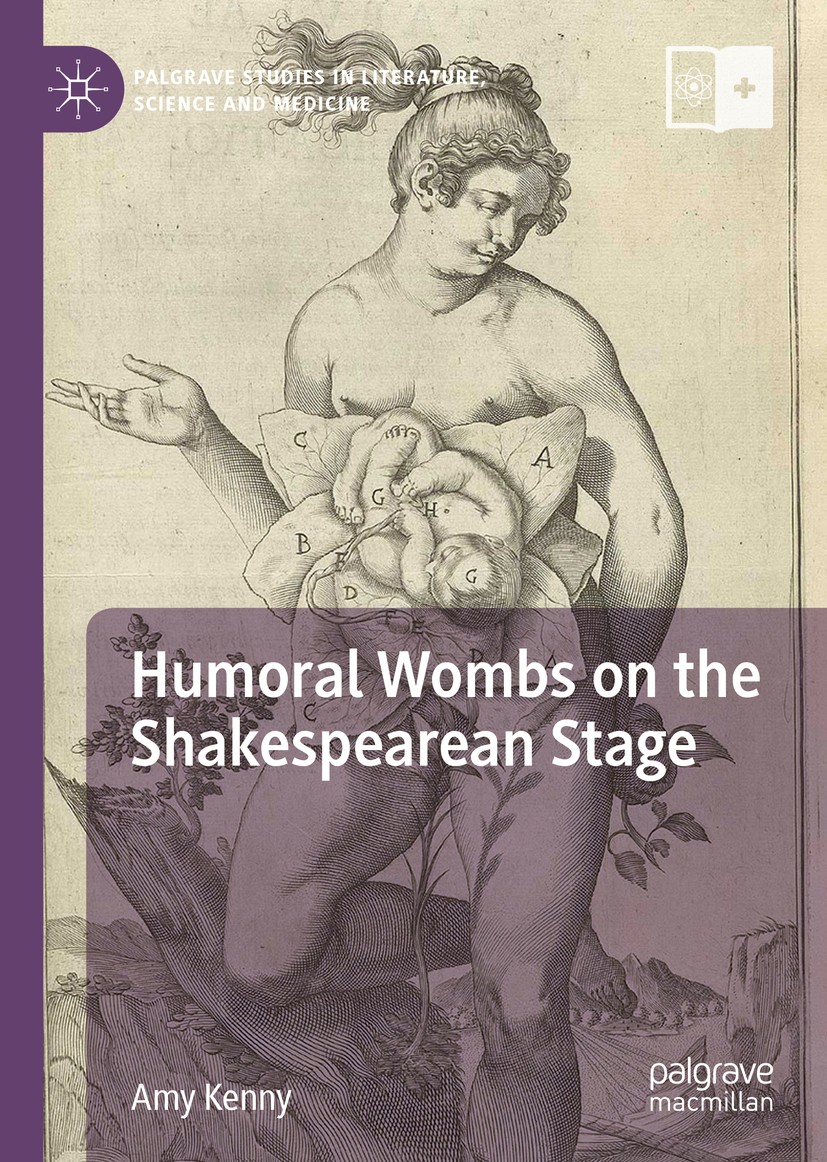
245 10|aHumoral Wombs on the Shakespearean Stage|h[electronic resource] /|cby Amy Kenny.
250 |a1st ed. 2019.
264 1|aCham :|bSpringer International Publishing :|bImprint: Palgrave Macmillan,|c2019.
300 |aXI, 202 p. 5 illus.|bonline resource.
336 |atext|btxt|2rdacontent
337 |acomputer|bc|2rdamedia
338 |aonline resource|bcr|2rdacarrier
347 |atext file|bPDF|2rda
490 1 |aPalgrave Studies in Literature, Science and Medicine,|x2634-6443
505 0 |a1. Introduction: the early modern womb -- 2. The green womb -- 3. The thick womb -- 4. The fertile womb -- 5. The monstrous womb -- 6. The tomb womb -- 7. The male womb -- 8. Coda: The exonerated womb. .
520 |aThis book explores how the humoral womb was evoked, enacted, and embodied on the Shakespearean stage by considering the intersection of performance studies and humoral theory. Galenic naturalism applied the four humors—yellow bile, black bile, phlegm, and blood—to delineate women as porous, polluting, and susceptible to their environment. This book draws on early modern medical texts to provocatively demonstrate how Shakespeare’s canon offers a unique agency to female characters via humoral discourse of the womb. Chapters discuss early modern medicine’s attempt to theorize and interpret the womb, specifically its role in disease, excretion, and conception, alongside passages of Shakespeare’s plays to offer a fresh reading of (geo)humoral subjectivity. The book shows how Shakespeare subversively challenges contemporary notions of female fluidity by accentuating the significance of the womb as a source of self-defiance and autonomy for female characters acrosshis canon. .
650 0|aEuropean literature|xRenaissance, 1450-1600.
650 0|aEuropean literature.
650 0|aScience|xHistory.
650 14|aEarly Modern and Renaissance Literature.
650 24|aEuropean Literature.
650 24|aHistory of Science.
710 2 |aSpringerLink (Online service)
773 0 |tSpringer Nature eBook
776 08|iPrinted edition:|z9783030052003
776 08|iPrinted edition:|z9783030052027
830 0|aPalgrave Studies in Literature, Science and Medicine,|x2634-6443
856 40|uhttps://doi.org/10.1007/978-3-030-05201-0
912 |aZDB-2-LCM
912 |aZDB-2-SXL
950 |aLiterature, Cultural and Media Studies (SpringerNature-41173)
950 |aLiterature, Cultural and Media Studies (R0) (SpringerNature-43723)