

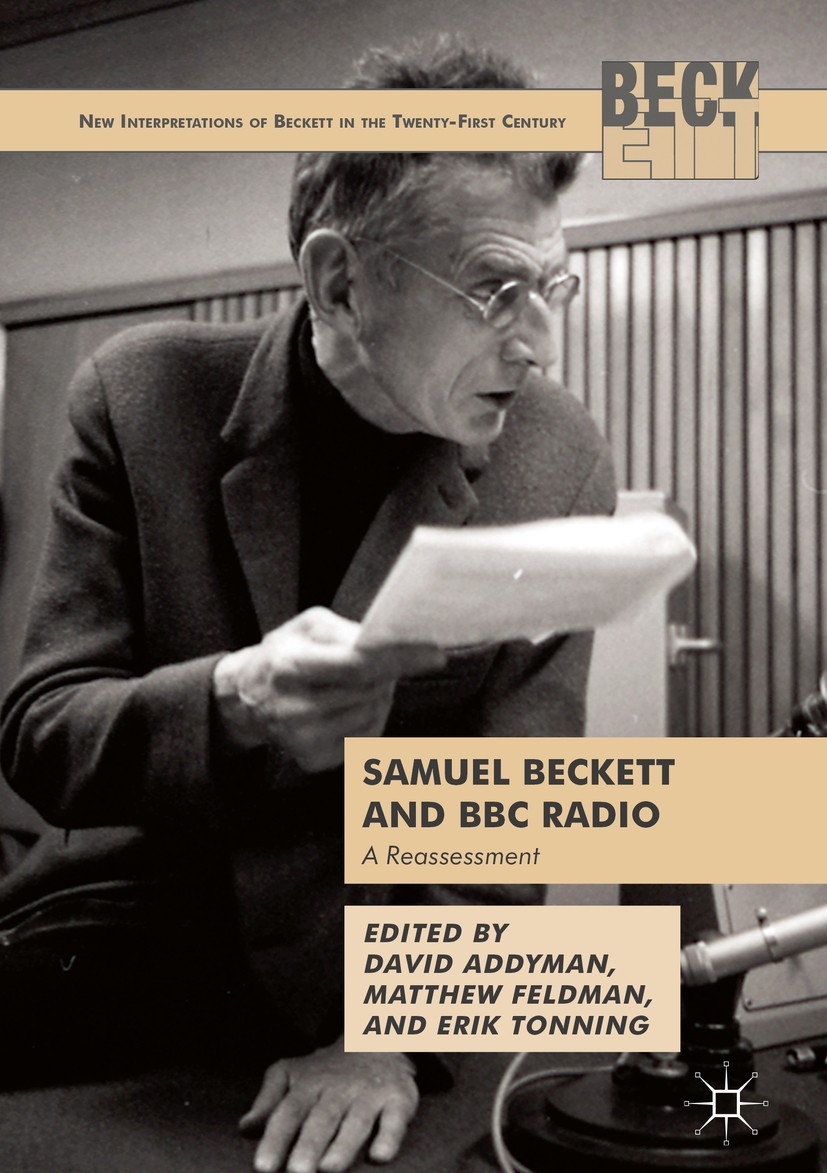
Samuel Beckett and BBC Radio [electronic resource] : A Reassessment / edited by David Addyman, Matthew Feldman, Erik Tonning.
Erişim Adresi
ISBN
9781137542656
Dil Kodu
İngilizce
Yer Numarası
EK/3330
Basım Bildirimi
1st ed. 2017.
Yayın Bilgisi
New York : Palgrave Macmillan US : Imprint: Palgrave Macmillan, 2017.
Fiziksel Niteleme
XV, 308 p. online resource.
Dizi
New Interpretations of Beckett in the Twenty-First Century, 2945-6800
İçindekiler Notu
1. Introduction: David Addyman, Matthew Feldman and Erik Tonning -- 2. Matthew Feldman, "Beckett’s ‘non-canonical’ radio productions, 1957-1989" -- 3. Erik Tonning, “Mediating Modernism: The Third Programme, Samuel Beckett, and Mass Communication" -- 4. Dirk van Hulle, “The BBC and Beckett’s Non-Radiogenic Plays in the 1950s" -- 5. Pim Verhulst, “The BBC as ‘Commissioner’ of Beckett’s Radio Plays" -- 6. Catherine Laws, "Imagining Radio Sound: Interference and Collaboration in the BBC Radio Production of Beckett’s All That Fall" -- 7. Stefano Rosignoli, “Author, Work and Trade: The Sociology of Samuel Beckett’s Texts in the Years of the Broadcasts for BBC Radio (1957-89). Copyright and Moral Rights" -- 8. John Pilling, “Changing My Tune: Beckett and the BBC Third Programme (1957-1960)" -- 9. Elsa Baroghel, “‘my God to have to murmur that’: Comment C’est/How It Is and the issue of performance" -- 10. Paul Stewart, “Fitting the Prose to Radio: The Case of ‘Lessness’" -- 11. Melissa Chia, “‘My comforts! Be friends!’: Words, Music and Beckett’s Poetry on the Third" -- 12. Steven Matthews, “Meditations and Monologues: Beckett’s mid-late prose on the radio" -- 13. Natalie Leeder, “‘None but the simplest words’: Beckett’s listeners”.
Özet, vb.
This book is the first sustained examination of Samuel Beckett’s pivotal engagements with post-war BBC radio. The BBC acted as a key interpreter and promoter of Beckett’s work during this crucial period of his "getting known" in the Anglophone world in the 1950s and 1960s, especially through the culturally ambitious Third Programme, but also by the intermediary of the house magazine, The Listener. The BBC ensured a sizeable but also informed reception for Beckett’s radio plays and various “adaptations” (including his stage plays, prose, and even poetry); the audience that Beckett's works reached by radio almost certainly exceeded in size his readership or theatre audiences at the time. In rethinking several key aspects of his relationship with the BBC, a mix of new and familiar Beckett critics take as their starting point the previously neglected BBC radio archives held at the Written Archive Centre in Caversham, Berkshire. The results of this extended reassessment are timely and, in many cases, quite surprising for readers of Beckett and for scholars of radio, “late modernism,” and post-war British culture more broadly.
Konu
Literature, Modern __ 20th century.
European literature.
Literature __ History and criticism.
Twentieth-Century Literature.
European Literature.
Literary History.
European literature.
Literature __ History and criticism.
Twentieth-Century Literature.
European Literature.
Literary History.
Diğer Yazarlar
Kurum Adı
Eseri Alıntıla
Referansları kullanmadan önce gözden geçirmeniz ve varsa gerekli düzeltmeleri yapmanız önerilir.
Dijital Kaynak
MARC Görünümü
LEADER 05260nam a22005775i 4500
001 840276
003 TR_AnAIT
005 20260715041042
007 cr nn 008mamaa
008 170331s2017 xxu| s |||| 0|eng d
020 |a9781137542656|9978-1-137-54265-6
024 7 |a10.1057/978-1-137-54265-6|2doi
041 |aeng
049 |aTürk Dil Kurumu Kütüphanesi
050 4|aPN770-779
072 7|aDSBH|2bicssc
072 7|aLIT024050|2bisacsh
072 7|aDSBH|2thema
082 04|a809.04|223
090 |aEK/3330
245 10|aSamuel Beckett and BBC Radio|h[electronic resource] :|bA Reassessment /|cedited by David Addyman, Matthew Feldman, Erik Tonning.
250 |a1st ed. 2017.
264 1|aNew York :|bPalgrave Macmillan US :|bImprint: Palgrave Macmillan,|c2017.
300 |aXV, 308 p.|bonline resource.
336 |atext|btxt|2rdacontent
337 |acomputer|bc|2rdamedia
338 |aonline resource|bcr|2rdacarrier
347 |atext file|bPDF|2rda
490 1 |aNew Interpretations of Beckett in the Twenty-First Century,|x2945-6800
505 0 |a1. Introduction: David Addyman, Matthew Feldman and Erik Tonning -- 2. Matthew Feldman, "Beckett’s ‘non-canonical’ radio productions, 1957-1989" -- 3. Erik Tonning, “Mediating Modernism: The Third Programme, Samuel Beckett, and Mass Communication" -- 4. Dirk van Hulle, “The BBC and Beckett’s Non-Radiogenic Plays in the 1950s" -- 5. Pim Verhulst, “The BBC as ‘Commissioner’ of Beckett’s Radio Plays" -- 6. Catherine Laws, "Imagining Radio Sound: Interference and Collaboration in the BBC Radio Production of Beckett’s All That Fall" -- 7. Stefano Rosignoli, “Author, Work and Trade: The Sociology of Samuel Beckett’s Texts in the Years of the Broadcasts for BBC Radio (1957-89). Copyright and Moral Rights" -- 8. John Pilling, “Changing My Tune: Beckett and the BBC Third Programme (1957-1960)" -- 9. Elsa Baroghel, “‘my God to have to murmur that’: Comment C’est/How It Is and the issue of performance" -- 10. Paul Stewart, “Fitting the Prose to Radio: The Case of ‘Lessness’" -- 11. Melissa Chia, “‘My comforts! Be friends!’: Words, Music and Beckett’s Poetry on the Third" -- 12. Steven Matthews, “Meditations and Monologues: Beckett’s mid-late prose on the radio" -- 13. Natalie Leeder, “‘None but the simplest words’: Beckett’s listeners”.
520 |aThis book is the first sustained examination of Samuel Beckett’s pivotal engagements with post-war BBC radio. The BBC acted as a key interpreter and promoter of Beckett’s work during this crucial period of his "getting known" in the Anglophone world in the 1950s and 1960s, especially through the culturally ambitious Third Programme, but also by the intermediary of the house magazine, The Listener. The BBC ensured a sizeable but also informed reception for Beckett’s radio plays and various “adaptations” (including his stage plays, prose, and even poetry); the audience that Beckett's works reached by radio almost certainly exceeded in size his readership or theatre audiences at the time. In rethinking several key aspects of his relationship with the BBC, a mix of new and familiar Beckett critics take as their starting point the previously neglected BBC radio archives held at the Written Archive Centre in Caversham, Berkshire. The results of this extended reassessment are timely and, in many cases, quite surprising for readers of Beckett and for scholars of radio, “late modernism,” and post-war British culture more broadly.
532 8 |aAccessibility summary: This PDF was produced prior to the implementation of current accessibility best practices. It supports searchable and selectable text. It may or may not include elements such as described non-text content (images, graphs etc), reflowable text or screen reader compatibility. Users with accessibility needs may experience limitations. Please contact us at accessibilitysupport@springernature.com if you require assistance or an alternative format.
532 8 |aNo reading system accessibility options actively disabled
532 8 |aPublisher contact for further accessibility information: accessibilitysupport@springernature.com
650 0|aLiterature, Modern|x20th century.
650 0|aEuropean literature.
650 0|aLiterature|xHistory and criticism.
650 14|aTwentieth-Century Literature.
650 24|aEuropean Literature.
650 24|aLiterary History.
700 1 |aAddyman, David.|eeditor.|4edt|4http://id.loc.gov/vocabulary/relators/edt
700 1 |aFeldman, Matthew.|eeditor.|4edt|4http://id.loc.gov/vocabulary/relators/edt
700 1 |aTonning, Erik.|eeditor.|4edt|4http://id.loc.gov/vocabulary/relators/edt
710 2 |aSpringerLink (Online service)
773 0 |tSpringer Nature eBook
776 08|iPrinted edition:|z9781349571925
776 08|iPrinted edition:|z9781349951307
776 08|iPrinted edition:|z9781349957361
830 0|aNew Interpretations of Beckett in the Twenty-First Century,|x2945-6800
856 40|uhttps://doi.org/10.1057/978-1-137-54265-6
912 |aZDB-2-LCM
912 |aZDB-2-SXL
950 |aLiterature, Cultural and Media Studies (SpringerNature-41173)
950 |aLiterature, Cultural and Media Studies (R0) (SpringerNature-43723)
001 840276
003 TR_AnAIT
005 20260715041042
007 cr nn 008mamaa
008 170331s2017 xxu| s |||| 0|eng d
020 |a9781137542656|9978-1-137-54265-6
024 7 |a10.1057/978-1-137-54265-6|2doi
041 |aeng
049 |aTürk Dil Kurumu Kütüphanesi
050 4|aPN770-779
072 7|aDSBH|2bicssc
072 7|aLIT024050|2bisacsh
072 7|aDSBH|2thema
082 04|a809.04|223
090 |aEK/3330
245 10|aSamuel Beckett and BBC Radio|h[electronic resource] :|bA Reassessment /|cedited by David Addyman, Matthew Feldman, Erik Tonning.
250 |a1st ed. 2017.
264 1|aNew York :|bPalgrave Macmillan US :|bImprint: Palgrave Macmillan,|c2017.
300 |aXV, 308 p.|bonline resource.
336 |atext|btxt|2rdacontent
337 |acomputer|bc|2rdamedia
338 |aonline resource|bcr|2rdacarrier
347 |atext file|bPDF|2rda
490 1 |aNew Interpretations of Beckett in the Twenty-First Century,|x2945-6800
505 0 |a1. Introduction: David Addyman, Matthew Feldman and Erik Tonning -- 2. Matthew Feldman, "Beckett’s ‘non-canonical’ radio productions, 1957-1989" -- 3. Erik Tonning, “Mediating Modernism: The Third Programme, Samuel Beckett, and Mass Communication" -- 4. Dirk van Hulle, “The BBC and Beckett’s Non-Radiogenic Plays in the 1950s" -- 5. Pim Verhulst, “The BBC as ‘Commissioner’ of Beckett’s Radio Plays" -- 6. Catherine Laws, "Imagining Radio Sound: Interference and Collaboration in the BBC Radio Production of Beckett’s All That Fall" -- 7. Stefano Rosignoli, “Author, Work and Trade: The Sociology of Samuel Beckett’s Texts in the Years of the Broadcasts for BBC Radio (1957-89). Copyright and Moral Rights" -- 8. John Pilling, “Changing My Tune: Beckett and the BBC Third Programme (1957-1960)" -- 9. Elsa Baroghel, “‘my God to have to murmur that’: Comment C’est/How It Is and the issue of performance" -- 10. Paul Stewart, “Fitting the Prose to Radio: The Case of ‘Lessness’" -- 11. Melissa Chia, “‘My comforts! Be friends!’: Words, Music and Beckett’s Poetry on the Third" -- 12. Steven Matthews, “Meditations and Monologues: Beckett’s mid-late prose on the radio" -- 13. Natalie Leeder, “‘None but the simplest words’: Beckett’s listeners”.
520 |aThis book is the first sustained examination of Samuel Beckett’s pivotal engagements with post-war BBC radio. The BBC acted as a key interpreter and promoter of Beckett’s work during this crucial period of his "getting known" in the Anglophone world in the 1950s and 1960s, especially through the culturally ambitious Third Programme, but also by the intermediary of the house magazine, The Listener. The BBC ensured a sizeable but also informed reception for Beckett’s radio plays and various “adaptations” (including his stage plays, prose, and even poetry); the audience that Beckett's works reached by radio almost certainly exceeded in size his readership or theatre audiences at the time. In rethinking several key aspects of his relationship with the BBC, a mix of new and familiar Beckett critics take as their starting point the previously neglected BBC radio archives held at the Written Archive Centre in Caversham, Berkshire. The results of this extended reassessment are timely and, in many cases, quite surprising for readers of Beckett and for scholars of radio, “late modernism,” and post-war British culture more broadly.
532 8 |aAccessibility summary: This PDF was produced prior to the implementation of current accessibility best practices. It supports searchable and selectable text. It may or may not include elements such as described non-text content (images, graphs etc), reflowable text or screen reader compatibility. Users with accessibility needs may experience limitations. Please contact us at accessibilitysupport@springernature.com if you require assistance or an alternative format.
532 8 |aNo reading system accessibility options actively disabled
532 8 |aPublisher contact for further accessibility information: accessibilitysupport@springernature.com
650 0|aLiterature, Modern|x20th century.
650 0|aEuropean literature.
650 0|aLiterature|xHistory and criticism.
650 14|aTwentieth-Century Literature.
650 24|aEuropean Literature.
650 24|aLiterary History.
700 1 |aAddyman, David.|eeditor.|4edt|4http://id.loc.gov/vocabulary/relators/edt
700 1 |aFeldman, Matthew.|eeditor.|4edt|4http://id.loc.gov/vocabulary/relators/edt
700 1 |aTonning, Erik.|eeditor.|4edt|4http://id.loc.gov/vocabulary/relators/edt
710 2 |aSpringerLink (Online service)
773 0 |tSpringer Nature eBook
776 08|iPrinted edition:|z9781349571925
776 08|iPrinted edition:|z9781349951307
776 08|iPrinted edition:|z9781349957361
830 0|aNew Interpretations of Beckett in the Twenty-First Century,|x2945-6800
856 40|uhttps://doi.org/10.1057/978-1-137-54265-6
912 |aZDB-2-LCM
912 |aZDB-2-SXL
950 |aLiterature, Cultural and Media Studies (SpringerNature-41173)
950 |aLiterature, Cultural and Media Studies (R0) (SpringerNature-43723)
Materyaller
Depodan talep edilen materyal sadece kütüphane içerisinde kullanılmaktadır.
Materyal dışarıya ödünç verilmemektedir.
Materyal dışarıya ödünç verilmemektedir.
