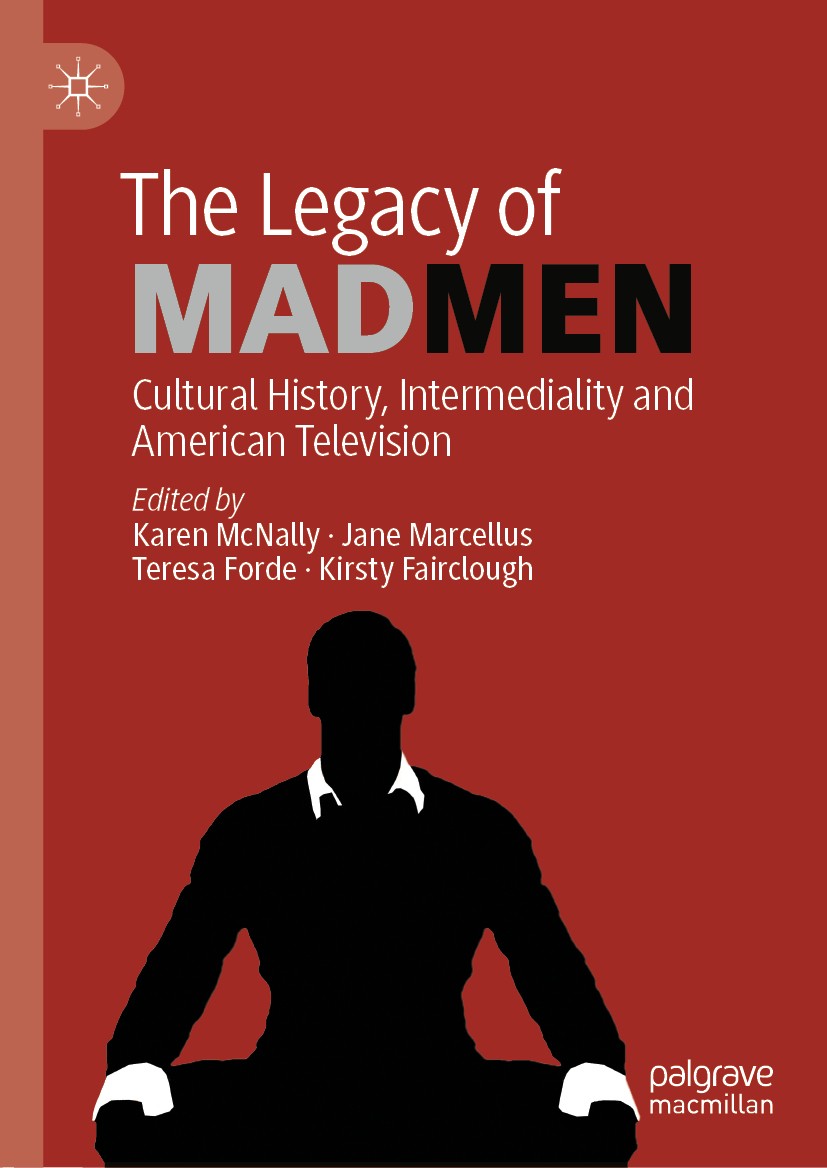
The Legacy of Mad Men [electronic resource] : Cultural History, Intermediality and American Television / edited by Karen McNally, Jane Marcellus, Teresa Forde, Kirsty Fairclough.
Erişim Adresi
ISBN
9783030310912
Dil Kodu
İngilizce
Yer Numarası
EK/3705
Basım Bildirimi
1st ed. 2019.
Yayın Bilgisi
Cham : Springer International Publishing : Imprint: Palgrave Macmillan, 2019.
Fiziksel Niteleme
XVII, 280 p. 1 illus. online resource.
İçindekiler Notu
Chapter 1 Jane Marcellus, Introduction: Where the Truth Still Lies.-Mad Men’s Status: Television, Reputation, Fandom -- Chapter 2 Gary R. Edgerton, Mad Men’s Legacy in the Quality Television Tradition -- Chapter 3 Andrée E. C. Betancourt, Mad Men, Maddicts, and Recapturing the Carousel: From Kodak Moments to Selfies -- Chapter 4 Trisha Dunleavy, Mad Men and Complex Seriality -- Gender and Race: The Complex Management of Power -- Chapter 5 Rod Carveth, The Depiction of the Civil Rights Movement on Mad Men -- Chapter 6 Mimi White, Mad Men, Women, and the Lure of Feminism -- Chapter 7 Maryn C. Wilkinson, The Performativity of Labour and Femininity on Mad Men -- Chapter 8 Tracy Lucht and Jane Marcellus, Mad Men, Corporate Culture, and Violence Against Women -- Mad Men’s Intermediality: Film, Music, Poetics -- Chapter 9 Emily Hoffman, Don Draper and the Enduring Appeal of Antonioni’s La Notte -- Chapter 10 Zak Roman, Mad Men’s Midcentury Modern Times -- Chapter 11 Rachel Donegan, Delicious Ambiguities: Mad Men’s Use of The Beatles, Nancy Sinatra, and Judy Collins in Seasons Five and Six -- Chapter 12 Honora Kenney, Using Bakhtin’s ‘Third Ear’ to Hear Mad Men’s Adspeak in the Everyday -- Chapter 13 Aaron Herschel Shapiro, Mad Men and the Staging of Literature: Ken Cosgrove and His Problems -- Endings and Legacies: The Final Season -- Chapter 14 Marjolaine Boutet, Mad Men’s Finale and the Making of History -- Chapter 15 Kristina Graour, The Dismantling of Narrative ‘Machinery’ in Mad Men’s Finale: Ending an Era -- Chapter 16 Marisa Carroll, What Jungian Psychology Can Tell Us About Don Draper’s Unexpected Embrace of Leonard in Mad Men’s Finale -- Chapter 17 Karen McNally and Teresa Forde, Afterword: Reading Mad Men in the Era of Trump .
Özet, vb.
“The Legacy of Mad Men adds significant new perspectives to the legacy of Mad Men scholarship. The authors apply theoretical perspectives that have been understudied in previous Mad Men work, chart new connections with previous media, and examine overlooked aspects of Men Men’s sound design. A concluding chapter insightfully considers how the election of Donald Trump has signaled a resurgence in the sexism, antisemitism, and racism critiqued in Mad Men.” - - Dr Jeremy Butler, Professor of Communication and Culture, University of Alabama For seven seasons, viewers worldwide watched as ad man Don Draper moved from adultery to self-discovery, secretary Peggy Olson became a take-no-prisoners businesswoman, object-of-the-gaze Joan Holloway developed a feminist consciousness, executive Roger Sterling tripped on LSD, and smarmy Pete Campbell became a surprisingly nice guy. Mad Men defined a pivotal moment for television, earning an enduring place in the medium’s history. This edited collection examines the enduringly popular television series as Mad Men still captivates audiences and scholars in its nuanced depiction of a complex decade. This is the first book to offer an analysis of Mad Men in its entirety, exploring the cyclical and episodic structure of the long form series and investigating issues of representation, power and social change. The collection establishes the show’s legacy in televisual terms, and brings it up to date through an examination of its cultural importance in the Trump era. Aimed at scholars and interested general readers, the book illustrates the ways in which Mad Men has become a cultural marker for reflecting upon contemporary television and politics. .
Konu
Motion pictures.
Television broadcasting.
Popular Culture.
Film and Television Studies.
Popular Culture.
Television broadcasting.
Popular Culture.
Film and Television Studies.
Popular Culture.
Kurum Adı

Eseri Alıntıla
Referansları kullanmadan önce gözden geçirmeniz ve varsa gerekli düzeltmeleri yapmanız önerilir.
Dijital Kaynak
MARC Görünümü
LEADER 05551nam a22005175i 4500
001 840324
003 TR_AnAIT
005 20260715040923
007 cr nn 008mamaa
008 191130s2019 sz | s |||| 0|eng d
020 |a9783030310912|9978-3-030-31091-2
024 7 |a10.1007/978-3-030-31091-2|2doi
041 |aeng
049 |aTürk Dil Kurumu Kütüphanesi
050 4|aPN1600-3307.2
072 7|aAP|2bicssc
072 7|aPER004000|2bisacsh
072 7|aAT|2thema
082 04|a791.4|223
090 |aEK/3705
245 14|aThe Legacy of Mad Men|h[electronic resource] :|bCultural History, Intermediality and American Television /|cedited by Karen McNally, Jane Marcellus, Teresa Forde, Kirsty Fairclough.
250 |a1st ed. 2019.
264 1|aCham :|bSpringer International Publishing :|bImprint: Palgrave Macmillan,|c2019.
300 |aXVII, 280 p. 1 illus.|bonline resource.
336 |atext|btxt|2rdacontent
337 |acomputer|bc|2rdamedia
338 |aonline resource|bcr|2rdacarrier
347 |atext file|bPDF|2rda
505 0 |aChapter 1 Jane Marcellus, Introduction: Where the Truth Still Lies.-Mad Men’s Status: Television, Reputation, Fandom -- Chapter 2 Gary R. Edgerton, Mad Men’s Legacy in the Quality Television Tradition -- Chapter 3 Andrée E. C. Betancourt, Mad Men, Maddicts, and Recapturing the Carousel: From Kodak Moments to Selfies -- Chapter 4 Trisha Dunleavy, Mad Men and Complex Seriality -- Gender and Race: The Complex Management of Power -- Chapter 5 Rod Carveth, The Depiction of the Civil Rights Movement on Mad Men -- Chapter 6 Mimi White, Mad Men, Women, and the Lure of Feminism -- Chapter 7 Maryn C. Wilkinson, The Performativity of Labour and Femininity on Mad Men -- Chapter 8 Tracy Lucht and Jane Marcellus, Mad Men, Corporate Culture, and Violence Against Women -- Mad Men’s Intermediality: Film, Music, Poetics -- Chapter 9 Emily Hoffman, Don Draper and the Enduring Appeal of Antonioni’s La Notte -- Chapter 10 Zak Roman, Mad Men’s Midcentury Modern Times -- Chapter 11 Rachel Donegan, Delicious Ambiguities: Mad Men’s Use of The Beatles, Nancy Sinatra, and Judy Collins in Seasons Five and Six -- Chapter 12 Honora Kenney, Using Bakhtin’s ‘Third Ear’ to Hear Mad Men’s Adspeak in the Everyday -- Chapter 13 Aaron Herschel Shapiro, Mad Men and the Staging of Literature: Ken Cosgrove and His Problems -- Endings and Legacies: The Final Season -- Chapter 14 Marjolaine Boutet, Mad Men’s Finale and the Making of History -- Chapter 15 Kristina Graour, The Dismantling of Narrative ‘Machinery’ in Mad Men’s Finale: Ending an Era -- Chapter 16 Marisa Carroll, What Jungian Psychology Can Tell Us About Don Draper’s Unexpected Embrace of Leonard in Mad Men’s Finale -- Chapter 17 Karen McNally and Teresa Forde, Afterword: Reading Mad Men in the Era of Trump .
520 |a“The Legacy of Mad Men adds significant new perspectives to the legacy of Mad Men scholarship. The authors apply theoretical perspectives that have been understudied in previous Mad Men work, chart new connections with previous media, and examine overlooked aspects of Men Men’s sound design. A concluding chapter insightfully considers how the election of Donald Trump has signaled a resurgence in the sexism, antisemitism, and racism critiqued in Mad Men.” - - Dr Jeremy Butler, Professor of Communication and Culture, University of Alabama For seven seasons, viewers worldwide watched as ad man Don Draper moved from adultery to self-discovery, secretary Peggy Olson became a take-no-prisoners businesswoman, object-of-the-gaze Joan Holloway developed a feminist consciousness, executive Roger Sterling tripped on LSD, and smarmy Pete Campbell became a surprisingly nice guy. Mad Men defined a pivotal moment for television, earning an enduring place in the medium’s history. This edited collection examines the enduringly popular television series as Mad Men still captivates audiences and scholars in its nuanced depiction of a complex decade. This is the first book to offer an analysis of Mad Men in its entirety, exploring the cyclical and episodic structure of the long form series and investigating issues of representation, power and social change. The collection establishes the show’s legacy in televisual terms, and brings it up to date through an examination of its cultural importance in the Trump era. Aimed at scholars and interested general readers, the book illustrates the ways in which Mad Men has become a cultural marker for reflecting upon contemporary television and politics. .
650 0|aMotion pictures.
650 0|aTelevision broadcasting.
650 0|aPopular Culture.
650 14|aFilm and Television Studies.
650 24|aPopular Culture.
700 1 |aMcNally, Karen.|eeditor.|4edt|4http://id.loc.gov/vocabulary/relators/edt
700 1 |aMarcellus, Jane.|eeditor.|4edt|4http://id.loc.gov/vocabulary/relators/edt
700 1 |aForde, Teresa.|eeditor.|4edt|4http://id.loc.gov/vocabulary/relators/edt
700 1 |aFairclough, Kirsty.|eeditor.|4edt|4http://id.loc.gov/vocabulary/relators/edt
710 2 |aSpringerLink (Online service)
773 0 |tSpringer Nature eBook
776 08|iPrinted edition:|z9783030310905
776 08|iPrinted edition:|z9783030310929
776 08|iPrinted edition:|z9783030310936
856 40|uhttps://doi.org/10.1007/978-3-030-31091-2
912 |aZDB-2-LCM
912 |aZDB-2-SXL
950 |aLiterature, Cultural and Media Studies (SpringerNature-41173)
950 |aLiterature, Cultural and Media Studies (R0) (SpringerNature-43723)
001 840324
003 TR_AnAIT
005 20260715040923
007 cr nn 008mamaa
008 191130s2019 sz | s |||| 0|eng d
020 |a9783030310912|9978-3-030-31091-2
024 7 |a10.1007/978-3-030-31091-2|2doi
041 |aeng
049 |aTürk Dil Kurumu Kütüphanesi
050 4|aPN1600-3307.2
072 7|aAP|2bicssc
072 7|aPER004000|2bisacsh
072 7|aAT|2thema
082 04|a791.4|223
090 |aEK/3705
245 14|aThe Legacy of Mad Men|h[electronic resource] :|bCultural History, Intermediality and American Television /|cedited by Karen McNally, Jane Marcellus, Teresa Forde, Kirsty Fairclough.
250 |a1st ed. 2019.
264 1|aCham :|bSpringer International Publishing :|bImprint: Palgrave Macmillan,|c2019.
300 |aXVII, 280 p. 1 illus.|bonline resource.
336 |atext|btxt|2rdacontent
337 |acomputer|bc|2rdamedia
338 |aonline resource|bcr|2rdacarrier
347 |atext file|bPDF|2rda
505 0 |aChapter 1 Jane Marcellus, Introduction: Where the Truth Still Lies.-Mad Men’s Status: Television, Reputation, Fandom -- Chapter 2 Gary R. Edgerton, Mad Men’s Legacy in the Quality Television Tradition -- Chapter 3 Andrée E. C. Betancourt, Mad Men, Maddicts, and Recapturing the Carousel: From Kodak Moments to Selfies -- Chapter 4 Trisha Dunleavy, Mad Men and Complex Seriality -- Gender and Race: The Complex Management of Power -- Chapter 5 Rod Carveth, The Depiction of the Civil Rights Movement on Mad Men -- Chapter 6 Mimi White, Mad Men, Women, and the Lure of Feminism -- Chapter 7 Maryn C. Wilkinson, The Performativity of Labour and Femininity on Mad Men -- Chapter 8 Tracy Lucht and Jane Marcellus, Mad Men, Corporate Culture, and Violence Against Women -- Mad Men’s Intermediality: Film, Music, Poetics -- Chapter 9 Emily Hoffman, Don Draper and the Enduring Appeal of Antonioni’s La Notte -- Chapter 10 Zak Roman, Mad Men’s Midcentury Modern Times -- Chapter 11 Rachel Donegan, Delicious Ambiguities: Mad Men’s Use of The Beatles, Nancy Sinatra, and Judy Collins in Seasons Five and Six -- Chapter 12 Honora Kenney, Using Bakhtin’s ‘Third Ear’ to Hear Mad Men’s Adspeak in the Everyday -- Chapter 13 Aaron Herschel Shapiro, Mad Men and the Staging of Literature: Ken Cosgrove and His Problems -- Endings and Legacies: The Final Season -- Chapter 14 Marjolaine Boutet, Mad Men’s Finale and the Making of History -- Chapter 15 Kristina Graour, The Dismantling of Narrative ‘Machinery’ in Mad Men’s Finale: Ending an Era -- Chapter 16 Marisa Carroll, What Jungian Psychology Can Tell Us About Don Draper’s Unexpected Embrace of Leonard in Mad Men’s Finale -- Chapter 17 Karen McNally and Teresa Forde, Afterword: Reading Mad Men in the Era of Trump .
520 |a“The Legacy of Mad Men adds significant new perspectives to the legacy of Mad Men scholarship. The authors apply theoretical perspectives that have been understudied in previous Mad Men work, chart new connections with previous media, and examine overlooked aspects of Men Men’s sound design. A concluding chapter insightfully considers how the election of Donald Trump has signaled a resurgence in the sexism, antisemitism, and racism critiqued in Mad Men.” - - Dr Jeremy Butler, Professor of Communication and Culture, University of Alabama For seven seasons, viewers worldwide watched as ad man Don Draper moved from adultery to self-discovery, secretary Peggy Olson became a take-no-prisoners businesswoman, object-of-the-gaze Joan Holloway developed a feminist consciousness, executive Roger Sterling tripped on LSD, and smarmy Pete Campbell became a surprisingly nice guy. Mad Men defined a pivotal moment for television, earning an enduring place in the medium’s history. This edited collection examines the enduringly popular television series as Mad Men still captivates audiences and scholars in its nuanced depiction of a complex decade. This is the first book to offer an analysis of Mad Men in its entirety, exploring the cyclical and episodic structure of the long form series and investigating issues of representation, power and social change. The collection establishes the show’s legacy in televisual terms, and brings it up to date through an examination of its cultural importance in the Trump era. Aimed at scholars and interested general readers, the book illustrates the ways in which Mad Men has become a cultural marker for reflecting upon contemporary television and politics. .
650 0|aMotion pictures.
650 0|aTelevision broadcasting.
650 0|aPopular Culture.
650 14|aFilm and Television Studies.
650 24|aPopular Culture.
700 1 |aMcNally, Karen.|eeditor.|4edt|4http://id.loc.gov/vocabulary/relators/edt
700 1 |aMarcellus, Jane.|eeditor.|4edt|4http://id.loc.gov/vocabulary/relators/edt
700 1 |aForde, Teresa.|eeditor.|4edt|4http://id.loc.gov/vocabulary/relators/edt
700 1 |aFairclough, Kirsty.|eeditor.|4edt|4http://id.loc.gov/vocabulary/relators/edt
710 2 |aSpringerLink (Online service)
773 0 |tSpringer Nature eBook
776 08|iPrinted edition:|z9783030310905
776 08|iPrinted edition:|z9783030310929
776 08|iPrinted edition:|z9783030310936
856 40|uhttps://doi.org/10.1007/978-3-030-31091-2
912 |aZDB-2-LCM
912 |aZDB-2-SXL
950 |aLiterature, Cultural and Media Studies (SpringerNature-41173)
950 |aLiterature, Cultural and Media Studies (R0) (SpringerNature-43723)
Materyaller
Depodan talep edilen materyal sadece kütüphane içerisinde kullanılmaktadır.
Materyal dışarıya ödünç verilmemektedir.
