

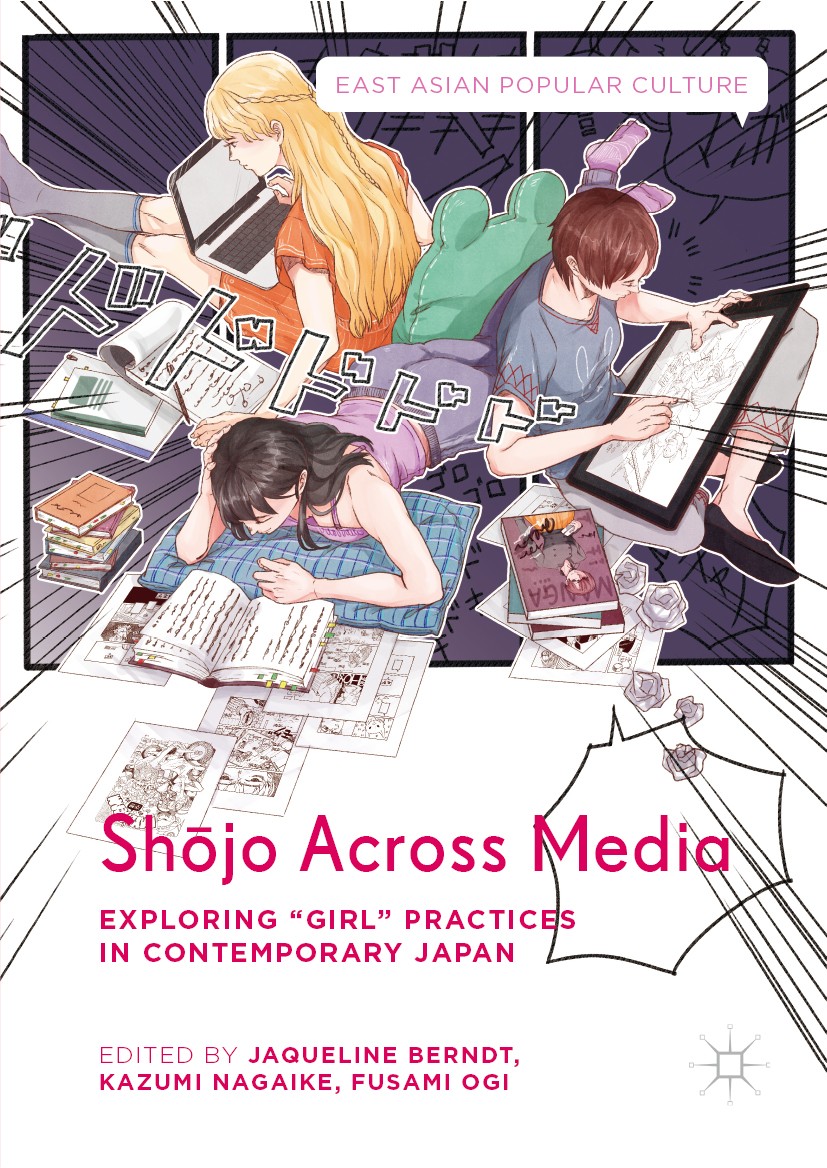
Shōjo Across Media [electronic resource] : Exploring "Girl" Practices in Contemporary Japan / edited by Jaqueline Berndt, Kazumi Nagaike, Fusami Ogi.
Erişim Adresi
ISBN
9783030014858
Dil Kodu
İngilizce
Yer Numarası
EK/3542
Basım Bildirimi
1st ed. 2019.
Yayın Bilgisi
Cham : Springer International Publishing : Imprint: Palgrave Macmillan, 2019.
Fiziksel Niteleme
XIX, 397 p. 11 illus., 8 illus. in color. online resource.
Dizi
East Asian Popular Culture, 2634-5943
İçindekiler Notu
Part I: Shōjo Manga -- 1. Romance of the Taishō School Girl in Shōjo Manga: Here Comes Miss Modern (Alisa Freedman) -- 2. Redefining Shōjo and Shōnen Manga through Language Patterns (Giancarla Unser-Schutz) -- 3. Shōjo Manga Beyond Shōjo Manga: The “Female Mode of Address” in Kabukumon (Olga Antononoka) -- Part II: Shōjo beyond Manga -- 4. Practicing Shōjo in Japanese New Media and Cyberculture: Analyses of the Cell Phone Novel and Dream Novel (Kazumi Nagaike and Raymond Langley) -- 5. The Shōjo in the Rōjo: Enchi Fumiko’s Representation of the Rōjo Who Refused to Grow Old (Sohyun Chun) -- 6. Mediating Otome in the Discourse of War Memory: Complexity of Memory-Making through Postwar Japanese War Films (Kaori Yoshida) -- 7. Shōjo in Anime: Beyond the Object of Men’s Desire(Akiko Sugawa-Shimada) -- Part III: Shōjo Performances -- 8. A Dream Dress for Girls: Milk, Fashion and Shōjo Identity (Masafumi Monden) -- 9. Sakura ga meijiru—Unlocking the Shōjo Wardrobe: Cosplay, Manga, 2.5D Space(Emerald L. King) -- 10. Multilayered Performers: The Takarazuka Musical Revue as Media (Sonoko Azuma, Translated by Raymond Langley and Nick Hall) -- 11. Sounds and Sighs: “Voice Porn” for Women (Minori Ishida, Translated by Nick Hall) -- Part IV: Shōjo Fans -- 12. From Shōjo to Bangya(ru): Women and Visual Kei (Adrienne Johnson) -- 13. Shōjo Fantasies of Inhabiting Cool Japan: Reimagining Fukuoka Through Shōjo and Otome Ideals with Cosplay Tourism(Craig Norris) -- 14. Seeking an Alternative: “Male” Shōjo Fans since the 1970s (Patrick W. Galbraith).
Özet, vb.
Since the 2000s, the Japanese word shōjo has gained global currency, accompanying the transcultural spread of other popular Japanese media such as manga and anime. The term refers to both a character type specifically, as well as commercial genres marketed to female audiences more generally. Through its diverse chapters this edited collection introduces the two main currents of shōjo research: on the one hand, historical investigations of Japan’s modern girl culture and its representations, informed by Japanese-studies and gender-studies concerns; on the other hand, explorations of the transcultural performativity of shōjo as a crafted concept and affect-prone code, shaped by media studies, genre theory, and fan-culture research. While acknowledging that shōjo has mediated multiple discourses throughout the twentieth century—discourses on Japan and its modernity, consumption and consumerism, non-hegemonic gender, and also technology—this volume shifts the focus to shōjo mediations, stretching from media by and for actual girls, to shōjo as media. As a result, the Japan-derived concept, while still situated, begins to offer possibilities for broader conceptualizations of girlness within the contemporary global digital mediascape.
Konu
Ethnology __ Asia.
Culture.
Communication.
Sex.
Motion pictures __ Asia.
Asia __ Politics and government.
Asian Culture.
Media and Communication.
Gender Studies.
Asian Film and TV.
Asian Politics.
Culture.
Communication.
Sex.
Motion pictures __ Asia.
Asia __ Politics and government.
Asian Culture.
Media and Communication.
Gender Studies.
Asian Film and TV.
Asian Politics.
Diğer Yazarlar
Kurum Adı
Eseri Alıntıla
Referansları kullanmadan önce gözden geçirmeniz ve varsa gerekli düzeltmeleri yapmanız önerilir.
Dijital Kaynak
MARC Görünümü
LEADER 06308nam a22007215i 4500
001 840396
003 TR_AnAIT
005 20260715040703
007 cr nn 008mamaa
008 190222s2019 sz | s |||| 0|eng d
020 |a9783030014858|9978-3-030-01485-8
024 7 |a10.1007/978-3-030-01485-8|2doi
041 |aeng
049 |aTürk Dil Kurumu Kütüphanesi
050 4|aGN625-635
072 7|aJFC|2bicssc
072 7|a1F|2bicssc
072 7|aSOC008020|2bisacsh
072 7|aJBCC|x1F|2thema
082 04|a306.095|223
090 |aEK/3542
245 10|aShōjo Across Media|h[electronic resource] :|bExploring "Girl" Practices in Contemporary Japan /|cedited by Jaqueline Berndt, Kazumi Nagaike, Fusami Ogi.
250 |a1st ed. 2019.
264 1|aCham :|bSpringer International Publishing :|bImprint: Palgrave Macmillan,|c2019.
300 |aXIX, 397 p. 11 illus., 8 illus. in color.|bonline resource.
336 |atext|btxt|2rdacontent
337 |acomputer|bc|2rdamedia
338 |aonline resource|bcr|2rdacarrier
341 0 |bTable of contents navigation|2onix
341 0 |bSingle logical reading order|2onix
341 0 |bShort alternative textual descriptions|2onix
341 0 |bUse of color is not sole means of conveying information|2onix
341 0 |bUse of high contrast between text and background color|2onix
341 0 |bNext / Previous structural navigation|2onix
341 0 |bAll non-decorative content supports reading without sight|2onix
347 |atext file|bPDF|2rda
490 1 |aEast Asian Popular Culture,|x2634-5943
505 0 |aPart I: Shōjo Manga -- 1. Romance of the Taishō School Girl in Shōjo Manga: Here Comes Miss Modern (Alisa Freedman) -- 2. Redefining Shōjo and Shōnen Manga through Language Patterns (Giancarla Unser-Schutz) -- 3. Shōjo Manga Beyond Shōjo Manga: The “Female Mode of Address” in Kabukumon (Olga Antononoka) -- Part II: Shōjo beyond Manga -- 4. Practicing Shōjo in Japanese New Media and Cyberculture: Analyses of the Cell Phone Novel and Dream Novel (Kazumi Nagaike and Raymond Langley) -- 5. The Shōjo in the Rōjo: Enchi Fumiko’s Representation of the Rōjo Who Refused to Grow Old (Sohyun Chun) -- 6. Mediating Otome in the Discourse of War Memory: Complexity of Memory-Making through Postwar Japanese War Films (Kaori Yoshida) -- 7. Shōjo in Anime: Beyond the Object of Men’s Desire(Akiko Sugawa-Shimada) -- Part III: Shōjo Performances -- 8. A Dream Dress for Girls: Milk, Fashion and Shōjo Identity (Masafumi Monden) -- 9. Sakura ga meijiru—Unlocking the Shōjo Wardrobe: Cosplay, Manga, 2.5D Space(Emerald L. King) -- 10. Multilayered Performers: The Takarazuka Musical Revue as Media (Sonoko Azuma, Translated by Raymond Langley and Nick Hall) -- 11. Sounds and Sighs: “Voice Porn” for Women (Minori Ishida, Translated by Nick Hall) -- Part IV: Shōjo Fans -- 12. From Shōjo to Bangya(ru): Women and Visual Kei (Adrienne Johnson) -- 13. Shōjo Fantasies of Inhabiting Cool Japan: Reimagining Fukuoka Through Shōjo and Otome Ideals with Cosplay Tourism(Craig Norris) -- 14. Seeking an Alternative: “Male” Shōjo Fans since the 1970s (Patrick W. Galbraith).
520 |aSince the 2000s, the Japanese word shōjo has gained global currency, accompanying the transcultural spread of other popular Japanese media such as manga and anime. The term refers to both a character type specifically, as well as commercial genres marketed to female audiences more generally. Through its diverse chapters this edited collection introduces the two main currents of shōjo research: on the one hand, historical investigations of Japan’s modern girl culture and its representations, informed by Japanese-studies and gender-studies concerns; on the other hand, explorations of the transcultural performativity of shōjo as a crafted concept and affect-prone code, shaped by media studies, genre theory, and fan-culture research. While acknowledging that shōjo has mediated multiple discourses throughout the twentieth century—discourses on Japan and its modernity, consumption and consumerism, non-hegemonic gender, and also technology—this volume shifts the focus to shōjo mediations, stretching from media by and for actual girls, to shōjo as media. As a result, the Japan-derived concept, while still situated, begins to offer possibilities for broader conceptualizations of girlness within the contemporary global digital mediascape.
532 8 |aAccessibility summary: This PDF does not fully comply with PDF/UA standards, but does feature limited screen reader support, described non-text content (images, graphs), bookmarks for easy navigation and searchable, selectable text. Users of assistive technologies may experience difficulty navigating or interpreting content in this document. We recognize the importance of accessibility, and we welcome queries about accessibility for any of our products. If you have a question or an access need, please get in touch with us at accessibilitysupport@springernature.com.
532 8 |aNo reading system accessibility options actively disabled
532 8 |aPublisher contact for further accessibility information: accessibilitysupport@springernature.com
650 0|aEthnology|xAsia.
650 0|aCulture.
650 0|aCommunication.
650 0|aSex.
650 0|aMotion pictures|xAsia.
650 0|aAsia|xPolitics and government.
650 14|aAsian Culture.
650 24|aMedia and Communication.
650 24|aGender Studies.
650 24|aAsian Film and TV.
650 24|aAsian Politics.
700 1 |aBerndt, Jaqueline.|eeditor.|4edt|4http://id.loc.gov/vocabulary/relators/edt
700 1 |aNagaike, Kazumi.|eeditor.|4edt|4http://id.loc.gov/vocabulary/relators/edt
700 1 |aOgi, Fusami.|eeditor.|4edt|4http://id.loc.gov/vocabulary/relators/edt
710 2 |aSpringerLink (Online service)
773 0 |tSpringer Nature eBook
776 08|iPrinted edition:|z9783030014841
776 08|iPrinted edition:|z9783030014865
830 0|aEast Asian Popular Culture,|x2634-5943
856 40|uhttps://doi.org/10.1007/978-3-030-01485-8
912 |aZDB-2-LCM
912 |aZDB-2-SXL
950 |aLiterature, Cultural and Media Studies (SpringerNature-41173)
950 |aLiterature, Cultural and Media Studies (R0) (SpringerNature-43723)
001 840396
003 TR_AnAIT
005 20260715040703
007 cr nn 008mamaa
008 190222s2019 sz | s |||| 0|eng d
020 |a9783030014858|9978-3-030-01485-8
024 7 |a10.1007/978-3-030-01485-8|2doi
041 |aeng
049 |aTürk Dil Kurumu Kütüphanesi
050 4|aGN625-635
072 7|aJFC|2bicssc
072 7|a1F|2bicssc
072 7|aSOC008020|2bisacsh
072 7|aJBCC|x1F|2thema
082 04|a306.095|223
090 |aEK/3542
245 10|aShōjo Across Media|h[electronic resource] :|bExploring "Girl" Practices in Contemporary Japan /|cedited by Jaqueline Berndt, Kazumi Nagaike, Fusami Ogi.
250 |a1st ed. 2019.
264 1|aCham :|bSpringer International Publishing :|bImprint: Palgrave Macmillan,|c2019.
300 |aXIX, 397 p. 11 illus., 8 illus. in color.|bonline resource.
336 |atext|btxt|2rdacontent
337 |acomputer|bc|2rdamedia
338 |aonline resource|bcr|2rdacarrier
341 0 |bTable of contents navigation|2onix
341 0 |bSingle logical reading order|2onix
341 0 |bShort alternative textual descriptions|2onix
341 0 |bUse of color is not sole means of conveying information|2onix
341 0 |bUse of high contrast between text and background color|2onix
341 0 |bNext / Previous structural navigation|2onix
341 0 |bAll non-decorative content supports reading without sight|2onix
347 |atext file|bPDF|2rda
490 1 |aEast Asian Popular Culture,|x2634-5943
505 0 |aPart I: Shōjo Manga -- 1. Romance of the Taishō School Girl in Shōjo Manga: Here Comes Miss Modern (Alisa Freedman) -- 2. Redefining Shōjo and Shōnen Manga through Language Patterns (Giancarla Unser-Schutz) -- 3. Shōjo Manga Beyond Shōjo Manga: The “Female Mode of Address” in Kabukumon (Olga Antononoka) -- Part II: Shōjo beyond Manga -- 4. Practicing Shōjo in Japanese New Media and Cyberculture: Analyses of the Cell Phone Novel and Dream Novel (Kazumi Nagaike and Raymond Langley) -- 5. The Shōjo in the Rōjo: Enchi Fumiko’s Representation of the Rōjo Who Refused to Grow Old (Sohyun Chun) -- 6. Mediating Otome in the Discourse of War Memory: Complexity of Memory-Making through Postwar Japanese War Films (Kaori Yoshida) -- 7. Shōjo in Anime: Beyond the Object of Men’s Desire(Akiko Sugawa-Shimada) -- Part III: Shōjo Performances -- 8. A Dream Dress for Girls: Milk, Fashion and Shōjo Identity (Masafumi Monden) -- 9. Sakura ga meijiru—Unlocking the Shōjo Wardrobe: Cosplay, Manga, 2.5D Space(Emerald L. King) -- 10. Multilayered Performers: The Takarazuka Musical Revue as Media (Sonoko Azuma, Translated by Raymond Langley and Nick Hall) -- 11. Sounds and Sighs: “Voice Porn” for Women (Minori Ishida, Translated by Nick Hall) -- Part IV: Shōjo Fans -- 12. From Shōjo to Bangya(ru): Women and Visual Kei (Adrienne Johnson) -- 13. Shōjo Fantasies of Inhabiting Cool Japan: Reimagining Fukuoka Through Shōjo and Otome Ideals with Cosplay Tourism(Craig Norris) -- 14. Seeking an Alternative: “Male” Shōjo Fans since the 1970s (Patrick W. Galbraith).
520 |aSince the 2000s, the Japanese word shōjo has gained global currency, accompanying the transcultural spread of other popular Japanese media such as manga and anime. The term refers to both a character type specifically, as well as commercial genres marketed to female audiences more generally. Through its diverse chapters this edited collection introduces the two main currents of shōjo research: on the one hand, historical investigations of Japan’s modern girl culture and its representations, informed by Japanese-studies and gender-studies concerns; on the other hand, explorations of the transcultural performativity of shōjo as a crafted concept and affect-prone code, shaped by media studies, genre theory, and fan-culture research. While acknowledging that shōjo has mediated multiple discourses throughout the twentieth century—discourses on Japan and its modernity, consumption and consumerism, non-hegemonic gender, and also technology—this volume shifts the focus to shōjo mediations, stretching from media by and for actual girls, to shōjo as media. As a result, the Japan-derived concept, while still situated, begins to offer possibilities for broader conceptualizations of girlness within the contemporary global digital mediascape.
532 8 |aAccessibility summary: This PDF does not fully comply with PDF/UA standards, but does feature limited screen reader support, described non-text content (images, graphs), bookmarks for easy navigation and searchable, selectable text. Users of assistive technologies may experience difficulty navigating or interpreting content in this document. We recognize the importance of accessibility, and we welcome queries about accessibility for any of our products. If you have a question or an access need, please get in touch with us at accessibilitysupport@springernature.com.
532 8 |aNo reading system accessibility options actively disabled
532 8 |aPublisher contact for further accessibility information: accessibilitysupport@springernature.com
650 0|aEthnology|xAsia.
650 0|aCulture.
650 0|aCommunication.
650 0|aSex.
650 0|aMotion pictures|xAsia.
650 0|aAsia|xPolitics and government.
650 14|aAsian Culture.
650 24|aMedia and Communication.
650 24|aGender Studies.
650 24|aAsian Film and TV.
650 24|aAsian Politics.
700 1 |aBerndt, Jaqueline.|eeditor.|4edt|4http://id.loc.gov/vocabulary/relators/edt
700 1 |aNagaike, Kazumi.|eeditor.|4edt|4http://id.loc.gov/vocabulary/relators/edt
700 1 |aOgi, Fusami.|eeditor.|4edt|4http://id.loc.gov/vocabulary/relators/edt
710 2 |aSpringerLink (Online service)
773 0 |tSpringer Nature eBook
776 08|iPrinted edition:|z9783030014841
776 08|iPrinted edition:|z9783030014865
830 0|aEast Asian Popular Culture,|x2634-5943
856 40|uhttps://doi.org/10.1007/978-3-030-01485-8
912 |aZDB-2-LCM
912 |aZDB-2-SXL
950 |aLiterature, Cultural and Media Studies (SpringerNature-41173)
950 |aLiterature, Cultural and Media Studies (R0) (SpringerNature-43723)
Materyaller
Depodan talep edilen materyal sadece kütüphane içerisinde kullanılmaktadır.
Materyal dışarıya ödünç verilmemektedir.
Materyal dışarıya ödünç verilmemektedir.
