LEADER 04371nam a22005895i 4500
001 840409
003 TR_AnAIT
005 20260715040646
007 cr nn 008mamaa
008 191213s2019 sz | s |||| 0|eng d
020 |a9783030180911|9978-3-030-18091-1
024 7 |a10.1007/978-3-030-18091-1|2doi
041 |aeng
049 |aTürk Dil Kurumu Kütüphanesi
050 4|aD1-2027
072 7|aJFC|2bicssc
072 7|aGM|2bicssc
072 7|aSOC002010|2bisacsh
072 7|aJBCC|2thema
072 7|aGLZ|2thema
082 04|a363.69|223
090 |aEK/3599
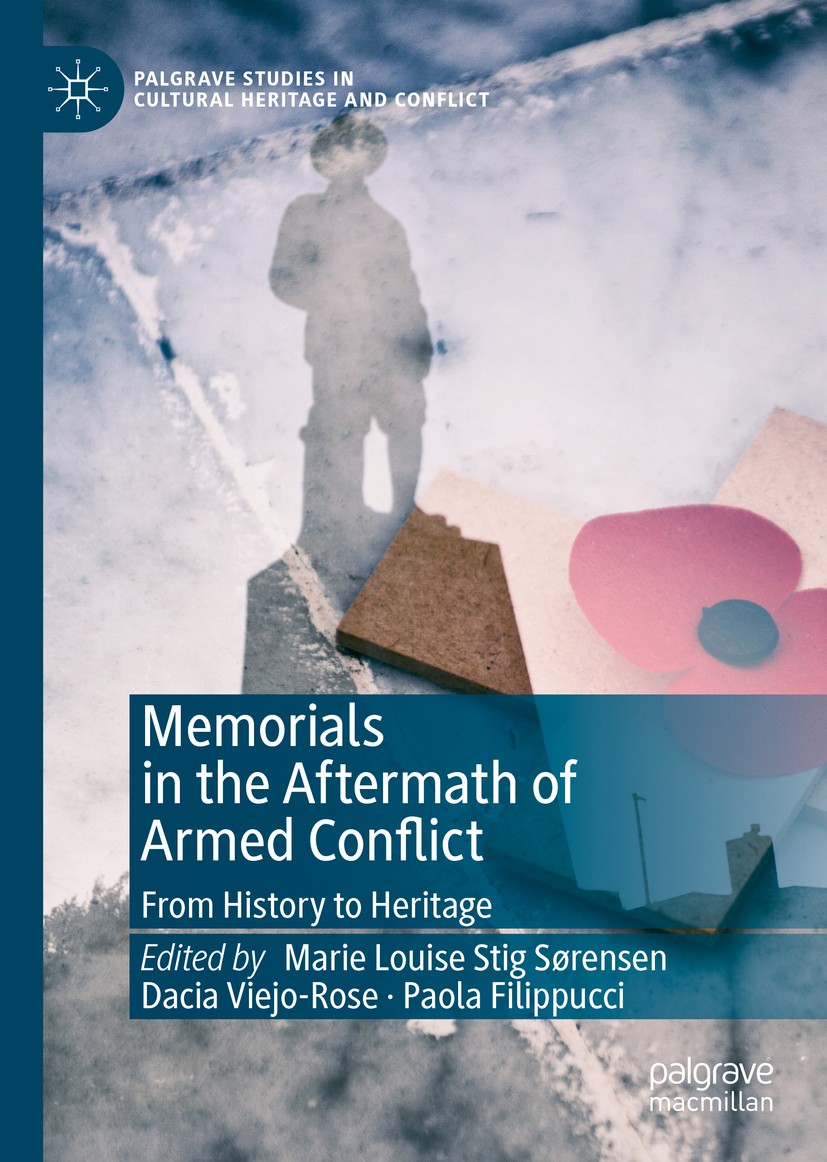
245 10|aMemorials in the Aftermath of Armed Conflict|h[electronic resource] :|bFrom History to Heritage /|cedited by Marie Louise Stig Sørensen, Dacia Viejo-Rose, Paola Filippucci.
250 |a1st ed. 2019.
264 1|aCham :|bSpringer International Publishing :|bImprint: Palgrave Macmillan,|c2019.
300 |aXIX, 312 p. 59 illus.|bonline resource.
336 |atext|btxt|2rdacontent
337 |acomputer|bc|2rdamedia
338 |aonline resource|bcr|2rdacarrier
347 |atext file|bPDF|2rda
490 1 |aPalgrave Studies in Cultural Heritage and Conflict,|x2634-6427
505 0 |a1. Introduction. Memorials and memorialisation – history, forms and affects; Marie Louise Stig Sørensen and Dacia Viejo Rose -- 2. Commemorations of the Madrid train bombings of 11 March 2004: Grassroots Memorials, Official Memorials and Conflictive Performances; Cristina Sánchez-Carretero and Gérôme Truc -- 3. Myths of Salvation and Struggle: Contesting a Secular Pilgrimage in Cyprus; Rebecca Bryant and Mete Hatay -- 4. Heritagization of the Gulag: A Case Study from the Solovetsky Islands; Margaret Comer -- 5. Srebrenica Memorial Centre and Commemorative Practices; Dzenan Sahovic -- 6. Conflicted memorials and the need to look forward. The interplay between remembering and forgetting in Mostar and on the Kosovo Field; Gustav Wollentz -- 7. The Dudik Memorial Complex: Commemoration and Changing Regimes in the Contested City of Vukovar; Britt Baillie -- 8. From’memorial combine’ to a ‘place of learning’. The Heide¬friedhof cemetery in Dresden as an arena for competing cultures of memory; Matthias Neutzner -- 9. The Isted Lion – from memorial of war to monument of friendship; Inge Adriansen.
520 |aThrough case studies from Europe and Russia, this volume analyses memorials as a means for the present to make claims on the past in the aftermath of armed conflict. The central contention is that memorials are not backward-looking, inert reminders of past events, but instead active triggers of personal and shared emotion, that are inescapably political, bound up with how societies reconstruct their present and future as they negotiate their way out of (and sometimes back into) conflict. A central aim of the book is to highlight and illustrate the cultural and ethical complexity of memorials, as focal points for a tension between the notion of memory as truth, and the practice of memory as negotiable. By adopting a relatively bounded temporal and spatial scope, the volume seeks to move beyond the established focus on national traditions, to reveal cultural commonalities and shared influences in the memorial forms and practices of individual regions and of particular conflicts. .
650 0|aCultural property.
650 0|aEthnology.
650 0|aCollective memory.
650 0|aArchaeology.
650 14|aCultural Heritage.
650 24|aSociocultural Anthropology.
650 24|aMemory Studies.
650 24|aArchaeology.
700 1 |aSørensen, Marie Louise Stig.|eeditor.|4edt|4http://id.loc.gov/vocabulary/relators/edt
700 1 |aViejo-Rose, Dacia.|eeditor.|4edt|4http://id.loc.gov/vocabulary/relators/edt
700 1 |aFilippucci, Paola.|eeditor.|4edt|4http://id.loc.gov/vocabulary/relators/edt
710 2 |aSpringerLink (Online service)
773 0 |tSpringer Nature eBook
776 08|iPrinted edition:|z9783030180904
776 08|iPrinted edition:|z9783030180928
776 08|iPrinted edition:|z9783030180935
830 0|aPalgrave Studies in Cultural Heritage and Conflict,|x2634-6427
856 40|uhttps://doi.org/10.1007/978-3-030-18091-1
912 |aZDB-2-LCM
912 |aZDB-2-SXL
950 |aLiterature, Cultural and Media Studies (SpringerNature-41173)
950 |aLiterature, Cultural and Media Studies (R0) (SpringerNature-43723)