

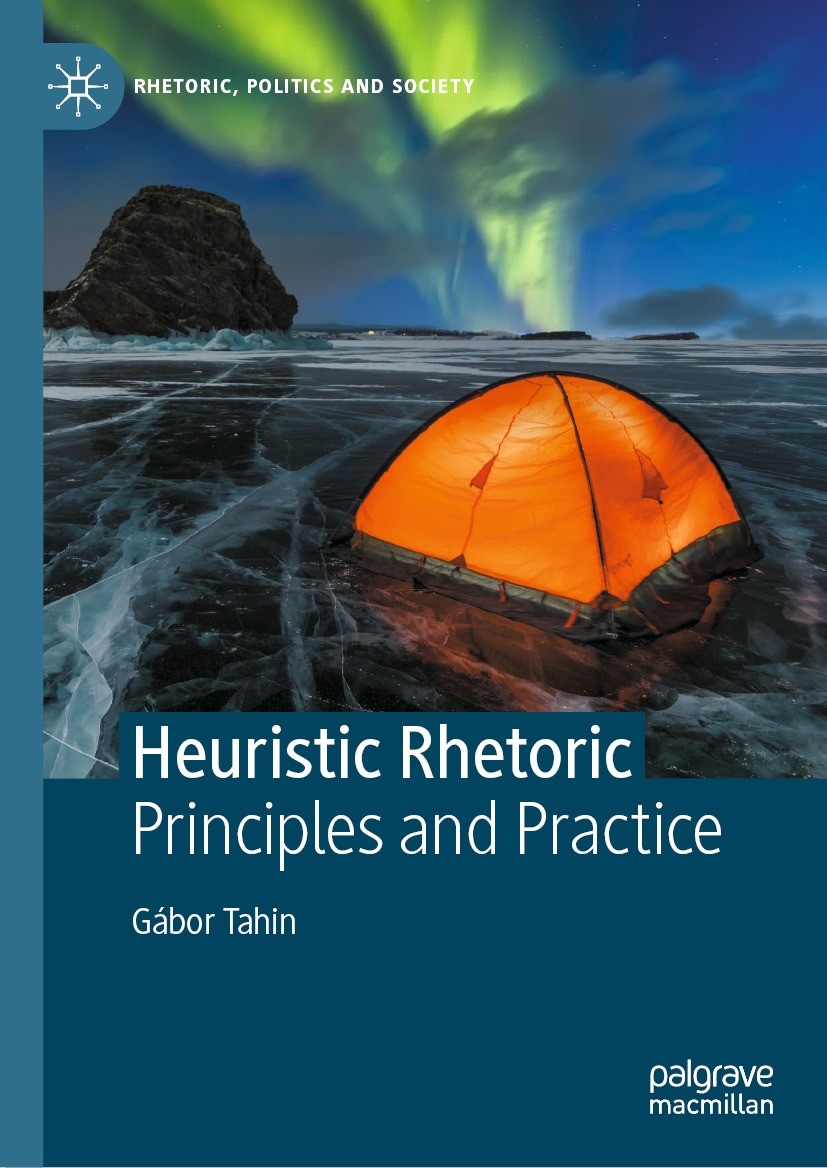
Heuristic Rhetoric [electronic resource] : Principles and Practice / by Gábor Tahin.
Erişim Adresi
ISBN
9783030984823
Dil Kodu
İngilizce
Yer Numarası
EK/3674
Yazar
Basım Bildirimi
1st ed. 2022.
Yayın Bilgisi
Cham : Springer International Publishing : Imprint: Palgrave Macmillan, 2022.
Fiziksel Niteleme
XVIII, 216 p. 1 illus. online resource.
Dizi
Rhetoric, Politics and Society, 2947-5155
İçindekiler Notu
Introduction -- Part One: Principles. Chapter 1 -- Chapter 2. Contingency -- Chapter 3. Probability -- Chapter 4. Temporality -- Chapter 5. Strategic construction -- Chapter 6 ‘Heuremes’ – Patterns of persuasive argument -- Part Two: Practice. Chapter 7. Classical Oratory -- Chapter 8. Modern Oratory.-Epilogue: Heuristic Rhetoric in Modern Education and Society.
Özet, vb.
This book introduces a novel approach to the analysis and practice of persuasive speaking and writing: heuristic rhetoric. The new method has evolved to fulfil the need at universities, government departments, political organisations, business enterprises and other public institutions for a modern practical alternative to classical rhetoric, which is, in the author’s view, no longer capable of giving a complete description of contemporary, predominantly mediatised, forms of public persuasive discourse, whilst other competing disciplines, such as critical discourse analysis or strategic manoeuvring, have not yet produced a set of tools, which have the comprehensive nature and practical orientation of Classical Greek and Roman rhetorical system. The book expounds heuristic rhetoric as an inter-disciplinary method to develop advanced skills of critical and strategic reasoning. Applying a novel set of principles for the strategic analysis of persuasive reasoning in complex rhetorical situations, the method emphasizes preparing and continuously adjusting argumentation according to the demands of unpredictable circumstances. Gábor Tahin is Head of Classics at Clifton College, Bristol, UK. His research interests include the philosophy and theory of rhetoric, Classical rhetoric, strategies of persuasive reasoning, and the practice of oratory. .
Konu
Political science.
Communication in politics.
Classical literature.
Literature, Ancient.
Political Theory.
Political Communication.
Classical and Antique Literature.
Communication in politics.
Classical literature.
Literature, Ancient.
Political Theory.
Political Communication.
Classical and Antique Literature.
Kurum Adı
Eseri Alıntıla
Referansları kullanmadan önce gözden geçirmeniz ve varsa gerekli düzeltmeleri yapmanız önerilir.
Dijital Kaynak
MARC Görünümü
LEADER 04748nam a22006375i 4500
001 840463
003 TR_AnAIT
005 20260715040302
007 cr nn 008mamaa
008 221130s2022 sz | s |||| 0|eng d
020 |a9783030984823|9978-3-030-98482-3
024 7 |a10.1007/978-3-030-98482-3|2doi
041 |aeng
049 |aTürk Dil Kurumu Kütüphanesi
050 4|aJC11-607
072 7|aJPA|2bicssc
072 7|aPOL010000|2bisacsh
072 7|aJPA|2thema
082 04|a320.01|223
090 |aEK/3674
100 1 |aTahin, Gábor.|eauthor.|4aut|4http://id.loc.gov/vocabulary/relators/aut
245 10|aHeuristic Rhetoric|h[electronic resource] :|bPrinciples and Practice /|cby Gábor Tahin.
250 |a1st ed. 2022.
264 1|aCham :|bSpringer International Publishing :|bImprint: Palgrave Macmillan,|c2022.
300 |aXVIII, 216 p. 1 illus.|bonline resource.
336 |atext|btxt|2rdacontent
337 |acomputer|bc|2rdamedia
338 |aonline resource|bcr|2rdacarrier
341 0 |bTable of contents navigation|2onix
341 0 |bSingle logical reading order|2onix
341 0 |bUse of color is not sole means of conveying information|2onix
341 0 |bUse of high contrast between text and background color|2onix
341 0 |bNext / Previous structural navigation|2onix
341 0 |bAll non-decorative content supports reading without sight|2onix
347 |atext file|bPDF|2rda
490 1 |aRhetoric, Politics and Society,|x2947-5155
505 0 |aIntroduction -- Part One: Principles. Chapter 1 -- Chapter 2. Contingency -- Chapter 3. Probability -- Chapter 4. Temporality -- Chapter 5. Strategic construction -- Chapter 6 ‘Heuremes’ – Patterns of persuasive argument -- Part Two: Practice. Chapter 7. Classical Oratory -- Chapter 8. Modern Oratory.-Epilogue: Heuristic Rhetoric in Modern Education and Society.
520 |aThis book introduces a novel approach to the analysis and practice of persuasive speaking and writing: heuristic rhetoric. The new method has evolved to fulfil the need at universities, government departments, political organisations, business enterprises and other public institutions for a modern practical alternative to classical rhetoric, which is, in the author’s view, no longer capable of giving a complete description of contemporary, predominantly mediatised, forms of public persuasive discourse, whilst other competing disciplines, such as critical discourse analysis or strategic manoeuvring, have not yet produced a set of tools, which have the comprehensive nature and practical orientation of Classical Greek and Roman rhetorical system. The book expounds heuristic rhetoric as an inter-disciplinary method to develop advanced skills of critical and strategic reasoning. Applying a novel set of principles for the strategic analysis of persuasive reasoning in complex rhetorical situations, the method emphasizes preparing and continuously adjusting argumentation according to the demands of unpredictable circumstances. Gábor Tahin is Head of Classics at Clifton College, Bristol, UK. His research interests include the philosophy and theory of rhetoric, Classical rhetoric, strategies of persuasive reasoning, and the practice of oratory. .
532 8 |aAccessibility summary: This PDF does not fully comply with PDF/UA standards, but does feature limited screen reader support, bookmarks for easy navigation and searchable, selectable text. Users of assistive technologies may experience difficulty navigating or interpreting content in this document. We recognize the importance of accessibility, and we welcome queries about accessibility for any of our products. If you have a question or an access need, please get in touch with us at accessibilitysupport@springernature.com.
532 8 |aNo reading system accessibility options actively disabled
532 8 |aPublisher contact for further accessibility information: accessibilitysupport@springernature.com
650 0|aPolitical science.
650 0|aCommunication in politics.
650 0|aClassical literature.
650 0|aLiterature, Ancient.
650 14|aPolitical Theory.
650 24|aPolitical Communication.
650 24|aClassical and Antique Literature.
710 2 |aSpringerLink (Online service)
773 0 |tSpringer Nature eBook
776 08|iPrinted edition:|z9783030984816
776 08|iPrinted edition:|z9783030984830
776 08|iPrinted edition:|z9783030984847
830 0|aRhetoric, Politics and Society,|x2947-5155
856 40|uhttps://doi.org/10.1007/978-3-030-98482-3
912 |aZDB-2-LCM
912 |aZDB-2-SXL
950 |aLiterature, Cultural and Media Studies (SpringerNature-41173)
950 |aLiterature, Cultural and Media Studies (R0) (SpringerNature-43723)
001 840463
003 TR_AnAIT
005 20260715040302
007 cr nn 008mamaa
008 221130s2022 sz | s |||| 0|eng d
020 |a9783030984823|9978-3-030-98482-3
024 7 |a10.1007/978-3-030-98482-3|2doi
041 |aeng
049 |aTürk Dil Kurumu Kütüphanesi
050 4|aJC11-607
072 7|aJPA|2bicssc
072 7|aPOL010000|2bisacsh
072 7|aJPA|2thema
082 04|a320.01|223
090 |aEK/3674
100 1 |aTahin, Gábor.|eauthor.|4aut|4http://id.loc.gov/vocabulary/relators/aut
245 10|aHeuristic Rhetoric|h[electronic resource] :|bPrinciples and Practice /|cby Gábor Tahin.
250 |a1st ed. 2022.
264 1|aCham :|bSpringer International Publishing :|bImprint: Palgrave Macmillan,|c2022.
300 |aXVIII, 216 p. 1 illus.|bonline resource.
336 |atext|btxt|2rdacontent
337 |acomputer|bc|2rdamedia
338 |aonline resource|bcr|2rdacarrier
341 0 |bTable of contents navigation|2onix
341 0 |bSingle logical reading order|2onix
341 0 |bUse of color is not sole means of conveying information|2onix
341 0 |bUse of high contrast between text and background color|2onix
341 0 |bNext / Previous structural navigation|2onix
341 0 |bAll non-decorative content supports reading without sight|2onix
347 |atext file|bPDF|2rda
490 1 |aRhetoric, Politics and Society,|x2947-5155
505 0 |aIntroduction -- Part One: Principles. Chapter 1 -- Chapter 2. Contingency -- Chapter 3. Probability -- Chapter 4. Temporality -- Chapter 5. Strategic construction -- Chapter 6 ‘Heuremes’ – Patterns of persuasive argument -- Part Two: Practice. Chapter 7. Classical Oratory -- Chapter 8. Modern Oratory.-Epilogue: Heuristic Rhetoric in Modern Education and Society.
520 |aThis book introduces a novel approach to the analysis and practice of persuasive speaking and writing: heuristic rhetoric. The new method has evolved to fulfil the need at universities, government departments, political organisations, business enterprises and other public institutions for a modern practical alternative to classical rhetoric, which is, in the author’s view, no longer capable of giving a complete description of contemporary, predominantly mediatised, forms of public persuasive discourse, whilst other competing disciplines, such as critical discourse analysis or strategic manoeuvring, have not yet produced a set of tools, which have the comprehensive nature and practical orientation of Classical Greek and Roman rhetorical system. The book expounds heuristic rhetoric as an inter-disciplinary method to develop advanced skills of critical and strategic reasoning. Applying a novel set of principles for the strategic analysis of persuasive reasoning in complex rhetorical situations, the method emphasizes preparing and continuously adjusting argumentation according to the demands of unpredictable circumstances. Gábor Tahin is Head of Classics at Clifton College, Bristol, UK. His research interests include the philosophy and theory of rhetoric, Classical rhetoric, strategies of persuasive reasoning, and the practice of oratory. .
532 8 |aAccessibility summary: This PDF does not fully comply with PDF/UA standards, but does feature limited screen reader support, bookmarks for easy navigation and searchable, selectable text. Users of assistive technologies may experience difficulty navigating or interpreting content in this document. We recognize the importance of accessibility, and we welcome queries about accessibility for any of our products. If you have a question or an access need, please get in touch with us at accessibilitysupport@springernature.com.
532 8 |aNo reading system accessibility options actively disabled
532 8 |aPublisher contact for further accessibility information: accessibilitysupport@springernature.com
650 0|aPolitical science.
650 0|aCommunication in politics.
650 0|aClassical literature.
650 0|aLiterature, Ancient.
650 14|aPolitical Theory.
650 24|aPolitical Communication.
650 24|aClassical and Antique Literature.
710 2 |aSpringerLink (Online service)
773 0 |tSpringer Nature eBook
776 08|iPrinted edition:|z9783030984816
776 08|iPrinted edition:|z9783030984830
776 08|iPrinted edition:|z9783030984847
830 0|aRhetoric, Politics and Society,|x2947-5155
856 40|uhttps://doi.org/10.1007/978-3-030-98482-3
912 |aZDB-2-LCM
912 |aZDB-2-SXL
950 |aLiterature, Cultural and Media Studies (SpringerNature-41173)
950 |aLiterature, Cultural and Media Studies (R0) (SpringerNature-43723)
Materyaller
Depodan talep edilen materyal sadece kütüphane içerisinde kullanılmaktadır.
Materyal dışarıya ödünç verilmemektedir.
Materyal dışarıya ödünç verilmemektedir.
