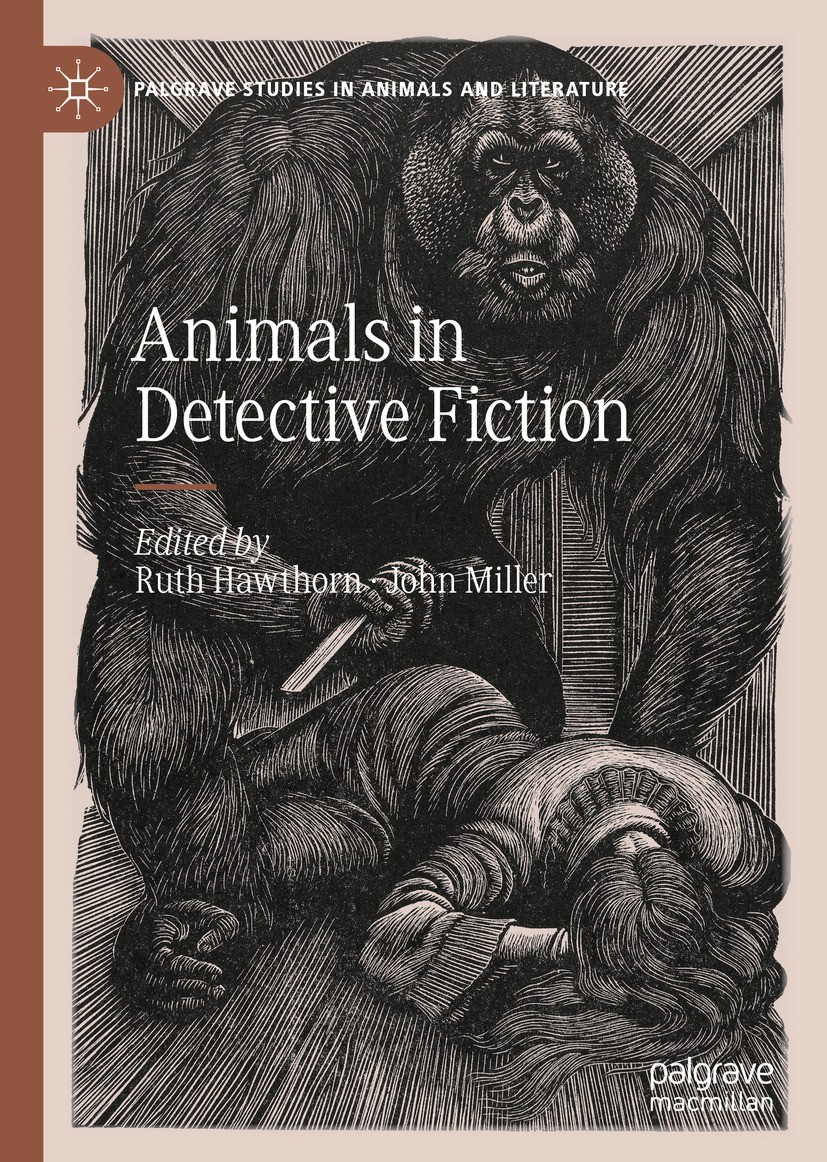
Animals in Detective Fiction [electronic resource] / edited by Ruth Hawthorn, John Miller.
Erişim Adresi
ISBN
9783031092411
Dil Kodu
İngilizce
Yer Numarası
EK/3808
Basım Bildirimi
1st ed. 2022.
Yayın Bilgisi
Cham : Springer International Publishing : Imprint: Palgrave Macmillan, 2022.
Fiziksel Niteleme
XIII, 311 p. 1 illus. in color. online resource.
Dizi
Palgrave Studies in Animals and Literature, 2634-6346
İçindekiler Notu
Origins and Evolutions: The Brutal History of Detective Fiction -- Ontologies -- Tigers, Criminals, Rogues: Animality in Dickens’ Detective Fiction -- Quantum Entanglements in Arthur Conan Doyle’s The Hound of the Baskervilles -- Wolverines, Werewolves and Demon Dogs: Animality, Criminality and Classification in James Ellroy’s L.A. Quartet -- Ethics -- The Psittacine Witness: Parrot Talk and Animal Ethics in Earl Derr Biggers’ The Chinese Parrot and Earl Stanley Gardner’s The Case of the Perjured Parrot -- Ecology, Capability and Companion Species: Conflicting Ethics in Nevada Barr’s Blood Lure -- Laboratory Tech-Noir: Genre, Narrative Form, and the Literary Model Organism in Jay Hosking’s Three Years with the Rat -- Reptiles, Buddhism, and Detection in John Burdett’s Bangkok 8 -- Politics -- Animals, Biopolitics, and Sensation Fiction: M. E. Braddon’s Lady Audley’s Secret -- “The Motto of the Mollusc”: Patricia Highsmith and the Semiotics ofSnails -- “Before the white man came, when animals still talked”: Colonial Creatures in Sherman Alexie’s Indian Killer and Adrian C. Louis’s Skins -- Forms -- Aping the Classics: Terry Pratchett’s Satirical Animals and Detective Fiction -- Animal Image and Human Logos in Graphic Detective Fiction -- “As easy to spot as a kangaroo in a dinner jacket”: Animetaphor in Raymond Chandler and Jonathan Lethem.
Özet, vb.
This book explores the vast array of animals that populate detective fiction. If the genre begins, as is widely supposed, with Edgar Allan Poe’s “Murders in the Rue Morgue” (1841), then detective fiction’s very first culprit is an animal. Animals, moreover, consistently appear as victims, clues, and companions, while the abstract conception of animality is closely tied to the idea of criminality. Although it is often described as an essentially conservative form, detective fiction can unsettle the binary of human and animal to intersect with developing concerns in animal studies: animal agency, the ethical complexities of human/animal interaction, the politics and literary aesthetics of violence, and animal metaphor. Gathering its 14 essays into sections on ontologies, ethics, politics, and forms, Animals in Detective Fiction provides a compelling and nuanced analysis of the central role creatures play in this enduringlypopular and continually morphing literary form. Ruth Hawthorn is Senior Lecturer in American Literature at the University of Lincoln. She is currently completing a monograph on American detective fiction for the BAAS Paperbacks series with Edinburgh University Press. Her research interests include crime fiction, the literature of LA, and ecocriticism. John Miller is Senior Lecturer in Nineteenth-Century Literature at the University of Sheffield, President of ASLE-UKI (Association for the Study of Literature and the Environment, UK and Ireland), and co-editor of Palgrave Studies in Animals in Literature. His books include Empire and the Animal Body (Anthem, 2014) and The Heart of the Forest (British Library Publishing, 2022). .
Konu
Literature and technology.
Mass media and literature.
Fiction.
Ecocriticism.
Communication in the environmental sciences.
Animal welfare __ Moral and ethical aspects.
Animal culture.
Literature and Technology.
Fiction Literature.
Ecocriticism.
Environmental Communication.
Animal Ethics.
Animal Science.
Mass media and literature.
Fiction.
Ecocriticism.
Communication in the environmental sciences.
Animal welfare __ Moral and ethical aspects.
Animal culture.
Literature and Technology.
Fiction Literature.
Ecocriticism.
Environmental Communication.
Animal Ethics.
Animal Science.
Diğer Yazarlar
Kurum Adı

Eseri Alıntıla
Referansları kullanmadan önce gözden geçirmeniz ve varsa gerekli düzeltmeleri yapmanız önerilir.
Dijital Kaynak
MARC Görünümü
LEADER 06554nam a22007335i 4500
001 840566
003 TR_AnAIT
005 20260715035751
007 cr nn 008mamaa
008 221206s2022 sz | s |||| 0|eng d
020 |a9783031092411|9978-3-031-09241-1
024 7 |a10.1007/978-3-031-09241-1|2doi
041 |aeng
049 |aTürk Dil Kurumu Kütüphanesi
050 4|aPN1-6790
072 7|aDSB|2bicssc
072 7|aLAN000000|2bisacsh
072 7|aDSB|2thema
082 04|a800|223
090 |aEK/3808
245 10|aAnimals in Detective Fiction|h[electronic resource] /|cedited by Ruth Hawthorn, John Miller.
250 |a1st ed. 2022.
264 1|aCham :|bSpringer International Publishing :|bImprint: Palgrave Macmillan,|c2022.
300 |aXIII, 311 p. 1 illus. in color.|bonline resource.
336 |atext|btxt|2rdacontent
337 |acomputer|bc|2rdamedia
338 |aonline resource|bcr|2rdacarrier
341 0 |bTable of contents navigation|2onix
341 0 |bSingle logical reading order|2onix
341 0 |bShort alternative textual descriptions|2onix
341 0 |bUse of color is not sole means of conveying information|2onix
341 0 |bUse of high contrast between text and background color|2onix
341 0 |bNext / Previous structural navigation|2onix
341 0 |bAll non-decorative content supports reading without sight|2onix
347 |atext file|bPDF|2rda
490 1 |aPalgrave Studies in Animals and Literature,|x2634-6346
505 0 |aOrigins and Evolutions: The Brutal History of Detective Fiction -- Ontologies -- Tigers, Criminals, Rogues: Animality in Dickens’ Detective Fiction -- Quantum Entanglements in Arthur Conan Doyle’s The Hound of the Baskervilles -- Wolverines, Werewolves and Demon Dogs: Animality, Criminality and Classification in James Ellroy’s L.A. Quartet -- Ethics -- The Psittacine Witness: Parrot Talk and Animal Ethics in Earl Derr Biggers’ The Chinese Parrot and Earl Stanley Gardner’s The Case of the Perjured Parrot -- Ecology, Capability and Companion Species: Conflicting Ethics in Nevada Barr’s Blood Lure -- Laboratory Tech-Noir: Genre, Narrative Form, and the Literary Model Organism in Jay Hosking’s Three Years with the Rat -- Reptiles, Buddhism, and Detection in John Burdett’s Bangkok 8 -- Politics -- Animals, Biopolitics, and Sensation Fiction: M. E. Braddon’s Lady Audley’s Secret -- “The Motto of the Mollusc”: Patricia Highsmith and the Semiotics ofSnails -- “Before the white man came, when animals still talked”: Colonial Creatures in Sherman Alexie’s Indian Killer and Adrian C. Louis’s Skins -- Forms -- Aping the Classics: Terry Pratchett’s Satirical Animals and Detective Fiction -- Animal Image and Human Logos in Graphic Detective Fiction -- “As easy to spot as a kangaroo in a dinner jacket”: Animetaphor in Raymond Chandler and Jonathan Lethem.
520 |aThis book explores the vast array of animals that populate detective fiction. If the genre begins, as is widely supposed, with Edgar Allan Poe’s “Murders in the Rue Morgue” (1841), then detective fiction’s very first culprit is an animal. Animals, moreover, consistently appear as victims, clues, and companions, while the abstract conception of animality is closely tied to the idea of criminality. Although it is often described as an essentially conservative form, detective fiction can unsettle the binary of human and animal to intersect with developing concerns in animal studies: animal agency, the ethical complexities of human/animal interaction, the politics and literary aesthetics of violence, and animal metaphor. Gathering its 14 essays into sections on ontologies, ethics, politics, and forms, Animals in Detective Fiction provides a compelling and nuanced analysis of the central role creatures play in this enduringlypopular and continually morphing literary form. Ruth Hawthorn is Senior Lecturer in American Literature at the University of Lincoln. She is currently completing a monograph on American detective fiction for the BAAS Paperbacks series with Edinburgh University Press. Her research interests include crime fiction, the literature of LA, and ecocriticism. John Miller is Senior Lecturer in Nineteenth-Century Literature at the University of Sheffield, President of ASLE-UKI (Association for the Study of Literature and the Environment, UK and Ireland), and co-editor of Palgrave Studies in Animals in Literature. His books include Empire and the Animal Body (Anthem, 2014) and The Heart of the Forest (British Library Publishing, 2022). .
532 8 |aAccessibility summary: This PDF does not fully comply with PDF/UA standards, but does feature limited screen reader support, described non-text content (images, graphs), bookmarks for easy navigation and searchable, selectable text. Users of assistive technologies may experience difficulty navigating or interpreting content in this document. We recognize the importance of accessibility, and we welcome queries about accessibility for any of our products. If you have a question or an access need, please get in touch with us at accessibilitysupport@springernature.com.
532 8 |aNo reading system accessibility options actively disabled
532 8 |aPublisher contact for further accessibility information: accessibilitysupport@springernature.com
650 0|aLiterature and technology.
650 0|aMass media and literature.
650 0|aFiction.
650 0|aEcocriticism.
650 0|aCommunication in the environmental sciences.
650 0|aAnimal welfare|xMoral and ethical aspects.
650 0|aAnimal culture.
650 14|aLiterature and Technology.
650 24|aFiction Literature.
650 24|aEcocriticism.
650 24|aEnvironmental Communication.
650 24|aAnimal Ethics.
650 24|aAnimal Science.
700 1 |aHawthorn, Ruth.|eeditor.|4edt|4http://id.loc.gov/vocabulary/relators/edt
700 1 |aMiller, John.|eeditor.|4edt|4http://id.loc.gov/vocabulary/relators/edt
710 2 |aSpringerLink (Online service)
773 0 |tSpringer Nature eBook
776 08|iPrinted edition:|z9783031092404
776 08|iPrinted edition:|z9783031092428
776 08|iPrinted edition:|z9783031092435
830 0|aPalgrave Studies in Animals and Literature,|x2634-6346
856 40|uhttps://doi.org/10.1007/978-3-031-09241-1
912 |aZDB-2-LCM
912 |aZDB-2-SXL
950 |aLiterature, Cultural and Media Studies (SpringerNature-41173)
950 |aLiterature, Cultural and Media Studies (R0) (SpringerNature-43723)
001 840566
003 TR_AnAIT
005 20260715035751
007 cr nn 008mamaa
008 221206s2022 sz | s |||| 0|eng d
020 |a9783031092411|9978-3-031-09241-1
024 7 |a10.1007/978-3-031-09241-1|2doi
041 |aeng
049 |aTürk Dil Kurumu Kütüphanesi
050 4|aPN1-6790
072 7|aDSB|2bicssc
072 7|aLAN000000|2bisacsh
072 7|aDSB|2thema
082 04|a800|223
090 |aEK/3808
245 10|aAnimals in Detective Fiction|h[electronic resource] /|cedited by Ruth Hawthorn, John Miller.
250 |a1st ed. 2022.
264 1|aCham :|bSpringer International Publishing :|bImprint: Palgrave Macmillan,|c2022.
300 |aXIII, 311 p. 1 illus. in color.|bonline resource.
336 |atext|btxt|2rdacontent
337 |acomputer|bc|2rdamedia
338 |aonline resource|bcr|2rdacarrier
341 0 |bTable of contents navigation|2onix
341 0 |bSingle logical reading order|2onix
341 0 |bShort alternative textual descriptions|2onix
341 0 |bUse of color is not sole means of conveying information|2onix
341 0 |bUse of high contrast between text and background color|2onix
341 0 |bNext / Previous structural navigation|2onix
341 0 |bAll non-decorative content supports reading without sight|2onix
347 |atext file|bPDF|2rda
490 1 |aPalgrave Studies in Animals and Literature,|x2634-6346
505 0 |aOrigins and Evolutions: The Brutal History of Detective Fiction -- Ontologies -- Tigers, Criminals, Rogues: Animality in Dickens’ Detective Fiction -- Quantum Entanglements in Arthur Conan Doyle’s The Hound of the Baskervilles -- Wolverines, Werewolves and Demon Dogs: Animality, Criminality and Classification in James Ellroy’s L.A. Quartet -- Ethics -- The Psittacine Witness: Parrot Talk and Animal Ethics in Earl Derr Biggers’ The Chinese Parrot and Earl Stanley Gardner’s The Case of the Perjured Parrot -- Ecology, Capability and Companion Species: Conflicting Ethics in Nevada Barr’s Blood Lure -- Laboratory Tech-Noir: Genre, Narrative Form, and the Literary Model Organism in Jay Hosking’s Three Years with the Rat -- Reptiles, Buddhism, and Detection in John Burdett’s Bangkok 8 -- Politics -- Animals, Biopolitics, and Sensation Fiction: M. E. Braddon’s Lady Audley’s Secret -- “The Motto of the Mollusc”: Patricia Highsmith and the Semiotics ofSnails -- “Before the white man came, when animals still talked”: Colonial Creatures in Sherman Alexie’s Indian Killer and Adrian C. Louis’s Skins -- Forms -- Aping the Classics: Terry Pratchett’s Satirical Animals and Detective Fiction -- Animal Image and Human Logos in Graphic Detective Fiction -- “As easy to spot as a kangaroo in a dinner jacket”: Animetaphor in Raymond Chandler and Jonathan Lethem.
520 |aThis book explores the vast array of animals that populate detective fiction. If the genre begins, as is widely supposed, with Edgar Allan Poe’s “Murders in the Rue Morgue” (1841), then detective fiction’s very first culprit is an animal. Animals, moreover, consistently appear as victims, clues, and companions, while the abstract conception of animality is closely tied to the idea of criminality. Although it is often described as an essentially conservative form, detective fiction can unsettle the binary of human and animal to intersect with developing concerns in animal studies: animal agency, the ethical complexities of human/animal interaction, the politics and literary aesthetics of violence, and animal metaphor. Gathering its 14 essays into sections on ontologies, ethics, politics, and forms, Animals in Detective Fiction provides a compelling and nuanced analysis of the central role creatures play in this enduringlypopular and continually morphing literary form. Ruth Hawthorn is Senior Lecturer in American Literature at the University of Lincoln. She is currently completing a monograph on American detective fiction for the BAAS Paperbacks series with Edinburgh University Press. Her research interests include crime fiction, the literature of LA, and ecocriticism. John Miller is Senior Lecturer in Nineteenth-Century Literature at the University of Sheffield, President of ASLE-UKI (Association for the Study of Literature and the Environment, UK and Ireland), and co-editor of Palgrave Studies in Animals in Literature. His books include Empire and the Animal Body (Anthem, 2014) and The Heart of the Forest (British Library Publishing, 2022). .
532 8 |aAccessibility summary: This PDF does not fully comply with PDF/UA standards, but does feature limited screen reader support, described non-text content (images, graphs), bookmarks for easy navigation and searchable, selectable text. Users of assistive technologies may experience difficulty navigating or interpreting content in this document. We recognize the importance of accessibility, and we welcome queries about accessibility for any of our products. If you have a question or an access need, please get in touch with us at accessibilitysupport@springernature.com.
532 8 |aNo reading system accessibility options actively disabled
532 8 |aPublisher contact for further accessibility information: accessibilitysupport@springernature.com
650 0|aLiterature and technology.
650 0|aMass media and literature.
650 0|aFiction.
650 0|aEcocriticism.
650 0|aCommunication in the environmental sciences.
650 0|aAnimal welfare|xMoral and ethical aspects.
650 0|aAnimal culture.
650 14|aLiterature and Technology.
650 24|aFiction Literature.
650 24|aEcocriticism.
650 24|aEnvironmental Communication.
650 24|aAnimal Ethics.
650 24|aAnimal Science.
700 1 |aHawthorn, Ruth.|eeditor.|4edt|4http://id.loc.gov/vocabulary/relators/edt
700 1 |aMiller, John.|eeditor.|4edt|4http://id.loc.gov/vocabulary/relators/edt
710 2 |aSpringerLink (Online service)
773 0 |tSpringer Nature eBook
776 08|iPrinted edition:|z9783031092404
776 08|iPrinted edition:|z9783031092428
776 08|iPrinted edition:|z9783031092435
830 0|aPalgrave Studies in Animals and Literature,|x2634-6346
856 40|uhttps://doi.org/10.1007/978-3-031-09241-1
912 |aZDB-2-LCM
912 |aZDB-2-SXL
950 |aLiterature, Cultural and Media Studies (SpringerNature-41173)
950 |aLiterature, Cultural and Media Studies (R0) (SpringerNature-43723)
Materyaller
Depodan talep edilen materyal sadece kütüphane içerisinde kullanılmaktadır.
Materyal dışarıya ödünç verilmemektedir.
