LEADER 04327nam a22006255i 4500
001 840567
003 TR_AnAIT
005 20260715035751
007 cr nn 008mamaa
008 221208s2022 sz | s |||| 0|eng d
020 |a9783030760922|9978-3-030-76092-2
024 7 |a10.1007/978-3-030-76092-2|2doi
041 |aeng
049 |aTürk Dil Kurumu Kütüphanesi
050 4|aPN1995.9.E96
072 7|aAPFN|2bicssc
072 7|aPER004060|2bisacsh
072 7|aATF|x6AQ|2thema
082 04|a791.4361|223
090 |aEK/3920
100 1 |aWalsh, Michael.|eauthor.|4aut|4http://id.loc.gov/vocabulary/relators/aut
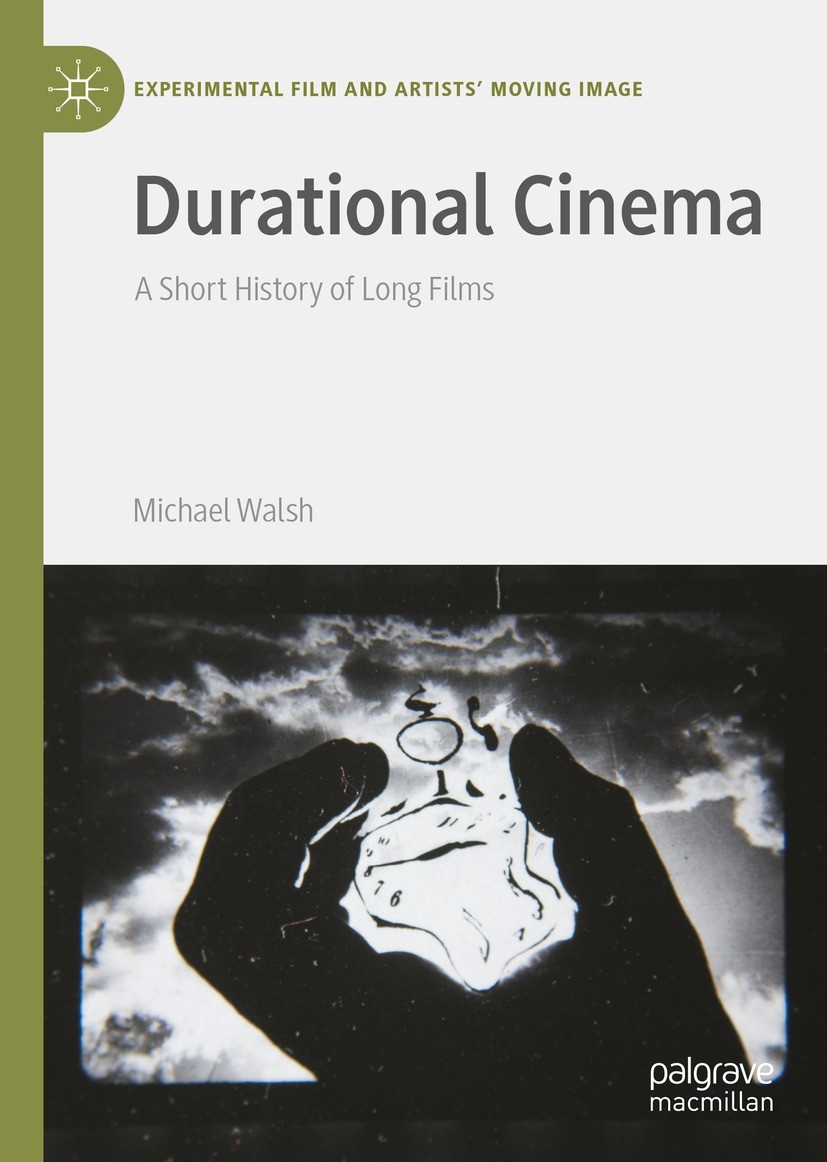
245 10|aDurational Cinema|h[electronic resource] :|bA Short History of Long Films /|cby Michael Walsh.
250 |a1st ed. 2022.
264 1|aCham :|bSpringer International Publishing :|bImprint: Palgrave Macmillan,|c2022.
300 |aXIII, 289 p.|bonline resource.
336 |atext|btxt|2rdacontent
337 |acomputer|bc|2rdamedia
338 |aonline resource|bcr|2rdacarrier
341 0 |bTable of contents navigation|2onix
341 0 |bSingle logical reading order|2onix
341 0 |bUse of color is not sole means of conveying information|2onix
341 0 |bUse of high contrast between text and background color|2onix
341 0 |bNext / Previous structural navigation|2onix
341 0 |bAll non-decorative content supports reading without sight|2onix
347 |atext file|bPDF|2rda
490 1 |aExperimental Film and Artists’ Moving Image,|x2523-7535
505 0 |a1. Introduction -- 2. The New York Avant-Garde of the 1960s -- 3. European Art Cinema in the Years After 1968 -- 4. Gallery and Museum Spaces Since the 1990s -- 5. Durational Documentary.
520 |aThis book argues for a durational cinema that is distinct from slow cinema, and outlines the history of its three main waves: the New York avant-garde of the 1960s, the European art cinema in the years after 1968, and the international cinema of gallery spaces as well as film festivals since the 1990s. Figures studied include Andy Warhol, Ken Jacobs, Chantal Akerman, Marguerite Duras, Claude Lanzmann, James Benning, Kevin Jerome Everson, Lav Diaz, and Wang Bing.Durational cinema is predominantly minimal, but has from the beginning also included a more encompassing or encyclopedic kind of filmmaking. Durational cinema is characteristically representational, and converges on certain topics (the Holocaust, deindustrialization, the experience of the working class and other marginalized people), but has no one meaning, signifying differently at different moments and in different hands. Warhol’s durational cinema of subtraction is quite different from Jacobs’s durational cinema of social disgust, while Lav Diaz’ durational sublime is quite different from Kevin Jerome Everson’s unblinking studies of African-American working people.
532 8 |aAccessibility summary: This PDF does not fully comply with PDF/UA standards, but does feature limited screen reader support, bookmarks for easy navigation and searchable, selectable text. Users of assistive technologies may experience difficulty navigating or interpreting content in this document. We recognize the importance of accessibility, and we welcome queries about accessibility for any of our products. If you have a question or an access need, please get in touch with us at accessibilitysupport@springernature.com.
532 8 |aNo reading system accessibility options actively disabled
532 8 |aPublisher contact for further accessibility information: accessibilitysupport@springernature.com
650 0|aExperimental films.
650 0|aMotion pictures|xHistory.
650 0|aMotion pictures.
650 14|aExperimental Film.
650 24|aFilm and TV History.
650 24|aFilm Theory.
710 2 |aSpringerLink (Online service)
773 0 |tSpringer Nature eBook
776 08|iPrinted edition:|z9783030760915
776 08|iPrinted edition:|z9783030760939
776 08|iPrinted edition:|z9783030760946
830 0|aExperimental Film and Artists’ Moving Image,|x2523-7535
856 40|uhttps://doi.org/10.1007/978-3-030-76092-2
912 |aZDB-2-LCM
912 |aZDB-2-SXL
950 |aLiterature, Cultural and Media Studies (SpringerNature-41173)
950 |aLiterature, Cultural and Media Studies (R0) (SpringerNature-43723)