

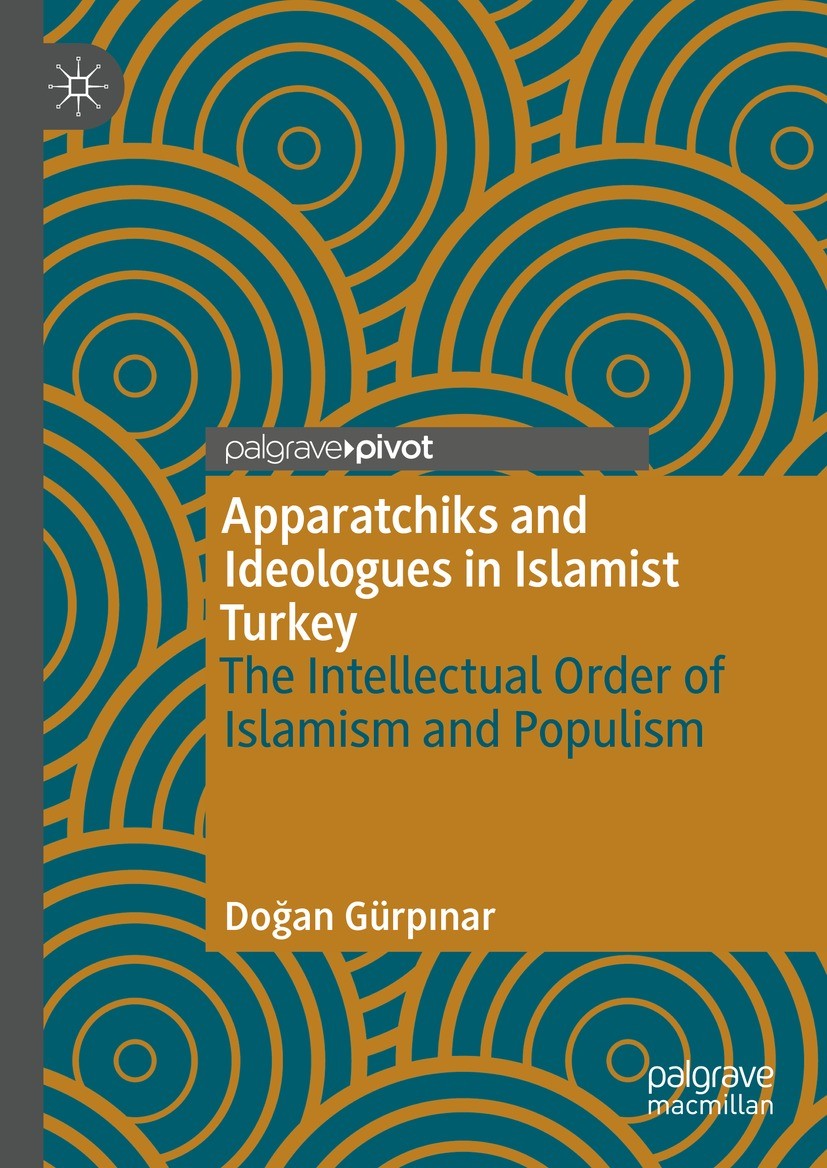
Apparatchiks and Ideologues in Islamist Turkey [electronic resource] : The Intellectual Order of Islamism and Populism / by Doğan Gürpınar.
Erişim Adresi
ISBN
9783031156526
Dil Kodu
İngilizce
Yer Numarası
EK/3825
Yazar
Basım Bildirimi
1st ed. 2023.
Yayın Bilgisi
Cham : Springer International Publishing : Imprint: Palgrave Macmillan, 2023.
Fiziksel Niteleme
VIII, 175 p. online resource.
İçindekiler Notu
1. Introduction: The AKP’s Intellectual Order and Political Technology in Comparative Perspectives -- 2. Quasi-liberal Intellectuals as AKP Apparatchiks: The Second Republic, White Turks, and Other Apologetics -- 3. Islamism, Populism, and Nativism: A Syncretic Brand -- 4. Popular Culture and Conspiracy: Managing the Political Entertainment Scene -- 5.The Rise of Politico Intellectuals: Think Tanks, and the Operators of Political Technology -- 6. Allies: The AKP-MHP Coalition and the Defense Intellectuals -- 7. The State of Turkish Universities during the AKP Rule -- 8. Historians, Ottomanphilia, Perennial Islam, and Contested National Identity in an Era of Cultural War.
Özet, vb.
This book analyzes how AKP’s embedded intellectuals operate as media spin doctors, exploring their transformation from passionately engaged intellectuals into apparatchiks. This project adapts a post-Soviet geography approach to the media, intelligentsia, and political discourse as derivative of authoritarian regimes to the Turkish context. It offers a fresh look at the Turkish political and intellectual scene and a comparative study of the populist-authoritarian politics of Turkey. Situated in the literature on the post-Soviet authoritarian regimes and their ways of governing, as well as their manipulation of public opinion, the book analyzes AKP-aligned intellectuals as apparatchiks. Gürpınar explores the different constellations of pro-AKP intellectuals vindicating the AKP regime from various angles, including: liberal/progressive intellectuals who initially supported the party for its liberal vistas but continued their support by twisting their progressive rhetoric; Islamist intellectuals blending their Islamism with populism; and national security intellectuals who joined after the AKP came to propagate a national security agenda. The book also provides an overview of the mechanisms of political technology, including the media landscape and its running by the AKP, intellectuals themselves as operators of political technology, and the problem of “cultural power.” The book will be of interest to those studying comparative authoritarian politics, populism, political communication, and scholars of Middle East and Eastern Europe. Doğan Gürpınar is an associate professor at Istanbul Technical University (İTÜ). He has published three books in English: Ottoman/Turkish Visions of the Nation, 1860–1950 (2013), Ottoman Imperial Diplomacy (2014), and Conspiracy Nation: Conspiracy Theories in Turkey (2019).
Konu
Communication in politics.
World politics.
Intellectual life __ History.
Middle East __ Politics and government.
Political Communication.
Political History.
Intellectual History.
Middle Eastern Politics.
World politics.
Intellectual life __ History.
Middle East __ Politics and government.
Political Communication.
Political History.
Intellectual History.
Middle Eastern Politics.
Kurum Adı
Eseri Alıntıla
Referansları kullanmadan önce gözden geçirmeniz ve varsa gerekli düzeltmeleri yapmanız önerilir.
Dijital Kaynak
MARC Görünümü
LEADER 05536nam a22006375i 4500
001 840571
003 TR_AnAIT
005 20260715035749
007 cr nn 008mamaa
008 221215s2023 sz | s |||| 0|eng d
020 |a9783031156526|9978-3-031-15652-6
024 7 |a10.1007/978-3-031-15652-6|2doi
041 |aeng
049 |aTürk Dil Kurumu Kütüphanesi
050 4|aJA85-85.2
072 7|aJPH|2bicssc
072 7|aGTC|2bicssc
072 7|aPOL000000|2bisacsh
072 7|aJPH|2thema
072 7|aGTC|2thema
082 04|a320.014|223
090 |aEK/3825
100 1 |aGürpınar, Doğan.|eauthor.|4aut|4http://id.loc.gov/vocabulary/relators/aut
245 10|aApparatchiks and Ideologues in Islamist Turkey|h[electronic resource] :|bThe Intellectual Order of Islamism and Populism /|cby Doğan Gürpınar.
250 |a1st ed. 2023.
264 1|aCham :|bSpringer International Publishing :|bImprint: Palgrave Macmillan,|c2023.
300 |aVIII, 175 p.|bonline resource.
336 |atext|btxt|2rdacontent
337 |acomputer|bc|2rdamedia
338 |aonline resource|bcr|2rdacarrier
341 0 |bTable of contents navigation|2onix
341 0 |bSingle logical reading order|2onix
341 0 |bUse of color is not sole means of conveying information|2onix
341 0 |bUse of high contrast between text and background color|2onix
341 0 |bNext / Previous structural navigation|2onix
341 0 |bAll non-decorative content supports reading without sight|2onix
347 |atext file|bPDF|2rda
505 0 |a1. Introduction: The AKP’s Intellectual Order and Political Technology in Comparative Perspectives -- 2. Quasi-liberal Intellectuals as AKP Apparatchiks: The Second Republic, White Turks, and Other Apologetics -- 3. Islamism, Populism, and Nativism: A Syncretic Brand -- 4. Popular Culture and Conspiracy: Managing the Political Entertainment Scene -- 5.The Rise of Politico Intellectuals: Think Tanks, and the Operators of Political Technology -- 6. Allies: The AKP-MHP Coalition and the Defense Intellectuals -- 7. The State of Turkish Universities during the AKP Rule -- 8. Historians, Ottomanphilia, Perennial Islam, and Contested National Identity in an Era of Cultural War.
520 |aThis book analyzes how AKP’s embedded intellectuals operate as media spin doctors, exploring their transformation from passionately engaged intellectuals into apparatchiks. This project adapts a post-Soviet geography approach to the media, intelligentsia, and political discourse as derivative of authoritarian regimes to the Turkish context. It offers a fresh look at the Turkish political and intellectual scene and a comparative study of the populist-authoritarian politics of Turkey. Situated in the literature on the post-Soviet authoritarian regimes and their ways of governing, as well as their manipulation of public opinion, the book analyzes AKP-aligned intellectuals as apparatchiks. Gürpınar explores the different constellations of pro-AKP intellectuals vindicating the AKP regime from various angles, including: liberal/progressive intellectuals who initially supported the party for its liberal vistas but continued their support by twisting their progressive rhetoric; Islamist intellectuals blending their Islamism with populism; and national security intellectuals who joined after the AKP came to propagate a national security agenda. The book also provides an overview of the mechanisms of political technology, including the media landscape and its running by the AKP, intellectuals themselves as operators of political technology, and the problem of “cultural power.” The book will be of interest to those studying comparative authoritarian politics, populism, political communication, and scholars of Middle East and Eastern Europe. Doğan Gürpınar is an associate professor at Istanbul Technical University (İTÜ). He has published three books in English: Ottoman/Turkish Visions of the Nation, 1860–1950 (2013), Ottoman Imperial Diplomacy (2014), and Conspiracy Nation: Conspiracy Theories in Turkey (2019).
532 8 |aAccessibility summary: This PDF does not fully comply with PDF/UA standards, but does feature limited screen reader support, bookmarks for easy navigation and searchable, selectable text. Users of assistive technologies may experience difficulty navigating or interpreting content in this document. We recognize the importance of accessibility, and we welcome queries about accessibility for any of our products. If you have a question or an access need, please get in touch with us at accessibilitysupport@springernature.com.
532 8 |aNo reading system accessibility options actively disabled
532 8 |aPublisher contact for further accessibility information: accessibilitysupport@springernature.com
650 0|aCommunication in politics.
650 0|aWorld politics.
650 0|aIntellectual life|xHistory.
650 0|aMiddle East|xPolitics and government.
650 14|aPolitical Communication.
650 24|aPolitical History.
650 24|aIntellectual History.
650 24|aMiddle Eastern Politics.
710 2 |aSpringerLink (Online service)
773 0 |tSpringer Nature eBook
776 08|iPrinted edition:|z9783031156519
776 08|iPrinted edition:|z9783031156533
856 40|uhttps://doi.org/10.1007/978-3-031-15652-6
912 |aZDB-2-LCM
912 |aZDB-2-SXL
950 |aLiterature, Cultural and Media Studies (SpringerNature-41173)
950 |aLiterature, Cultural and Media Studies (R0) (SpringerNature-43723)
001 840571
003 TR_AnAIT
005 20260715035749
007 cr nn 008mamaa
008 221215s2023 sz | s |||| 0|eng d
020 |a9783031156526|9978-3-031-15652-6
024 7 |a10.1007/978-3-031-15652-6|2doi
041 |aeng
049 |aTürk Dil Kurumu Kütüphanesi
050 4|aJA85-85.2
072 7|aJPH|2bicssc
072 7|aGTC|2bicssc
072 7|aPOL000000|2bisacsh
072 7|aJPH|2thema
072 7|aGTC|2thema
082 04|a320.014|223
090 |aEK/3825
100 1 |aGürpınar, Doğan.|eauthor.|4aut|4http://id.loc.gov/vocabulary/relators/aut
245 10|aApparatchiks and Ideologues in Islamist Turkey|h[electronic resource] :|bThe Intellectual Order of Islamism and Populism /|cby Doğan Gürpınar.
250 |a1st ed. 2023.
264 1|aCham :|bSpringer International Publishing :|bImprint: Palgrave Macmillan,|c2023.
300 |aVIII, 175 p.|bonline resource.
336 |atext|btxt|2rdacontent
337 |acomputer|bc|2rdamedia
338 |aonline resource|bcr|2rdacarrier
341 0 |bTable of contents navigation|2onix
341 0 |bSingle logical reading order|2onix
341 0 |bUse of color is not sole means of conveying information|2onix
341 0 |bUse of high contrast between text and background color|2onix
341 0 |bNext / Previous structural navigation|2onix
341 0 |bAll non-decorative content supports reading without sight|2onix
347 |atext file|bPDF|2rda
505 0 |a1. Introduction: The AKP’s Intellectual Order and Political Technology in Comparative Perspectives -- 2. Quasi-liberal Intellectuals as AKP Apparatchiks: The Second Republic, White Turks, and Other Apologetics -- 3. Islamism, Populism, and Nativism: A Syncretic Brand -- 4. Popular Culture and Conspiracy: Managing the Political Entertainment Scene -- 5.The Rise of Politico Intellectuals: Think Tanks, and the Operators of Political Technology -- 6. Allies: The AKP-MHP Coalition and the Defense Intellectuals -- 7. The State of Turkish Universities during the AKP Rule -- 8. Historians, Ottomanphilia, Perennial Islam, and Contested National Identity in an Era of Cultural War.
520 |aThis book analyzes how AKP’s embedded intellectuals operate as media spin doctors, exploring their transformation from passionately engaged intellectuals into apparatchiks. This project adapts a post-Soviet geography approach to the media, intelligentsia, and political discourse as derivative of authoritarian regimes to the Turkish context. It offers a fresh look at the Turkish political and intellectual scene and a comparative study of the populist-authoritarian politics of Turkey. Situated in the literature on the post-Soviet authoritarian regimes and their ways of governing, as well as their manipulation of public opinion, the book analyzes AKP-aligned intellectuals as apparatchiks. Gürpınar explores the different constellations of pro-AKP intellectuals vindicating the AKP regime from various angles, including: liberal/progressive intellectuals who initially supported the party for its liberal vistas but continued their support by twisting their progressive rhetoric; Islamist intellectuals blending their Islamism with populism; and national security intellectuals who joined after the AKP came to propagate a national security agenda. The book also provides an overview of the mechanisms of political technology, including the media landscape and its running by the AKP, intellectuals themselves as operators of political technology, and the problem of “cultural power.” The book will be of interest to those studying comparative authoritarian politics, populism, political communication, and scholars of Middle East and Eastern Europe. Doğan Gürpınar is an associate professor at Istanbul Technical University (İTÜ). He has published three books in English: Ottoman/Turkish Visions of the Nation, 1860–1950 (2013), Ottoman Imperial Diplomacy (2014), and Conspiracy Nation: Conspiracy Theories in Turkey (2019).
532 8 |aAccessibility summary: This PDF does not fully comply with PDF/UA standards, but does feature limited screen reader support, bookmarks for easy navigation and searchable, selectable text. Users of assistive technologies may experience difficulty navigating or interpreting content in this document. We recognize the importance of accessibility, and we welcome queries about accessibility for any of our products. If you have a question or an access need, please get in touch with us at accessibilitysupport@springernature.com.
532 8 |aNo reading system accessibility options actively disabled
532 8 |aPublisher contact for further accessibility information: accessibilitysupport@springernature.com
650 0|aCommunication in politics.
650 0|aWorld politics.
650 0|aIntellectual life|xHistory.
650 0|aMiddle East|xPolitics and government.
650 14|aPolitical Communication.
650 24|aPolitical History.
650 24|aIntellectual History.
650 24|aMiddle Eastern Politics.
710 2 |aSpringerLink (Online service)
773 0 |tSpringer Nature eBook
776 08|iPrinted edition:|z9783031156519
776 08|iPrinted edition:|z9783031156533
856 40|uhttps://doi.org/10.1007/978-3-031-15652-6
912 |aZDB-2-LCM
912 |aZDB-2-SXL
950 |aLiterature, Cultural and Media Studies (SpringerNature-41173)
950 |aLiterature, Cultural and Media Studies (R0) (SpringerNature-43723)
Materyaller
Depodan talep edilen materyal sadece kütüphane içerisinde kullanılmaktadır.
Materyal dışarıya ödünç verilmemektedir.
Materyal dışarıya ödünç verilmemektedir.
