

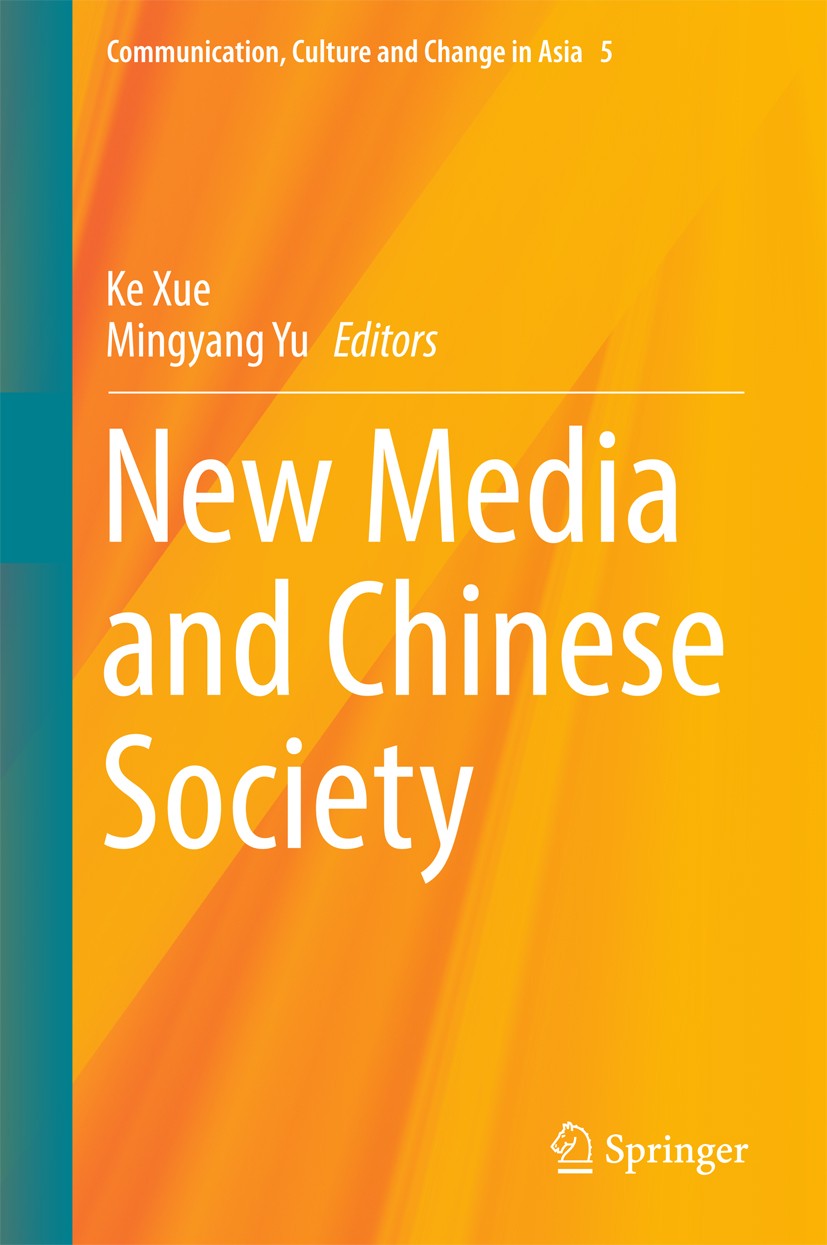
New Media and Chinese Society [electronic resource] / edited by Ke Xue, Mingyang Yu.
Erişim Adresi
ISBN
9789811067105
Dil Kodu
İngilizce
Yer Numarası
EK/3772
Basım Bildirimi
1st ed. 2017.
Yayın Bilgisi
Singapore : Springer Nature Singapore : Imprint: Springer, 2017.
Fiziksel Niteleme
XVII, 290 p. 22 illus., 13 illus. in color. online resource.
Dizi
Communication, Culture and Change in Asia, 2366-4673 ; 5
İçindekiler Notu
Preface -- Part 1: Development of the New Media Industry in China -- Chapter 1. Media Evolution from the Perspective of Scientific and Technological Development (Manli Cheng) -- Chapter 2. New Media, Market Competition, and Media Diversity: An Examination of Taiwan’s Terrestrial TV Market from 1986 to 2002 (Shu-Chu Sarrina Li) -- Chapter 3. Blue or Red Sea? An Analysis of Chinese Mobile Radio Industry (Laihui Yu) -- Part 2: New Media and the Chinese Society -- Chapter 4. Social Media Use, Political Efficacy, and Political Participation in China: The Moderating Role of Need for Orientation (Lu Wei) -- Chapter 5. Intermittent Use of Social Media: Facebook and Weibo Use, Their Predictors and Social and Political Implications (Yinjiao Ye) -- Chapter 6. New Media’s Impact on China from a Culture Perspective (Yi Xu) -- Chapter 7. An Analysis of Moral Coercion in the Context of Media Socialization (Peiren Shao) -- Chapter 8. The Changes and Deviations of Political Discourse Employed in GovernmentCommunication in the Internet Age (Xiaohong Wang) -- Chapter 9. Challenges to China’s Diplomacy in the Context of New Media (Xiaomeng Song) -- Part 3: Social Media Usage in Everyday Life -- Chapter 10. Digital Photography and Memory Practice in Contemporary Chinese Families (Rui Yang) -- Chapter 11. WeChat and Distant Family Intergenerational Communication in China: A Study of Online Content Sharing on WeChat (Baohua Zhou) -- Chapter 12. A Study on Chinese Mobile Internet Users’ Continuance Intention of Online Brand Community (Yuanbing Deng) -- Part 4: Content Production and Consumption in the New Media Era -- Chapter 13. To Stick or to Switch: Understanding Social Reading Apps Continuance by Evidence Collected from Chinese College Students (Wu Li) -- Chapter 14. Shaping Music Consumption in China's New Media Era: Use, Exchange, and Identity (Mengyu Luo) -- Chapter 15. To Collaborate or Not? A Study of Motivations for Collaborative Knowledge Production in Cyberspace (Jia He) -- Chapter 16. A Study on the Effectiveness of We-Media as a Platform for Intercultural Communication (Sun Yanran) -- Afterword (Xue Ke).
Özet, vb.
This book focuses on the influence of social media on Chinese society. The respective chapters present research by top-tier communication scholars from prominent Chinese universities and offer revealing findings on the interplay between media / social media, economics and politics. To that end, both qualitative and quantitative methods based on classical theories of communication and economics are drawn upon. The book explores four main areas: the challenges and opportunities for Chinese journalism and communications, changes in Chinese economic development, influences and forecasts for Chinese politics, and the impacts on Chinese culture. As the chapter contributors hail from diverse regions within China and represent three generations of communication scholars, the book offers a comprehensive guide, helping readers understand the impact of social media on China’s development from a broad range of perspectives, and sharing insights on its impacts around the world.
Konu
Social media.
Mass media.
Communication in politics.
Ethnology __ Asia.
Culture.
Social Media.
Media Sociology.
Political Communication.
Asian Culture.
Mass media.
Communication in politics.
Ethnology __ Asia.
Culture.
Social Media.
Media Sociology.
Political Communication.
Asian Culture.
Diğer Yazarlar
Kurum Adı
Eseri Alıntıla
Referansları kullanmadan önce gözden geçirmeniz ve varsa gerekli düzeltmeleri yapmanız önerilir.
Dijital Kaynak
MARC Görünümü
LEADER 05153nam a22005655i 4500
001 840584
003 TR_AnAIT
005 20260715035743
007 cr nn 008mamaa
008 171024s2017 si | s |||| 0|eng d
020 |a9789811067105|9978-981-10-6710-5
024 7 |a10.1007/978-981-10-6710-5|2doi
041 |aeng
049 |aTürk Dil Kurumu Kütüphanesi
050 4|aHM741-743
072 7|aJFD|2bicssc
072 7|aSOC052000|2bisacsh
072 7|aJBCT1|2thema
082 04|a302.231|223
090 |aEK/3772
245 10|aNew Media and Chinese Society|h[electronic resource] /|cedited by Ke Xue, Mingyang Yu.
250 |a1st ed. 2017.
264 1|aSingapore :|bSpringer Nature Singapore :|bImprint: Springer,|c2017.
300 |aXVII, 290 p. 22 illus., 13 illus. in color.|bonline resource.
336 |atext|btxt|2rdacontent
337 |acomputer|bc|2rdamedia
338 |aonline resource|bcr|2rdacarrier
347 |atext file|bPDF|2rda
490 1 |aCommunication, Culture and Change in Asia,|x2366-4673 ;|v5
505 0 |aPreface -- Part 1: Development of the New Media Industry in China -- Chapter 1. Media Evolution from the Perspective of Scientific and Technological Development (Manli Cheng) -- Chapter 2. New Media, Market Competition, and Media Diversity: An Examination of Taiwan’s Terrestrial TV Market from 1986 to 2002 (Shu-Chu Sarrina Li) -- Chapter 3. Blue or Red Sea? An Analysis of Chinese Mobile Radio Industry (Laihui Yu) -- Part 2: New Media and the Chinese Society -- Chapter 4. Social Media Use, Political Efficacy, and Political Participation in China: The Moderating Role of Need for Orientation (Lu Wei) -- Chapter 5. Intermittent Use of Social Media: Facebook and Weibo Use, Their Predictors and Social and Political Implications (Yinjiao Ye) -- Chapter 6. New Media’s Impact on China from a Culture Perspective (Yi Xu) -- Chapter 7. An Analysis of Moral Coercion in the Context of Media Socialization (Peiren Shao) -- Chapter 8. The Changes and Deviations of Political Discourse Employed in GovernmentCommunication in the Internet Age (Xiaohong Wang) -- Chapter 9. Challenges to China’s Diplomacy in the Context of New Media (Xiaomeng Song) -- Part 3: Social Media Usage in Everyday Life -- Chapter 10. Digital Photography and Memory Practice in Contemporary Chinese Families (Rui Yang) -- Chapter 11. WeChat and Distant Family Intergenerational Communication in China: A Study of Online Content Sharing on WeChat (Baohua Zhou) -- Chapter 12. A Study on Chinese Mobile Internet Users’ Continuance Intention of Online Brand Community (Yuanbing Deng) -- Part 4: Content Production and Consumption in the New Media Era -- Chapter 13. To Stick or to Switch: Understanding Social Reading Apps Continuance by Evidence Collected from Chinese College Students (Wu Li) -- Chapter 14. Shaping Music Consumption in China's New Media Era: Use, Exchange, and Identity (Mengyu Luo) -- Chapter 15. To Collaborate or Not? A Study of Motivations for Collaborative Knowledge Production in Cyberspace (Jia He) -- Chapter 16. A Study on the Effectiveness of We-Media as a Platform for Intercultural Communication (Sun Yanran) -- Afterword (Xue Ke).
520 |aThis book focuses on the influence of social media on Chinese society. The respective chapters present research by top-tier communication scholars from prominent Chinese universities and offer revealing findings on the interplay between media / social media, economics and politics. To that end, both qualitative and quantitative methods based on classical theories of communication and economics are drawn upon. The book explores four main areas: the challenges and opportunities for Chinese journalism and communications, changes in Chinese economic development, influences and forecasts for Chinese politics, and the impacts on Chinese culture. As the chapter contributors hail from diverse regions within China and represent three generations of communication scholars, the book offers a comprehensive guide, helping readers understand the impact of social media on China’s development from a broad range of perspectives, and sharing insights on its impacts around the world.
650 0|aSocial media.
650 0|aMass media.
650 0|aCommunication in politics.
650 0|aEthnology|xAsia.
650 0|aCulture.
650 14|aSocial Media.
650 24|aMedia Sociology.
650 24|aPolitical Communication.
650 24|aAsian Culture.
700 1 |aXue, Ke.|eeditor.|4edt|4http://id.loc.gov/vocabulary/relators/edt
700 1 |aYu, Mingyang.|eeditor.|4edt|4http://id.loc.gov/vocabulary/relators/edt
710 2 |aSpringerLink (Online service)
773 0 |tSpringer Nature eBook
776 08|iPrinted edition:|z9789811067099
776 08|iPrinted edition:|z9789811067112
776 08|iPrinted edition:|z9789811349355
830 0|aCommunication, Culture and Change in Asia,|x2366-4673 ;|v5
856 40|uhttps://doi.org/10.1007/978-981-10-6710-5
912 |aZDB-2-LCM
912 |aZDB-2-SXL
950 |aLiterature, Cultural and Media Studies (SpringerNature-41173)
950 |aLiterature, Cultural and Media Studies (R0) (SpringerNature-43723)
001 840584
003 TR_AnAIT
005 20260715035743
007 cr nn 008mamaa
008 171024s2017 si | s |||| 0|eng d
020 |a9789811067105|9978-981-10-6710-5
024 7 |a10.1007/978-981-10-6710-5|2doi
041 |aeng
049 |aTürk Dil Kurumu Kütüphanesi
050 4|aHM741-743
072 7|aJFD|2bicssc
072 7|aSOC052000|2bisacsh
072 7|aJBCT1|2thema
082 04|a302.231|223
090 |aEK/3772
245 10|aNew Media and Chinese Society|h[electronic resource] /|cedited by Ke Xue, Mingyang Yu.
250 |a1st ed. 2017.
264 1|aSingapore :|bSpringer Nature Singapore :|bImprint: Springer,|c2017.
300 |aXVII, 290 p. 22 illus., 13 illus. in color.|bonline resource.
336 |atext|btxt|2rdacontent
337 |acomputer|bc|2rdamedia
338 |aonline resource|bcr|2rdacarrier
347 |atext file|bPDF|2rda
490 1 |aCommunication, Culture and Change in Asia,|x2366-4673 ;|v5
505 0 |aPreface -- Part 1: Development of the New Media Industry in China -- Chapter 1. Media Evolution from the Perspective of Scientific and Technological Development (Manli Cheng) -- Chapter 2. New Media, Market Competition, and Media Diversity: An Examination of Taiwan’s Terrestrial TV Market from 1986 to 2002 (Shu-Chu Sarrina Li) -- Chapter 3. Blue or Red Sea? An Analysis of Chinese Mobile Radio Industry (Laihui Yu) -- Part 2: New Media and the Chinese Society -- Chapter 4. Social Media Use, Political Efficacy, and Political Participation in China: The Moderating Role of Need for Orientation (Lu Wei) -- Chapter 5. Intermittent Use of Social Media: Facebook and Weibo Use, Their Predictors and Social and Political Implications (Yinjiao Ye) -- Chapter 6. New Media’s Impact on China from a Culture Perspective (Yi Xu) -- Chapter 7. An Analysis of Moral Coercion in the Context of Media Socialization (Peiren Shao) -- Chapter 8. The Changes and Deviations of Political Discourse Employed in GovernmentCommunication in the Internet Age (Xiaohong Wang) -- Chapter 9. Challenges to China’s Diplomacy in the Context of New Media (Xiaomeng Song) -- Part 3: Social Media Usage in Everyday Life -- Chapter 10. Digital Photography and Memory Practice in Contemporary Chinese Families (Rui Yang) -- Chapter 11. WeChat and Distant Family Intergenerational Communication in China: A Study of Online Content Sharing on WeChat (Baohua Zhou) -- Chapter 12. A Study on Chinese Mobile Internet Users’ Continuance Intention of Online Brand Community (Yuanbing Deng) -- Part 4: Content Production and Consumption in the New Media Era -- Chapter 13. To Stick or to Switch: Understanding Social Reading Apps Continuance by Evidence Collected from Chinese College Students (Wu Li) -- Chapter 14. Shaping Music Consumption in China's New Media Era: Use, Exchange, and Identity (Mengyu Luo) -- Chapter 15. To Collaborate or Not? A Study of Motivations for Collaborative Knowledge Production in Cyberspace (Jia He) -- Chapter 16. A Study on the Effectiveness of We-Media as a Platform for Intercultural Communication (Sun Yanran) -- Afterword (Xue Ke).
520 |aThis book focuses on the influence of social media on Chinese society. The respective chapters present research by top-tier communication scholars from prominent Chinese universities and offer revealing findings on the interplay between media / social media, economics and politics. To that end, both qualitative and quantitative methods based on classical theories of communication and economics are drawn upon. The book explores four main areas: the challenges and opportunities for Chinese journalism and communications, changes in Chinese economic development, influences and forecasts for Chinese politics, and the impacts on Chinese culture. As the chapter contributors hail from diverse regions within China and represent three generations of communication scholars, the book offers a comprehensive guide, helping readers understand the impact of social media on China’s development from a broad range of perspectives, and sharing insights on its impacts around the world.
650 0|aSocial media.
650 0|aMass media.
650 0|aCommunication in politics.
650 0|aEthnology|xAsia.
650 0|aCulture.
650 14|aSocial Media.
650 24|aMedia Sociology.
650 24|aPolitical Communication.
650 24|aAsian Culture.
700 1 |aXue, Ke.|eeditor.|4edt|4http://id.loc.gov/vocabulary/relators/edt
700 1 |aYu, Mingyang.|eeditor.|4edt|4http://id.loc.gov/vocabulary/relators/edt
710 2 |aSpringerLink (Online service)
773 0 |tSpringer Nature eBook
776 08|iPrinted edition:|z9789811067099
776 08|iPrinted edition:|z9789811067112
776 08|iPrinted edition:|z9789811349355
830 0|aCommunication, Culture and Change in Asia,|x2366-4673 ;|v5
856 40|uhttps://doi.org/10.1007/978-981-10-6710-5
912 |aZDB-2-LCM
912 |aZDB-2-SXL
950 |aLiterature, Cultural and Media Studies (SpringerNature-41173)
950 |aLiterature, Cultural and Media Studies (R0) (SpringerNature-43723)
Materyaller
Depodan talep edilen materyal sadece kütüphane içerisinde kullanılmaktadır.
Materyal dışarıya ödünç verilmemektedir.
Materyal dışarıya ödünç verilmemektedir.
