

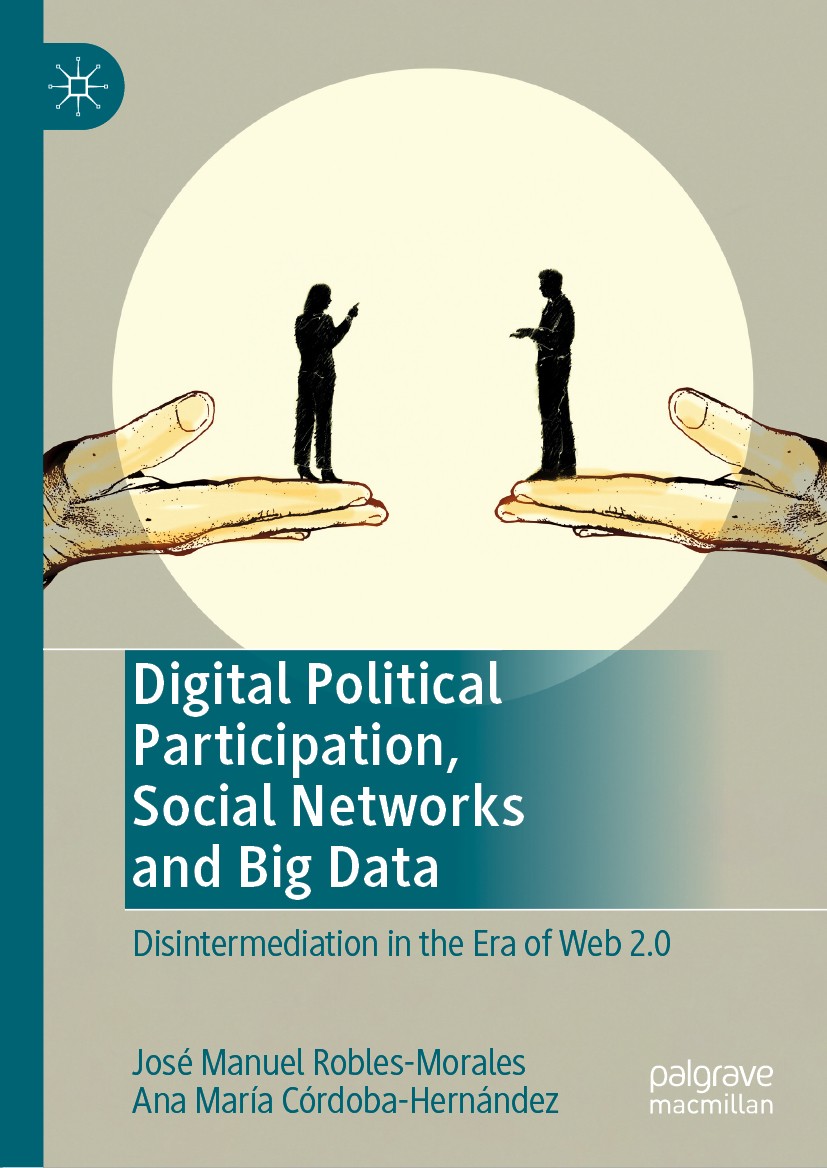
Digital Political Participation, Social Networks and Big Data [electronic resource] : Disintermediation in the Era of Web 2.0 / by José Manuel Robles-Morales, Ana María Córdoba-Hernández.
Erişim Adresi
ISBN
9783030277574
Dil Kodu
İngilizce
Yer Numarası
EK/3951
Basım Bildirimi
1st ed. 2019.
Yayın Bilgisi
Cham : Springer International Publishing : Imprint: Palgrave Macmillan, 2019.
Fiziksel Niteleme
XI, 151 p. 10 illus., 1 illus. in color. online resource.
İçindekiler Notu
Chapter 1. Introduction -- PART I. THE FRAMEWORK: TOWARDS A DISINTERMEDIATED POLITICS? -- Chapter 2. The mediated public opinion: When everything happens through others -- Chapter 3. The culture of politics on the Network -- Chapter 4. The political potential of social networks -- Chapter 5. The dreams of technological reason generate monsters -- PART II. DISINTERMEDIATION IN SOCIAL NETWORKS -- Chapter 6. The disintermediation of the agents, the case of #UnidosPodemos -- Chapter 7. The disintermediation of the message: the case of #BlackLivesMatter -- Chapter 8. The disintermediation of the space: the case of #BringBackOurGirls -- Chapter 9. How does politics work? The Big Data view -- Chapter 10. Conclusions.
Özet, vb.
This book explores the changes in political communication in light of the development of a public opinion mediated by web 2.0 technologies. One of the most important changes in political communication is related to the process of disintermediation, i.e. the process by which digital technologies allow citizens to compete in the public space with those agents who, traditionally, co-opted public opinion. However, while disintermediation has undeniably generated a number of advances, having linked citizens to the public debate, the authors highlight some aspects where disintermediation is moving away from a rational and inclusive public space. They argue that these aspects, related to the immediacy, polarization and incivility of the communication, obscure the possibilities for democratization of digital political communication. José Manuel Robles-Morales is a lecturer at the Sociology III Department at Complutense University, Spain. His research focuses on digital political participation, digital political theory, and technological differences (digital divide). His publications have appeared in journals such as Information Communication and Society, The European Journal of Communication Research, Revista Internacional de Sociología and Revista Española de Investigaciones Sociológicas. Ana María Córdoba-Hernández is Research and Faculty Head at the Faculty of Communication at the University of La Sabana, Colombia. Her research focuses on media, specifically in the context of international communication, digital political participation, the transformation of the network society and the analysis of socio-political phenomena across social networks.
Konu
Digital media.
Communication in politics.
Political science.
Political sociology.
Social media.
Big data.
Digital and New Media.
Political Communication.
Political Science.
Political Sociology.
Social Media.
Big Data.
Communication in politics.
Political science.
Political sociology.
Social media.
Big data.
Digital and New Media.
Political Communication.
Political Science.
Political Sociology.
Social Media.
Big Data.
Diğer Yazarlar
Kurum Adı
Eseri Alıntıla
Referansları kullanmadan önce gözden geçirmeniz ve varsa gerekli düzeltmeleri yapmanız önerilir.
Dijital Kaynak
MARC Görünümü
LEADER 04545nam a22005775i 4500
001 840616
003 TR_AnAIT
005 20260715035723
007 cr nn 008mamaa
008 190918s2019 sz | s |||| 0|eng d
020 |a9783030277574|9978-3-030-27757-4
024 7 |a10.1007/978-3-030-27757-4|2doi
041 |aeng
049 |aTürk Dil Kurumu Kütüphanesi
050 4|aP87-96
072 7|aJFD|2bicssc
072 7|aSOC052000|2bisacsh
072 7|aJBCT1|2thema
082 04|a302.231|223
090 |aEK/3951
100 1 |aRobles-Morales, José Manuel.|eauthor.|4aut|4http://id.loc.gov/vocabulary/relators/aut
245 10|aDigital Political Participation, Social Networks and Big Data|h[electronic resource] :|bDisintermediation in the Era of Web 2.0 /|cby José Manuel Robles-Morales, Ana María Córdoba-Hernández.
250 |a1st ed. 2019.
264 1|aCham :|bSpringer International Publishing :|bImprint: Palgrave Macmillan,|c2019.
300 |aXI, 151 p. 10 illus., 1 illus. in color.|bonline resource.
336 |atext|btxt|2rdacontent
337 |acomputer|bc|2rdamedia
338 |aonline resource|bcr|2rdacarrier
347 |atext file|bPDF|2rda
505 0 |aChapter 1. Introduction -- PART I. THE FRAMEWORK: TOWARDS A DISINTERMEDIATED POLITICS? -- Chapter 2. The mediated public opinion: When everything happens through others -- Chapter 3. The culture of politics on the Network -- Chapter 4. The political potential of social networks -- Chapter 5. The dreams of technological reason generate monsters -- PART II. DISINTERMEDIATION IN SOCIAL NETWORKS -- Chapter 6. The disintermediation of the agents, the case of #UnidosPodemos -- Chapter 7. The disintermediation of the message: the case of #BlackLivesMatter -- Chapter 8. The disintermediation of the space: the case of #BringBackOurGirls -- Chapter 9. How does politics work? The Big Data view -- Chapter 10. Conclusions.
520 |aThis book explores the changes in political communication in light of the development of a public opinion mediated by web 2.0 technologies. One of the most important changes in political communication is related to the process of disintermediation, i.e. the process by which digital technologies allow citizens to compete in the public space with those agents who, traditionally, co-opted public opinion. However, while disintermediation has undeniably generated a number of advances, having linked citizens to the public debate, the authors highlight some aspects where disintermediation is moving away from a rational and inclusive public space. They argue that these aspects, related to the immediacy, polarization and incivility of the communication, obscure the possibilities for democratization of digital political communication. José Manuel Robles-Morales is a lecturer at the Sociology III Department at Complutense University, Spain. His research focuses on digital political participation, digital political theory, and technological differences (digital divide). His publications have appeared in journals such as Information Communication and Society, The European Journal of Communication Research, Revista Internacional de Sociología and Revista Española de Investigaciones Sociológicas. Ana María Córdoba-Hernández is Research and Faculty Head at the Faculty of Communication at the University of La Sabana, Colombia. Her research focuses on media, specifically in the context of international communication, digital political participation, the transformation of the network society and the analysis of socio-political phenomena across social networks.
650 0|aDigital media.
650 0|aCommunication in politics.
650 0|aPolitical science.
650 0|aPolitical sociology.
650 0|aSocial media.
650 0|aBig data.
650 14|aDigital and New Media.
650 24|aPolitical Communication.
650 24|aPolitical Science.
650 24|aPolitical Sociology.
650 24|aSocial Media.
650 24|aBig Data.
700 1 |aCórdoba-Hernández, Ana María.|eauthor.|4aut|4http://id.loc.gov/vocabulary/relators/aut
710 2 |aSpringerLink (Online service)
773 0 |tSpringer Nature eBook
776 08|iPrinted edition:|z9783030277567
776 08|iPrinted edition:|z9783030277581
776 08|iPrinted edition:|z9783030277598
856 40|uhttps://doi.org/10.1007/978-3-030-27757-4
912 |aZDB-2-LCM
912 |aZDB-2-SXL
950 |aLiterature, Cultural and Media Studies (SpringerNature-41173)
950 |aLiterature, Cultural and Media Studies (R0) (SpringerNature-43723)
001 840616
003 TR_AnAIT
005 20260715035723
007 cr nn 008mamaa
008 190918s2019 sz | s |||| 0|eng d
020 |a9783030277574|9978-3-030-27757-4
024 7 |a10.1007/978-3-030-27757-4|2doi
041 |aeng
049 |aTürk Dil Kurumu Kütüphanesi
050 4|aP87-96
072 7|aJFD|2bicssc
072 7|aSOC052000|2bisacsh
072 7|aJBCT1|2thema
082 04|a302.231|223
090 |aEK/3951
100 1 |aRobles-Morales, José Manuel.|eauthor.|4aut|4http://id.loc.gov/vocabulary/relators/aut
245 10|aDigital Political Participation, Social Networks and Big Data|h[electronic resource] :|bDisintermediation in the Era of Web 2.0 /|cby José Manuel Robles-Morales, Ana María Córdoba-Hernández.
250 |a1st ed. 2019.
264 1|aCham :|bSpringer International Publishing :|bImprint: Palgrave Macmillan,|c2019.
300 |aXI, 151 p. 10 illus., 1 illus. in color.|bonline resource.
336 |atext|btxt|2rdacontent
337 |acomputer|bc|2rdamedia
338 |aonline resource|bcr|2rdacarrier
347 |atext file|bPDF|2rda
505 0 |aChapter 1. Introduction -- PART I. THE FRAMEWORK: TOWARDS A DISINTERMEDIATED POLITICS? -- Chapter 2. The mediated public opinion: When everything happens through others -- Chapter 3. The culture of politics on the Network -- Chapter 4. The political potential of social networks -- Chapter 5. The dreams of technological reason generate monsters -- PART II. DISINTERMEDIATION IN SOCIAL NETWORKS -- Chapter 6. The disintermediation of the agents, the case of #UnidosPodemos -- Chapter 7. The disintermediation of the message: the case of #BlackLivesMatter -- Chapter 8. The disintermediation of the space: the case of #BringBackOurGirls -- Chapter 9. How does politics work? The Big Data view -- Chapter 10. Conclusions.
520 |aThis book explores the changes in political communication in light of the development of a public opinion mediated by web 2.0 technologies. One of the most important changes in political communication is related to the process of disintermediation, i.e. the process by which digital technologies allow citizens to compete in the public space with those agents who, traditionally, co-opted public opinion. However, while disintermediation has undeniably generated a number of advances, having linked citizens to the public debate, the authors highlight some aspects where disintermediation is moving away from a rational and inclusive public space. They argue that these aspects, related to the immediacy, polarization and incivility of the communication, obscure the possibilities for democratization of digital political communication. José Manuel Robles-Morales is a lecturer at the Sociology III Department at Complutense University, Spain. His research focuses on digital political participation, digital political theory, and technological differences (digital divide). His publications have appeared in journals such as Information Communication and Society, The European Journal of Communication Research, Revista Internacional de Sociología and Revista Española de Investigaciones Sociológicas. Ana María Córdoba-Hernández is Research and Faculty Head at the Faculty of Communication at the University of La Sabana, Colombia. Her research focuses on media, specifically in the context of international communication, digital political participation, the transformation of the network society and the analysis of socio-political phenomena across social networks.
650 0|aDigital media.
650 0|aCommunication in politics.
650 0|aPolitical science.
650 0|aPolitical sociology.
650 0|aSocial media.
650 0|aBig data.
650 14|aDigital and New Media.
650 24|aPolitical Communication.
650 24|aPolitical Science.
650 24|aPolitical Sociology.
650 24|aSocial Media.
650 24|aBig Data.
700 1 |aCórdoba-Hernández, Ana María.|eauthor.|4aut|4http://id.loc.gov/vocabulary/relators/aut
710 2 |aSpringerLink (Online service)
773 0 |tSpringer Nature eBook
776 08|iPrinted edition:|z9783030277567
776 08|iPrinted edition:|z9783030277581
776 08|iPrinted edition:|z9783030277598
856 40|uhttps://doi.org/10.1007/978-3-030-27757-4
912 |aZDB-2-LCM
912 |aZDB-2-SXL
950 |aLiterature, Cultural and Media Studies (SpringerNature-41173)
950 |aLiterature, Cultural and Media Studies (R0) (SpringerNature-43723)
Materyaller
Depodan talep edilen materyal sadece kütüphane içerisinde kullanılmaktadır.
Materyal dışarıya ödünç verilmemektedir.
Materyal dışarıya ödünç verilmemektedir.
