LEADER 03910nam a22005535i 4500
001 840622
003 TR_AnAIT
005 20260715035719
007 cr nn 008mamaa
008 200109s2020 sz | s |||| 0|eng d
020 |a9783030318819|9978-3-030-31881-9
024 7 |a10.1007/978-3-030-31881-9|2doi
041 |aeng
049 |aTürk Dil Kurumu Kütüphanesi
050 4|aHM621-656
072 7|aJFCA|2bicssc
072 7|aSOC022000|2bisacsh
072 7|aJBCC1|2thema
082 04|a306|223
090 |aEK/3776
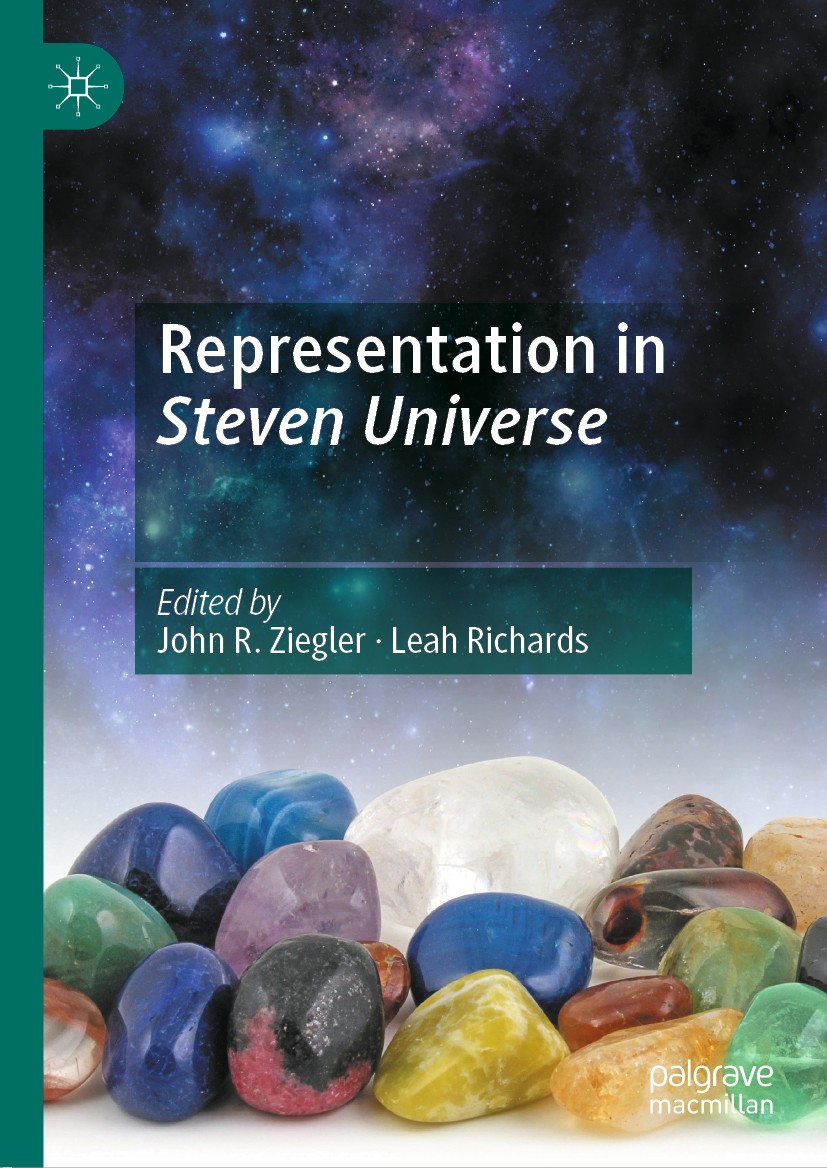
245 10|aRepresentation in Steven Universe|h[electronic resource] /|cedited by John R. Ziegler, Leah Richards.
250 |a1st ed. 2020.
264 1|aCham :|bSpringer International Publishing :|bImprint: Palgrave Macmillan,|c2020.
300 |aXVI, 260 p. 22 illus., 21 illus. in color.|bonline resource.
336 |atext|btxt|2rdacontent
337 |acomputer|bc|2rdamedia
338 |aonline resource|bcr|2rdacarrier
347 |atext file|bPDF|2rda
505 0 |aIntroduction; John R. Ziegler and Leah Richards -- 1. Drawing Queerness Forward: Fusion, Futurity, and Steven Universe; Kevin Cooley -- 2. “I am a Conversation”: Gem Fusion, Representation, and Privilege; Olivia Zolciak -- 3. Queer Transformation and Fluid Fandom; Jake Pitre -- 4. Globalizing Fandoms: Envisioning Queer Futures from Kunihiko Ikuhara to Rebecca Sugar; Jacqueline Ristola -- 5. Contact Zone Earth: Power and Consent in Steven Universe and Octavia Butler’s Lilith’s Brood; Emrys Donaldson -- 6. “Truth is a feeling in your gut”: Ronaldo Fryman, Conspiracy Theories, and Media Satire; John R. Ziegler and Leah Richards -- (Two additional chapters forthcoming following peer review recommendations).
520 |aThis book assembles ten scholarly examinations of the politics of representation in the groundbreaking animated children’s television series Steven Universe. These analyses address a range of representational sites and subjects, including queerness, race, fandom, colonialism, and the environment, and provide an accessible foundation for further scholarship. The introduction contextualizes Steven Universe in the children’s science-fiction and anime traditions and discusses the series’ crucial mechanic of fusion. Subsequent chapters probe the fandom’s expressions of queer identity, approach the series’ queer force through the political potential of the animated body, consider the unequal privilege of different female characters, and trace the influence of anime director Kunihiko Ikuhara. Further chapters argue that Ronaldo allows satire of multiple media forms, focus on Onion as a surrealist trickster, and contemplate cross-species hybridity and consent. Thefinal chapters concentrate on background art in connection with ecological and geological narratives, adopt a decolonial perspective on the Gems’ legacy, and interrogate how the tension between personal and cultural narratives constantly recreates memory.
650 0|aPopular Culture.
650 0|aAnimated films.
650 0|aSex.
650 0|aMotion pictures.
650 0|aCommunication.
650 14|aPopular Culture.
650 24|aAnimation.
650 24|aGender Studies.
650 24|aClose Readings in Film and TV.
650 24|aMedia and Communication.
700 1 |aZiegler, John R.|eeditor.|4edt|4http://id.loc.gov/vocabulary/relators/edt
700 1 |aRichards, Leah.|eeditor.|4edt|4http://id.loc.gov/vocabulary/relators/edt
710 2 |aSpringerLink (Online service)
773 0 |tSpringer Nature eBook
776 08|iPrinted edition:|z9783030318802
776 08|iPrinted edition:|z9783030318826
776 08|iPrinted edition:|z9783030318833
856 40|uhttps://doi.org/10.1007/978-3-030-31881-9
912 |aZDB-2-LCM
912 |aZDB-2-SXL
950 |aLiterature, Cultural and Media Studies (SpringerNature-41173)
950 |aLiterature, Cultural and Media Studies (R0) (SpringerNature-43723)