LEADER 03599nam a22005175i 4500
001 840666
003 TR_AnAIT
005 20260715035602
007 cr nn 008mamaa
008 221120s2022 sz | s |||| 0|eng d
020 |a9783031190087|9978-3-031-19008-7
024 7 |a10.1007/978-3-031-19008-7|2doi
041 |aeng
049 |aTürk Dil Kurumu Kütüphanesi
050 4|aGN562-564
072 7|aJFC|2bicssc
072 7|a1KL|2bicssc
072 7|aSOC008050|2bisacsh
072 7|aJBCC|x1KL|2thema
082 04|a306.098|223
090 |aEK/3788
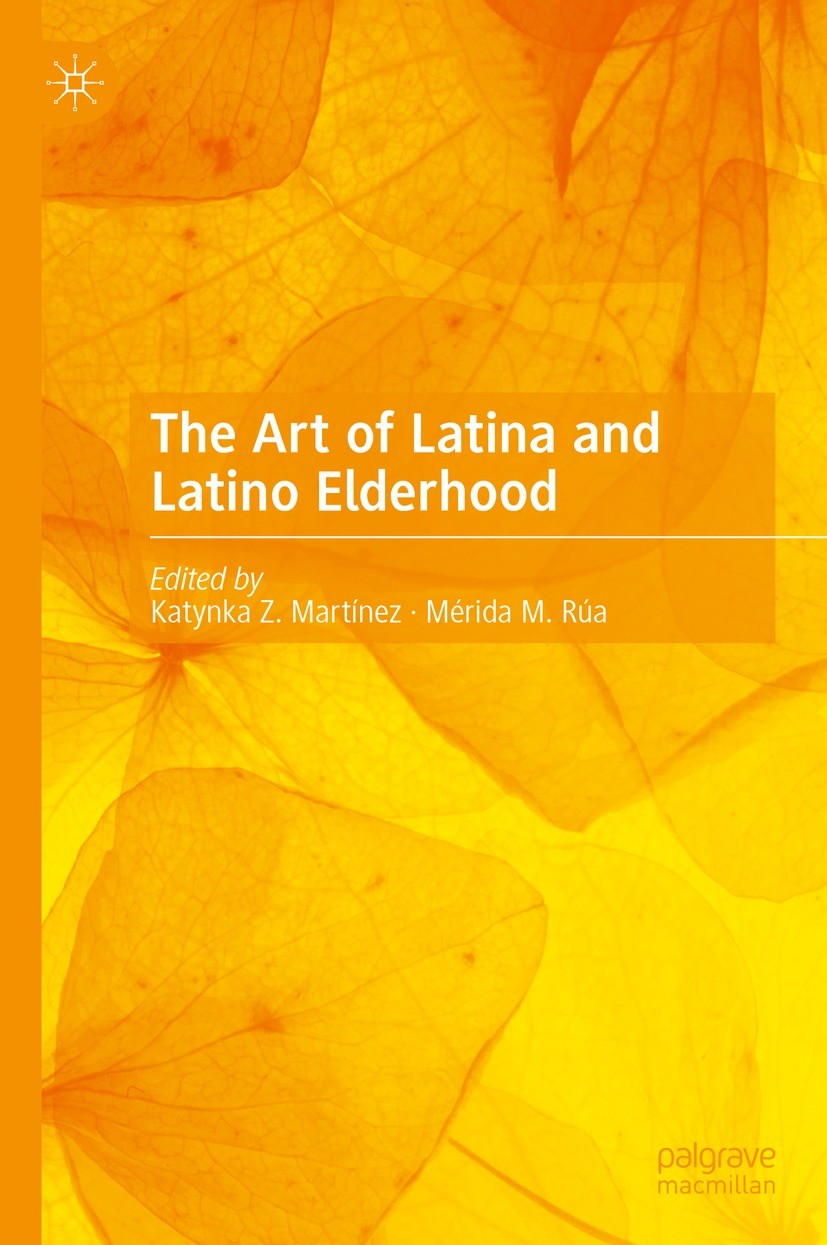
245 14|aThe Art of Latina and Latino Elderhood|h[electronic resource] /|cedited by Katynka Z. Martínez, Mérida M. Rúa.
250 |a1st ed. 2022.
264 1|aCham :|bSpringer Nature Switzerland :|bImprint: Palgrave Macmillan,|c2022.
300 |aVI, 139 p.|bonline resource.
336 |atext|btxt|2rdacontent
337 |acomputer|bc|2rdamedia
338 |aonline resource|bcr|2rdacarrier
347 |atext file|bPDF|2rda
505 0 |aThe art of Latina and Latino elderhood: A note from the editor -- Special issue: The art of Latina and Latino elderhood -- Reflections of an aging Chicano boomer: Growing old in the time of demographic transformation -- Operation Granma G -- Dancing among older Latinos: Interweaving health and culture -- Hairpiece: A photo essay featuring Yolanda Lopez -- In your fifties, you’re like the crone, sixties, and you are the abuela: A diálogo with older Latina actors -- The abuela perplex: Unscripting Latina elderhood -- Vital minimums: El Salvador between youth and old age -- A lesson learned: The beginning and end of life.
520 |aIt is widely recognized that Latinos are a sizable and diverse population and that they are a young demographic. The median age of non-Hispanic white Americans is 58, whereas for Latinos it is 30. Perhaps this partially explains the dearth of attention afforded to the topic of aging Latinos by academic scholarship and the mainstream media. This book compellingly alerts us to the reality that there is a growing, aging Latino population about which we know very little and that deserves our attention. The book responds to this significant gap in our knowledge with an exciting set of academic articles and creative contributions that challenges not only our assumptions about Latinos and aging but also our thinking on the types of contributions in an academic context. The contributors make the case that the story of Latino elderhood is best conveyed through a truly multidisciplinary and interdisciplinary approach, bringing together public policy, humanistic social sciences, and artistic interventions. Previously published as a Special Issue in the journal: Latino Studies "Special Issue: The Art of Latina and Latino Elderhood".
650 0|aEthnology|xLatin America.
650 0|aCulture.
650 0|aArt|xHistory.
650 14|aLatin American Culture.
650 24|aLatino Culture.
650 24|aArt History.
700 1 |aMartínez, Katynka Z.|eeditor.|4edt|4http://id.loc.gov/vocabulary/relators/edt
700 1 |aRúa, Mérida M.|eeditor.|4edt|4http://id.loc.gov/vocabulary/relators/edt
710 2 |aSpringerLink (Online service)
773 0 |tSpringer Nature eBook
776 08|iPrinted edition:|z9783031190070
776 08|iPrinted edition:|z9783031190094
776 08|iPrinted edition:|z9783031190100
856 40|uhttps://doi.org/10.1007/978-3-031-19008-7
912 |aZDB-2-LCM
912 |aZDB-2-SXL
950 |aLiterature, Cultural and Media Studies (SpringerNature-41173)
950 |aLiterature, Cultural and Media Studies (R0) (SpringerNature-43723)