

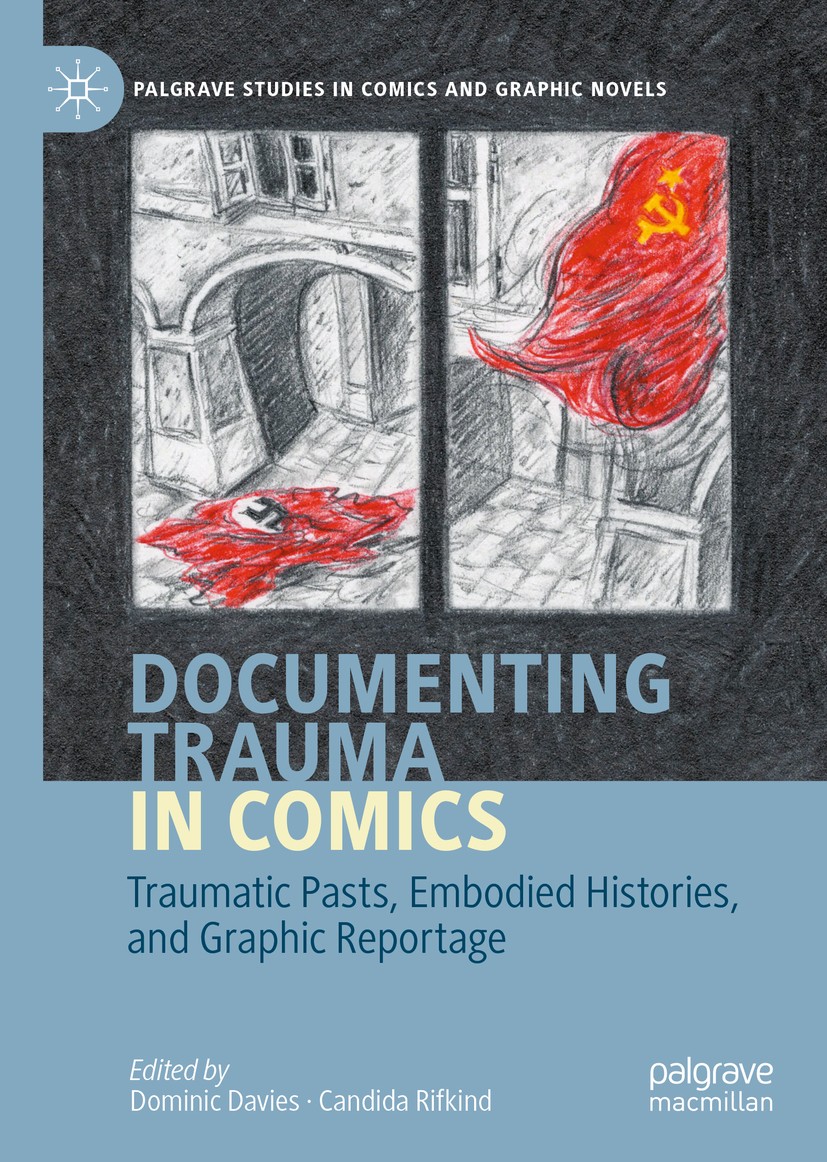
Documenting Trauma in Comics [electronic resource] : Traumatic Pasts, Embodied Histories, and Graphic Reportage / edited by Dominic Davies, Candida Rifkind.
Erişim Adresi
ISBN
9783030379988
Dil Kodu
İngilizce
Yer Numarası
EK/4109
Basım Bildirimi
1st ed. 2020.
Yayın Bilgisi
Cham : Springer International Publishing : Imprint: Palgrave Macmillan, 2020.
Fiziksel Niteleme
XXI, 345 p. 51 illus., 23 illus. in color. online resource.
Dizi
Palgrave Studies in Comics and Graphic Novels, 2634-6389
İçindekiler Notu
1. Introduction: Documenting Trauma in Comics. Section I: Documenting Trauma- 2. Hierarchies of Pain: Trauma Tropes Today and Tomorrow -- 3. Emotional History and Legacies of War in Recent German Comics and Graphic Novels -- 4. The Past That Will Not Die: Trauma, Race and Zombie Empire in Horror Comics of the 1950s -- 5. Exploring Trauma and Social Haunting Through Community Comics Creation -- 6. Comic: "Documenting Trauma" -- Section II: Traumatic Pasts -- 7. Traumatic Moments: Retrospective ‘Seeing’ of Violation, Rupture and Injury in Three Post-millennial Indian Graphic Narratives. - 8. This Side, That Side: Restoring Memory, Restorying Partition -- 9. Visual Detention: Reclaiming Human Rights Through Memory in Leila Abdelrazaq’s Baddawi -- 10. Comic: Crying in the Chapel -- Section III: Embodies Histories -- 11. Folding, Cutting, Reassembling: Materializing Trauma and Memory in Comics -- 12. 'To Create Her World Anew’: Charlotte Salomon’s Graphic Life Narrative -- 13. Una’s Becoming Unbecoming, Visuality, and Sexual Trauma. -- 14. Discourses of Trauma and Representation: Motherhood and Mother Tongue in Miriam Katin’s Graphic Memoirs -- 15. Comic: First Person Third -- Section IV: Graphic Reportage -- 16. Comics Telling Refugee Stories -- 17. Migrant Detention Comics and the Aesthetic Technologies of Compassion -- 18. Comics as Memoir and Documentary: A Case Study of Sarah Glidden -- 19. Afterword. .
Özet, vb.
“Documenting Trauma in Comics: Traumatic Pasts, Embodied Histories, and Graphic Reportage brings together a diverse group of scholars to offer a new perspective on representations of trauma in graphic narratives. Using primary source comics from a broad geographic and historical scope, this collection focuses on creating relationships between texts, demonstrating not only the global interest in trauma narratives but also the myriad representational techniques that comics can employ. As such, the coordinates by which this work is steered are academically rigorous, contemporary, and highly topical.” --Professor Harriet EH Earle, Sheffield Hallam University “A necessary collection, both for its crucial global scope and for its contribution to how we think about trauma and images.” --Professor Hillary Chute, Northeastern University Why are so many contemporary comics and graphic narratives written as memoirs or documentaries of traumatic events? Is there a specific relationship between the comics form and the documentation and reportage of trauma? How do the interpretive demands made on comics readers shape their relationships with traumatic events? And how does comics’ documentation of traumatic pasts operate across national borders and in different cultural, political, and politicised contexts? The sixteen chapters and three comics included in Documenting Trauma in Comics set out to answer exactly these questions. Drawing on a range of historically and geographically expansive examples, the contributors bring their different perspectives to bear on the tangled and often fraught intersections between trauma studies, comics studies, and theories of documentary practices and processes. The result is a collection that shows how comics is not simply related to trauma, but a generative force that has become central to its remembrance, documentation, and study. Dominic Davies is a Lecturer in the Department of English at City, University of London. Candida Rifkind is a Professor in the Department of English, University of Winnipeg, Canada.
Konu
Comic books, strips, etc. __ Influence on mass media.
Popular Culture.
Culture.
Communication.
Literature, Modern __ 20th century.
Literature, Modern __ 21st century.
Collective memory.
Comics Studies.
Popular Culture.
Global and International Culture.
Media and Communication.
Contemporary Literature.
Memory Studies.
Popular Culture.
Culture.
Communication.
Literature, Modern __ 20th century.
Literature, Modern __ 21st century.
Collective memory.
Comics Studies.
Popular Culture.
Global and International Culture.
Media and Communication.
Contemporary Literature.
Memory Studies.
Diğer Yazarlar
Kurum Adı
Eseri Alıntıla
Referansları kullanmadan önce gözden geçirmeniz ve varsa gerekli düzeltmeleri yapmanız önerilir.
Dijital Kaynak
MARC Görünümü
LEADER 07205nam a22007815i 4500
001 840747
003 TR_AnAIT
005 20260715035317
007 cr nn 008mamaa
008 200521s2020 sz | s |||| 0|eng d
020 |a9783030379988|9978-3-030-37998-8
024 7 |a10.1007/978-3-030-37998-8|2doi
041 |aeng
049 |aTürk Dil Kurumu Kütüphanesi
050 4|aP94.6-.65
050 4|aPN6700-6790
072 7|aJFD|2bicssc
072 7|aFX|2bicssc
072 7|aSOC052000|2bisacsh
072 7|aJBCT|2thema
072 7|aX|2thema
082 04|a306.488|223
082 04|a741.5|223
090 |aEK/4109
245 10|aDocumenting Trauma in Comics|h[electronic resource] :|bTraumatic Pasts, Embodied Histories, and Graphic Reportage /|cedited by Dominic Davies, Candida Rifkind.
250 |a1st ed. 2020.
264 1|aCham :|bSpringer International Publishing :|bImprint: Palgrave Macmillan,|c2020.
300 |aXXI, 345 p. 51 illus., 23 illus. in color.|bonline resource.
336 |atext|btxt|2rdacontent
337 |acomputer|bc|2rdamedia
338 |aonline resource|bcr|2rdacarrier
341 0 |bTable of contents navigation|2onix
341 0 |bSingle logical reading order|2onix
341 0 |bShort alternative textual descriptions|2onix
341 0 |bUse of color is not sole means of conveying information|2onix
341 0 |bUse of high contrast between text and background color|2onix
341 0 |bNext / Previous structural navigation|2onix
341 0 |bAll non-decorative content supports reading without sight|2onix
347 |atext file|bPDF|2rda
490 1 |aPalgrave Studies in Comics and Graphic Novels,|x2634-6389
505 0 |a1. Introduction: Documenting Trauma in Comics. Section I: Documenting Trauma- 2. Hierarchies of Pain: Trauma Tropes Today and Tomorrow -- 3. Emotional History and Legacies of War in Recent German Comics and Graphic Novels -- 4. The Past That Will Not Die: Trauma, Race and Zombie Empire in Horror Comics of the 1950s -- 5. Exploring Trauma and Social Haunting Through Community Comics Creation -- 6. Comic: "Documenting Trauma" -- Section II: Traumatic Pasts -- 7. Traumatic Moments: Retrospective ‘Seeing’ of Violation, Rupture and Injury in Three Post-millennial Indian Graphic Narratives. - 8. This Side, That Side: Restoring Memory, Restorying Partition -- 9. Visual Detention: Reclaiming Human Rights Through Memory in Leila Abdelrazaq’s Baddawi -- 10. Comic: Crying in the Chapel -- Section III: Embodies Histories -- 11. Folding, Cutting, Reassembling: Materializing Trauma and Memory in Comics -- 12. 'To Create Her World Anew’: Charlotte Salomon’s Graphic Life Narrative -- 13. Una’s Becoming Unbecoming, Visuality, and Sexual Trauma. -- 14. Discourses of Trauma and Representation: Motherhood and Mother Tongue in Miriam Katin’s Graphic Memoirs -- 15. Comic: First Person Third -- Section IV: Graphic Reportage -- 16. Comics Telling Refugee Stories -- 17. Migrant Detention Comics and the Aesthetic Technologies of Compassion -- 18. Comics as Memoir and Documentary: A Case Study of Sarah Glidden -- 19. Afterword. .
520 |a“Documenting Trauma in Comics: Traumatic Pasts, Embodied Histories, and Graphic Reportage brings together a diverse group of scholars to offer a new perspective on representations of trauma in graphic narratives. Using primary source comics from a broad geographic and historical scope, this collection focuses on creating relationships between texts, demonstrating not only the global interest in trauma narratives but also the myriad representational techniques that comics can employ. As such, the coordinates by which this work is steered are academically rigorous, contemporary, and highly topical.” --Professor Harriet EH Earle, Sheffield Hallam University “A necessary collection, both for its crucial global scope and for its contribution to how we think about trauma and images.” --Professor Hillary Chute, Northeastern University Why are so many contemporary comics and graphic narratives written as memoirs or documentaries of traumatic events? Is there a specific relationship between the comics form and the documentation and reportage of trauma? How do the interpretive demands made on comics readers shape their relationships with traumatic events? And how does comics’ documentation of traumatic pasts operate across national borders and in different cultural, political, and politicised contexts? The sixteen chapters and three comics included in Documenting Trauma in Comics set out to answer exactly these questions. Drawing on a range of historically and geographically expansive examples, the contributors bring their different perspectives to bear on the tangled and often fraught intersections between trauma studies, comics studies, and theories of documentary practices and processes. The result is a collection that shows how comics is not simply related to trauma, but a generative force that has become central to its remembrance, documentation, and study. Dominic Davies is a Lecturer in the Department of English at City, University of London. Candida Rifkind is a Professor in the Department of English, University of Winnipeg, Canada.
532 8 |aAccessibility summary: This PDF does not fully comply with PDF/UA standards, but does feature limited screen reader support, described non-text content (images, graphs), bookmarks for easy navigation and searchable, selectable text. Users of assistive technologies may experience difficulty navigating or interpreting content in this document. We recognize the importance of accessibility, and we welcome queries about accessibility for any of our products. If you have a question or an access need, please get in touch with us at accessibilitysupport@springernature.com.
532 8 |aNo reading system accessibility options actively disabled
532 8 |aPublisher contact for further accessibility information: accessibilitysupport@springernature.com
650 0|aComic books, strips, etc.|xInfluence on mass media.
650 0|aPopular Culture.
650 0|aCulture.
650 0|aCommunication.
650 0|aLiterature, Modern|x20th century.
650 0|aLiterature, Modern|x21st century.
650 0|aCollective memory.
650 14|aComics Studies.
650 24|aPopular Culture.
650 24|aGlobal and International Culture.
650 24|aMedia and Communication.
650 24|aContemporary Literature.
650 24|aMemory Studies.
700 1 |aDavies, Dominic.|eeditor.|4edt|4http://id.loc.gov/vocabulary/relators/edt
700 1 |aRifkind, Candida.|eeditor.|4edt|4http://id.loc.gov/vocabulary/relators/edt
710 2 |aSpringerLink (Online service)
773 0 |tSpringer Nature eBook
776 08|iPrinted edition:|z9783030379971
776 08|iPrinted edition:|z9783030379995
776 08|iPrinted edition:|z9783030380007
830 0|aPalgrave Studies in Comics and Graphic Novels,|x2634-6389
856 40|uhttps://doi.org/10.1007/978-3-030-37998-8
912 |aZDB-2-LCM
912 |aZDB-2-SXL
950 |aLiterature, Cultural and Media Studies (SpringerNature-41173)
950 |aLiterature, Cultural and Media Studies (R0) (SpringerNature-43723)
001 840747
003 TR_AnAIT
005 20260715035317
007 cr nn 008mamaa
008 200521s2020 sz | s |||| 0|eng d
020 |a9783030379988|9978-3-030-37998-8
024 7 |a10.1007/978-3-030-37998-8|2doi
041 |aeng
049 |aTürk Dil Kurumu Kütüphanesi
050 4|aP94.6-.65
050 4|aPN6700-6790
072 7|aJFD|2bicssc
072 7|aFX|2bicssc
072 7|aSOC052000|2bisacsh
072 7|aJBCT|2thema
072 7|aX|2thema
082 04|a306.488|223
082 04|a741.5|223
090 |aEK/4109
245 10|aDocumenting Trauma in Comics|h[electronic resource] :|bTraumatic Pasts, Embodied Histories, and Graphic Reportage /|cedited by Dominic Davies, Candida Rifkind.
250 |a1st ed. 2020.
264 1|aCham :|bSpringer International Publishing :|bImprint: Palgrave Macmillan,|c2020.
300 |aXXI, 345 p. 51 illus., 23 illus. in color.|bonline resource.
336 |atext|btxt|2rdacontent
337 |acomputer|bc|2rdamedia
338 |aonline resource|bcr|2rdacarrier
341 0 |bTable of contents navigation|2onix
341 0 |bSingle logical reading order|2onix
341 0 |bShort alternative textual descriptions|2onix
341 0 |bUse of color is not sole means of conveying information|2onix
341 0 |bUse of high contrast between text and background color|2onix
341 0 |bNext / Previous structural navigation|2onix
341 0 |bAll non-decorative content supports reading without sight|2onix
347 |atext file|bPDF|2rda
490 1 |aPalgrave Studies in Comics and Graphic Novels,|x2634-6389
505 0 |a1. Introduction: Documenting Trauma in Comics. Section I: Documenting Trauma- 2. Hierarchies of Pain: Trauma Tropes Today and Tomorrow -- 3. Emotional History and Legacies of War in Recent German Comics and Graphic Novels -- 4. The Past That Will Not Die: Trauma, Race and Zombie Empire in Horror Comics of the 1950s -- 5. Exploring Trauma and Social Haunting Through Community Comics Creation -- 6. Comic: "Documenting Trauma" -- Section II: Traumatic Pasts -- 7. Traumatic Moments: Retrospective ‘Seeing’ of Violation, Rupture and Injury in Three Post-millennial Indian Graphic Narratives. - 8. This Side, That Side: Restoring Memory, Restorying Partition -- 9. Visual Detention: Reclaiming Human Rights Through Memory in Leila Abdelrazaq’s Baddawi -- 10. Comic: Crying in the Chapel -- Section III: Embodies Histories -- 11. Folding, Cutting, Reassembling: Materializing Trauma and Memory in Comics -- 12. 'To Create Her World Anew’: Charlotte Salomon’s Graphic Life Narrative -- 13. Una’s Becoming Unbecoming, Visuality, and Sexual Trauma. -- 14. Discourses of Trauma and Representation: Motherhood and Mother Tongue in Miriam Katin’s Graphic Memoirs -- 15. Comic: First Person Third -- Section IV: Graphic Reportage -- 16. Comics Telling Refugee Stories -- 17. Migrant Detention Comics and the Aesthetic Technologies of Compassion -- 18. Comics as Memoir and Documentary: A Case Study of Sarah Glidden -- 19. Afterword. .
520 |a“Documenting Trauma in Comics: Traumatic Pasts, Embodied Histories, and Graphic Reportage brings together a diverse group of scholars to offer a new perspective on representations of trauma in graphic narratives. Using primary source comics from a broad geographic and historical scope, this collection focuses on creating relationships between texts, demonstrating not only the global interest in trauma narratives but also the myriad representational techniques that comics can employ. As such, the coordinates by which this work is steered are academically rigorous, contemporary, and highly topical.” --Professor Harriet EH Earle, Sheffield Hallam University “A necessary collection, both for its crucial global scope and for its contribution to how we think about trauma and images.” --Professor Hillary Chute, Northeastern University Why are so many contemporary comics and graphic narratives written as memoirs or documentaries of traumatic events? Is there a specific relationship between the comics form and the documentation and reportage of trauma? How do the interpretive demands made on comics readers shape their relationships with traumatic events? And how does comics’ documentation of traumatic pasts operate across national borders and in different cultural, political, and politicised contexts? The sixteen chapters and three comics included in Documenting Trauma in Comics set out to answer exactly these questions. Drawing on a range of historically and geographically expansive examples, the contributors bring their different perspectives to bear on the tangled and often fraught intersections between trauma studies, comics studies, and theories of documentary practices and processes. The result is a collection that shows how comics is not simply related to trauma, but a generative force that has become central to its remembrance, documentation, and study. Dominic Davies is a Lecturer in the Department of English at City, University of London. Candida Rifkind is a Professor in the Department of English, University of Winnipeg, Canada.
532 8 |aAccessibility summary: This PDF does not fully comply with PDF/UA standards, but does feature limited screen reader support, described non-text content (images, graphs), bookmarks for easy navigation and searchable, selectable text. Users of assistive technologies may experience difficulty navigating or interpreting content in this document. We recognize the importance of accessibility, and we welcome queries about accessibility for any of our products. If you have a question or an access need, please get in touch with us at accessibilitysupport@springernature.com.
532 8 |aNo reading system accessibility options actively disabled
532 8 |aPublisher contact for further accessibility information: accessibilitysupport@springernature.com
650 0|aComic books, strips, etc.|xInfluence on mass media.
650 0|aPopular Culture.
650 0|aCulture.
650 0|aCommunication.
650 0|aLiterature, Modern|x20th century.
650 0|aLiterature, Modern|x21st century.
650 0|aCollective memory.
650 14|aComics Studies.
650 24|aPopular Culture.
650 24|aGlobal and International Culture.
650 24|aMedia and Communication.
650 24|aContemporary Literature.
650 24|aMemory Studies.
700 1 |aDavies, Dominic.|eeditor.|4edt|4http://id.loc.gov/vocabulary/relators/edt
700 1 |aRifkind, Candida.|eeditor.|4edt|4http://id.loc.gov/vocabulary/relators/edt
710 2 |aSpringerLink (Online service)
773 0 |tSpringer Nature eBook
776 08|iPrinted edition:|z9783030379971
776 08|iPrinted edition:|z9783030379995
776 08|iPrinted edition:|z9783030380007
830 0|aPalgrave Studies in Comics and Graphic Novels,|x2634-6389
856 40|uhttps://doi.org/10.1007/978-3-030-37998-8
912 |aZDB-2-LCM
912 |aZDB-2-SXL
950 |aLiterature, Cultural and Media Studies (SpringerNature-41173)
950 |aLiterature, Cultural and Media Studies (R0) (SpringerNature-43723)
Materyaller
Depodan talep edilen materyal sadece kütüphane içerisinde kullanılmaktadır.
Materyal dışarıya ödünç verilmemektedir.
Materyal dışarıya ödünç verilmemektedir.
