

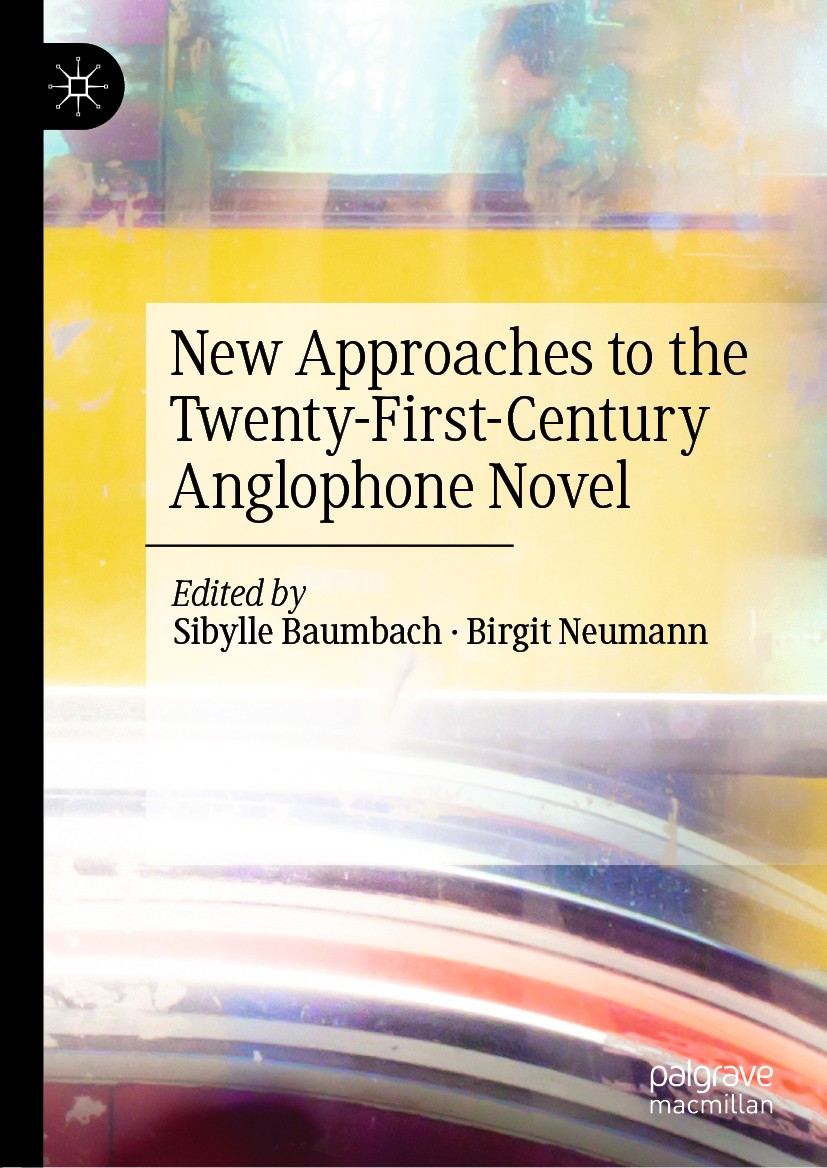
New Approaches to the Twenty-First-Century Anglophone Novel [electronic resource] / edited by Sibylle Baumbach, Birgit Neumann.
Erişim Adresi
ISBN
9783030325985
Dil Kodu
İngilizce
Yer Numarası
EK/3970
Basım Bildirimi
1st ed. 2019.
Yayın Bilgisi
Cham : Springer International Publishing : Imprint: Palgrave Macmillan, 2019.
Fiziksel Niteleme
XV, 344 p. 1 illus. online resource.
İçindekiler Notu
Chapter 1. The Novel — An Undead Genre (Sibylle Baumbach and Birgit Neumann) -- Chapter 2. Human Rights and Transnational Justice in the Contemporary Anglophone Novel: J.M. Coetzee’s Disgraceand Achmat Dangor’s Bitter Fruit (Sangina Patnaik) -- Chapter 3. The Economy of Attention and the Novel (Sibylle Baumbach) -- Chapter 4. Twenty-First-Century Fictional Experiments with Emotion and Cognition (Suzanne Keen) -- Chapter 5. ‘Reality Hunger,’ Documentarism, and Fragmentation in Twenty-First-Century Anglophone Novels (Alexander Scherr and Ansgar Nünning) -- Chapter 6. Cli-Fi: Environmental Literature for the Anthropocene (Laura Wright) -- Chapter 7. The Animal Novel That Therefore This is Not? (Kari Weil) -- Chapter 8. We Have Always Already Been Becoming Posthuman? Posthumanism in Theory and (Reading) Practice (Roman Bartosch) -- Chapter 9. What is ‘the’ Neoliberal Novel? Neoliberalism, Finance, and Biopolitics (Arne De Boever) -- Chapter 10. The Novel after 9/11: From Ground Zero to the “War on Terror” (Michael C. Frank) -- Chapter 11. Post-National Futures in Nationalist Contexts? Reading ‘British’ Fictions of Artificial Intelligence (Will Slocombe) -- Chapter 12. Anglophone World Literature and Glocal Memories: Chimamanda Ngozi Adichie’s Half of a Yellow Sun and Kiran Desai’s The Inheritance of Loss (Birgit Neumann) -- Chapter 13. Afropolitanism and the Novel: Mapping Material Networks in Recent Fiction from the African Diaspora (Jennifer Wawrzinek) -- Chapter 14. Temporality in the Contemporary Global South Novel (Russell West-Pavlov) -- Chapter 15. Beyond the Written Word: Graphic Novels in the Twenty-First Century (Lukas Etter and Jan-Noël Thon) -- Chapter 16. The Limits of Fictional Ontologies in Bret Easton Ellis’ American Psycho and Kazuo Ishiguro’s Never Let Me Go (Roger Lüdeke) -- Chapter 17. The End of the Novel (Pieter Vermeulen).
Özet, vb.
This book discusses the complex ways in which the novel offers a vibrant arena for critically engaging with our contemporary world and scrutinises the genre's political, ethical, and aesthetic value. Far-reaching cultural, political, and technological changes during the past two decades have created new contexts for the novel, which have yet to be accounted for in literary studies. Addressing the need for fresh transdisciplinary approaches that explore these developments, the book focuses on the multifaceted responses of the novel to key global challenges, including migration and cosmopolitanism, posthumanism and ecosickness, human and animal rights, affect and biopolitics, human cognition and anxieties of inattention, and the transculturality of terror. By doing so, it testifies to the ongoing cultural relevance of the genre. Lastly, it examines a range of 21st-century Anglophone novels to encourage new critical discourses in literary studies. Sibylle Baumbach is a Professor of English Literatures at Stuttgart University, Germany. Birgit Neumann is a Professor of English Literature and Anglophone Studies at Heinrich Heine University Düsseldorf, Germany.
Konu
Literature, Modern __ 20th century.
Literature, Modern __ 21st century.
Literature __ Philosophy.
European literature.
America __ Literatures.
Contemporary Literature.
Literary Theory.
European Literature.
North American Literature.
Literature, Modern __ 21st century.
Literature __ Philosophy.
European literature.
America __ Literatures.
Contemporary Literature.
Literary Theory.
European Literature.
North American Literature.
Diğer Yazarlar
Kurum Adı
Eseri Alıntıla
Referansları kullanmadan önce gözden geçirmeniz ve varsa gerekli düzeltmeleri yapmanız önerilir.
Dijital Kaynak
MARC Görünümü
LEADER 05077nam a22005415i 4500
001 840827
003 TR_AnAIT
005 20260715033726
007 cr nn 008mamaa
008 191220s2019 sz | s |||| 0|eng d
020 |a9783030325985|9978-3-030-32598-5
024 7 |a10.1007/978-3-030-32598-5|2doi
041 |aeng
049 |aTürk Dil Kurumu Kütüphanesi
050 4|aPN695-779
072 7|aDSBH|2bicssc
072 7|aLIT024000|2bisacsh
072 7|aDSBH|2thema
082 04|a809.05|223
090 |aEK/3970
245 10|aNew Approaches to the Twenty-First-Century Anglophone Novel|h[electronic resource] /|cedited by Sibylle Baumbach, Birgit Neumann.
250 |a1st ed. 2019.
264 1|aCham :|bSpringer International Publishing :|bImprint: Palgrave Macmillan,|c2019.
300 |aXV, 344 p. 1 illus.|bonline resource.
336 |atext|btxt|2rdacontent
337 |acomputer|bc|2rdamedia
338 |aonline resource|bcr|2rdacarrier
347 |atext file|bPDF|2rda
505 0 |aChapter 1. The Novel — An Undead Genre (Sibylle Baumbach and Birgit Neumann) -- Chapter 2. Human Rights and Transnational Justice in the Contemporary Anglophone Novel: J.M. Coetzee’s Disgraceand Achmat Dangor’s Bitter Fruit (Sangina Patnaik) -- Chapter 3. The Economy of Attention and the Novel (Sibylle Baumbach) -- Chapter 4. Twenty-First-Century Fictional Experiments with Emotion and Cognition (Suzanne Keen) -- Chapter 5. ‘Reality Hunger,’ Documentarism, and Fragmentation in Twenty-First-Century Anglophone Novels (Alexander Scherr and Ansgar Nünning) -- Chapter 6. Cli-Fi: Environmental Literature for the Anthropocene (Laura Wright) -- Chapter 7. The Animal Novel That Therefore This is Not? (Kari Weil) -- Chapter 8. We Have Always Already Been Becoming Posthuman? Posthumanism in Theory and (Reading) Practice (Roman Bartosch) -- Chapter 9. What is ‘the’ Neoliberal Novel? Neoliberalism, Finance, and Biopolitics (Arne De Boever) -- Chapter 10. The Novel after 9/11: From Ground Zero to the “War on Terror” (Michael C. Frank) -- Chapter 11. Post-National Futures in Nationalist Contexts? Reading ‘British’ Fictions of Artificial Intelligence (Will Slocombe) -- Chapter 12. Anglophone World Literature and Glocal Memories: Chimamanda Ngozi Adichie’s Half of a Yellow Sun and Kiran Desai’s The Inheritance of Loss (Birgit Neumann) -- Chapter 13. Afropolitanism and the Novel: Mapping Material Networks in Recent Fiction from the African Diaspora (Jennifer Wawrzinek) -- Chapter 14. Temporality in the Contemporary Global South Novel (Russell West-Pavlov) -- Chapter 15. Beyond the Written Word: Graphic Novels in the Twenty-First Century (Lukas Etter and Jan-Noël Thon) -- Chapter 16. The Limits of Fictional Ontologies in Bret Easton Ellis’ American Psycho and Kazuo Ishiguro’s Never Let Me Go (Roger Lüdeke) -- Chapter 17. The End of the Novel (Pieter Vermeulen).
520 |aThis book discusses the complex ways in which the novel offers a vibrant arena for critically engaging with our contemporary world and scrutinises the genre's political, ethical, and aesthetic value. Far-reaching cultural, political, and technological changes during the past two decades have created new contexts for the novel, which have yet to be accounted for in literary studies. Addressing the need for fresh transdisciplinary approaches that explore these developments, the book focuses on the multifaceted responses of the novel to key global challenges, including migration and cosmopolitanism, posthumanism and ecosickness, human and animal rights, affect and biopolitics, human cognition and anxieties of inattention, and the transculturality of terror. By doing so, it testifies to the ongoing cultural relevance of the genre. Lastly, it examines a range of 21st-century Anglophone novels to encourage new critical discourses in literary studies. Sibylle Baumbach is a Professor of English Literatures at Stuttgart University, Germany. Birgit Neumann is a Professor of English Literature and Anglophone Studies at Heinrich Heine University Düsseldorf, Germany.
650 0|aLiterature, Modern|x20th century.
650 0|aLiterature, Modern|x21st century.
650 0|aLiterature|xPhilosophy.
650 0|aEuropean literature.
650 0|aAmerica|xLiteratures.
650 14|aContemporary Literature.
650 24|aLiterary Theory.
650 24|aEuropean Literature.
650 24|aNorth American Literature.
700 1 |aBaumbach, Sibylle.|eeditor.|4edt|4http://id.loc.gov/vocabulary/relators/edt
700 1 |aNeumann, Birgit.|eeditor.|4edt|4http://id.loc.gov/vocabulary/relators/edt
710 2 |aSpringerLink (Online service)
773 0 |tSpringer Nature eBook
776 08|iPrinted edition:|z9783030325978
776 08|iPrinted edition:|z9783030325992
776 08|iPrinted edition:|z9783030326005
856 40|uhttps://doi.org/10.1007/978-3-030-32598-5
912 |aZDB-2-LCM
912 |aZDB-2-SXL
950 |aLiterature, Cultural and Media Studies (SpringerNature-41173)
950 |aLiterature, Cultural and Media Studies (R0) (SpringerNature-43723)
001 840827
003 TR_AnAIT
005 20260715033726
007 cr nn 008mamaa
008 191220s2019 sz | s |||| 0|eng d
020 |a9783030325985|9978-3-030-32598-5
024 7 |a10.1007/978-3-030-32598-5|2doi
041 |aeng
049 |aTürk Dil Kurumu Kütüphanesi
050 4|aPN695-779
072 7|aDSBH|2bicssc
072 7|aLIT024000|2bisacsh
072 7|aDSBH|2thema
082 04|a809.05|223
090 |aEK/3970
245 10|aNew Approaches to the Twenty-First-Century Anglophone Novel|h[electronic resource] /|cedited by Sibylle Baumbach, Birgit Neumann.
250 |a1st ed. 2019.
264 1|aCham :|bSpringer International Publishing :|bImprint: Palgrave Macmillan,|c2019.
300 |aXV, 344 p. 1 illus.|bonline resource.
336 |atext|btxt|2rdacontent
337 |acomputer|bc|2rdamedia
338 |aonline resource|bcr|2rdacarrier
347 |atext file|bPDF|2rda
505 0 |aChapter 1. The Novel — An Undead Genre (Sibylle Baumbach and Birgit Neumann) -- Chapter 2. Human Rights and Transnational Justice in the Contemporary Anglophone Novel: J.M. Coetzee’s Disgraceand Achmat Dangor’s Bitter Fruit (Sangina Patnaik) -- Chapter 3. The Economy of Attention and the Novel (Sibylle Baumbach) -- Chapter 4. Twenty-First-Century Fictional Experiments with Emotion and Cognition (Suzanne Keen) -- Chapter 5. ‘Reality Hunger,’ Documentarism, and Fragmentation in Twenty-First-Century Anglophone Novels (Alexander Scherr and Ansgar Nünning) -- Chapter 6. Cli-Fi: Environmental Literature for the Anthropocene (Laura Wright) -- Chapter 7. The Animal Novel That Therefore This is Not? (Kari Weil) -- Chapter 8. We Have Always Already Been Becoming Posthuman? Posthumanism in Theory and (Reading) Practice (Roman Bartosch) -- Chapter 9. What is ‘the’ Neoliberal Novel? Neoliberalism, Finance, and Biopolitics (Arne De Boever) -- Chapter 10. The Novel after 9/11: From Ground Zero to the “War on Terror” (Michael C. Frank) -- Chapter 11. Post-National Futures in Nationalist Contexts? Reading ‘British’ Fictions of Artificial Intelligence (Will Slocombe) -- Chapter 12. Anglophone World Literature and Glocal Memories: Chimamanda Ngozi Adichie’s Half of a Yellow Sun and Kiran Desai’s The Inheritance of Loss (Birgit Neumann) -- Chapter 13. Afropolitanism and the Novel: Mapping Material Networks in Recent Fiction from the African Diaspora (Jennifer Wawrzinek) -- Chapter 14. Temporality in the Contemporary Global South Novel (Russell West-Pavlov) -- Chapter 15. Beyond the Written Word: Graphic Novels in the Twenty-First Century (Lukas Etter and Jan-Noël Thon) -- Chapter 16. The Limits of Fictional Ontologies in Bret Easton Ellis’ American Psycho and Kazuo Ishiguro’s Never Let Me Go (Roger Lüdeke) -- Chapter 17. The End of the Novel (Pieter Vermeulen).
520 |aThis book discusses the complex ways in which the novel offers a vibrant arena for critically engaging with our contemporary world and scrutinises the genre's political, ethical, and aesthetic value. Far-reaching cultural, political, and technological changes during the past two decades have created new contexts for the novel, which have yet to be accounted for in literary studies. Addressing the need for fresh transdisciplinary approaches that explore these developments, the book focuses on the multifaceted responses of the novel to key global challenges, including migration and cosmopolitanism, posthumanism and ecosickness, human and animal rights, affect and biopolitics, human cognition and anxieties of inattention, and the transculturality of terror. By doing so, it testifies to the ongoing cultural relevance of the genre. Lastly, it examines a range of 21st-century Anglophone novels to encourage new critical discourses in literary studies. Sibylle Baumbach is a Professor of English Literatures at Stuttgart University, Germany. Birgit Neumann is a Professor of English Literature and Anglophone Studies at Heinrich Heine University Düsseldorf, Germany.
650 0|aLiterature, Modern|x20th century.
650 0|aLiterature, Modern|x21st century.
650 0|aLiterature|xPhilosophy.
650 0|aEuropean literature.
650 0|aAmerica|xLiteratures.
650 14|aContemporary Literature.
650 24|aLiterary Theory.
650 24|aEuropean Literature.
650 24|aNorth American Literature.
700 1 |aBaumbach, Sibylle.|eeditor.|4edt|4http://id.loc.gov/vocabulary/relators/edt
700 1 |aNeumann, Birgit.|eeditor.|4edt|4http://id.loc.gov/vocabulary/relators/edt
710 2 |aSpringerLink (Online service)
773 0 |tSpringer Nature eBook
776 08|iPrinted edition:|z9783030325978
776 08|iPrinted edition:|z9783030325992
776 08|iPrinted edition:|z9783030326005
856 40|uhttps://doi.org/10.1007/978-3-030-32598-5
912 |aZDB-2-LCM
912 |aZDB-2-SXL
950 |aLiterature, Cultural and Media Studies (SpringerNature-41173)
950 |aLiterature, Cultural and Media Studies (R0) (SpringerNature-43723)
Materyaller
Depodan talep edilen materyal sadece kütüphane içerisinde kullanılmaktadır.
Materyal dışarıya ödünç verilmemektedir.
Materyal dışarıya ödünç verilmemektedir.
