

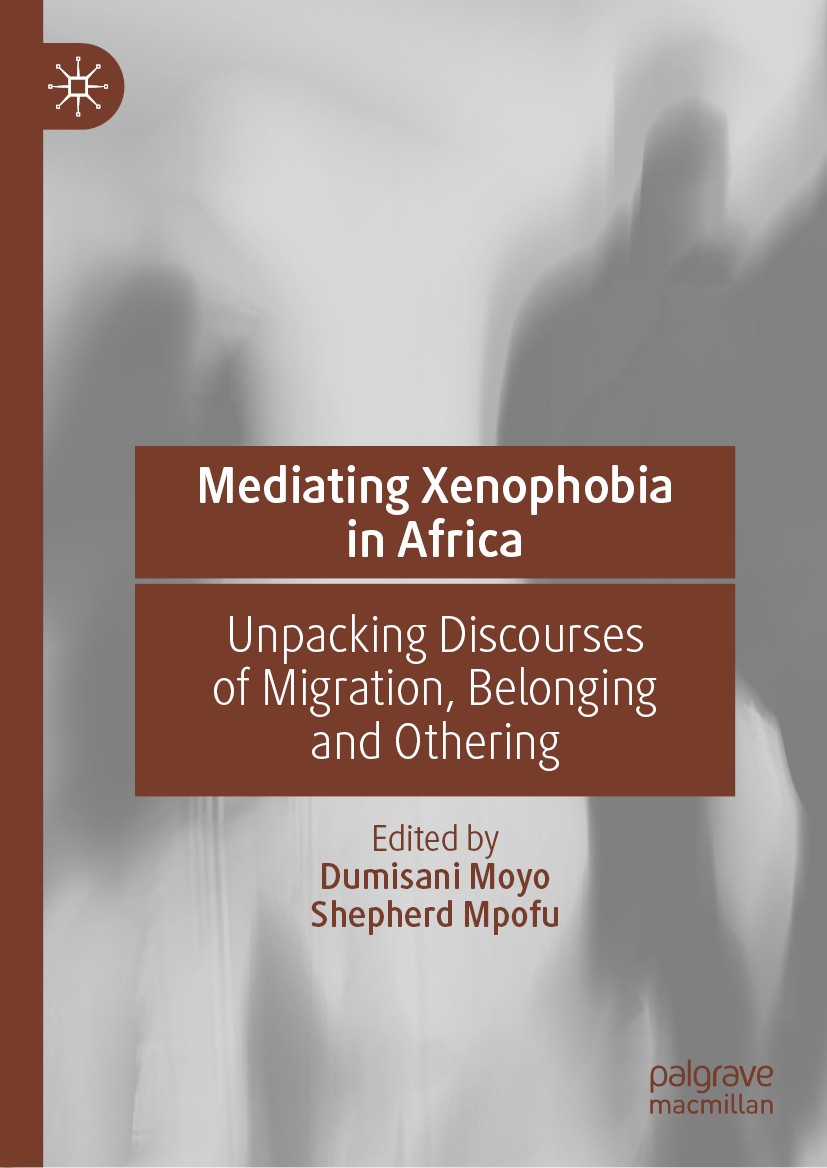
Mediating Xenophobia in Africa [electronic resource] : Unpacking Discourses of Migration, Belonging and Othering / edited by Dumisani Moyo, Shepherd Mpofu.
Erişim Adresi
ISBN
9783030612368
Dil Kodu
İngilizce
Yer Numarası
EK/3992
Basım Bildirimi
1st ed. 2020.
Yayın Bilgisi
Cham : Springer International Publishing : Imprint: Palgrave Macmillan, 2020.
Fiziksel Niteleme
XXVIII, 394 p. 30 illus., 26 illus. in color. online resource.
İçindekiler Notu
1. Mediation, Migration and Xenophobia: Critical Reflections on the Crisis of Representing the Other in an Increasingly Intolerant World -- 2. Defying Empirical and Causal Evidence: Busting the Media’s Myth of Afrophobia in South Africa -- 3. Talk Radio and the Mediation of Xenophobic Violence in South Africa -- 4. Media, Migrants and Movement: A Comparative Study of the Coverage of Migration Between Two Pairs of sub-Saharan Countries -- 5. Knowledge, the Media and Anti-Immigrant Hate Crime in South Africa: Where are the Connections? -- 6. Quantitative Linguistic Analysis of Representations of Immigrants in the South African Print Media, 2011‒2015 -- 7. Xenophobia, the Media and the West African Integration Agenda -- 8. National Identity and Representation of Xenophobia in Mozambican Private and Public Television -- 9. ‘They are Vampires, Unlike Us’. Framing of South African Xenophobia by the Nigerian Press -- 10. ‘Uganda can Protect Chinese Investors but Not Its Own Citizens?’ Paradoxical Perspectives in Xenophobic Narratives and Practices Fostering Otherness in Uganda -- 11. Feminisation of Migration: A Thematic Analysis of News Media Texts About Zimbabwean Migrants in South Africa -- 12. ‘Africa Must Be … One Place, One Country’: Xenophobia and the Unmediated Representation of African Migrants in South Africa -- 13. Complicity and Condonation: The Tabloid Press and Reporting of Migrant Access to Public Health in South Africa -- 14. Gateways and Gatekeepers: Social Media and the (Re)Defining of Somali Identity in Kenya’s Security Operations -- 15. Social Media, Migration and Xenophobia in the Horn of Africa -- 16. Not Just a Foreigner: ‘Progressive’ (Self-)representations of African Migrants in the Media -- 17. ‘They all Speak English So Well ...’ A Decolonial Analysis of ‘Positive’ Representations of Zimbabwean Migrants by South Africans on Social Media -- 18. Picturing Xenophobia: Photojournalism and Xenophobic Violence in South Africa.
Özet, vb.
“Communal conflict continually reminds us why humans seek communal solidarity and should fear it. As this volume’s authors demonstrate, the names and terms we use carry moral value about deservingness, about hospitality, and about rights to space and resources. This book offers distinct insights that explain the dynamic dangers of exclusion. The book deserves particular credit for deploying a remarkable collection of scholars and practitioners to surface these themes. While many will not yet be known to the global academy, their contributions suggest they should be.” -- Loren B. Landau, Professor, University of Oxford, UK and University of the Witwatersrand, South Africa “Moyo and Mpofu have successfully assembled a stellar group of academics to explore the complex and indeed opaque subject of xenophobia. The result is a brilliant and enlightening volume that expands the canvas of perspectives and advances frontiers of knowledge. I have nothing but praise for this important volume.” --Sabelo J. Ndlovu-Gatsheni, Professor and Chair of Epistemologies of the Global South, University of Bayreuth, Germany This book brings together contributions that analyse different ways in which migration and xenophobia have been mediated in both mainstream and social media in Africa and the meanings of these different mediation practices across the continent. It is premised on the assumption that the media play an important role in mediating the complex intersection between migration, identity, belonging, and xenophobia (or what others have called Afrophobia), through framing stories in ways that either buttress stereotyping and Othering, or challenge the perceptions and representations that fuel the violence inflicted on so-called foreign nationals. The book deals with different expressions of xenophobic violence, including both physical and emotional violence, that target the foreign Other in different African countries. Dumisani Moyo is Associate Professor of Communication and Vice Dean, Academic at the University of Johannesburg, South Africa. Shepherd Mpofu (PhD) is Senior Lecturer at the University of Limpopo, South Africa.
Konu
Ethnology __ Africa.
Culture.
Communication.
Emigration and immigration.
Mass media and culture.
African Culture.
Media and Communication.
Human Migration.
Media Culture.
Culture.
Communication.
Emigration and immigration.
Mass media and culture.
African Culture.
Media and Communication.
Human Migration.
Media Culture.
Diğer Yazarlar
Kurum Adı
Eseri Alıntıla
Referansları kullanmadan önce gözden geçirmeniz ve varsa gerekli düzeltmeleri yapmanız önerilir.
Dijital Kaynak
MARC Görünümü
LEADER 06189nam a22005535i 4500
001 840856
003 TR_AnAIT
005 20260715033405
007 cr nn 008mamaa
008 201124s2020 sz | s |||| 0|eng d
020 |a9783030612368|9978-3-030-61236-8
024 7 |a10.1007/978-3-030-61236-8|2doi
041 |aeng
049 |aTürk Dil Kurumu Kütüphanesi
050 4|aGN643-661
072 7|aJFC|2bicssc
072 7|a1H|2bicssc
072 7|aSOC008010|2bisacsh
072 7|aJBCC|x1H|2thema
082 04|a306.096|223
090 |aEK/3992
245 10|aMediating Xenophobia in Africa|h[electronic resource] :|bUnpacking Discourses of Migration, Belonging and Othering /|cedited by Dumisani Moyo, Shepherd Mpofu.
250 |a1st ed. 2020.
264 1|aCham :|bSpringer International Publishing :|bImprint: Palgrave Macmillan,|c2020.
300 |aXXVIII, 394 p. 30 illus., 26 illus. in color.|bonline resource.
336 |atext|btxt|2rdacontent
337 |acomputer|bc|2rdamedia
338 |aonline resource|bcr|2rdacarrier
347 |atext file|bPDF|2rda
505 0 |a1. Mediation, Migration and Xenophobia: Critical Reflections on the Crisis of Representing the Other in an Increasingly Intolerant World -- 2. Defying Empirical and Causal Evidence: Busting the Media’s Myth of Afrophobia in South Africa -- 3. Talk Radio and the Mediation of Xenophobic Violence in South Africa -- 4. Media, Migrants and Movement: A Comparative Study of the Coverage of Migration Between Two Pairs of sub-Saharan Countries -- 5. Knowledge, the Media and Anti-Immigrant Hate Crime in South Africa: Where are the Connections? -- 6. Quantitative Linguistic Analysis of Representations of Immigrants in the South African Print Media, 2011‒2015 -- 7. Xenophobia, the Media and the West African Integration Agenda -- 8. National Identity and Representation of Xenophobia in Mozambican Private and Public Television -- 9. ‘They are Vampires, Unlike Us’. Framing of South African Xenophobia by the Nigerian Press -- 10. ‘Uganda can Protect Chinese Investors but Not Its Own Citizens?’ Paradoxical Perspectives in Xenophobic Narratives and Practices Fostering Otherness in Uganda -- 11. Feminisation of Migration: A Thematic Analysis of News Media Texts About Zimbabwean Migrants in South Africa -- 12. ‘Africa Must Be … One Place, One Country’: Xenophobia and the Unmediated Representation of African Migrants in South Africa -- 13. Complicity and Condonation: The Tabloid Press and Reporting of Migrant Access to Public Health in South Africa -- 14. Gateways and Gatekeepers: Social Media and the (Re)Defining of Somali Identity in Kenya’s Security Operations -- 15. Social Media, Migration and Xenophobia in the Horn of Africa -- 16. Not Just a Foreigner: ‘Progressive’ (Self-)representations of African Migrants in the Media -- 17. ‘They all Speak English So Well ...’ A Decolonial Analysis of ‘Positive’ Representations of Zimbabwean Migrants by South Africans on Social Media -- 18. Picturing Xenophobia: Photojournalism and Xenophobic Violence in South Africa.
520 |a“Communal conflict continually reminds us why humans seek communal solidarity and should fear it. As this volume’s authors demonstrate, the names and terms we use carry moral value about deservingness, about hospitality, and about rights to space and resources. This book offers distinct insights that explain the dynamic dangers of exclusion. The book deserves particular credit for deploying a remarkable collection of scholars and practitioners to surface these themes. While many will not yet be known to the global academy, their contributions suggest they should be.” -- Loren B. Landau, Professor, University of Oxford, UK and University of the Witwatersrand, South Africa “Moyo and Mpofu have successfully assembled a stellar group of academics to explore the complex and indeed opaque subject of xenophobia. The result is a brilliant and enlightening volume that expands the canvas of perspectives and advances frontiers of knowledge. I have nothing but praise for this important volume.” --Sabelo J. Ndlovu-Gatsheni, Professor and Chair of Epistemologies of the Global South, University of Bayreuth, Germany This book brings together contributions that analyse different ways in which migration and xenophobia have been mediated in both mainstream and social media in Africa and the meanings of these different mediation practices across the continent. It is premised on the assumption that the media play an important role in mediating the complex intersection between migration, identity, belonging, and xenophobia (or what others have called Afrophobia), through framing stories in ways that either buttress stereotyping and Othering, or challenge the perceptions and representations that fuel the violence inflicted on so-called foreign nationals. The book deals with different expressions of xenophobic violence, including both physical and emotional violence, that target the foreign Other in different African countries. Dumisani Moyo is Associate Professor of Communication and Vice Dean, Academic at the University of Johannesburg, South Africa. Shepherd Mpofu (PhD) is Senior Lecturer at the University of Limpopo, South Africa.
650 0|aEthnology|xAfrica.
650 0|aCulture.
650 0|aCommunication.
650 0|aEmigration and immigration.
650 0|aMass media and culture.
650 14|aAfrican Culture.
650 24|aMedia and Communication.
650 24|aHuman Migration.
650 24|aMedia Culture.
700 1 |aMoyo, Dumisani.|eeditor.|4edt|4http://id.loc.gov/vocabulary/relators/edt
700 1 |aMpofu, Shepherd.|eeditor.|4edt|4http://id.loc.gov/vocabulary/relators/edt
710 2 |aSpringerLink (Online service)
773 0 |tSpringer Nature eBook
776 08|iPrinted edition:|z9783030612351
776 08|iPrinted edition:|z9783030612375
776 08|iPrinted edition:|z9783030612382
856 40|uhttps://doi.org/10.1007/978-3-030-61236-8
912 |aZDB-2-LCM
912 |aZDB-2-SXL
950 |aLiterature, Cultural and Media Studies (SpringerNature-41173)
950 |aLiterature, Cultural and Media Studies (R0) (SpringerNature-43723)
001 840856
003 TR_AnAIT
005 20260715033405
007 cr nn 008mamaa
008 201124s2020 sz | s |||| 0|eng d
020 |a9783030612368|9978-3-030-61236-8
024 7 |a10.1007/978-3-030-61236-8|2doi
041 |aeng
049 |aTürk Dil Kurumu Kütüphanesi
050 4|aGN643-661
072 7|aJFC|2bicssc
072 7|a1H|2bicssc
072 7|aSOC008010|2bisacsh
072 7|aJBCC|x1H|2thema
082 04|a306.096|223
090 |aEK/3992
245 10|aMediating Xenophobia in Africa|h[electronic resource] :|bUnpacking Discourses of Migration, Belonging and Othering /|cedited by Dumisani Moyo, Shepherd Mpofu.
250 |a1st ed. 2020.
264 1|aCham :|bSpringer International Publishing :|bImprint: Palgrave Macmillan,|c2020.
300 |aXXVIII, 394 p. 30 illus., 26 illus. in color.|bonline resource.
336 |atext|btxt|2rdacontent
337 |acomputer|bc|2rdamedia
338 |aonline resource|bcr|2rdacarrier
347 |atext file|bPDF|2rda
505 0 |a1. Mediation, Migration and Xenophobia: Critical Reflections on the Crisis of Representing the Other in an Increasingly Intolerant World -- 2. Defying Empirical and Causal Evidence: Busting the Media’s Myth of Afrophobia in South Africa -- 3. Talk Radio and the Mediation of Xenophobic Violence in South Africa -- 4. Media, Migrants and Movement: A Comparative Study of the Coverage of Migration Between Two Pairs of sub-Saharan Countries -- 5. Knowledge, the Media and Anti-Immigrant Hate Crime in South Africa: Where are the Connections? -- 6. Quantitative Linguistic Analysis of Representations of Immigrants in the South African Print Media, 2011‒2015 -- 7. Xenophobia, the Media and the West African Integration Agenda -- 8. National Identity and Representation of Xenophobia in Mozambican Private and Public Television -- 9. ‘They are Vampires, Unlike Us’. Framing of South African Xenophobia by the Nigerian Press -- 10. ‘Uganda can Protect Chinese Investors but Not Its Own Citizens?’ Paradoxical Perspectives in Xenophobic Narratives and Practices Fostering Otherness in Uganda -- 11. Feminisation of Migration: A Thematic Analysis of News Media Texts About Zimbabwean Migrants in South Africa -- 12. ‘Africa Must Be … One Place, One Country’: Xenophobia and the Unmediated Representation of African Migrants in South Africa -- 13. Complicity and Condonation: The Tabloid Press and Reporting of Migrant Access to Public Health in South Africa -- 14. Gateways and Gatekeepers: Social Media and the (Re)Defining of Somali Identity in Kenya’s Security Operations -- 15. Social Media, Migration and Xenophobia in the Horn of Africa -- 16. Not Just a Foreigner: ‘Progressive’ (Self-)representations of African Migrants in the Media -- 17. ‘They all Speak English So Well ...’ A Decolonial Analysis of ‘Positive’ Representations of Zimbabwean Migrants by South Africans on Social Media -- 18. Picturing Xenophobia: Photojournalism and Xenophobic Violence in South Africa.
520 |a“Communal conflict continually reminds us why humans seek communal solidarity and should fear it. As this volume’s authors demonstrate, the names and terms we use carry moral value about deservingness, about hospitality, and about rights to space and resources. This book offers distinct insights that explain the dynamic dangers of exclusion. The book deserves particular credit for deploying a remarkable collection of scholars and practitioners to surface these themes. While many will not yet be known to the global academy, their contributions suggest they should be.” -- Loren B. Landau, Professor, University of Oxford, UK and University of the Witwatersrand, South Africa “Moyo and Mpofu have successfully assembled a stellar group of academics to explore the complex and indeed opaque subject of xenophobia. The result is a brilliant and enlightening volume that expands the canvas of perspectives and advances frontiers of knowledge. I have nothing but praise for this important volume.” --Sabelo J. Ndlovu-Gatsheni, Professor and Chair of Epistemologies of the Global South, University of Bayreuth, Germany This book brings together contributions that analyse different ways in which migration and xenophobia have been mediated in both mainstream and social media in Africa and the meanings of these different mediation practices across the continent. It is premised on the assumption that the media play an important role in mediating the complex intersection between migration, identity, belonging, and xenophobia (or what others have called Afrophobia), through framing stories in ways that either buttress stereotyping and Othering, or challenge the perceptions and representations that fuel the violence inflicted on so-called foreign nationals. The book deals with different expressions of xenophobic violence, including both physical and emotional violence, that target the foreign Other in different African countries. Dumisani Moyo is Associate Professor of Communication and Vice Dean, Academic at the University of Johannesburg, South Africa. Shepherd Mpofu (PhD) is Senior Lecturer at the University of Limpopo, South Africa.
650 0|aEthnology|xAfrica.
650 0|aCulture.
650 0|aCommunication.
650 0|aEmigration and immigration.
650 0|aMass media and culture.
650 14|aAfrican Culture.
650 24|aMedia and Communication.
650 24|aHuman Migration.
650 24|aMedia Culture.
700 1 |aMoyo, Dumisani.|eeditor.|4edt|4http://id.loc.gov/vocabulary/relators/edt
700 1 |aMpofu, Shepherd.|eeditor.|4edt|4http://id.loc.gov/vocabulary/relators/edt
710 2 |aSpringerLink (Online service)
773 0 |tSpringer Nature eBook
776 08|iPrinted edition:|z9783030612351
776 08|iPrinted edition:|z9783030612375
776 08|iPrinted edition:|z9783030612382
856 40|uhttps://doi.org/10.1007/978-3-030-61236-8
912 |aZDB-2-LCM
912 |aZDB-2-SXL
950 |aLiterature, Cultural and Media Studies (SpringerNature-41173)
950 |aLiterature, Cultural and Media Studies (R0) (SpringerNature-43723)
Materyaller
Depodan talep edilen materyal sadece kütüphane içerisinde kullanılmaktadır.
Materyal dışarıya ödünç verilmemektedir.
Materyal dışarıya ödünç verilmemektedir.
