LEADER 03850nam a22006255i 4500
001 840867
003 TR_AnAIT
005 20260715033359
007 cr nn 008mamaa
008 220606s2022 sz | s |||| 0|eng d
020 |a9783031009174|9978-3-031-00917-4
024 7 |a10.1007/978-3-031-00917-4|2doi
041 |aeng
049 |aTürk Dil Kurumu Kütüphanesi
050 4|aPN661-694
072 7|aDSBB|2bicssc
072 7|aLIT011000|2bisacsh
072 7|aDSBB|2thema
082 04|a809.02|223
090 |aEK/4092
100 1 |aVerini, Alexandra.|eauthor.|4aut|4http://id.loc.gov/vocabulary/relators/aut
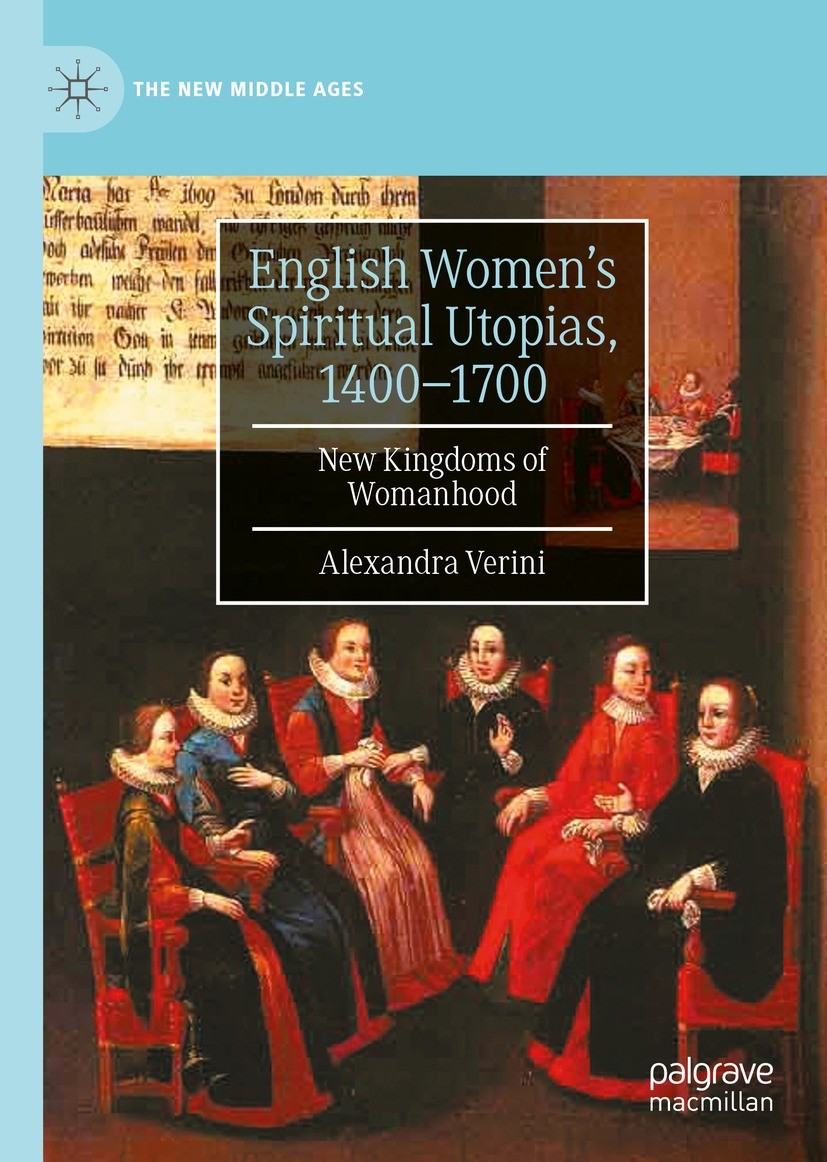
245 10|aEnglish Women’s Spiritual Utopias, 1400-1700|h[electronic resource] :|bNew Kingdoms of Womanhood /|cby Alexandra Verini.
250 |a1st ed. 2022.
264 1|aCham :|bSpringer International Publishing :|bImprint: Palgrave Macmillan,|c2022.
300 |aXIII, 223 p. 6 illus.|bonline resource.
336 |atext|btxt|2rdacontent
337 |acomputer|bc|2rdamedia
338 |aonline resource|bcr|2rdacarrier
347 |atext file|bPDF|2rda
490 1 |aThe New Middle Ages,|x2945-5944
505 0 |aChapter 1: Mirrors of our Lady: Utopia in the Medieval Convent -- Chapter 2: These Most Afflicted Sisters: Old and New Futures in Exiled English Convents -- Chapter 3: Not Yet: Aspirational Women’s Communities Beyond the Convent -- Chapter 4: Convents of Pleasure: English Women’s Literary Utopias.
520 |aEnglish Women’s Spiritual Utopias, 1400-1700: New Kingdoms of Womanhood uncovers a tradition of women’s utopianism that extends back to medieval women’s monasticism, overturning accounts of utopia that trace its origins solely to Thomas More. As enclosed spaces in which women wielded authority that was unavailable to them in the outside world, medieval and early modern convents were self-consciously engaged in reworking pre-existing cultural heritage to project desired proto-feminist futures. The utopianism developed within the English convent percolated outwards to unenclosed women's spiritual communities such as Mary Ward's Institute of the Blessed Virgin and the Ferrar family at Little Gidding. Convent-based utopianism further acted as an unrecognized influence on the first English women’s literary utopias by authors such as Margaret Cavendish and Mary Astell. Collectively, these female communities forged a mode of utopia that drew on the past to imagine new possibilities for themselves as well as for their larger religious and political communities. Tracking utopianism from the convent to the literary page over a period of 300 years, New Kingdoms writes a new history of medieval and early modern women’s intellectual work and expands the concept of utopia itself.
650 0|aLiterature, Medieval.
650 0|aEurope|xHistory|x476-1492.
650 0|aPhilosophy, Medieval.
650 0|aLiterature|xPhilosophy.
650 0|aFeminism and literature.
650 0|aFeminist theology.
650 14|aMedieval Literature.
650 24|aHistory of Medieval Europe.
650 24|aMedieval Philosophy.
650 24|aFeminist Literary Theory.
650 24|aFeminist Theology.
710 2 |aSpringerLink (Online service)
773 0 |tSpringer Nature eBook
776 08|iPrinted edition:|z9783031009167
776 08|iPrinted edition:|z9783031009181
776 08|iPrinted edition:|z9783031009198
776 08|iPrinted edition:|z9783031031755
776 08|iPrinted edition:|z9783031031748
776 08|iPrinted edition:|z9783031031731
776 08|iPrinted edition:|z9783031031724
830 0|aThe New Middle Ages,|x2945-5944
856 40|uhttps://doi.org/10.1007/978-3-031-00917-4
912 |aZDB-2-LCM
912 |aZDB-2-SXL
950 |aLiterature, Cultural and Media Studies (SpringerNature-41173)
950 |aLiterature, Cultural and Media Studies (R0) (SpringerNature-43723)