

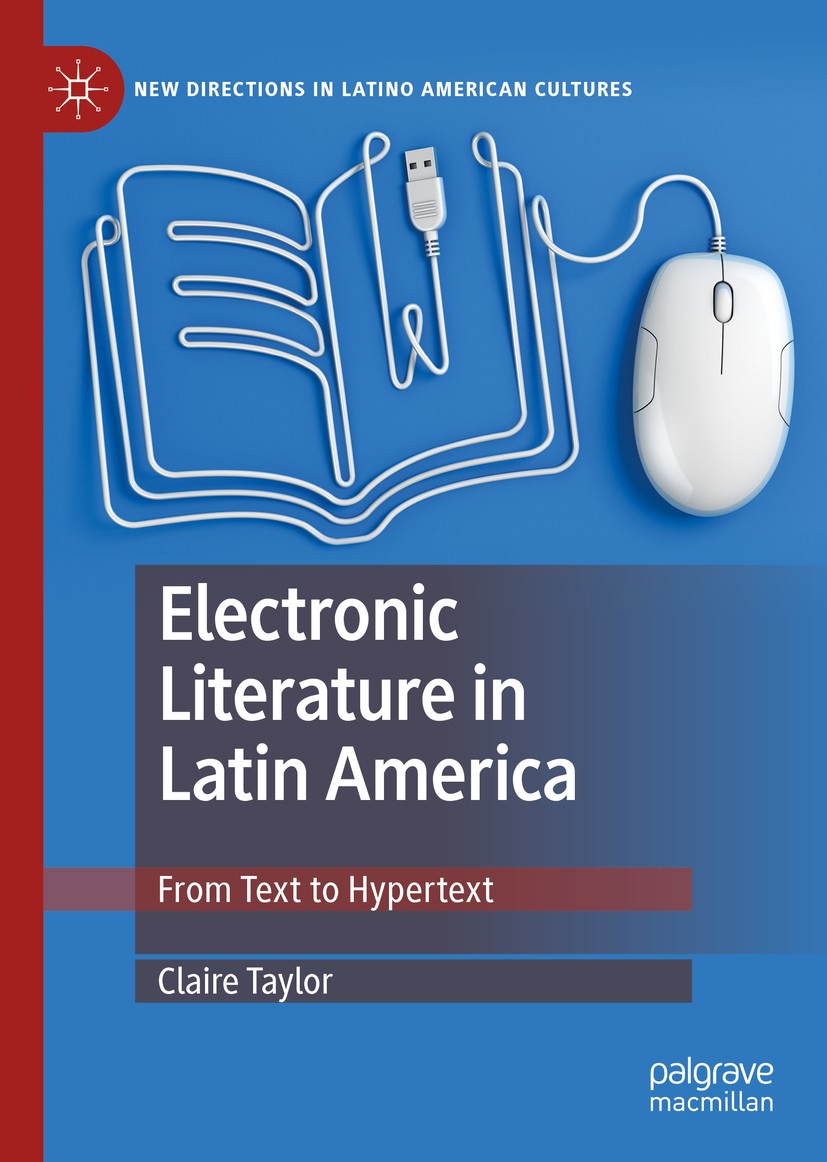
Electronic Literature in Latin America [electronic resource] : From Text to Hypertext / by Claire Taylor.
Erişim Adresi
ISBN
9783030309886
Dil Kodu
İngilizce
Yer Numarası
EK/4183
Yazar
Basım Bildirimi
1st ed. 2019.
Yayın Bilgisi
Cham : Springer International Publishing : Imprint: Palgrave Macmillan, 2019.
Fiziksel Niteleme
XI, 272 p. 17 illus. online resource.
Dizi
New Directions in Latino American Cultures, 2634-520X
İçindekiler Notu
Introduction -- 1. Revitalising Legacy Media: Carlos Labbé’s Pentagonal: incluidos tú y yo (2001) (Chile) -- 2. Foregrounding Fragments and Gaps: Marina Zerbarini’s Eveline, fragmentos de una respuesta (2004) (Argentina) -- 3. Re-animating the Whodunnit: Jaime Alejandro Rodríguez’s: Golpe de Gracia (2009) (Colombia) -- 4. Re-writing the Classics and Animating the Baroque: Belén Gache’s Góngora Wordtoys (2011) and Radical karaoke (2011) (Spain-Argentina) -- 5. Re-thinking the Aphorism: Eduardo Navas’s Mínima Moralia Redux (2011-to date), (US-El Salvador) -- 6. Critiquing Web Structure and the Circulation of Images: Doménico Chiappe’s Hotel Minotauro (2013-2015) -- Conclusion.
Özet, vb.
“Electronic Literature in Latin America is an authoritative and original study. It brilliantly shows how digital literature interacts with experimental literary predecessors, thus moving beyond unproblematised assertions of the empowering nature of new technologies and showing such work in dialogue with radical literary predecessors and embodying new possibilities, while remaining aware of the limitations of new media in the era of technocapitalism. The case studies chosen provide a rich and detailed insight into the trajectory of electronic literature in twenty-first century Latin America and into the political and ethical issues that such cultural production raises.” - Professor Philip Swanson, University of Sheffield, UK “Taylor’s focus on these texts as the inheritors of long-established literary traditions provides a useful and refreshing alternative to a tendency to frame electronic culture as exclusively popular or even mass culture. The project thus builds a vital argument about how radical literary traditions, both past and present, can make important contributions to ideological and political debates.” - Professor Par Kumaraswami, University of Reading, UK This book explores one of the most exciting new developments in the literary field to emerge over recent decades: the growing body of work known as ‘electronic literature’, comprising literary works that take advantage of the capabilities of digital technologies in their enactment. Focussing on six leading authors within Latin(o) America whose works have proved pioneering in the development of these new literary forms, the book proposes a three-fold approach of aesthetics, technologics, and ethics, as a framework for analyzing digital literature.
Konu
Technology __ Sociological aspects.
Ethnology __ Latin America.
Culture.
Latin American literature.
Digital media.
Communication.
Science, Technology and Society.
Latin American Culture.
Latin American/Caribbean Literature.
Digital and New Media.
Media and Communication.
Ethnology __ Latin America.
Culture.
Latin American literature.
Digital media.
Communication.
Science, Technology and Society.
Latin American Culture.
Latin American/Caribbean Literature.
Digital and New Media.
Media and Communication.
Kurum Adı
Eseri Alıntıla
Referansları kullanmadan önce gözden geçirmeniz ve varsa gerekli düzeltmeleri yapmanız önerilir.
Dijital Kaynak
MARC Görünümü
LEADER 04553nam a22005775i 4500
001 840933
003 TR_AnAIT
005 20260715032726
007 cr nn 008mamaa
008 191122s2019 sz | s |||| 0|eng d
020 |a9783030309886|9978-3-030-30988-6
024 7 |a10.1007/978-3-030-30988-6|2doi
041 |aeng
049 |aTürk Dil Kurumu Kütüphanesi
050 4|aHM846-851
072 7|aJF|2bicssc
072 7|aSOC000000|2bisacsh
072 7|aJB|2thema
082 04|a303.483|223
090 |aEK/4183
100 1 |aTaylor, Claire.|eauthor.|4aut|4http://id.loc.gov/vocabulary/relators/aut
245 10|aElectronic Literature in Latin America|h[electronic resource] :|bFrom Text to Hypertext /|cby Claire Taylor.
250 |a1st ed. 2019.
264 1|aCham :|bSpringer International Publishing :|bImprint: Palgrave Macmillan,|c2019.
300 |aXI, 272 p. 17 illus.|bonline resource.
336 |atext|btxt|2rdacontent
337 |acomputer|bc|2rdamedia
338 |aonline resource|bcr|2rdacarrier
347 |atext file|bPDF|2rda
490 1 |aNew Directions in Latino American Cultures,|x2634-520X
505 0 |aIntroduction -- 1. Revitalising Legacy Media: Carlos Labbé’s Pentagonal: incluidos tú y yo (2001) (Chile) -- 2. Foregrounding Fragments and Gaps: Marina Zerbarini’s Eveline, fragmentos de una respuesta (2004) (Argentina) -- 3. Re-animating the Whodunnit: Jaime Alejandro Rodríguez’s: Golpe de Gracia (2009) (Colombia) -- 4. Re-writing the Classics and Animating the Baroque: Belén Gache’s Góngora Wordtoys (2011) and Radical karaoke (2011) (Spain-Argentina) -- 5. Re-thinking the Aphorism: Eduardo Navas’s Mínima Moralia Redux (2011-to date), (US-El Salvador) -- 6. Critiquing Web Structure and the Circulation of Images: Doménico Chiappe’s Hotel Minotauro (2013-2015) -- Conclusion.
520 |a “Electronic Literature in Latin America is an authoritative and original study. It brilliantly shows how digital literature interacts with experimental literary predecessors, thus moving beyond unproblematised assertions of the empowering nature of new technologies and showing such work in dialogue with radical literary predecessors and embodying new possibilities, while remaining aware of the limitations of new media in the era of technocapitalism. The case studies chosen provide a rich and detailed insight into the trajectory of electronic literature in twenty-first century Latin America and into the political and ethical issues that such cultural production raises.” - Professor Philip Swanson, University of Sheffield, UK “Taylor’s focus on these texts as the inheritors of long-established literary traditions provides a useful and refreshing alternative to a tendency to frame electronic culture as exclusively popular or even mass culture. The project thus builds a vital argument about how radical literary traditions, both past and present, can make important contributions to ideological and political debates.” - Professor Par Kumaraswami, University of Reading, UK This book explores one of the most exciting new developments in the literary field to emerge over recent decades: the growing body of work known as ‘electronic literature’, comprising literary works that take advantage of the capabilities of digital technologies in their enactment. Focussing on six leading authors within Latin(o) America whose works have proved pioneering in the development of these new literary forms, the book proposes a three-fold approach of aesthetics, technologics, and ethics, as a framework for analyzing digital literature.
650 0|aTechnology|xSociological aspects.
650 0|aEthnology|xLatin America.
650 0|aCulture.
650 0|aLatin American literature.
650 0|aDigital media.
650 0|aCommunication.
650 14|aScience, Technology and Society.
650 24|aLatin American Culture.
650 24|aLatin American/Caribbean Literature.
650 24|aDigital and New Media.
650 24|aMedia and Communication.
710 2 |aSpringerLink (Online service)
773 0 |tSpringer Nature eBook
776 08|iPrinted edition:|z9783030309879
776 08|iPrinted edition:|z9783030309893
776 08|iPrinted edition:|z9783030309909
830 0|aNew Directions in Latino American Cultures,|x2634-520X
856 40|uhttps://doi.org/10.1007/978-3-030-30988-6
912 |aZDB-2-LCM
912 |aZDB-2-SXL
950 |aLiterature, Cultural and Media Studies (SpringerNature-41173)
950 |aLiterature, Cultural and Media Studies (R0) (SpringerNature-43723)
001 840933
003 TR_AnAIT
005 20260715032726
007 cr nn 008mamaa
008 191122s2019 sz | s |||| 0|eng d
020 |a9783030309886|9978-3-030-30988-6
024 7 |a10.1007/978-3-030-30988-6|2doi
041 |aeng
049 |aTürk Dil Kurumu Kütüphanesi
050 4|aHM846-851
072 7|aJF|2bicssc
072 7|aSOC000000|2bisacsh
072 7|aJB|2thema
082 04|a303.483|223
090 |aEK/4183
100 1 |aTaylor, Claire.|eauthor.|4aut|4http://id.loc.gov/vocabulary/relators/aut
245 10|aElectronic Literature in Latin America|h[electronic resource] :|bFrom Text to Hypertext /|cby Claire Taylor.
250 |a1st ed. 2019.
264 1|aCham :|bSpringer International Publishing :|bImprint: Palgrave Macmillan,|c2019.
300 |aXI, 272 p. 17 illus.|bonline resource.
336 |atext|btxt|2rdacontent
337 |acomputer|bc|2rdamedia
338 |aonline resource|bcr|2rdacarrier
347 |atext file|bPDF|2rda
490 1 |aNew Directions in Latino American Cultures,|x2634-520X
505 0 |aIntroduction -- 1. Revitalising Legacy Media: Carlos Labbé’s Pentagonal: incluidos tú y yo (2001) (Chile) -- 2. Foregrounding Fragments and Gaps: Marina Zerbarini’s Eveline, fragmentos de una respuesta (2004) (Argentina) -- 3. Re-animating the Whodunnit: Jaime Alejandro Rodríguez’s: Golpe de Gracia (2009) (Colombia) -- 4. Re-writing the Classics and Animating the Baroque: Belén Gache’s Góngora Wordtoys (2011) and Radical karaoke (2011) (Spain-Argentina) -- 5. Re-thinking the Aphorism: Eduardo Navas’s Mínima Moralia Redux (2011-to date), (US-El Salvador) -- 6. Critiquing Web Structure and the Circulation of Images: Doménico Chiappe’s Hotel Minotauro (2013-2015) -- Conclusion.
520 |a “Electronic Literature in Latin America is an authoritative and original study. It brilliantly shows how digital literature interacts with experimental literary predecessors, thus moving beyond unproblematised assertions of the empowering nature of new technologies and showing such work in dialogue with radical literary predecessors and embodying new possibilities, while remaining aware of the limitations of new media in the era of technocapitalism. The case studies chosen provide a rich and detailed insight into the trajectory of electronic literature in twenty-first century Latin America and into the political and ethical issues that such cultural production raises.” - Professor Philip Swanson, University of Sheffield, UK “Taylor’s focus on these texts as the inheritors of long-established literary traditions provides a useful and refreshing alternative to a tendency to frame electronic culture as exclusively popular or even mass culture. The project thus builds a vital argument about how radical literary traditions, both past and present, can make important contributions to ideological and political debates.” - Professor Par Kumaraswami, University of Reading, UK This book explores one of the most exciting new developments in the literary field to emerge over recent decades: the growing body of work known as ‘electronic literature’, comprising literary works that take advantage of the capabilities of digital technologies in their enactment. Focussing on six leading authors within Latin(o) America whose works have proved pioneering in the development of these new literary forms, the book proposes a three-fold approach of aesthetics, technologics, and ethics, as a framework for analyzing digital literature.
650 0|aTechnology|xSociological aspects.
650 0|aEthnology|xLatin America.
650 0|aCulture.
650 0|aLatin American literature.
650 0|aDigital media.
650 0|aCommunication.
650 14|aScience, Technology and Society.
650 24|aLatin American Culture.
650 24|aLatin American/Caribbean Literature.
650 24|aDigital and New Media.
650 24|aMedia and Communication.
710 2 |aSpringerLink (Online service)
773 0 |tSpringer Nature eBook
776 08|iPrinted edition:|z9783030309879
776 08|iPrinted edition:|z9783030309893
776 08|iPrinted edition:|z9783030309909
830 0|aNew Directions in Latino American Cultures,|x2634-520X
856 40|uhttps://doi.org/10.1007/978-3-030-30988-6
912 |aZDB-2-LCM
912 |aZDB-2-SXL
950 |aLiterature, Cultural and Media Studies (SpringerNature-41173)
950 |aLiterature, Cultural and Media Studies (R0) (SpringerNature-43723)
Materyaller
Depodan talep edilen materyal sadece kütüphane içerisinde kullanılmaktadır.
Materyal dışarıya ödünç verilmemektedir.
Materyal dışarıya ödünç verilmemektedir.
