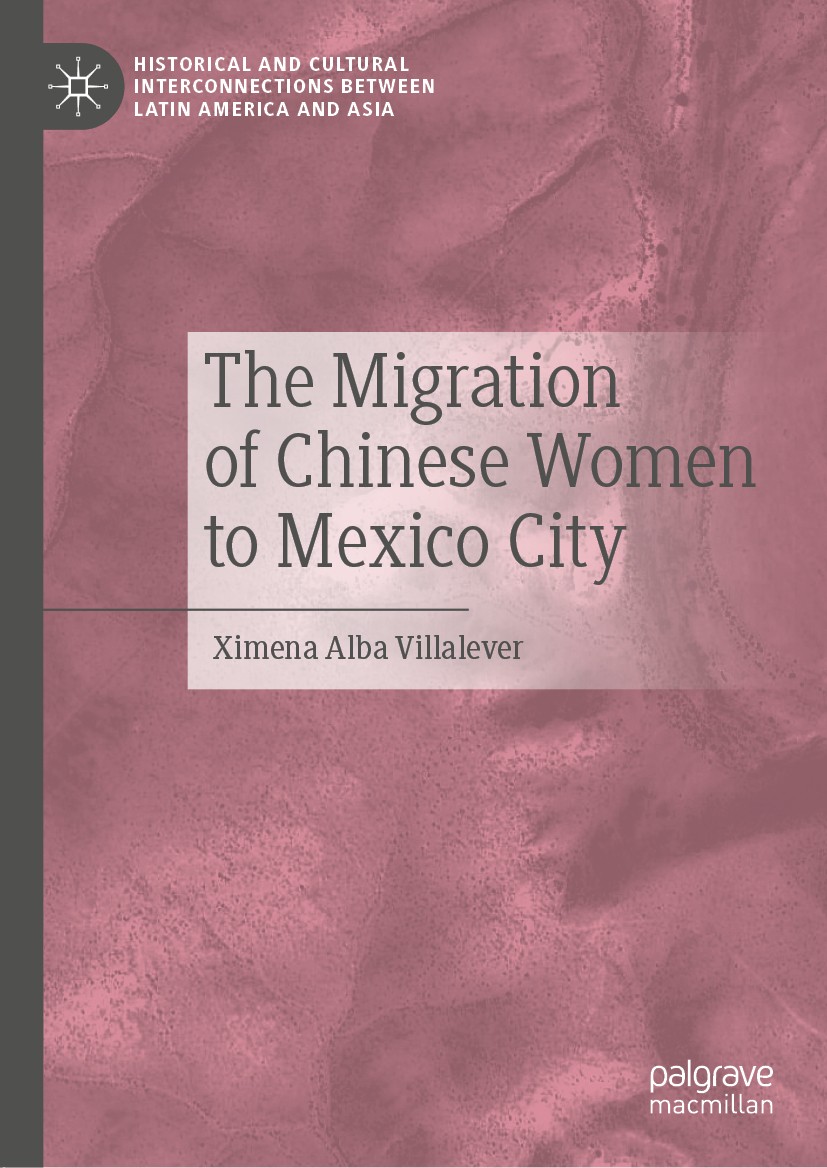
The Migration of Chinese Women to Mexico City [electronic resource] / by Ximena Alba Villalever.
Erişim Adresi
ISBN
9783030533441
Dil Kodu
İngilizce
Yer Numarası
EK/4256
Yazar
Basım Bildirimi
1st ed. 2020.
Yayın Bilgisi
Cham : Springer International Publishing : Imprint: Palgrave Macmillan, 2020.
Fiziksel Niteleme
XV, 281 p. 6 illus., 5 illus. in color. online resource.
Dizi
Historical and Cultural Interconnections between Latin America and Asia, 2946-4285
İçindekiler Notu
Part One: Chinese women in Mexican popular markets, starting with small scale processes of globalization -- 1 The networking components of street markets and ‘popular’ economy -- 1.1 Locating Tepito and its ramifications, deconstructing the ‘centre’ -- 1.2 Tepiteñes and spaces of opportunities, intersectional spectrums -- 1.3 Blended spaces: migration and commerce in Tepito -- 2 Made in Yiwu, to Tepito -- 2.1 Of bullet trains and hair garments, experiencing Yiwu -- 2.2 Blended spaces: migration, commerce and gender in Yiwu -- Conclusions -- Part Two: Herstories of migration, building spaces of opportunities -- 3 Building subjectivities in systematic inequality -- 3.1 The feminization of Chinese migration patterns, causes and effects -- 3.2 Growing up in a Chinese jia. What is the place of women? -- 3.3 Defying social constructions of gender. Migration, marriage and work -- 4 Mexico, land of opportunities? Migration as a search for survival and social mobility -- 4.1 The paradoxes of development. Education, employment and origin, indicators of inequality -- 4.2 Building networks between Mexico and China, strategies of migration and work -- 4.3 Constructing spaces of opportunities: transversal articulations between commerce and migration -- Conclusions.-Part Three: Drafting alternative spaces of globalization -- 5 From transnational urban formations to global cities -- 5.1 What are alternative spaces of globalization? -- 5.2 Constructing cities through belonging: bringing gender in -- 5.3 Vulnerabilities and resistances in the city, building networks of trust between guanxi and comadrazgo -- 6 The place of women as actors of transnational formations -- 6.1 Transnational motherhoods -- 6.2 Building transnational family businesses -- 6.3 Building bridges from space to place: ambivalent constructions of otherness, migration and discrimination -- 6.4 Building alternatives to survival and growth -- Conclusions.
Özet, vb.
"Alba Villalever's fascinating ethnography is a careful examination of the crucial role that Chinese migrant women play in Mexico City's ubiquitous popular markets, and a necessary new perspective on the rapidly increasing trade between China and Latin America. Its excellent writing and sharp methodology and analysis will make this book a must read for scholars in Anthropology as well as Asian and Latin American studies." -Fredy González, Associate Professor of Global Asian Studies and History, University of Illinois Chicago, USA This book focuses on the migration strategies of Chinese women who travel to Mexico City in search of opportunities and survival. Specifically, it explores the experiences and contributions of women who have placed themselves within the local and conflictive networks of Mexico City´s downtown street markets (particularly in Tepito), where they work as suppliers and petty vendors of inexpensive products made in China (specifically inYiwu). Street markets are the vital nodes of Mexican “popular” economy (economía popular), but the people that work and live among them have a long history of marginalization in relation to formal economic networks in Mexico City. Despite the difficult conditions of these spaces, in the last three decades they have become a new source of economic opportunities and labor market access for Chinese migrants, particularly for women. Through their commerce, these migrants have introduced new commodities and new trade dynamics into these markets, which are thereby transformed into alternative spaces of globalization. Ximena Alba Villalever earned her PhD in Anthropology from the Institute for Latin American Studies of the Free University of Berlin, Germany. Her research interests revolve around gender, migration, inequality and globalization. She has researched Chinese migration to Mexico for more than a decade. More recently, she has turned her sight to processes offorced migration and organized violence in Mexico. She is currently working as a Postdoctoral Fellow in a project founded by the Deutsche Forschungsgemeinschaft in the Institute for Latin American Studies of the Free University of Berlin.
Konu
Ethnology.
Ethnology __ Asia.
Culture.
Ethnology __ Latin America.
Emigration and immigration.
Sociocultural Anthropology.
Asian Culture.
Latin American Culture.
Human Migration.
Ethnology __ Asia.
Culture.
Ethnology __ Latin America.
Emigration and immigration.
Sociocultural Anthropology.
Asian Culture.
Latin American Culture.
Human Migration.
Kurum Adı

Eseri Alıntıla
Referansları kullanmadan önce gözden geçirmeniz ve varsa gerekli düzeltmeleri yapmanız önerilir.
Dijital Kaynak
MARC Görünümü
LEADER 06190nam a22005535i 4500
001 840962
003 TR_AnAIT
005 20260715032640
007 cr nn 008mamaa
008 201109s2020 sz | s |||| 0|eng d
020 |a9783030533441|9978-3-030-53344-1
024 7 |a10.1007/978-3-030-53344-1|2doi
041 |aeng
049 |aTürk Dil Kurumu Kütüphanesi
050 4|aGN301-674
072 7|aJHMC|2bicssc
072 7|aSOC002010|2bisacsh
072 7|aJHMC|2thema
082 04|a305.8|223
090 |aEK/4256
100 1 |aAlba Villalever, Ximena.|eauthor.|4aut|4http://id.loc.gov/vocabulary/relators/aut
245 14|aThe Migration of Chinese Women to Mexico City|h[electronic resource] /|cby Ximena Alba Villalever.
250 |a1st ed. 2020.
264 1|aCham :|bSpringer International Publishing :|bImprint: Palgrave Macmillan,|c2020.
300 |aXV, 281 p. 6 illus., 5 illus. in color.|bonline resource.
336 |atext|btxt|2rdacontent
337 |acomputer|bc|2rdamedia
338 |aonline resource|bcr|2rdacarrier
347 |atext file|bPDF|2rda
490 1 |aHistorical and Cultural Interconnections between Latin America and Asia,|x2946-4285
505 0 |aPart One: Chinese women in Mexican popular markets, starting with small scale processes of globalization -- 1 The networking components of street markets and ‘popular’ economy -- 1.1 Locating Tepito and its ramifications, deconstructing the ‘centre’ -- 1.2 Tepiteñes and spaces of opportunities, intersectional spectrums -- 1.3 Blended spaces: migration and commerce in Tepito -- 2 Made in Yiwu, to Tepito -- 2.1 Of bullet trains and hair garments, experiencing Yiwu -- 2.2 Blended spaces: migration, commerce and gender in Yiwu -- Conclusions -- Part Two: Herstories of migration, building spaces of opportunities -- 3 Building subjectivities in systematic inequality -- 3.1 The feminization of Chinese migration patterns, causes and effects -- 3.2 Growing up in a Chinese jia. What is the place of women? -- 3.3 Defying social constructions of gender. Migration, marriage and work -- 4 Mexico, land of opportunities? Migration as a search for survival and social mobility -- 4.1 The paradoxes of development. Education, employment and origin, indicators of inequality -- 4.2 Building networks between Mexico and China, strategies of migration and work -- 4.3 Constructing spaces of opportunities: transversal articulations between commerce and migration -- Conclusions.-Part Three: Drafting alternative spaces of globalization -- 5 From transnational urban formations to global cities -- 5.1 What are alternative spaces of globalization? -- 5.2 Constructing cities through belonging: bringing gender in -- 5.3 Vulnerabilities and resistances in the city, building networks of trust between guanxi and comadrazgo -- 6 The place of women as actors of transnational formations -- 6.1 Transnational motherhoods -- 6.2 Building transnational family businesses -- 6.3 Building bridges from space to place: ambivalent constructions of otherness, migration and discrimination -- 6.4 Building alternatives to survival and growth -- Conclusions.
520 |a"Alba Villalever's fascinating ethnography is a careful examination of the crucial role that Chinese migrant women play in Mexico City's ubiquitous popular markets, and a necessary new perspective on the rapidly increasing trade between China and Latin America. Its excellent writing and sharp methodology and analysis will make this book a must read for scholars in Anthropology as well as Asian and Latin American studies." -Fredy González, Associate Professor of Global Asian Studies and History, University of Illinois Chicago, USA This book focuses on the migration strategies of Chinese women who travel to Mexico City in search of opportunities and survival. Specifically, it explores the experiences and contributions of women who have placed themselves within the local and conflictive networks of Mexico City´s downtown street markets (particularly in Tepito), where they work as suppliers and petty vendors of inexpensive products made in China (specifically inYiwu). Street markets are the vital nodes of Mexican “popular” economy (economía popular), but the people that work and live among them have a long history of marginalization in relation to formal economic networks in Mexico City. Despite the difficult conditions of these spaces, in the last three decades they have become a new source of economic opportunities and labor market access for Chinese migrants, particularly for women. Through their commerce, these migrants have introduced new commodities and new trade dynamics into these markets, which are thereby transformed into alternative spaces of globalization. Ximena Alba Villalever earned her PhD in Anthropology from the Institute for Latin American Studies of the Free University of Berlin, Germany. Her research interests revolve around gender, migration, inequality and globalization. She has researched Chinese migration to Mexico for more than a decade. More recently, she has turned her sight to processes offorced migration and organized violence in Mexico. She is currently working as a Postdoctoral Fellow in a project founded by the Deutsche Forschungsgemeinschaft in the Institute for Latin American Studies of the Free University of Berlin.
650 0|aEthnology.
650 0|aEthnology|xAsia.
650 0|aCulture.
650 0|aEthnology|xLatin America.
650 0|aEmigration and immigration.
650 14|aSociocultural Anthropology.
650 24|aAsian Culture.
650 24|aLatin American Culture.
650 24|aHuman Migration.
710 2 |aSpringerLink (Online service)
773 0 |tSpringer Nature eBook
776 08|iPrinted edition:|z9783030533434
776 08|iPrinted edition:|z9783030533458
776 08|iPrinted edition:|z9783030533465
830 0|aHistorical and Cultural Interconnections between Latin America and Asia,|x2946-4285
856 40|uhttps://doi.org/10.1007/978-3-030-53344-1
912 |aZDB-2-LCM
912 |aZDB-2-SXL
950 |aLiterature, Cultural and Media Studies (SpringerNature-41173)
950 |aLiterature, Cultural and Media Studies (R0) (SpringerNature-43723)
001 840962
003 TR_AnAIT
005 20260715032640
007 cr nn 008mamaa
008 201109s2020 sz | s |||| 0|eng d
020 |a9783030533441|9978-3-030-53344-1
024 7 |a10.1007/978-3-030-53344-1|2doi
041 |aeng
049 |aTürk Dil Kurumu Kütüphanesi
050 4|aGN301-674
072 7|aJHMC|2bicssc
072 7|aSOC002010|2bisacsh
072 7|aJHMC|2thema
082 04|a305.8|223
090 |aEK/4256
100 1 |aAlba Villalever, Ximena.|eauthor.|4aut|4http://id.loc.gov/vocabulary/relators/aut
245 14|aThe Migration of Chinese Women to Mexico City|h[electronic resource] /|cby Ximena Alba Villalever.
250 |a1st ed. 2020.
264 1|aCham :|bSpringer International Publishing :|bImprint: Palgrave Macmillan,|c2020.
300 |aXV, 281 p. 6 illus., 5 illus. in color.|bonline resource.
336 |atext|btxt|2rdacontent
337 |acomputer|bc|2rdamedia
338 |aonline resource|bcr|2rdacarrier
347 |atext file|bPDF|2rda
490 1 |aHistorical and Cultural Interconnections between Latin America and Asia,|x2946-4285
505 0 |aPart One: Chinese women in Mexican popular markets, starting with small scale processes of globalization -- 1 The networking components of street markets and ‘popular’ economy -- 1.1 Locating Tepito and its ramifications, deconstructing the ‘centre’ -- 1.2 Tepiteñes and spaces of opportunities, intersectional spectrums -- 1.3 Blended spaces: migration and commerce in Tepito -- 2 Made in Yiwu, to Tepito -- 2.1 Of bullet trains and hair garments, experiencing Yiwu -- 2.2 Blended spaces: migration, commerce and gender in Yiwu -- Conclusions -- Part Two: Herstories of migration, building spaces of opportunities -- 3 Building subjectivities in systematic inequality -- 3.1 The feminization of Chinese migration patterns, causes and effects -- 3.2 Growing up in a Chinese jia. What is the place of women? -- 3.3 Defying social constructions of gender. Migration, marriage and work -- 4 Mexico, land of opportunities? Migration as a search for survival and social mobility -- 4.1 The paradoxes of development. Education, employment and origin, indicators of inequality -- 4.2 Building networks between Mexico and China, strategies of migration and work -- 4.3 Constructing spaces of opportunities: transversal articulations between commerce and migration -- Conclusions.-Part Three: Drafting alternative spaces of globalization -- 5 From transnational urban formations to global cities -- 5.1 What are alternative spaces of globalization? -- 5.2 Constructing cities through belonging: bringing gender in -- 5.3 Vulnerabilities and resistances in the city, building networks of trust between guanxi and comadrazgo -- 6 The place of women as actors of transnational formations -- 6.1 Transnational motherhoods -- 6.2 Building transnational family businesses -- 6.3 Building bridges from space to place: ambivalent constructions of otherness, migration and discrimination -- 6.4 Building alternatives to survival and growth -- Conclusions.
520 |a"Alba Villalever's fascinating ethnography is a careful examination of the crucial role that Chinese migrant women play in Mexico City's ubiquitous popular markets, and a necessary new perspective on the rapidly increasing trade between China and Latin America. Its excellent writing and sharp methodology and analysis will make this book a must read for scholars in Anthropology as well as Asian and Latin American studies." -Fredy González, Associate Professor of Global Asian Studies and History, University of Illinois Chicago, USA This book focuses on the migration strategies of Chinese women who travel to Mexico City in search of opportunities and survival. Specifically, it explores the experiences and contributions of women who have placed themselves within the local and conflictive networks of Mexico City´s downtown street markets (particularly in Tepito), where they work as suppliers and petty vendors of inexpensive products made in China (specifically inYiwu). Street markets are the vital nodes of Mexican “popular” economy (economía popular), but the people that work and live among them have a long history of marginalization in relation to formal economic networks in Mexico City. Despite the difficult conditions of these spaces, in the last three decades they have become a new source of economic opportunities and labor market access for Chinese migrants, particularly for women. Through their commerce, these migrants have introduced new commodities and new trade dynamics into these markets, which are thereby transformed into alternative spaces of globalization. Ximena Alba Villalever earned her PhD in Anthropology from the Institute for Latin American Studies of the Free University of Berlin, Germany. Her research interests revolve around gender, migration, inequality and globalization. She has researched Chinese migration to Mexico for more than a decade. More recently, she has turned her sight to processes offorced migration and organized violence in Mexico. She is currently working as a Postdoctoral Fellow in a project founded by the Deutsche Forschungsgemeinschaft in the Institute for Latin American Studies of the Free University of Berlin.
650 0|aEthnology.
650 0|aEthnology|xAsia.
650 0|aCulture.
650 0|aEthnology|xLatin America.
650 0|aEmigration and immigration.
650 14|aSociocultural Anthropology.
650 24|aAsian Culture.
650 24|aLatin American Culture.
650 24|aHuman Migration.
710 2 |aSpringerLink (Online service)
773 0 |tSpringer Nature eBook
776 08|iPrinted edition:|z9783030533434
776 08|iPrinted edition:|z9783030533458
776 08|iPrinted edition:|z9783030533465
830 0|aHistorical and Cultural Interconnections between Latin America and Asia,|x2946-4285
856 40|uhttps://doi.org/10.1007/978-3-030-53344-1
912 |aZDB-2-LCM
912 |aZDB-2-SXL
950 |aLiterature, Cultural and Media Studies (SpringerNature-41173)
950 |aLiterature, Cultural and Media Studies (R0) (SpringerNature-43723)
Materyaller
Depodan talep edilen materyal sadece kütüphane içerisinde kullanılmaktadır.
Materyal dışarıya ödünç verilmemektedir.
