

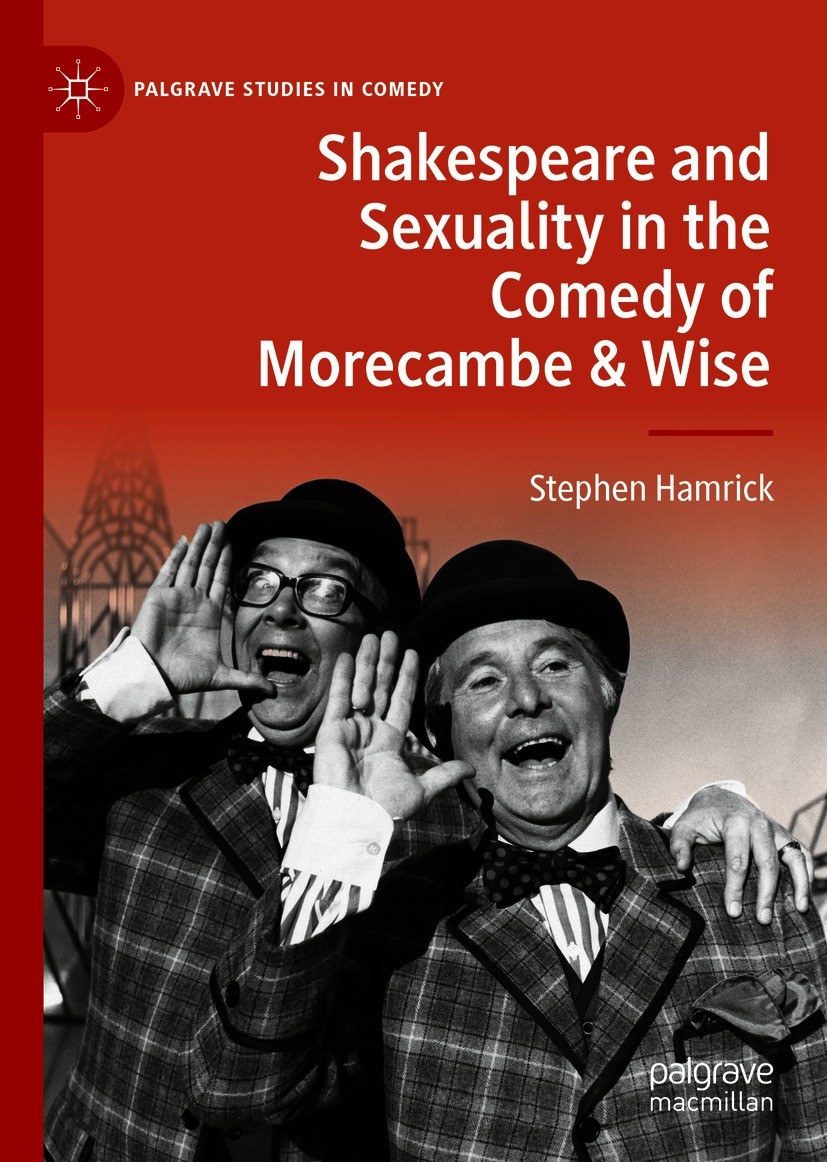
Shakespeare and Sexuality in the Comedy of Morecambe & Wise [electronic resource] / by Stephen Hamrick.
Erişim Adresi
ISBN
9783030339586
Dil Kodu
İngilizce
Yer Numarası
EK/4268
Yazar
Basım Bildirimi
1st ed. 2020.
Yayın Bilgisi
Cham : Springer International Publishing : Imprint: Palgrave Macmillan, 2020.
Fiziksel Niteleme
XIII, 346 p. 6 illus. online resource.
Dizi
Palgrave Studies in Comedy, 2731-4340
İçindekiler Notu
Introduction -- Section One: Morecambe & Wise Past and Present -- Chapter 1 - Transferring Variety to Television -- Chapter 2 - The Shrine of Morecambe & Wise -- Section Two: Morecambe & Wise and Shakespeare -- Chapter 3 - Shakespop -- Chapter 4 - Embodying the Bard -- Chapter 5 - At War with the Boys -- Chapter 6 - Hamlets (formerly the conclusion) -- Section Three: Morecambe & Wise and Sexuality -- Chapter 7 - Impersonating Men -- Chapter 8 - Cross-Dressed Comedy -- Chapter 9 - In Bed with a Will -- Chapter 10 - Queer Shakespeare -- Conclusion.
Özet, vb.
Contextualizing the duo’s work within British comedy, Shakespeare criticism, the history of sexuality, and their own historical moment, this book offers the first sustained analysis of the 20th Century’s most successful double-act. Over the course of a forty-four-year career (1940-1984), Eric Morecambe & Ernie Wise appropriated snippets of verse, scenes, and other elements from seventeen of Shakespeare’s plays more than one-hundred-and-fifty times. Fashioning a kinder, more inclusive world, they deployed a vast array of elements connected to Shakespeare, his life, and institutions. Rejecting claims that they offer only nostalgic escapism, Hamrick analyses their work within contemporary contexts, including their engagement with many forms and genres, including Variety, the heritage industry, journalism, and more. ‘The Boys’ deploy Shakespeare to work through issues of class, sexuality, and violence. Lesbianism, drag, gay marriage, and a queer aesthetics emerge, helping to normalise homosexuality and complicate masculinity in the ‘permissive’ 1960s.
Konu
Comedy.
Ethnology.
European literature __ Renaissance, 1450-1600.
Comedy Studies.
Sociocultural Anthropology.
Early Modern and Renaissance Literature.
Ethnology.
European literature __ Renaissance, 1450-1600.
Comedy Studies.
Sociocultural Anthropology.
Early Modern and Renaissance Literature.
Kurum Adı
