LEADER 03636nam a22005415i 4500
001 841026
003 TR_AnAIT
005 20260715032515
007 cr nn 008mamaa
008 200728s2020 sz | s |||| 0|eng d
020 |a9783030514938|9978-3-030-51493-8
024 7 |a10.1007/978-3-030-51493-8|2doi
041 |aeng
049 |aTürk Dil Kurumu Kütüphanesi
050 4|aPN1-6790
072 7|aD|2bicssc
072 7|aLIT000000|2bisacsh
072 7|aD|2thema
082 04|a800|223
090 |aEK/4146
100 1 |aNagai, Kaori.|eauthor.|4aut|4http://id.loc.gov/vocabulary/relators/aut
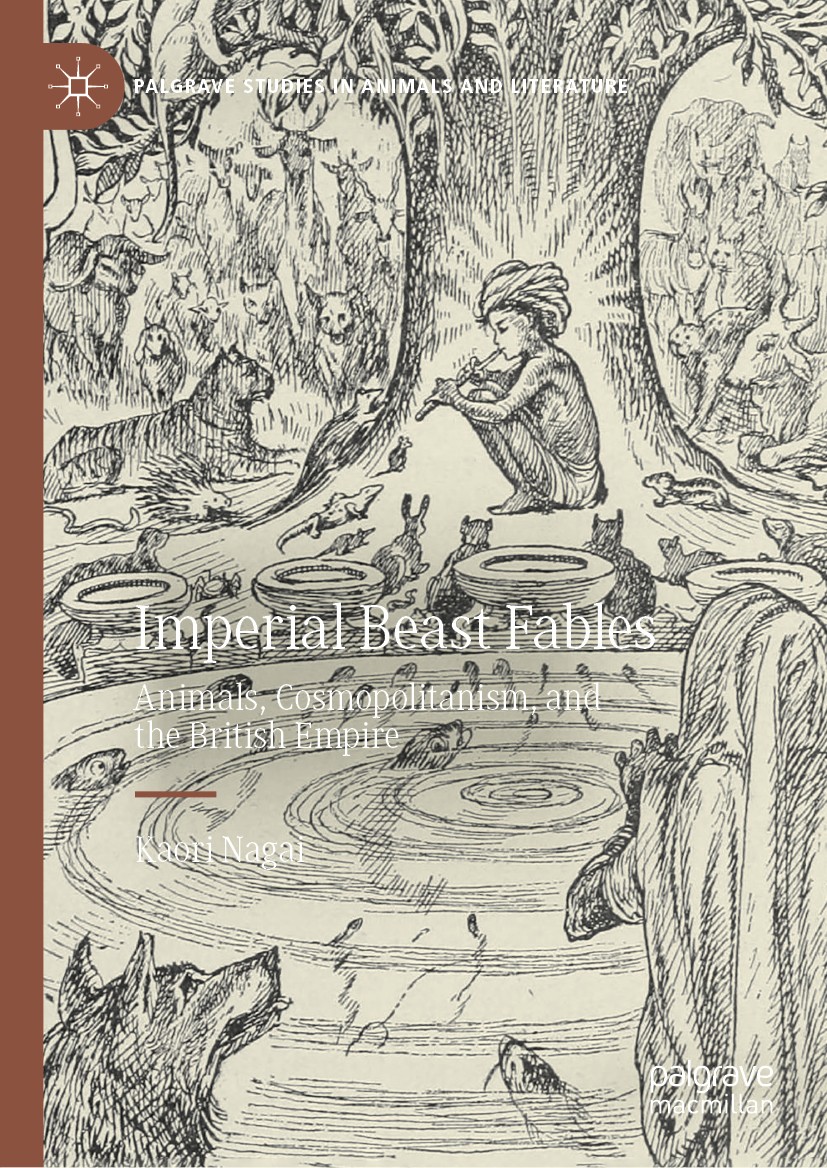
245 10|aImperial Beast Fables|h[electronic resource] :|bAnimals, Cosmopolitanism, and the British Empire /|cby Kaori Nagai.
250 |a1st ed. 2020.
264 1|aCham :|bSpringer International Publishing :|bImprint: Palgrave Macmillan,|c2020.
300 |aXIII, 252 p. 7 illus.|bonline resource.
336 |atext|btxt|2rdacontent
337 |acomputer|bc|2rdamedia
338 |aonline resource|bcr|2rdacarrier
347 |atext file|bPDF|2rda
490 1 |aPalgrave Studies in Animals and Literature,|x2634-6346
505 0 |aIntroduction: Rats in the Box -- Chapter 1: Winged Tales: The Advent of the Imperial Beast Fable -- Chapter 2: ‘Once Upon a Time When Animals Spoke’: Theories of the Beast Fable -- Chapter 3: Into the Chinese Boxes: The Jungle Books -- Chapter 4: Kangaroo Notebook: Abe’s Metatherian Journey -- Chapter 5: Animal Alphabets: Chesterton’s Dog, Browning’s Rats, Lear’s Blue Baboon -- Chapter 6: Fabling Cosmopolitanism: The Ark Esperanto.
520 |aThis book coins the term ‘imperial beast fable’ to explore modern forms of human-animal relationships and their origins in the British Empire. Taking as a starting point the long nineteenth-century fascination with non-European beast fables, it examines literary reworkings of these fables, such as Rudyard Kipling’s Jungle Books, in relation to the global politics of race, language, and species. The imperial beast fable figures variably as a key site where the nature and origins of mankind are hotly debated; an emerging space of conservation in which humans enclose animals to manage and control them; a cage in which an animal narrator talks to change its human jailors; and a vision of animal cosmopolitanism, in which a close kinship between humans and other animals is dreamt of. Written at the intersection of animal studies and postcolonial studies, this book proposes that the beast fable embodies the ideologies and values of the British Empire, while also covertly critiquingthem. It therefore finds in the beast fable the possibility that the multitudinous animals it gives voice to might challenge the imperial networks which threaten their existence, both in the nineteenth century and today.
650 0|aLiterature.
650 0|aLiterature, Modern|x19th century.
650 0|aLiterature, Modern|x20th century.
650 0|aOriental literature.
650 14|aLiterature.
650 24|aNineteenth-Century Literature.
650 24|aTwentieth-Century Literature.
650 24|aAsian Literature.
710 2 |aSpringerLink (Online service)
773 0 |tSpringer Nature eBook
776 08|iPrinted edition:|z9783030514921
776 08|iPrinted edition:|z9783030514945
776 08|iPrinted edition:|z9783030514952
830 0|aPalgrave Studies in Animals and Literature,|x2634-6346
856 40|uhttps://doi.org/10.1007/978-3-030-51493-8
912 |aZDB-2-LCM
912 |aZDB-2-SXL
950 |aLiterature, Cultural and Media Studies (SpringerNature-41173)
950 |aLiterature, Cultural and Media Studies (R0) (SpringerNature-43723)