

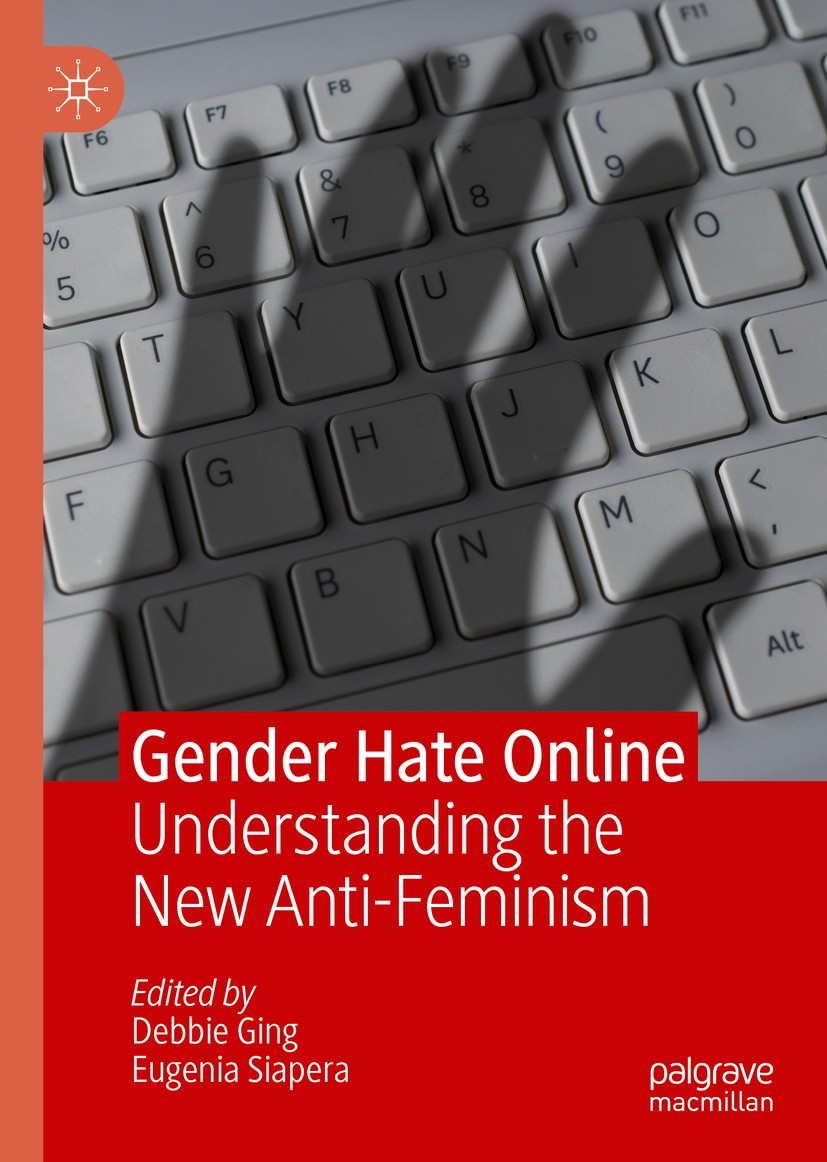
Gender Hate Online [electronic resource] : Understanding the New Anti-Feminism / edited by Debbie Ging, Eugenia Siapera.
Erişim Adresi
ISBN
9783319962269
Dil Kodu
İngilizce
Yer Numarası
EK/4332
Basım Bildirimi
1st ed. 2019.
Yayın Bilgisi
Cham : Springer International Publishing : Imprint: Palgrave Macmillan, 2019.
Fiziksel Niteleme
XXIV, 281 p. 33 illus., 31 illus. in color. online resource.
İçindekiler Notu
1. Introduction (Debbie Ging and Eugenia Siapera) -- Part I. Theorising the New Anti-Feminism(s) -- 2. Online Misogyny as Witch Hunt: Primitive Accumulation in the Age of Technocapitalism (Eugenia Siapera) -- 3. Bros v. Hos: Postfeminism, Anti-Feminism and the Toxic Turn in Digital Gender Politics (Debbie Ging) -- 4. Mera Internet, Meri Marzi: Alternative Imaginings of Consent in Pakistani Online Spaces (Nighat Dad and Shmyla Khan) -- Part II. Manifestations of Online Misogyny: Case studies of different platforms and cultural contexts -- 5. Convergence on Common Ground: MRAs, Memes and Transcultural Contexts of Digital Misogyny (MacKenzie Cockerill) -- 6. Black or Feminist: The Intersections of Misogyny, Race and Anti-Feminist Rhetoric Pertaining to the Bill Cosby Allegations (Sarah Anne Dunne) -- 7. Cruel Intentions and Social Conventions: Locating the Shame in Revenge Porn (Rikke Amundsen) -- 8. “Hell Hath No Fury….”: Gendered Reactions to the Cosby Mistrial Across Liberal and Conservative News Media Sites (Francine Banner) -- Part III. Responses/resistance/experiences -- 9. Animating Feminist Anger: Economies of Race and Gender in Reaction GIFs (Rachel Kuo) -- 10. Politics of #LoSha: Using Naming and Shaming as a Feminist Tool on Facebook (Arpita Chakraborty) -- 11. Affective Resistance Against Online Misogyny and Homophobia on the RuNet (Tetyana Lokot) -- 12. Feminist Tinder: Young Women Talk Back to Harassment Online (Laura Brightwell) -- 13. “Should I Even Be Writing This?”: Public Narratives and Resistance to Online Harassment (Jasmine Linbarry and Bianca Batti).
Özet, vb.
Gender Hate Online addresses the dynamic nature of misogyny: how it travels, what technological and cultural affordances support or obstruct this and what impact reappropriated expressions of misogyny have in other cultures. It adds significantly to an emergent body of scholarship on this topic by bringing together a variety of theoretical approaches, while also including reflections on the past, present, and future of feminism and its interconnections with technologies and media. It also addresses the fact that most work on this area has been focused on the Global North, by including perspectives from Pakistan, India and Russia as well as intersectional and transcultural analyses. Finally, it addresses ways in which women fight back and reclaim online spaces, offering practical applications as well as critical analyses. This edited collection therefore addresses a substantial gap in scholarship by bringing together a body of work exclusively devoted to this topic. With perspectives from a variety of disciplines and geographic bases, the volume will be of major interest to scholars and students in the fields of gender, new media and hate speech. Debbie Ging is Associate Professor of Media Studies in the School of Communications at Dublin City University, Ireland. Eugenia Siapera is Associate Professor of Digital and Social Media and Deputy Director of the Institute for Future Media and Journalism in the School of Communications at Dublin City University, Ireland.
Konu
Sex.
Technology __ Sociological aspects.
Digital media.
Social media.
Communication.
Gender Studies.
Science, Technology and Society.
Digital and New Media.
Social Media.
Media and Communication.
Technology __ Sociological aspects.
Digital media.
Social media.
Communication.
Gender Studies.
Science, Technology and Society.
Digital and New Media.
Social Media.
Media and Communication.
Diğer Yazarlar
Kurum Adı
Eseri Alıntıla
Referansları kullanmadan önce gözden geçirmeniz ve varsa gerekli düzeltmeleri yapmanız önerilir.
Dijital Kaynak
MARC Görünümü
LEADER 06273nam a22006615i 4500
001 841111
003 TR_AnAIT
005 20260715032027
007 cr nn 008mamaa
008 190712s2019 sz | s |||| 0|eng d
020 |a9783319962269|9978-3-319-96226-9
024 7 |a10.1007/978-3-319-96226-9|2doi
041 |aeng
049 |aTürk Dil Kurumu Kütüphanesi
050 4|aHQ12-449
072 7|aJFSJ|2bicssc
072 7|aSOC032000|2bisacsh
072 7|aJBSF|2thema
082 04|a305.3|223
090 |aEK/4332
245 10|aGender Hate Online|h[electronic resource] :|bUnderstanding the New Anti-Feminism /|cedited by Debbie Ging, Eugenia Siapera.
250 |a1st ed. 2019.
264 1|aCham :|bSpringer International Publishing :|bImprint: Palgrave Macmillan,|c2019.
300 |aXXIV, 281 p. 33 illus., 31 illus. in color.|bonline resource.
336 |atext|btxt|2rdacontent
337 |acomputer|bc|2rdamedia
338 |aonline resource|bcr|2rdacarrier
341 0 |bTable of contents navigation|2onix
341 0 |bSingle logical reading order|2onix
341 0 |bShort alternative textual descriptions|2onix
341 0 |bUse of color is not sole means of conveying information|2onix
341 0 |bUse of high contrast between text and background color|2onix
341 0 |bNext / Previous structural navigation|2onix
341 0 |bAll non-decorative content supports reading without sight|2onix
347 |atext file|bPDF|2rda
505 0 |a1. Introduction (Debbie Ging and Eugenia Siapera) -- Part I. Theorising the New Anti-Feminism(s) -- 2. Online Misogyny as Witch Hunt: Primitive Accumulation in the Age of Technocapitalism (Eugenia Siapera) -- 3. Bros v. Hos: Postfeminism, Anti-Feminism and the Toxic Turn in Digital Gender Politics (Debbie Ging) -- 4. Mera Internet, Meri Marzi: Alternative Imaginings of Consent in Pakistani Online Spaces (Nighat Dad and Shmyla Khan) -- Part II. Manifestations of Online Misogyny: Case studies of different platforms and cultural contexts -- 5. Convergence on Common Ground: MRAs, Memes and Transcultural Contexts of Digital Misogyny (MacKenzie Cockerill) -- 6. Black or Feminist: The Intersections of Misogyny, Race and Anti-Feminist Rhetoric Pertaining to the Bill Cosby Allegations (Sarah Anne Dunne) -- 7. Cruel Intentions and Social Conventions: Locating the Shame in Revenge Porn (Rikke Amundsen) -- 8. “Hell Hath No Fury….”: Gendered Reactions to the Cosby Mistrial Across Liberal and Conservative News Media Sites (Francine Banner) -- Part III. Responses/resistance/experiences -- 9. Animating Feminist Anger: Economies of Race and Gender in Reaction GIFs (Rachel Kuo) -- 10. Politics of #LoSha: Using Naming and Shaming as a Feminist Tool on Facebook (Arpita Chakraborty) -- 11. Affective Resistance Against Online Misogyny and Homophobia on the RuNet (Tetyana Lokot) -- 12. Feminist Tinder: Young Women Talk Back to Harassment Online (Laura Brightwell) -- 13. “Should I Even Be Writing This?”: Public Narratives and Resistance to Online Harassment (Jasmine Linbarry and Bianca Batti).
520 |aGender Hate Online addresses the dynamic nature of misogyny: how it travels, what technological and cultural affordances support or obstruct this and what impact reappropriated expressions of misogyny have in other cultures. It adds significantly to an emergent body of scholarship on this topic by bringing together a variety of theoretical approaches, while also including reflections on the past, present, and future of feminism and its interconnections with technologies and media. It also addresses the fact that most work on this area has been focused on the Global North, by including perspectives from Pakistan, India and Russia as well as intersectional and transcultural analyses. Finally, it addresses ways in which women fight back and reclaim online spaces, offering practical applications as well as critical analyses. This edited collection therefore addresses a substantial gap in scholarship by bringing together a body of work exclusively devoted to this topic. With perspectives from a variety of disciplines and geographic bases, the volume will be of major interest to scholars and students in the fields of gender, new media and hate speech. Debbie Ging is Associate Professor of Media Studies in the School of Communications at Dublin City University, Ireland. Eugenia Siapera is Associate Professor of Digital and Social Media and Deputy Director of the Institute for Future Media and Journalism in the School of Communications at Dublin City University, Ireland.
532 8 |aAccessibility summary: This PDF does not fully comply with PDF/UA standards, but does feature limited screen reader support, described non-text content (images, graphs), bookmarks for easy navigation and searchable, selectable text. Users of assistive technologies may experience difficulty navigating or interpreting content in this document. We recognize the importance of accessibility, and we welcome queries about accessibility for any of our products. If you have a question or an access need, please get in touch with us at accessibilitysupport@springernature.com.
532 8 |aNo reading system accessibility options actively disabled
532 8 |aPublisher contact for further accessibility information: accessibilitysupport@springernature.com
650 0|aSex.
650 0|aTechnology|xSociological aspects.
650 0|aDigital media.
650 0|aSocial media.
650 0|aCommunication.
650 14|aGender Studies.
650 24|aScience, Technology and Society.
650 24|aDigital and New Media.
650 24|aSocial Media.
650 24|aMedia and Communication.
700 1 |aGing, Debbie.|eeditor.|4edt|4http://id.loc.gov/vocabulary/relators/edt
700 1 |aSiapera, Eugenia.|eeditor.|4edt|4http://id.loc.gov/vocabulary/relators/edt
710 2 |aSpringerLink (Online service)
773 0 |tSpringer Nature eBook
776 08|iPrinted edition:|z9783319962252
776 08|iPrinted edition:|z9783319962276
856 40|uhttps://doi.org/10.1007/978-3-319-96226-9
912 |aZDB-2-LCM
912 |aZDB-2-SXL
950 |aLiterature, Cultural and Media Studies (SpringerNature-41173)
950 |aLiterature, Cultural and Media Studies (R0) (SpringerNature-43723)
001 841111
003 TR_AnAIT
005 20260715032027
007 cr nn 008mamaa
008 190712s2019 sz | s |||| 0|eng d
020 |a9783319962269|9978-3-319-96226-9
024 7 |a10.1007/978-3-319-96226-9|2doi
041 |aeng
049 |aTürk Dil Kurumu Kütüphanesi
050 4|aHQ12-449
072 7|aJFSJ|2bicssc
072 7|aSOC032000|2bisacsh
072 7|aJBSF|2thema
082 04|a305.3|223
090 |aEK/4332
245 10|aGender Hate Online|h[electronic resource] :|bUnderstanding the New Anti-Feminism /|cedited by Debbie Ging, Eugenia Siapera.
250 |a1st ed. 2019.
264 1|aCham :|bSpringer International Publishing :|bImprint: Palgrave Macmillan,|c2019.
300 |aXXIV, 281 p. 33 illus., 31 illus. in color.|bonline resource.
336 |atext|btxt|2rdacontent
337 |acomputer|bc|2rdamedia
338 |aonline resource|bcr|2rdacarrier
341 0 |bTable of contents navigation|2onix
341 0 |bSingle logical reading order|2onix
341 0 |bShort alternative textual descriptions|2onix
341 0 |bUse of color is not sole means of conveying information|2onix
341 0 |bUse of high contrast between text and background color|2onix
341 0 |bNext / Previous structural navigation|2onix
341 0 |bAll non-decorative content supports reading without sight|2onix
347 |atext file|bPDF|2rda
505 0 |a1. Introduction (Debbie Ging and Eugenia Siapera) -- Part I. Theorising the New Anti-Feminism(s) -- 2. Online Misogyny as Witch Hunt: Primitive Accumulation in the Age of Technocapitalism (Eugenia Siapera) -- 3. Bros v. Hos: Postfeminism, Anti-Feminism and the Toxic Turn in Digital Gender Politics (Debbie Ging) -- 4. Mera Internet, Meri Marzi: Alternative Imaginings of Consent in Pakistani Online Spaces (Nighat Dad and Shmyla Khan) -- Part II. Manifestations of Online Misogyny: Case studies of different platforms and cultural contexts -- 5. Convergence on Common Ground: MRAs, Memes and Transcultural Contexts of Digital Misogyny (MacKenzie Cockerill) -- 6. Black or Feminist: The Intersections of Misogyny, Race and Anti-Feminist Rhetoric Pertaining to the Bill Cosby Allegations (Sarah Anne Dunne) -- 7. Cruel Intentions and Social Conventions: Locating the Shame in Revenge Porn (Rikke Amundsen) -- 8. “Hell Hath No Fury….”: Gendered Reactions to the Cosby Mistrial Across Liberal and Conservative News Media Sites (Francine Banner) -- Part III. Responses/resistance/experiences -- 9. Animating Feminist Anger: Economies of Race and Gender in Reaction GIFs (Rachel Kuo) -- 10. Politics of #LoSha: Using Naming and Shaming as a Feminist Tool on Facebook (Arpita Chakraborty) -- 11. Affective Resistance Against Online Misogyny and Homophobia on the RuNet (Tetyana Lokot) -- 12. Feminist Tinder: Young Women Talk Back to Harassment Online (Laura Brightwell) -- 13. “Should I Even Be Writing This?”: Public Narratives and Resistance to Online Harassment (Jasmine Linbarry and Bianca Batti).
520 |aGender Hate Online addresses the dynamic nature of misogyny: how it travels, what technological and cultural affordances support or obstruct this and what impact reappropriated expressions of misogyny have in other cultures. It adds significantly to an emergent body of scholarship on this topic by bringing together a variety of theoretical approaches, while also including reflections on the past, present, and future of feminism and its interconnections with technologies and media. It also addresses the fact that most work on this area has been focused on the Global North, by including perspectives from Pakistan, India and Russia as well as intersectional and transcultural analyses. Finally, it addresses ways in which women fight back and reclaim online spaces, offering practical applications as well as critical analyses. This edited collection therefore addresses a substantial gap in scholarship by bringing together a body of work exclusively devoted to this topic. With perspectives from a variety of disciplines and geographic bases, the volume will be of major interest to scholars and students in the fields of gender, new media and hate speech. Debbie Ging is Associate Professor of Media Studies in the School of Communications at Dublin City University, Ireland. Eugenia Siapera is Associate Professor of Digital and Social Media and Deputy Director of the Institute for Future Media and Journalism in the School of Communications at Dublin City University, Ireland.
532 8 |aAccessibility summary: This PDF does not fully comply with PDF/UA standards, but does feature limited screen reader support, described non-text content (images, graphs), bookmarks for easy navigation and searchable, selectable text. Users of assistive technologies may experience difficulty navigating or interpreting content in this document. We recognize the importance of accessibility, and we welcome queries about accessibility for any of our products. If you have a question or an access need, please get in touch with us at accessibilitysupport@springernature.com.
532 8 |aNo reading system accessibility options actively disabled
532 8 |aPublisher contact for further accessibility information: accessibilitysupport@springernature.com
650 0|aSex.
650 0|aTechnology|xSociological aspects.
650 0|aDigital media.
650 0|aSocial media.
650 0|aCommunication.
650 14|aGender Studies.
650 24|aScience, Technology and Society.
650 24|aDigital and New Media.
650 24|aSocial Media.
650 24|aMedia and Communication.
700 1 |aGing, Debbie.|eeditor.|4edt|4http://id.loc.gov/vocabulary/relators/edt
700 1 |aSiapera, Eugenia.|eeditor.|4edt|4http://id.loc.gov/vocabulary/relators/edt
710 2 |aSpringerLink (Online service)
773 0 |tSpringer Nature eBook
776 08|iPrinted edition:|z9783319962252
776 08|iPrinted edition:|z9783319962276
856 40|uhttps://doi.org/10.1007/978-3-319-96226-9
912 |aZDB-2-LCM
912 |aZDB-2-SXL
950 |aLiterature, Cultural and Media Studies (SpringerNature-41173)
950 |aLiterature, Cultural and Media Studies (R0) (SpringerNature-43723)
Materyaller
Depodan talep edilen materyal sadece kütüphane içerisinde kullanılmaktadır.
Materyal dışarıya ödünç verilmemektedir.
Materyal dışarıya ödünç verilmemektedir.
