

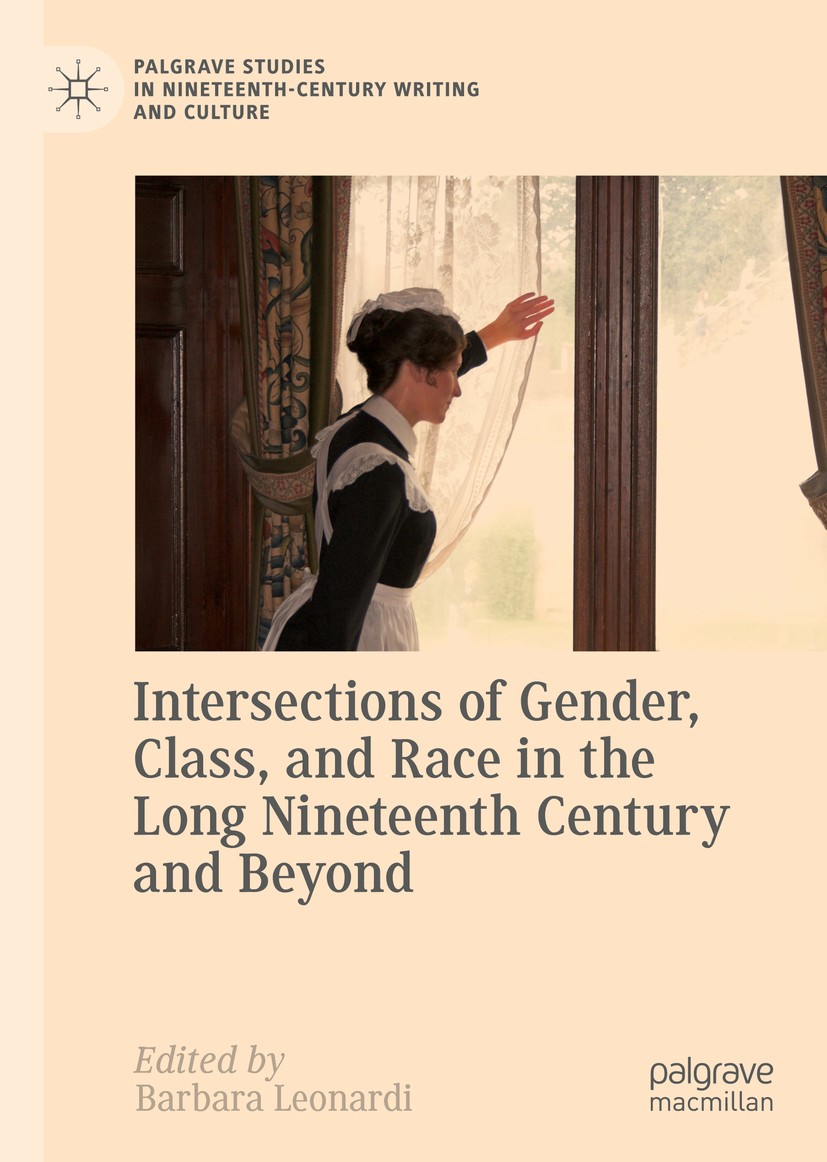
Intersections of Gender, Class, and Race in the Long Nineteenth Century and Beyond [electronic resource] / edited by Barbara Leonardi.
Erişim Adresi
ISBN
9783319967707
Dil Kodu
İngilizce
Yer Numarası
EK/4518
Basım Bildirimi
1st ed. 2018.
Yayın Bilgisi
Cham : Springer International Publishing : Imprint: Palgrave Macmillan, 2018.
Fiziksel Niteleme
XVI, 328 p. 1 illus. online resource.
Dizi
Palgrave Studies in Nineteenth-Century Writing and Culture, 2634-6508
İçindekiler Notu
1. Introduction: The Family Metaphor - Barbara Leonardi -- 2. Motherhood, Mother Country, and Migrant Maternity - Barbara Leonardi -- 3. "No crime to kill a bastard-child": Stereotypes of Infanticide in Nineteenth-Century England and Wales - Daniel J. R. Grey -- 4. The New Woman in her Confinement: Fin de siècle Constructions of Maternity and Motherhood - Kirsty Bunting -- 5. "Another Class": The Lady's Maid in Short Stories 1920-1950 - Anna Fenge -- 6. The Destabilisation of Gender and National Boundaries in Lewis Grassic Gibbon's A Scots Quair: A Long Nineteenth Century Perspective - Carla Sassi -- 7. "Would you not like to try all sorts of lives - one is so very small": Katherine Mansfield as a Threshold Person - Angela Smith -- 8. Transferential Rhetoric and Beyond: The West Indian Presence in Maria Edgeworth's Belinda and Amelia Opie's Adeline Mowbray - James Morris -- 9. Bandsmen, Brass Band Uniforms and Nineteenth-Century Militarism: Southern Pennine Bandsmen and Stereotypes of Military Masculinity, c. 1840-1914 - Stephen Etheridge -- 10. Comparative Decadence? Male Queerness in Late Nineteenth- and Late Twentieth-Century Fiction - Rainier Emig -- 11. Cherchez La Femme: Looking for Lesbian Femininities in Literature, 1850-1928 - Sarah Parker -- 12. "Utterly Subversive of Female Delicacy": Victorian Sensibilities and the Unspeakable Allegations in Countess Russell's Divorce Suit - Michael Bedo -- 13. Killing the "Angel in the House": Violence and Victim-Blaming in Anne Brontë's The Tenant of Wildfell Hall - Claire O'Callaghan. .
Özet, vb.
This book explores the intersections of gender with class and race in the construction of national and imperial ideologies and their fluid transformation from the Romantic to the Victorian period and beyond, exposing how these cultural constructions are deeply entangled with the family metaphor. For example, by examining the re-signification of the “angel in the house” and the deviant woman in the context of unstable or contingent masculinities and across discourses of class and nation, the volume contributes to a more nuanced understanding of British cultural constructions in the long nineteenth century. The central idea is to unearth the historical roots of the family metaphor in the construction of national and imperial ideologies, and to uncover the interests served by its specific discursive formation. The book explores both male and female stereotypes, enabling a more perceptive comparison, enriched with a nuanced reflection on the construction and social function of class. .
Konu
Literature, Modern __ 19th century.
Sex.
Nineteenth-Century Literature.
Gender Studies.
Sex.
Nineteenth-Century Literature.
Gender Studies.
Diğer Yazarlar
Kurum Adı
Eseri Alıntıla
Referansları kullanmadan önce gözden geçirmeniz ve varsa gerekli düzeltmeleri yapmanız önerilir.
Dijital Kaynak
MARC Görünümü
LEADER 04436nam a22004935i 4500
001 841207
003 TR_AnAIT
005 20260715031329
007 cr nn 008mamaa
008 181229s2018 sz | s |||| 0|eng d
020 |a9783319967707|9978-3-319-96770-7
024 7 |a10.1007/978-3-319-96770-7|2doi
041 |aeng
049 |aTürk Dil Kurumu Kütüphanesi
050 4|aPN760.5-769
072 7|aDSBF|2bicssc
072 7|aLIT024040|2bisacsh
072 7|aDSBF|2thema
082 04|a809.034|223
090 |aEK/4518
245 10|aIntersections of Gender, Class, and Race in the Long Nineteenth Century and Beyond|h[electronic resource] /|cedited by Barbara Leonardi.
250 |a1st ed. 2018.
264 1|aCham :|bSpringer International Publishing :|bImprint: Palgrave Macmillan,|c2018.
300 |aXVI, 328 p. 1 illus.|bonline resource.
336 |atext|btxt|2rdacontent
337 |acomputer|bc|2rdamedia
338 |aonline resource|bcr|2rdacarrier
347 |atext file|bPDF|2rda
490 1 |aPalgrave Studies in Nineteenth-Century Writing and Culture,|x2634-6508
505 0 |a1. Introduction: The Family Metaphor - Barbara Leonardi -- 2. Motherhood, Mother Country, and Migrant Maternity - Barbara Leonardi -- 3. "No crime to kill a bastard-child": Stereotypes of Infanticide in Nineteenth-Century England and Wales - Daniel J. R. Grey -- 4. The New Woman in her Confinement: Fin de siècle Constructions of Maternity and Motherhood - Kirsty Bunting -- 5. "Another Class": The Lady's Maid in Short Stories 1920-1950 - Anna Fenge -- 6. The Destabilisation of Gender and National Boundaries in Lewis Grassic Gibbon's A Scots Quair: A Long Nineteenth Century Perspective - Carla Sassi -- 7. "Would you not like to try all sorts of lives - one is so very small": Katherine Mansfield as a Threshold Person - Angela Smith -- 8. Transferential Rhetoric and Beyond: The West Indian Presence in Maria Edgeworth's Belinda and Amelia Opie's Adeline Mowbray - James Morris -- 9. Bandsmen, Brass Band Uniforms and Nineteenth-Century Militarism: Southern Pennine Bandsmen and Stereotypes of Military Masculinity, c. 1840-1914 - Stephen Etheridge -- 10. Comparative Decadence? Male Queerness in Late Nineteenth- and Late Twentieth-Century Fiction - Rainier Emig -- 11. Cherchez La Femme: Looking for Lesbian Femininities in Literature, 1850-1928 - Sarah Parker -- 12. "Utterly Subversive of Female Delicacy": Victorian Sensibilities and the Unspeakable Allegations in Countess Russell's Divorce Suit - Michael Bedo -- 13. Killing the "Angel in the House": Violence and Victim-Blaming in Anne Brontë's The Tenant of Wildfell Hall - Claire O'Callaghan. .
520 |aThis book explores the intersections of gender with class and race in the construction of national and imperial ideologies and their fluid transformation from the Romantic to the Victorian period and beyond, exposing how these cultural constructions are deeply entangled with the family metaphor. For example, by examining the re-signification of the “angel in the house” and the deviant woman in the context of unstable or contingent masculinities and across discourses of class and nation, the volume contributes to a more nuanced understanding of British cultural constructions in the long nineteenth century. The central idea is to unearth the historical roots of the family metaphor in the construction of national and imperial ideologies, and to uncover the interests served by its specific discursive formation. The book explores both male and female stereotypes, enabling a more perceptive comparison, enriched with a nuanced reflection on the construction and social function of class. .
650 0|aLiterature, Modern|x19th century.
650 0|aSex.
650 14|aNineteenth-Century Literature.
650 24|aGender Studies.
700 1 |aLeonardi, Barbara.|eeditor.|4edt|4http://id.loc.gov/vocabulary/relators/edt
710 2 |aSpringerLink (Online service)
773 0 |tSpringer Nature eBook
776 08|iPrinted edition:|z9783319967691
776 08|iPrinted edition:|z9783319967714
776 08|iPrinted edition:|z9783030404888
830 0|aPalgrave Studies in Nineteenth-Century Writing and Culture,|x2634-6508
856 40|uhttps://doi.org/10.1007/978-3-319-96770-7
912 |aZDB-2-LCM
912 |aZDB-2-SXL
950 |aLiterature, Cultural and Media Studies (SpringerNature-41173)
950 |aLiterature, Cultural and Media Studies (R0) (SpringerNature-43723)
001 841207
003 TR_AnAIT
005 20260715031329
007 cr nn 008mamaa
008 181229s2018 sz | s |||| 0|eng d
020 |a9783319967707|9978-3-319-96770-7
024 7 |a10.1007/978-3-319-96770-7|2doi
041 |aeng
049 |aTürk Dil Kurumu Kütüphanesi
050 4|aPN760.5-769
072 7|aDSBF|2bicssc
072 7|aLIT024040|2bisacsh
072 7|aDSBF|2thema
082 04|a809.034|223
090 |aEK/4518
245 10|aIntersections of Gender, Class, and Race in the Long Nineteenth Century and Beyond|h[electronic resource] /|cedited by Barbara Leonardi.
250 |a1st ed. 2018.
264 1|aCham :|bSpringer International Publishing :|bImprint: Palgrave Macmillan,|c2018.
300 |aXVI, 328 p. 1 illus.|bonline resource.
336 |atext|btxt|2rdacontent
337 |acomputer|bc|2rdamedia
338 |aonline resource|bcr|2rdacarrier
347 |atext file|bPDF|2rda
490 1 |aPalgrave Studies in Nineteenth-Century Writing and Culture,|x2634-6508
505 0 |a1. Introduction: The Family Metaphor - Barbara Leonardi -- 2. Motherhood, Mother Country, and Migrant Maternity - Barbara Leonardi -- 3. "No crime to kill a bastard-child": Stereotypes of Infanticide in Nineteenth-Century England and Wales - Daniel J. R. Grey -- 4. The New Woman in her Confinement: Fin de siècle Constructions of Maternity and Motherhood - Kirsty Bunting -- 5. "Another Class": The Lady's Maid in Short Stories 1920-1950 - Anna Fenge -- 6. The Destabilisation of Gender and National Boundaries in Lewis Grassic Gibbon's A Scots Quair: A Long Nineteenth Century Perspective - Carla Sassi -- 7. "Would you not like to try all sorts of lives - one is so very small": Katherine Mansfield as a Threshold Person - Angela Smith -- 8. Transferential Rhetoric and Beyond: The West Indian Presence in Maria Edgeworth's Belinda and Amelia Opie's Adeline Mowbray - James Morris -- 9. Bandsmen, Brass Band Uniforms and Nineteenth-Century Militarism: Southern Pennine Bandsmen and Stereotypes of Military Masculinity, c. 1840-1914 - Stephen Etheridge -- 10. Comparative Decadence? Male Queerness in Late Nineteenth- and Late Twentieth-Century Fiction - Rainier Emig -- 11. Cherchez La Femme: Looking for Lesbian Femininities in Literature, 1850-1928 - Sarah Parker -- 12. "Utterly Subversive of Female Delicacy": Victorian Sensibilities and the Unspeakable Allegations in Countess Russell's Divorce Suit - Michael Bedo -- 13. Killing the "Angel in the House": Violence and Victim-Blaming in Anne Brontë's The Tenant of Wildfell Hall - Claire O'Callaghan. .
520 |aThis book explores the intersections of gender with class and race in the construction of national and imperial ideologies and their fluid transformation from the Romantic to the Victorian period and beyond, exposing how these cultural constructions are deeply entangled with the family metaphor. For example, by examining the re-signification of the “angel in the house” and the deviant woman in the context of unstable or contingent masculinities and across discourses of class and nation, the volume contributes to a more nuanced understanding of British cultural constructions in the long nineteenth century. The central idea is to unearth the historical roots of the family metaphor in the construction of national and imperial ideologies, and to uncover the interests served by its specific discursive formation. The book explores both male and female stereotypes, enabling a more perceptive comparison, enriched with a nuanced reflection on the construction and social function of class. .
650 0|aLiterature, Modern|x19th century.
650 0|aSex.
650 14|aNineteenth-Century Literature.
650 24|aGender Studies.
700 1 |aLeonardi, Barbara.|eeditor.|4edt|4http://id.loc.gov/vocabulary/relators/edt
710 2 |aSpringerLink (Online service)
773 0 |tSpringer Nature eBook
776 08|iPrinted edition:|z9783319967691
776 08|iPrinted edition:|z9783319967714
776 08|iPrinted edition:|z9783030404888
830 0|aPalgrave Studies in Nineteenth-Century Writing and Culture,|x2634-6508
856 40|uhttps://doi.org/10.1007/978-3-319-96770-7
912 |aZDB-2-LCM
912 |aZDB-2-SXL
950 |aLiterature, Cultural and Media Studies (SpringerNature-41173)
950 |aLiterature, Cultural and Media Studies (R0) (SpringerNature-43723)
Materyaller
Depodan talep edilen materyal sadece kütüphane içerisinde kullanılmaktadır.
Materyal dışarıya ödünç verilmemektedir.
Materyal dışarıya ödünç verilmemektedir.
