

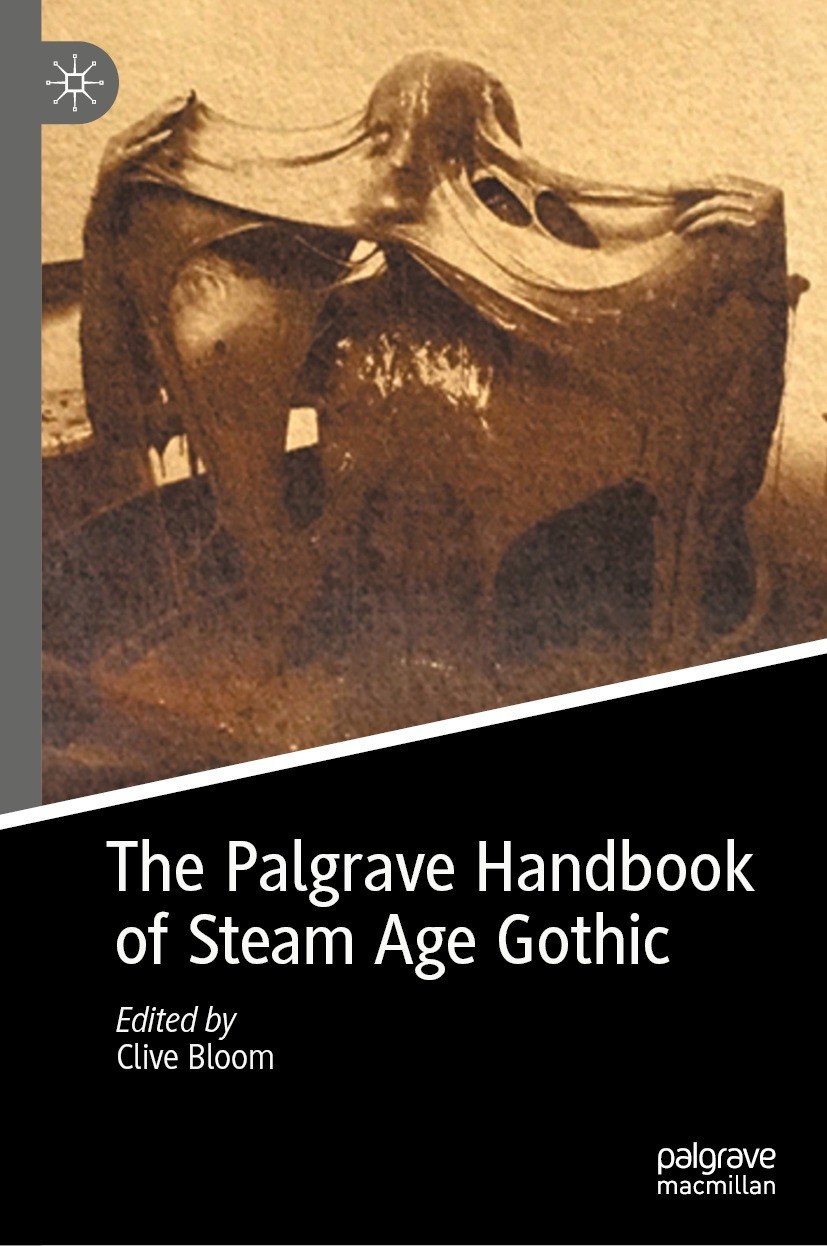
The Palgrave Handbook of Steam Age Gothic [electronic resource] / edited by Clive Bloom.
Erişim Adresi
ISBN
9783030408664
Dil Kodu
İngilizce
Yer Numarası
EK/4516
Basım Bildirimi
1st ed. 2021.
Yayın Bilgisi
Cham : Springer International Publishing : Imprint: Palgrave Macmillan, 2021.
Fiziksel Niteleme
XIV, 867 p. 13 illus., 5 illus. in color. online resource.
İçindekiler Notu
PART ONE: VICTORIAN TRANSFORMATIONS -- Gothic architecture for the steam age: Charles Barrie -- Augustus Pugin and family -- George Gilbert Scott and family -- the rebuilt Houses of Parliament, the restoration of medieval France -- Thomas Lovell Beddoes -- John Ruskin -- the gothic cemetery (Highgate etc) Victor Hugo -- the Brontes; Charles Dickens and the ghost story -- Edith Wharton -- Sheriden le Fanu -- Sabine Baring Gould -- domestic gothic -- melodrama and the gothic -- Egyptian gothic taste -- freaks and raree shows -- Egyptian gothic -- stage magic and the gothic -- real life ghosts and hauntings -- PART TWO: FIN DE SIECLE -- Guy de Maupassant -- gothic music- Wagner and Berlioz -- Robert Louise Stevenson, Dr Jekyll and Mr Hyde -- Ambrose Bierce -- magic lantern gothic -- Conan Doyle gothic -- Jack the Ripper -- the cult of Pan; Arthur Machen -- J K Huysman -- Bram Stoker and Dracula -- end of the century decadence-erotic gothic and occult gothic -- Oscar Wilde and the Picture ofDorian Gray -- Richard Marsh and the Beetle -- H G Wells -- the ghost tales of Edith Wharton -- Isaak Dineson -- Robert W Chambers: the King in Yellow -- Lord Dunsany -- Count Steinbock -- John Buchan -- end of the century ghost tales -minor writers -- bibliography.
Özet, vb.
By the early 1830s the old school of Gothic literature was exhausted. Late Romanticism, emphasising as it did the uncertainties of personality and imagination, gave it a new lease of life. Gothic—the literature of disturbance and uncertainty—now produced works that reflected domestic fears, sexual crimes, drug filled hallucinations, the terrible secrets of middle class marriage, imperial horror at alien invasion, occult demonism and the insanity of psychopaths. It was from the 1830s onwards that the old gothic castle gave way to the country house drawing room, the dungeon was displaced by the sewers of the city and the villains of early novels became the familiar figures of Dr Jekyll and Mr Hyde, Dracula, Dorian Grey and Jack the Ripper. After the death of Prince Albert (1861), the Gothic became darker, more morbid, obsessed with demonic lovers, blood sucking ghouls, blood stained murderers and deranged doctors. Whilst the gothic architecture of the Houses of Parliament and the new Puginesque churches upheld a Victorian ideal of sobriety, Christianity and imperial destiny, Gothic literature filed these new spaces with a dread that spread like a plague to America, France, Germany and even Russia. From 1830 to 1914, the period covered by this volume, we saw the emergence of the greats of Gothic literature and the supernatural from Edgar Allan Poe to Emily Bronte, from Sheridan Le Fanu to Bram Stoker and Robert Louis Stevenson. Contributors also examine the fin-de-siècle dreamers of decadence such as Arthur Machen, M P Shiel and Vernon Lee and their obsession with the occult, folklore, spiritualism, revenants, ghostly apparitions and cosmic annihilation. This volume explores the period through the prism of architectural history, urban studies, feminism, 'hauntology' and much more. 'Horror', as Poe teaches us, 'is the soul of the plot'. .
Konu
Popular Culture.
Fiction.
Popular Culture.
Fiction Literature.
Fiction.
Popular Culture.
Fiction Literature.
Diğer Yazarlar
Kurum Adı
Eseri Alıntıla
Referansları kullanmadan önce gözden geçirmeniz ve varsa gerekli düzeltmeleri yapmanız önerilir.
Dijital Kaynak
MARC Görünümü
LEADER 04781nam a22004695i 4500
001 841251
003 TR_AnAIT
005 20260715031031
007 cr nn 008mamaa
008 210203s2021 sz | s |||| 0|eng d
020 |a9783030408664|9978-3-030-40866-4
024 7 |a10.1007/978-3-030-40866-4|2doi
041 |aeng
049 |aTürk Dil Kurumu Kütüphanesi
050 4|aHM621-656
072 7|aJFCA|2bicssc
072 7|aSOC022000|2bisacsh
072 7|aJBCC1|2thema
082 04|a306|223
090 |aEK/4516
245 14|aThe Palgrave Handbook of Steam Age Gothic|h[electronic resource] /|cedited by Clive Bloom.
250 |a1st ed. 2021.
264 1|aCham :|bSpringer International Publishing :|bImprint: Palgrave Macmillan,|c2021.
300 |aXIV, 867 p. 13 illus., 5 illus. in color.|bonline resource.
336 |atext|btxt|2rdacontent
337 |acomputer|bc|2rdamedia
338 |aonline resource|bcr|2rdacarrier
347 |atext file|bPDF|2rda
505 0 |aPART ONE: VICTORIAN TRANSFORMATIONS -- Gothic architecture for the steam age: Charles Barrie -- Augustus Pugin and family -- George Gilbert Scott and family -- the rebuilt Houses of Parliament, the restoration of medieval France -- Thomas Lovell Beddoes -- John Ruskin -- the gothic cemetery (Highgate etc) Victor Hugo -- the Brontes; Charles Dickens and the ghost story -- Edith Wharton -- Sheriden le Fanu -- Sabine Baring Gould -- domestic gothic -- melodrama and the gothic -- Egyptian gothic taste -- freaks and raree shows -- Egyptian gothic -- stage magic and the gothic -- real life ghosts and hauntings -- PART TWO: FIN DE SIECLE -- Guy de Maupassant -- gothic music- Wagner and Berlioz -- Robert Louise Stevenson, Dr Jekyll and Mr Hyde -- Ambrose Bierce -- magic lantern gothic -- Conan Doyle gothic -- Jack the Ripper -- the cult of Pan; Arthur Machen -- J K Huysman -- Bram Stoker and Dracula -- end of the century decadence-erotic gothic and occult gothic -- Oscar Wilde and the Picture ofDorian Gray -- Richard Marsh and the Beetle -- H G Wells -- the ghost tales of Edith Wharton -- Isaak Dineson -- Robert W Chambers: the King in Yellow -- Lord Dunsany -- Count Steinbock -- John Buchan -- end of the century ghost tales -minor writers -- bibliography.
520 |aBy the early 1830s the old school of Gothic literature was exhausted. Late Romanticism, emphasising as it did the uncertainties of personality and imagination, gave it a new lease of life. Gothic—the literature of disturbance and uncertainty—now produced works that reflected domestic fears, sexual crimes, drug filled hallucinations, the terrible secrets of middle class marriage, imperial horror at alien invasion, occult demonism and the insanity of psychopaths. It was from the 1830s onwards that the old gothic castle gave way to the country house drawing room, the dungeon was displaced by the sewers of the city and the villains of early novels became the familiar figures of Dr Jekyll and Mr Hyde, Dracula, Dorian Grey and Jack the Ripper. After the death of Prince Albert (1861), the Gothic became darker, more morbid, obsessed with demonic lovers, blood sucking ghouls, blood stained murderers and deranged doctors. Whilst the gothic architecture of the Houses of Parliament and the new Puginesque churches upheld a Victorian ideal of sobriety, Christianity and imperial destiny, Gothic literature filed these new spaces with a dread that spread like a plague to America, France, Germany and even Russia. From 1830 to 1914, the period covered by this volume, we saw the emergence of the greats of Gothic literature and the supernatural from Edgar Allan Poe to Emily Bronte, from Sheridan Le Fanu to Bram Stoker and Robert Louis Stevenson. Contributors also examine the fin-de-siècle dreamers of decadence such as Arthur Machen, M P Shiel and Vernon Lee and their obsession with the occult, folklore, spiritualism, revenants, ghostly apparitions and cosmic annihilation. This volume explores the period through the prism of architectural history, urban studies, feminism, 'hauntology' and much more. 'Horror', as Poe teaches us, 'is the soul of the plot'. .
650 0|aPopular Culture.
650 0|aFiction.
650 14|aPopular Culture.
650 24|aFiction Literature.
700 1 |aBloom, Clive.|eeditor.|4edt|4http://id.loc.gov/vocabulary/relators/edt
710 2 |aSpringerLink (Online service)
773 0 |tSpringer Nature eBook
776 08|iPrinted edition:|z9783030408657
776 08|iPrinted edition:|z9783030408671
776 08|iPrinted edition:|z9783030408688
856 40|uhttps://doi.org/10.1007/978-3-030-40866-4
912 |aZDB-2-LCM
912 |aZDB-2-SXL
950 |aLiterature, Cultural and Media Studies (SpringerNature-41173)
950 |aLiterature, Cultural and Media Studies (R0) (SpringerNature-43723)
001 841251
003 TR_AnAIT
005 20260715031031
007 cr nn 008mamaa
008 210203s2021 sz | s |||| 0|eng d
020 |a9783030408664|9978-3-030-40866-4
024 7 |a10.1007/978-3-030-40866-4|2doi
041 |aeng
049 |aTürk Dil Kurumu Kütüphanesi
050 4|aHM621-656
072 7|aJFCA|2bicssc
072 7|aSOC022000|2bisacsh
072 7|aJBCC1|2thema
082 04|a306|223
090 |aEK/4516
245 14|aThe Palgrave Handbook of Steam Age Gothic|h[electronic resource] /|cedited by Clive Bloom.
250 |a1st ed. 2021.
264 1|aCham :|bSpringer International Publishing :|bImprint: Palgrave Macmillan,|c2021.
300 |aXIV, 867 p. 13 illus., 5 illus. in color.|bonline resource.
336 |atext|btxt|2rdacontent
337 |acomputer|bc|2rdamedia
338 |aonline resource|bcr|2rdacarrier
347 |atext file|bPDF|2rda
505 0 |aPART ONE: VICTORIAN TRANSFORMATIONS -- Gothic architecture for the steam age: Charles Barrie -- Augustus Pugin and family -- George Gilbert Scott and family -- the rebuilt Houses of Parliament, the restoration of medieval France -- Thomas Lovell Beddoes -- John Ruskin -- the gothic cemetery (Highgate etc) Victor Hugo -- the Brontes; Charles Dickens and the ghost story -- Edith Wharton -- Sheriden le Fanu -- Sabine Baring Gould -- domestic gothic -- melodrama and the gothic -- Egyptian gothic taste -- freaks and raree shows -- Egyptian gothic -- stage magic and the gothic -- real life ghosts and hauntings -- PART TWO: FIN DE SIECLE -- Guy de Maupassant -- gothic music- Wagner and Berlioz -- Robert Louise Stevenson, Dr Jekyll and Mr Hyde -- Ambrose Bierce -- magic lantern gothic -- Conan Doyle gothic -- Jack the Ripper -- the cult of Pan; Arthur Machen -- J K Huysman -- Bram Stoker and Dracula -- end of the century decadence-erotic gothic and occult gothic -- Oscar Wilde and the Picture ofDorian Gray -- Richard Marsh and the Beetle -- H G Wells -- the ghost tales of Edith Wharton -- Isaak Dineson -- Robert W Chambers: the King in Yellow -- Lord Dunsany -- Count Steinbock -- John Buchan -- end of the century ghost tales -minor writers -- bibliography.
520 |aBy the early 1830s the old school of Gothic literature was exhausted. Late Romanticism, emphasising as it did the uncertainties of personality and imagination, gave it a new lease of life. Gothic—the literature of disturbance and uncertainty—now produced works that reflected domestic fears, sexual crimes, drug filled hallucinations, the terrible secrets of middle class marriage, imperial horror at alien invasion, occult demonism and the insanity of psychopaths. It was from the 1830s onwards that the old gothic castle gave way to the country house drawing room, the dungeon was displaced by the sewers of the city and the villains of early novels became the familiar figures of Dr Jekyll and Mr Hyde, Dracula, Dorian Grey and Jack the Ripper. After the death of Prince Albert (1861), the Gothic became darker, more morbid, obsessed with demonic lovers, blood sucking ghouls, blood stained murderers and deranged doctors. Whilst the gothic architecture of the Houses of Parliament and the new Puginesque churches upheld a Victorian ideal of sobriety, Christianity and imperial destiny, Gothic literature filed these new spaces with a dread that spread like a plague to America, France, Germany and even Russia. From 1830 to 1914, the period covered by this volume, we saw the emergence of the greats of Gothic literature and the supernatural from Edgar Allan Poe to Emily Bronte, from Sheridan Le Fanu to Bram Stoker and Robert Louis Stevenson. Contributors also examine the fin-de-siècle dreamers of decadence such as Arthur Machen, M P Shiel and Vernon Lee and their obsession with the occult, folklore, spiritualism, revenants, ghostly apparitions and cosmic annihilation. This volume explores the period through the prism of architectural history, urban studies, feminism, 'hauntology' and much more. 'Horror', as Poe teaches us, 'is the soul of the plot'. .
650 0|aPopular Culture.
650 0|aFiction.
650 14|aPopular Culture.
650 24|aFiction Literature.
700 1 |aBloom, Clive.|eeditor.|4edt|4http://id.loc.gov/vocabulary/relators/edt
710 2 |aSpringerLink (Online service)
773 0 |tSpringer Nature eBook
776 08|iPrinted edition:|z9783030408657
776 08|iPrinted edition:|z9783030408671
776 08|iPrinted edition:|z9783030408688
856 40|uhttps://doi.org/10.1007/978-3-030-40866-4
912 |aZDB-2-LCM
912 |aZDB-2-SXL
950 |aLiterature, Cultural and Media Studies (SpringerNature-41173)
950 |aLiterature, Cultural and Media Studies (R0) (SpringerNature-43723)
Materyaller
Depodan talep edilen materyal sadece kütüphane içerisinde kullanılmaktadır.
Materyal dışarıya ödünç verilmemektedir.
Materyal dışarıya ödünç verilmemektedir.
