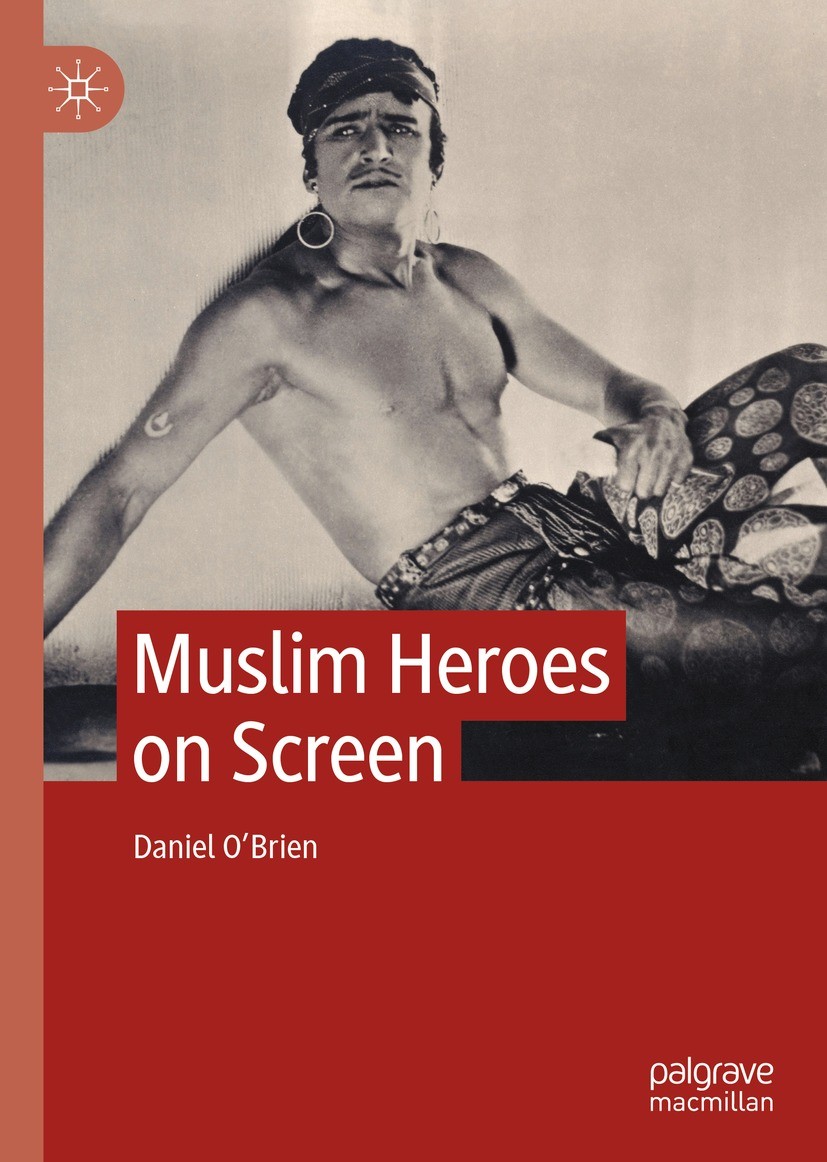
Muslim Heroes on Screen [electronic resource] / by Daniel O'Brien.
Erişim Adresi
ISBN
9783030741426
Dil Kodu
İngilizce
Yer Numarası
EK/4599
Yazar
Basım Bildirimi
1st ed. 2021.
Yayın Bilgisi
Cham : Springer International Publishing : Imprint: Palgrave Macmillan, 2021.
Fiziksel Niteleme
IX, 251 p. 25 illus., 23 illus. in color. online resource.
İçindekiler Notu
Chapter 1. Introduction -- Chapter 2. Thieves of Bagdad: The Cinematic Metamorphosis of an Islamicized Hero -- Chapter 3. The Voyages of Sinbad: From Hollywood Cartoon Stooge to Global Fantasy Icon -- Chapter 4. Moutamin and the Mahdi: The Honourable Muslim Ally/Enemy in El Cid and Khartoum -- Chapter 5. Saladin: The West’s Favourite Muslim? -- Chapter 6. Representing the Unrepresentable: Muhammad, The Message, and South Park. Chapter 7. Epilogue: ‘The baraka has not deserted me’—American Expansionism and Muslim Resilience in The Wind and the Lion./.
Özet, vb.
"Before the dominance of the “terrorist” trope in Hollywood dozens of films embraced romantic and exotic representations of Muslims on screen. While these films are often left without serious inquiry because they reproduce stereotypes, Daniel O’Brien’s Muslim Heroes on Screen questions whether these depictions can transcend their Orientalist production and framing. O’Brien brings his compelling and careful film analysis to a series of films that center heroic Muslim characters, while also analyzing their cinematic production, release, and journalistic reception. Muslim Heroes on Screen is an unique study that pushes the study of Muslims in film in interesting directions." — Kristian Petersen, Old Dominion University, editor of Muslims in the Movies: A Global Anthology and New Approaches to Islam in Film. If films drawing on Middle East tropes often highlight white Westerners, figures such as Sinbad and the Thief of Bagdad embody a counter-tradition of protagonists, derived from Islamic folklore and history, who are portrayed as ‘Other’ to Western audiences. In Muslim Heroes on Screen, Daniel O’Brien explores the depiction of these characters in Euro-American cinema from the silent era to the present day. Far from being mere racial masquerade, these screen portrayals are more complex and nuanced than is generally allowed, not least in terms of the shifting concepts and assumptions that inform their Muslim identity. Using films ranging from Douglas Fairbanks’ The Thief of Bagdad, The 7th Voyage of Sinbad, El Cid, Kingdom of Heaven and The Message to The Wind and the Lion, O’Brien considers how the representational strategies of Western filmmakers may transcend such Muslim stereotypes as fanatic antagonists or passive victims. These figures possess a cultural significance which cannot be fully appreciated by Euro-American audienceswithout reference to their distinction as Muslim heroes and the implications and resonances of an Islamicized protagonist. Daniel O’Brien is a writer and part-time lecturer in film studies, and has worked for both the Department of Film and the Faculty of Medicine at the University of Southampton, UK. His previous books include Classical Masculinity and the Spectacular Body on Film (Palgrave, 2014) and Black Masculinity on Film (Palgrave, 2017).
Konu
Motion pictures, American.
Islam.
American Film and TV.
Islam.
Islam.
American Film and TV.
Islam.
Kurum Adı

Eseri Alıntıla
Referansları kullanmadan önce gözden geçirmeniz ve varsa gerekli düzeltmeleri yapmanız önerilir.
Dijital Kaynak
MARC Görünümü
LEADER 04554nam a22004815i 4500
001 841339
003 TR_AnAIT
005 20260715030614
007 cr nn 008mamaa
008 211116s2021 sz | s |||| 0|eng d
020 |a9783030741426|9978-3-030-74142-6
024 7 |a10.1007/978-3-030-74142-6|2doi
041 |aeng
049 |aTürk Dil Kurumu Kütüphanesi
050 4|aPN1993.5.U6
072 7|aAP|2bicssc
072 7|a1K|2bicssc
072 7|aPER004000|2bisacsh
072 7|aAT|x1K|2thema
082 04|a791.40973|223
090 |aEK/4599
100 1 |aO'Brien, Daniel.|eauthor.|4aut|4http://id.loc.gov/vocabulary/relators/aut
245 10|aMuslim Heroes on Screen|h[electronic resource] /|cby Daniel O'Brien.
250 |a1st ed. 2021.
264 1|aCham :|bSpringer International Publishing :|bImprint: Palgrave Macmillan,|c2021.
300 |aIX, 251 p. 25 illus., 23 illus. in color.|bonline resource.
336 |atext|btxt|2rdacontent
337 |acomputer|bc|2rdamedia
338 |aonline resource|bcr|2rdacarrier
347 |atext file|bPDF|2rda
505 0 |aChapter 1. Introduction -- Chapter 2. Thieves of Bagdad: The Cinematic Metamorphosis of an Islamicized Hero -- Chapter 3. The Voyages of Sinbad: From Hollywood Cartoon Stooge to Global Fantasy Icon -- Chapter 4. Moutamin and the Mahdi: The Honourable Muslim Ally/Enemy in El Cid and Khartoum -- Chapter 5. Saladin: The West’s Favourite Muslim? -- Chapter 6. Representing the Unrepresentable: Muhammad, The Message, and South Park. Chapter 7. Epilogue: ‘The baraka has not deserted me’—American Expansionism and Muslim Resilience in The Wind and the Lion./.
520 |a"Before the dominance of the “terrorist” trope in Hollywood dozens of films embraced romantic and exotic representations of Muslims on screen. While these films are often left without serious inquiry because they reproduce stereotypes, Daniel O’Brien’s Muslim Heroes on Screen questions whether these depictions can transcend their Orientalist production and framing. O’Brien brings his compelling and careful film analysis to a series of films that center heroic Muslim characters, while also analyzing their cinematic production, release, and journalistic reception. Muslim Heroes on Screen is an unique study that pushes the study of Muslims in film in interesting directions." — Kristian Petersen, Old Dominion University, editor of Muslims in the Movies: A Global Anthology and New Approaches to Islam in Film. If films drawing on Middle East tropes often highlight white Westerners, figures such as Sinbad and the Thief of Bagdad embody a counter-tradition of protagonists, derived from Islamic folklore and history, who are portrayed as ‘Other’ to Western audiences. In Muslim Heroes on Screen, Daniel O’Brien explores the depiction of these characters in Euro-American cinema from the silent era to the present day. Far from being mere racial masquerade, these screen portrayals are more complex and nuanced than is generally allowed, not least in terms of the shifting concepts and assumptions that inform their Muslim identity. Using films ranging from Douglas Fairbanks’ The Thief of Bagdad, The 7th Voyage of Sinbad, El Cid, Kingdom of Heaven and The Message to The Wind and the Lion, O’Brien considers how the representational strategies of Western filmmakers may transcend such Muslim stereotypes as fanatic antagonists or passive victims. These figures possess a cultural significance which cannot be fully appreciated by Euro-American audienceswithout reference to their distinction as Muslim heroes and the implications and resonances of an Islamicized protagonist. Daniel O’Brien is a writer and part-time lecturer in film studies, and has worked for both the Department of Film and the Faculty of Medicine at the University of Southampton, UK. His previous books include Classical Masculinity and the Spectacular Body on Film (Palgrave, 2014) and Black Masculinity on Film (Palgrave, 2017).
650 0|aMotion pictures, American.
650 0|aIslam.
650 14|aAmerican Film and TV.
650 24|aIslam.
710 2 |aSpringerLink (Online service)
773 0 |tSpringer Nature eBook
776 08|iPrinted edition:|z9783030741419
776 08|iPrinted edition:|z9783030741433
776 08|iPrinted edition:|z9783030741440
856 40|uhttps://doi.org/10.1007/978-3-030-74142-6
912 |aZDB-2-LCM
912 |aZDB-2-SXL
950 |aLiterature, Cultural and Media Studies (SpringerNature-41173)
950 |aLiterature, Cultural and Media Studies (R0) (SpringerNature-43723)
001 841339
003 TR_AnAIT
005 20260715030614
007 cr nn 008mamaa
008 211116s2021 sz | s |||| 0|eng d
020 |a9783030741426|9978-3-030-74142-6
024 7 |a10.1007/978-3-030-74142-6|2doi
041 |aeng
049 |aTürk Dil Kurumu Kütüphanesi
050 4|aPN1993.5.U6
072 7|aAP|2bicssc
072 7|a1K|2bicssc
072 7|aPER004000|2bisacsh
072 7|aAT|x1K|2thema
082 04|a791.40973|223
090 |aEK/4599
100 1 |aO'Brien, Daniel.|eauthor.|4aut|4http://id.loc.gov/vocabulary/relators/aut
245 10|aMuslim Heroes on Screen|h[electronic resource] /|cby Daniel O'Brien.
250 |a1st ed. 2021.
264 1|aCham :|bSpringer International Publishing :|bImprint: Palgrave Macmillan,|c2021.
300 |aIX, 251 p. 25 illus., 23 illus. in color.|bonline resource.
336 |atext|btxt|2rdacontent
337 |acomputer|bc|2rdamedia
338 |aonline resource|bcr|2rdacarrier
347 |atext file|bPDF|2rda
505 0 |aChapter 1. Introduction -- Chapter 2. Thieves of Bagdad: The Cinematic Metamorphosis of an Islamicized Hero -- Chapter 3. The Voyages of Sinbad: From Hollywood Cartoon Stooge to Global Fantasy Icon -- Chapter 4. Moutamin and the Mahdi: The Honourable Muslim Ally/Enemy in El Cid and Khartoum -- Chapter 5. Saladin: The West’s Favourite Muslim? -- Chapter 6. Representing the Unrepresentable: Muhammad, The Message, and South Park. Chapter 7. Epilogue: ‘The baraka has not deserted me’—American Expansionism and Muslim Resilience in The Wind and the Lion./.
520 |a"Before the dominance of the “terrorist” trope in Hollywood dozens of films embraced romantic and exotic representations of Muslims on screen. While these films are often left without serious inquiry because they reproduce stereotypes, Daniel O’Brien’s Muslim Heroes on Screen questions whether these depictions can transcend their Orientalist production and framing. O’Brien brings his compelling and careful film analysis to a series of films that center heroic Muslim characters, while also analyzing their cinematic production, release, and journalistic reception. Muslim Heroes on Screen is an unique study that pushes the study of Muslims in film in interesting directions." — Kristian Petersen, Old Dominion University, editor of Muslims in the Movies: A Global Anthology and New Approaches to Islam in Film. If films drawing on Middle East tropes often highlight white Westerners, figures such as Sinbad and the Thief of Bagdad embody a counter-tradition of protagonists, derived from Islamic folklore and history, who are portrayed as ‘Other’ to Western audiences. In Muslim Heroes on Screen, Daniel O’Brien explores the depiction of these characters in Euro-American cinema from the silent era to the present day. Far from being mere racial masquerade, these screen portrayals are more complex and nuanced than is generally allowed, not least in terms of the shifting concepts and assumptions that inform their Muslim identity. Using films ranging from Douglas Fairbanks’ The Thief of Bagdad, The 7th Voyage of Sinbad, El Cid, Kingdom of Heaven and The Message to The Wind and the Lion, O’Brien considers how the representational strategies of Western filmmakers may transcend such Muslim stereotypes as fanatic antagonists or passive victims. These figures possess a cultural significance which cannot be fully appreciated by Euro-American audienceswithout reference to their distinction as Muslim heroes and the implications and resonances of an Islamicized protagonist. Daniel O’Brien is a writer and part-time lecturer in film studies, and has worked for both the Department of Film and the Faculty of Medicine at the University of Southampton, UK. His previous books include Classical Masculinity and the Spectacular Body on Film (Palgrave, 2014) and Black Masculinity on Film (Palgrave, 2017).
650 0|aMotion pictures, American.
650 0|aIslam.
650 14|aAmerican Film and TV.
650 24|aIslam.
710 2 |aSpringerLink (Online service)
773 0 |tSpringer Nature eBook
776 08|iPrinted edition:|z9783030741419
776 08|iPrinted edition:|z9783030741433
776 08|iPrinted edition:|z9783030741440
856 40|uhttps://doi.org/10.1007/978-3-030-74142-6
912 |aZDB-2-LCM
912 |aZDB-2-SXL
950 |aLiterature, Cultural and Media Studies (SpringerNature-41173)
950 |aLiterature, Cultural and Media Studies (R0) (SpringerNature-43723)
Materyaller
Depodan talep edilen materyal sadece kütüphane içerisinde kullanılmaktadır.
Materyal dışarıya ödünç verilmemektedir.
