

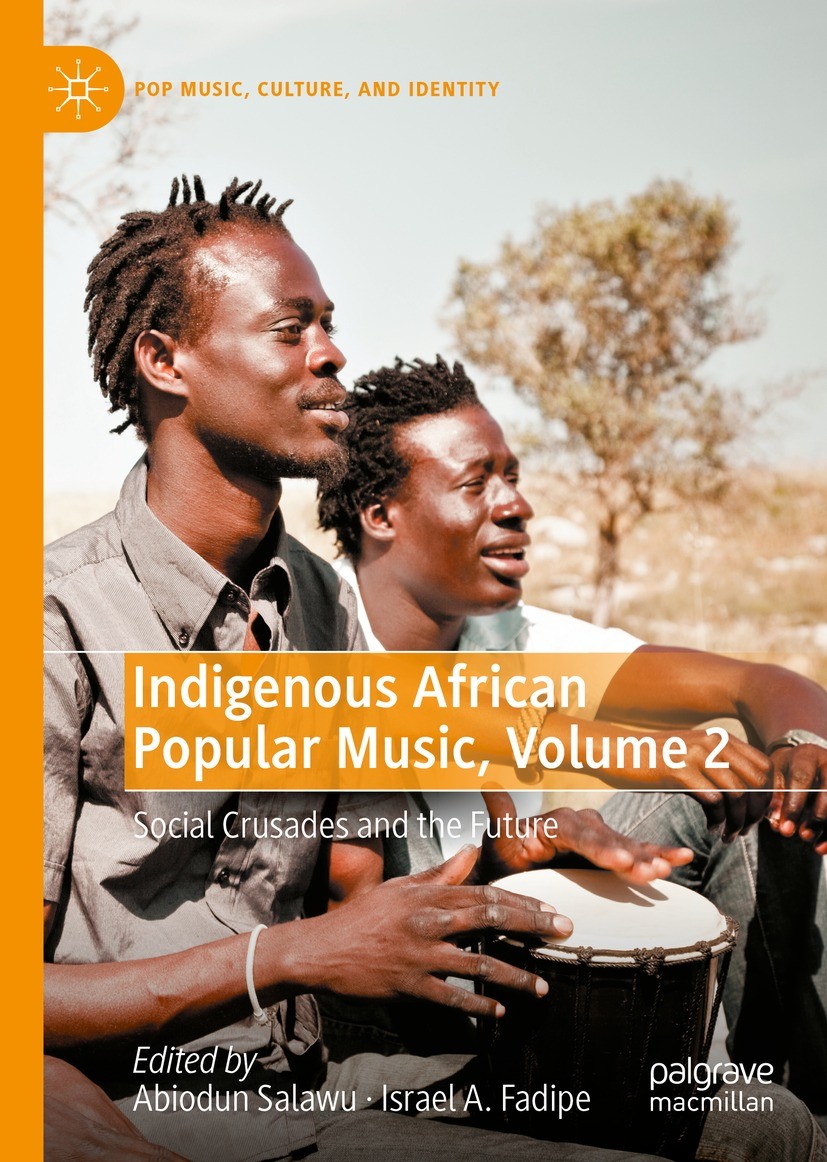
Indigenous African Popular Music, Volume 2 [electronic resource] : Social Crusades and the Future / edited by Abiodun Salawu, Israel A. Fadipe.
Erişim Adresi
ISBN
9783030987053
Dil Kodu
İngilizce
Yer Numarası
EK/4637
Basım Bildirimi
1st ed. 2022.
Yayın Bilgisi
Cham : Springer International Publishing : Imprint: Palgrave Macmillan, 2022.
Fiziksel Niteleme
XXVII, 465 p. 4 illus. online resource.
Dizi
Pop Music, Culture and Identity, 2634-6621
İçindekiler Notu
Part I Indigenous African Popular Music, Democracy, Politics and Social Crusade -- 1 Extra-Mundane Communication in Ayinla Omowura’s Music: Exploring Connections Between a Tool and an Agent -- 2 The Role of Politicians in Democratizing Musical Production in Northern Nigeria -- 3 Popular Music, Political Mobilisation and Grandstanding: An Analysis of Maskandi in Legitimisation of Jacob Zuma (2008–2018) -- 4 Popular Music and the Concept of the Dissident in Post-Independence Zimbabwe -- 5 Indigenous African Popular Music, Democracy and Politics6 Music and Political Protests in Africa: Analysis of Selected Fela Anikulapo-Kuti’s Songs in Nigeria -- 7 Singing Democracy and Politics in Post-Independence Zimbabwe: A Critical Discourse Analysis of Selfcensorship in Zimbabwean Indigenous Theological-Sungura Music -- 8 Indigenous African Artistes as Social Critics: A Study of Evangelist Bayo Adegboyega of Yoruba Extraction -- 9 State-Minded Praise Music Culture Through Electoral Nigeria -- 10 Beyond Mere Entertainment: Moral Reorientation in Ogundare Foyanmu’s Ijala Song-Texts -- 11 Nigerian Indigenous Music as an Instrument of Social Crusade and Enlightenment: An Appraisal of Selected Albums of Sikiru Ayinde Barrister, Dauda Epo Akara and Odolaye Aremu -- Part II Indigenous African Popular Music and Environmental Health Communication -- 12 Yorùbá Indigenous Musical Jingles on COVID-19: A Content Appraisal.-13 Promotion of Food Sovereignty in Africa Through Yoruba’s Indigenous Music -- 14 Mainstreaming Afro-hip-hop Music in Redressing the Spread of Infodemics on COVID-19 -- Part III Indigenous African Popular Music and Gender Empowerment -- 15 Why Not Call a Spade a Spade? Unpacking Paul Matavire’s Gender Philosophy -- 16 The Communicativeness of Select Nigerian Afro-hip-hop Lyrics and Sociological Perception of Women -- 17 Content and Reception of Eswatini’s Indigenous and Popular Music on Women Empowerment -- Part IV Indigenous African Popular Music, African Youths and African Future -- 18 Ngoma Songs as Tanzanian Youths’ Third Space for Political Participation -- 19 The Future of the Indigenous African Popular Music -- 20 The Popular Cultural Practice of Hip-Hop Among The Indigenous !Xun and Khwe Youth of Platfontein, South Africa -- 21 Zimdancehall Music as Rules ofSexual Engagement -- Part V Indigenous African Popular Music, Advanced Broadcast Technologies and the Digital Media -- 22 Tradi-Modern Musical Genres Amidst Neo-Colonial Western Digital Recording Towards Development in Benue State -- 23 The Evolution of the Roles of Producers in the Zimbabwe Recording Industry.-24 Topic: Indigenous African Music Economics: Survival Strategies in the Face of Web Technologies -- 25 Commodification of Music in the Digital Age: Locating Namibia’s Oviritje Popular Music Genre in the Capitalist Music Economy -- 26 The Role of Sound Archiving of Indigenous Popular Music in the Conflict Zones of North-Eastern Nigeria.
Özet, vb.
This volume examines how African indigenous popular music is deployed in democracy, politics and for social crusades by African artists. Exploring the role of indigenous African popular music in environmental health communication and gender empowerment, it subsequently focuses on how the music portrays the African future, its use by African youths, and how it is affected by advanced broadcast technologies and the digital media. Indigenous African popular music has long been under-appreciated in communication scholarship. However, understanding the nature and philosophies of indigenous African popular music reveals an untapped diversity which can only be unraveled by the knowledge of myriad cultural backgrounds from which its genres originate. With a particular focus on scholarship from Nigeria, Zimbabwe and South Africa, this volume explores how, during the colonial period and post-independence dispensation, indigenous African music genres and their artists were mainstreamed in order to tackle emerging issues, to sensitise Africans about the affairs of their respective nations and to warn African leaders who have failed and are failing African citizenry about the plight of the people. At the same time, indigenous African popular music genres have served as a beacon to the teeming African youths to express their dreams, frustrations about their environments and to represent themselves. This volume explores how, through the advent of new media technologies, indigenous African popular musicians have been working relentlessly for indigenous production, becoming champions of good governance, marginalised population, and repositories of indigenous cultural traditions and cosmologies. Abiodun Salawu is Professor of Journalism, Communication and Media Studies, and Director of Indigenous Language Media in Africa, at the North-West University, South Africa. His major areas of research include indigenous language media, development communication, critical studies and new media. Israel A. Fadipe is postdoctoral fellow in Indigenous Language Media in Africa at the Faculty of Humanities, North-West University, South Africa. He specialises in communication, cultural and gender studies, and has published articles and chapters in both local and international journals.
Konu
Popular music.
Ethnology __ Africa.
Culture.
African languages.
Intercultural communication.
Emigration and immigration.
Africa __ History.
Popular Music.
African Culture.
African Languages.
Intercultural Communication.
Diaspora Studies.
African History.
Ethnology __ Africa.
Culture.
African languages.
Intercultural communication.
Emigration and immigration.
Africa __ History.
Popular Music.
African Culture.
African Languages.
Intercultural Communication.
Diaspora Studies.
African History.
Diğer Yazarlar
Kurum Adı
Eseri Alıntıla
Referansları kullanmadan önce gözden geçirmeniz ve varsa gerekli düzeltmeleri yapmanız önerilir.
Dijital Kaynak
MARC Görünümü
LEADER 07493nam a22006135i 4500
001 841358
003 TR_AnAIT
005 20260715030350
007 cr nn 008mamaa
008 220614s2022 sz | s |||| 0|eng d
020 |a9783030987053|9978-3-030-98705-3
024 7 |a10.1007/978-3-030-98705-3|2doi
041 |aeng
049 |aTürk Dil Kurumu Kütüphanesi
050 4|aML3469-3543
072 7|aAVGN|2bicssc
072 7|aMUS029000|2bisacsh
072 7|aAVLP|2thema
082 04|a781.63|223
090 |aEK/4637
245 10|aIndigenous African Popular Music, Volume 2|h[electronic resource] :|bSocial Crusades and the Future /|cedited by Abiodun Salawu, Israel A. Fadipe.
250 |a1st ed. 2022.
264 1|aCham :|bSpringer International Publishing :|bImprint: Palgrave Macmillan,|c2022.
300 |aXXVII, 465 p. 4 illus.|bonline resource.
336 |atext|btxt|2rdacontent
337 |acomputer|bc|2rdamedia
338 |aonline resource|bcr|2rdacarrier
347 |atext file|bPDF|2rda
490 1 |aPop Music, Culture and Identity,|x2634-6621
505 0 |aPart I Indigenous African Popular Music, Democracy, Politics and Social Crusade -- 1 Extra-Mundane Communication in Ayinla Omowura’s Music: Exploring Connections Between a Tool and an Agent -- 2 The Role of Politicians in Democratizing Musical Production in Northern Nigeria -- 3 Popular Music, Political Mobilisation and Grandstanding: An Analysis of Maskandi in Legitimisation of Jacob Zuma (2008–2018) -- 4 Popular Music and the Concept of the Dissident in Post-Independence Zimbabwe -- 5 Indigenous African Popular Music, Democracy and Politics6 Music and Political Protests in Africa: Analysis of Selected Fela Anikulapo-Kuti’s Songs in Nigeria -- 7 Singing Democracy and Politics in Post-Independence Zimbabwe: A Critical Discourse Analysis of Selfcensorship in Zimbabwean Indigenous Theological-Sungura Music -- 8 Indigenous African Artistes as Social Critics: A Study of Evangelist Bayo Adegboyega of Yoruba Extraction -- 9 State-Minded Praise Music Culture Through Electoral Nigeria -- 10 Beyond Mere Entertainment: Moral Reorientation in Ogundare Foyanmu’s Ijala Song-Texts -- 11 Nigerian Indigenous Music as an Instrument of Social Crusade and Enlightenment: An Appraisal of Selected Albums of Sikiru Ayinde Barrister, Dauda Epo Akara and Odolaye Aremu -- Part II Indigenous African Popular Music and Environmental Health Communication -- 12 Yorùbá Indigenous Musical Jingles on COVID-19: A Content Appraisal.-13 Promotion of Food Sovereignty in Africa Through Yoruba’s Indigenous Music -- 14 Mainstreaming Afro-hip-hop Music in Redressing the Spread of Infodemics on COVID-19 -- Part III Indigenous African Popular Music and Gender Empowerment -- 15 Why Not Call a Spade a Spade? Unpacking Paul Matavire’s Gender Philosophy -- 16 The Communicativeness of Select Nigerian Afro-hip-hop Lyrics and Sociological Perception of Women -- 17 Content and Reception of Eswatini’s Indigenous and Popular Music on Women Empowerment -- Part IV Indigenous African Popular Music, African Youths and African Future -- 18 Ngoma Songs as Tanzanian Youths’ Third Space for Political Participation -- 19 The Future of the Indigenous African Popular Music -- 20 The Popular Cultural Practice of Hip-Hop Among The Indigenous !Xun and Khwe Youth of Platfontein, South Africa -- 21 Zimdancehall Music as Rules ofSexual Engagement -- Part V Indigenous African Popular Music, Advanced Broadcast Technologies and the Digital Media -- 22 Tradi-Modern Musical Genres Amidst Neo-Colonial Western Digital Recording Towards Development in Benue State -- 23 The Evolution of the Roles of Producers in the Zimbabwe Recording Industry.-24 Topic: Indigenous African Music Economics: Survival Strategies in the Face of Web Technologies -- 25 Commodification of Music in the Digital Age: Locating Namibia’s Oviritje Popular Music Genre in the Capitalist Music Economy -- 26 The Role of Sound Archiving of Indigenous Popular Music in the Conflict Zones of North-Eastern Nigeria.
520 |aThis volume examines how African indigenous popular music is deployed in democracy, politics and for social crusades by African artists. Exploring the role of indigenous African popular music in environmental health communication and gender empowerment, it subsequently focuses on how the music portrays the African future, its use by African youths, and how it is affected by advanced broadcast technologies and the digital media. Indigenous African popular music has long been under-appreciated in communication scholarship. However, understanding the nature and philosophies of indigenous African popular music reveals an untapped diversity which can only be unraveled by the knowledge of myriad cultural backgrounds from which its genres originate. With a particular focus on scholarship from Nigeria, Zimbabwe and South Africa, this volume explores how, during the colonial period and post-independence dispensation, indigenous African music genres and their artists were mainstreamed in order to tackle emerging issues, to sensitise Africans about the affairs of their respective nations and to warn African leaders who have failed and are failing African citizenry about the plight of the people. At the same time, indigenous African popular music genres have served as a beacon to the teeming African youths to express their dreams, frustrations about their environments and to represent themselves. This volume explores how, through the advent of new media technologies, indigenous African popular musicians have been working relentlessly for indigenous production, becoming champions of good governance, marginalised population, and repositories of indigenous cultural traditions and cosmologies. Abiodun Salawu is Professor of Journalism, Communication and Media Studies, and Director of Indigenous Language Media in Africa, at the North-West University, South Africa. His major areas of research include indigenous language media, development communication, critical studies and new media. Israel A. Fadipe is postdoctoral fellow in Indigenous Language Media in Africa at the Faculty of Humanities, North-West University, South Africa. He specialises in communication, cultural and gender studies, and has published articles and chapters in both local and international journals.
650 0|aPopular music.
650 0|aEthnology|xAfrica.
650 0|aCulture.
650 0|aAfrican languages.
650 0|aIntercultural communication.
650 0|aEmigration and immigration.
650 0|aAfrica|xHistory.
650 14|aPopular Music.
650 24|aAfrican Culture.
650 24|aAfrican Languages.
650 24|aIntercultural Communication.
650 24|aDiaspora Studies.
650 24|aAfrican History.
700 1 |aSalawu, Abiodun.|eeditor.|4edt|4http://id.loc.gov/vocabulary/relators/edt
700 1 |aFadipe, Israel A.|eeditor.|4edt|4http://id.loc.gov/vocabulary/relators/edt
710 2 |aSpringerLink (Online service)
773 0 |tSpringer Nature eBook
776 08|iPrinted edition:|z9783030987046
776 08|iPrinted edition:|z9783030987060
776 08|iPrinted edition:|z9783030987077
830 0|aPop Music, Culture and Identity,|x2634-6621
856 40|uhttps://doi.org/10.1007/978-3-030-98705-3
912 |aZDB-2-LCM
912 |aZDB-2-SXL
950 |aLiterature, Cultural and Media Studies (SpringerNature-41173)
950 |aLiterature, Cultural and Media Studies (R0) (SpringerNature-43723)
001 841358
003 TR_AnAIT
005 20260715030350
007 cr nn 008mamaa
008 220614s2022 sz | s |||| 0|eng d
020 |a9783030987053|9978-3-030-98705-3
024 7 |a10.1007/978-3-030-98705-3|2doi
041 |aeng
049 |aTürk Dil Kurumu Kütüphanesi
050 4|aML3469-3543
072 7|aAVGN|2bicssc
072 7|aMUS029000|2bisacsh
072 7|aAVLP|2thema
082 04|a781.63|223
090 |aEK/4637
245 10|aIndigenous African Popular Music, Volume 2|h[electronic resource] :|bSocial Crusades and the Future /|cedited by Abiodun Salawu, Israel A. Fadipe.
250 |a1st ed. 2022.
264 1|aCham :|bSpringer International Publishing :|bImprint: Palgrave Macmillan,|c2022.
300 |aXXVII, 465 p. 4 illus.|bonline resource.
336 |atext|btxt|2rdacontent
337 |acomputer|bc|2rdamedia
338 |aonline resource|bcr|2rdacarrier
347 |atext file|bPDF|2rda
490 1 |aPop Music, Culture and Identity,|x2634-6621
505 0 |aPart I Indigenous African Popular Music, Democracy, Politics and Social Crusade -- 1 Extra-Mundane Communication in Ayinla Omowura’s Music: Exploring Connections Between a Tool and an Agent -- 2 The Role of Politicians in Democratizing Musical Production in Northern Nigeria -- 3 Popular Music, Political Mobilisation and Grandstanding: An Analysis of Maskandi in Legitimisation of Jacob Zuma (2008–2018) -- 4 Popular Music and the Concept of the Dissident in Post-Independence Zimbabwe -- 5 Indigenous African Popular Music, Democracy and Politics6 Music and Political Protests in Africa: Analysis of Selected Fela Anikulapo-Kuti’s Songs in Nigeria -- 7 Singing Democracy and Politics in Post-Independence Zimbabwe: A Critical Discourse Analysis of Selfcensorship in Zimbabwean Indigenous Theological-Sungura Music -- 8 Indigenous African Artistes as Social Critics: A Study of Evangelist Bayo Adegboyega of Yoruba Extraction -- 9 State-Minded Praise Music Culture Through Electoral Nigeria -- 10 Beyond Mere Entertainment: Moral Reorientation in Ogundare Foyanmu’s Ijala Song-Texts -- 11 Nigerian Indigenous Music as an Instrument of Social Crusade and Enlightenment: An Appraisal of Selected Albums of Sikiru Ayinde Barrister, Dauda Epo Akara and Odolaye Aremu -- Part II Indigenous African Popular Music and Environmental Health Communication -- 12 Yorùbá Indigenous Musical Jingles on COVID-19: A Content Appraisal.-13 Promotion of Food Sovereignty in Africa Through Yoruba’s Indigenous Music -- 14 Mainstreaming Afro-hip-hop Music in Redressing the Spread of Infodemics on COVID-19 -- Part III Indigenous African Popular Music and Gender Empowerment -- 15 Why Not Call a Spade a Spade? Unpacking Paul Matavire’s Gender Philosophy -- 16 The Communicativeness of Select Nigerian Afro-hip-hop Lyrics and Sociological Perception of Women -- 17 Content and Reception of Eswatini’s Indigenous and Popular Music on Women Empowerment -- Part IV Indigenous African Popular Music, African Youths and African Future -- 18 Ngoma Songs as Tanzanian Youths’ Third Space for Political Participation -- 19 The Future of the Indigenous African Popular Music -- 20 The Popular Cultural Practice of Hip-Hop Among The Indigenous !Xun and Khwe Youth of Platfontein, South Africa -- 21 Zimdancehall Music as Rules ofSexual Engagement -- Part V Indigenous African Popular Music, Advanced Broadcast Technologies and the Digital Media -- 22 Tradi-Modern Musical Genres Amidst Neo-Colonial Western Digital Recording Towards Development in Benue State -- 23 The Evolution of the Roles of Producers in the Zimbabwe Recording Industry.-24 Topic: Indigenous African Music Economics: Survival Strategies in the Face of Web Technologies -- 25 Commodification of Music in the Digital Age: Locating Namibia’s Oviritje Popular Music Genre in the Capitalist Music Economy -- 26 The Role of Sound Archiving of Indigenous Popular Music in the Conflict Zones of North-Eastern Nigeria.
520 |aThis volume examines how African indigenous popular music is deployed in democracy, politics and for social crusades by African artists. Exploring the role of indigenous African popular music in environmental health communication and gender empowerment, it subsequently focuses on how the music portrays the African future, its use by African youths, and how it is affected by advanced broadcast technologies and the digital media. Indigenous African popular music has long been under-appreciated in communication scholarship. However, understanding the nature and philosophies of indigenous African popular music reveals an untapped diversity which can only be unraveled by the knowledge of myriad cultural backgrounds from which its genres originate. With a particular focus on scholarship from Nigeria, Zimbabwe and South Africa, this volume explores how, during the colonial period and post-independence dispensation, indigenous African music genres and their artists were mainstreamed in order to tackle emerging issues, to sensitise Africans about the affairs of their respective nations and to warn African leaders who have failed and are failing African citizenry about the plight of the people. At the same time, indigenous African popular music genres have served as a beacon to the teeming African youths to express their dreams, frustrations about their environments and to represent themselves. This volume explores how, through the advent of new media technologies, indigenous African popular musicians have been working relentlessly for indigenous production, becoming champions of good governance, marginalised population, and repositories of indigenous cultural traditions and cosmologies. Abiodun Salawu is Professor of Journalism, Communication and Media Studies, and Director of Indigenous Language Media in Africa, at the North-West University, South Africa. His major areas of research include indigenous language media, development communication, critical studies and new media. Israel A. Fadipe is postdoctoral fellow in Indigenous Language Media in Africa at the Faculty of Humanities, North-West University, South Africa. He specialises in communication, cultural and gender studies, and has published articles and chapters in both local and international journals.
650 0|aPopular music.
650 0|aEthnology|xAfrica.
650 0|aCulture.
650 0|aAfrican languages.
650 0|aIntercultural communication.
650 0|aEmigration and immigration.
650 0|aAfrica|xHistory.
650 14|aPopular Music.
650 24|aAfrican Culture.
650 24|aAfrican Languages.
650 24|aIntercultural Communication.
650 24|aDiaspora Studies.
650 24|aAfrican History.
700 1 |aSalawu, Abiodun.|eeditor.|4edt|4http://id.loc.gov/vocabulary/relators/edt
700 1 |aFadipe, Israel A.|eeditor.|4edt|4http://id.loc.gov/vocabulary/relators/edt
710 2 |aSpringerLink (Online service)
773 0 |tSpringer Nature eBook
776 08|iPrinted edition:|z9783030987046
776 08|iPrinted edition:|z9783030987060
776 08|iPrinted edition:|z9783030987077
830 0|aPop Music, Culture and Identity,|x2634-6621
856 40|uhttps://doi.org/10.1007/978-3-030-98705-3
912 |aZDB-2-LCM
912 |aZDB-2-SXL
950 |aLiterature, Cultural and Media Studies (SpringerNature-41173)
950 |aLiterature, Cultural and Media Studies (R0) (SpringerNature-43723)
Materyaller
Depodan talep edilen materyal sadece kütüphane içerisinde kullanılmaktadır.
Materyal dışarıya ödünç verilmemektedir.
Materyal dışarıya ödünç verilmemektedir.
