LEADER 03572nam a22005655i 4500
001 841399
003 TR_AnAIT
005 20260715030200
007 cr nn 008mamaa
008 190724s2019 sz | s |||| 0|eng d
020 |a9783030216719|9978-3-030-21671-9
024 7 |a10.1007/978-3-030-21671-9|2doi
041 |aeng
049 |aTürk Dil Kurumu Kütüphanesi
050 4|aPN760.5-769
072 7|aDSBF|2bicssc
072 7|aLIT024040|2bisacsh
072 7|aDSBF|2thema
082 04|a809.034|223
090 |aEK/4588
100 1 |aCrawford, Joseph.|eauthor.|0(orcid)0000-0002-1544-534X|1https://orcid.org/0000-0002-1544-534X|4aut|4http://id.loc.gov/vocabulary/relators/aut
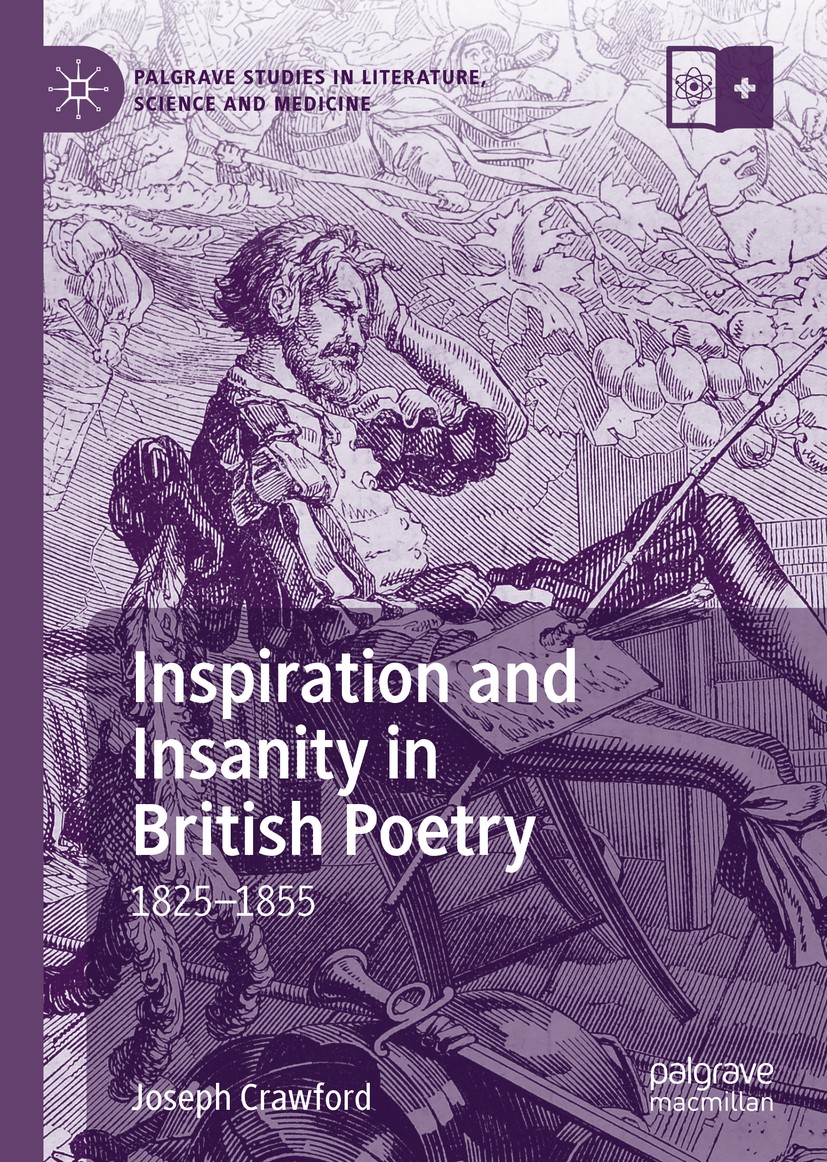
245 10|aInspiration and Insanity in British Poetry|h[electronic resource] :|b1825–1855 /|cby Joseph Crawford.
250 |a1st ed. 2019.
264 1|aCham :|bSpringer International Publishing :|bImprint: Palgrave Macmillan,|c2019.
300 |aVII, 248 p.|bonline resource.
336 |atext|btxt|2rdacontent
337 |acomputer|bc|2rdamedia
338 |aonline resource|bcr|2rdacarrier
347 |atext file|bPDF|2rda
490 1 |aPalgrave Studies in Literature, Science and Medicine,|x2634-6443
505 0 |a1. Introduction -- 2. ‘He was not one of ye’: poetry and mental peculiarity, 1825-36 -- 3. 'Ah! let me not be fool'd': delusion and inspiration in the poems of Browning and Tennyson, 1832-40 -- 4. Sir William's last stand: poetry and insanity in England, 1837-42 -- 5. Seeing Things: Mesmerism, Spiritualism, and Romantic Poetry, 1836-55 -- 6. 'The Madness': inspiration and insanity in Spasmodic poetry, 1851-55 -- 7. Epilogue: ‘It is strange.’.
520 |aThis book explores the ways in which poetic inspiration came to be associated with madness in early nineteenth-century Britain. By examining the works of poets such as Barrett, Browning, Clare, Tennyson, Townshend, and the Spasmodics in relation to the burgeoning asylum system and shifting medical discourses of the period, it investigates the ways in which Britain’s post-Romantic poets understood their own poetic vocations within a cultural context that insistently linked poetic talent with illness and insanity. Joseph Crawford examines the popularity of mesmerism among the writers of the era, as an alternative system of medicine that provided a more sympathetic account of the nature of poetic genius, and investigates the persistent tension, found throughout the literary and medical writings of the period, between the Romantic ideal of the poet as a transcendent visionary genius and the ‘medico-psychological’ conception of poets as mere case studies in abnormal neurological development.
650 0|aLiterature, Modern|x19th century.
650 0|aPoetry.
650 0|aScience|xHistory.
650 0|aPhilosophy of mind.
650 0|aCognitive psychology.
650 14|aNineteenth-Century Literature.
650 24|aPoetry and Poetics.
650 24|aHistory of Science.
650 24|aPhilosophy of Mind.
650 24|aCognitive Psychology.
710 2 |aSpringerLink (Online service)
773 0 |tSpringer Nature eBook
776 08|iPrinted edition:|z9783030216702
776 08|iPrinted edition:|z9783030216726
776 08|iPrinted edition:|z9783030216733
830 0|aPalgrave Studies in Literature, Science and Medicine,|x2634-6443
856 40|uhttps://doi.org/10.1007/978-3-030-21671-9
912 |aZDB-2-LCM
912 |aZDB-2-SXL
950 |aLiterature, Cultural and Media Studies (SpringerNature-41173)
950 |aLiterature, Cultural and Media Studies (R0) (SpringerNature-43723)