LEADER 04078nam a22005295i 4500
001 841405
003 TR_AnAIT
005 20260715030100
007 cr nn 008mamaa
008 200929s2020 sz | s |||| 0|eng d
020 |a9783030465476|9978-3-030-46547-6
024 7 |a10.1007/978-3-030-46547-6|2doi
041 |aeng
049 |aTürk Dil Kurumu Kütüphanesi
050 4|aPN1560-1590
050 4|aPN2000-3307
072 7|aAN|2bicssc
072 7|aPER000000|2bisacsh
072 7|aAT|2thema
082 04|a790|223
090 |aEK/4686
100 1 |aGibson, Janet.|eauthor.|4aut|4http://id.loc.gov/vocabulary/relators/aut
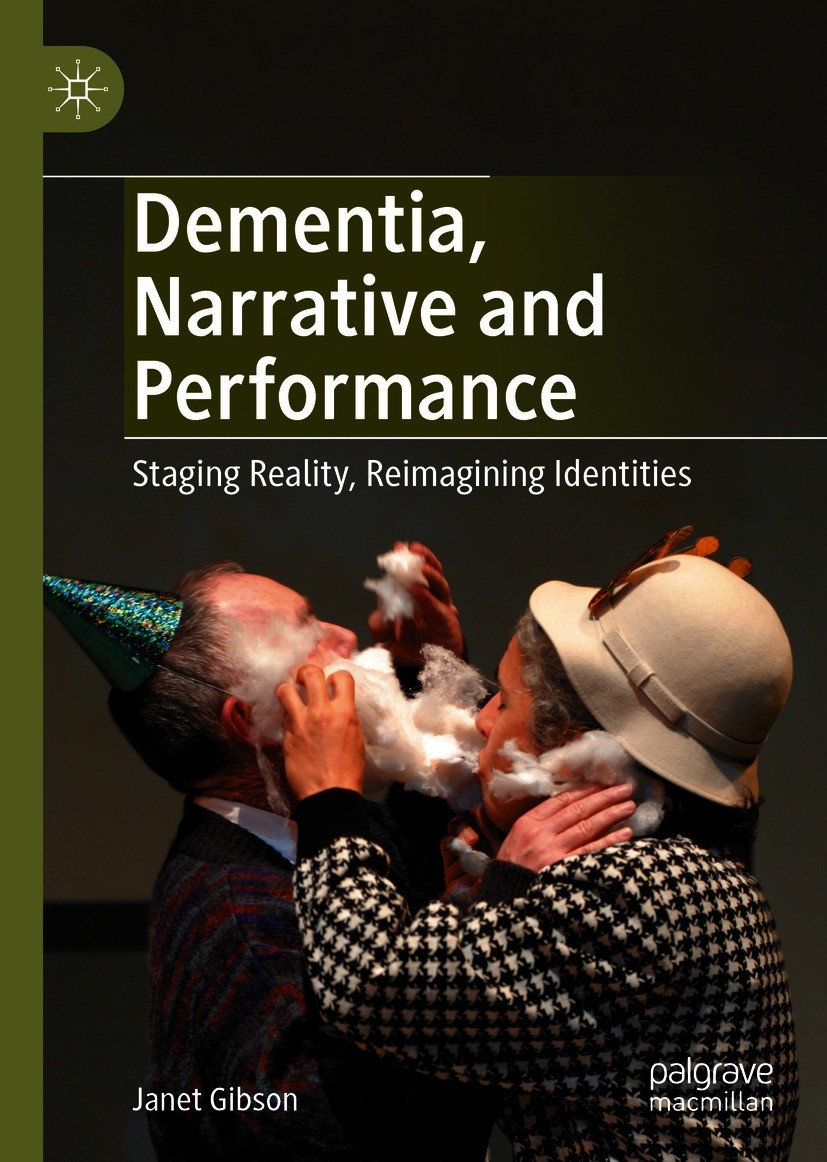
245 10|aDementia, Narrative and Performance|h[electronic resource] :|bStaging Reality, Reimagining Identities /|cby Janet Gibson.
250 |a1st ed. 2020.
264 1|aCham :|bSpringer International Publishing :|bImprint: Palgrave Macmillan,|c2020.
300 |aXV, 298 p. 5 illus.|bonline resource.
336 |atext|btxt|2rdacontent
337 |acomputer|bc|2rdamedia
338 |aonline resource|bcr|2rdacarrier
347 |atext file|bPDF|2rda
505 0 |a1. My Mother’s Story, My Story -- Part I. Dementia, Identity and Narrative -- 2. Recasting Senility: The Genesis of the ‘Right Kind’ of Dementia Story -- 3. Narrative Regimes -- Part II. Dementia in Performance -- 4. Staging the ‘Reality’ of Dementia -- 5. Staging Dementia Voices in Australia: Missing the Bus to David Jones, Theatre Kantanka, and Sundowner, KAGE -- 6. Mapping Applied Performance in Dementia Cultures -- 7. “I Don’t Want to Disappear”: Dementia and Public Autobiographical Performance -- Part III. Dementia as Performance -- 8. Rehearsing a Theory of Dementia as Performance -- 9. Revisiting My Mother’s Story, My Story.
520 |aFocusing mainly on case studies from Australia and the United States of America, this book considers how people with dementia represent themselves and are represented in ‘theatre of the real’ productions and care home interventions, assessing the extent to which the ‘right kind’ of dementia story is being affirmed or challenged. It argues that this type of story — one of tragedy, loss of personhood, biomedical deficit, and socio-economic ‘crisis — produces dementia and the people living with it, as much as biology does. It proposes two novel ideas. One is that the ‘gaze’ of theatre and performance offers a reframing of some of the behaviours and actions of people with dementia, through which deficit views can be changed to ones of possibility. The other is that, conversely,dementia offers productive perspectives on ’theatre of the real’. Scanning contemporary critical studies about and practices of ‘theatre of the real’ performances and applied theatre interventions, the book probes what it means when certain ‘theatre of the real’ practices (specifically verbatim and autobiographical) interact with storytellers considered, culturally, to be ‘unreliable narrators’. It also explores whether autobiographical theatre is useful in reinforcing a sense of ‘self’ for those deemed no longer to have one. With a focus on therelationship between stories and selves, the book investigates how selves might be rethought so that they are not contingent on the production of lucid self-narratives, consistent language, and truthful memories.
650 0|aPerforming arts.
650 0|aTheater.
650 0|aTheater|xHistory.
650 0|aSocial service.
650 14|aTheatre and Performance Arts.
650 24|aContemporary Theatre and Performance.
650 24|aApplied Theatre.
650 24|aSocial Care.
710 2 |aSpringerLink (Online service)
773 0 |tSpringer Nature eBook
776 08|iPrinted edition:|z9783030465469
776 08|iPrinted edition:|z9783030465483
776 08|iPrinted edition:|z9783030465490
856 40|uhttps://doi.org/10.1007/978-3-030-46547-6
912 |aZDB-2-LCM
912 |aZDB-2-SXL
950 |aLiterature, Cultural and Media Studies (SpringerNature-41173)
950 |aLiterature, Cultural and Media Studies (R0) (SpringerNature-43723)