

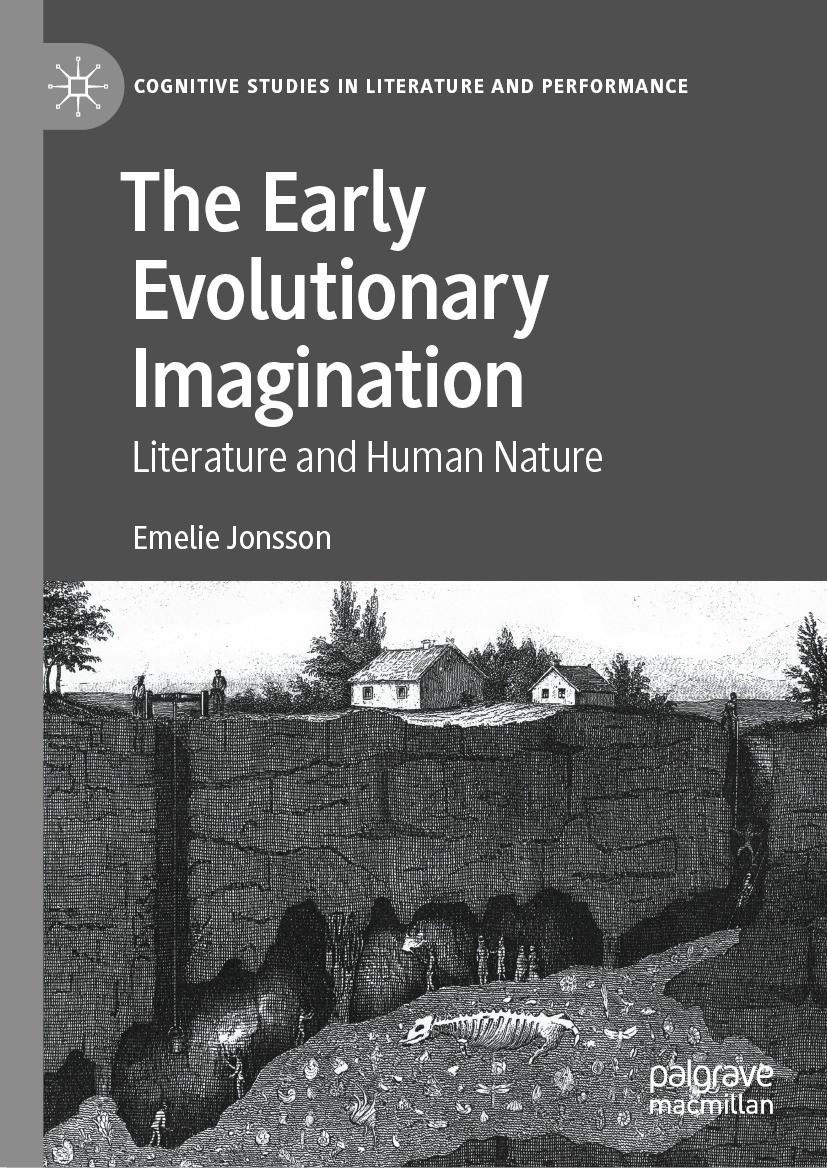
The Early Evolutionary Imagination [electronic resource] : Literature and Human Nature / by Emelie Jonsson.
Erişim Adresi
ISBN
9783030827380
Dil Kodu
İngilizce
Yer Numarası
EK/4704
Yazar
Basım Bildirimi
1st ed. 2021.
Yayın Bilgisi
Cham : Springer International Publishing : Imprint: Palgrave Macmillan, 2021.
Fiziksel Niteleme
XII, 300 p. 1 illus. online resource.
Dizi
Cognitive Studies in Literature and Performance, 2945-7300
İçindekiler Notu
1. Chapter 1: Using Evolution to Explain the Evolutionary Imagination -- Chapter 2 Myth-Making in Early Evolutionary Thought -- Chapter 3: Darwinism in Literature -- Chapter 4: From Adventure to Utopia -- Chapter 5: Jack London’s Evolutionary Imagination -- Chapter 6: H. G. Wells’s Evolutionary Imagination -- Chapter 7: Joseph Conrad’s Evolutionary Imagination -- The Unimaginable Place in Nature.
Özet, vb.
“Jonsson is the first scholar in this historical field to assimilate the most recent empirical knowledge about our evolved human nature and the psychology of imagination. Her theoretical framework provides robust explanatory power, her interpretive critiques are incisive and authoritative, and her style is lucid and vigorous. Like the best critics of any literary school, she evokes the whole imaginative world view of the authors she discusses.” --Joseph Carroll, Curator’s Distinguished Professor Emeritus, University of St. Louis, Missouri, USA “Jonsson’s new book is brilliantly conceived, elegantly written, and deeply illuminating. Her premise is that Darwinian thinking represented a profound challenge to the foundational concepts of literary culture—the autonomy of the individual, the meaningfulness of human life, the importance of moral choice, and the value of art. Her argument is that literary culture in the years following Darwin explored ways of confronting this challenge, opening up a space between difficult truths and soothing fictions, and making it possible for people to grasp the unique disturbance of the Darwinian message without being destroyed by its implications.” --Geoffrey Harpham, senior fellow at the Kenan Institute for Ethics, Duke University, USA Darwinian evolution is an imaginative problem that has been passed down to us unsolved. It is our most powerful explanation of humanity’s place in nature, but it is also more cognitively demanding and less emotionally satisfying than any myth. From the publication of the Origin of Species in 1859, evolution has pushed our capacity for storytelling into overdrive, sparking fairy tales, adventure stories, political allegories, utopias, dystopias, social realist novels, and existential meditations. Though this influence on literature has been widely studied, it has not been explainedpsychologically. This book argues for the adaptive function of storytelling, integrates traditional humanist scholarship with current knowledge about the evolved and adapted human mind, and calls for literary scholars to reframe their interpretation of the first authors who responded to Darwin. Emelie Jonsson is Assistant Professor of English literature at the Arctic University of Norway, UiT, and Associate Editor of Evolutionary Studies in Imaginative Culture. Her research centers on the friction between human psychology and naturalistic cosmology. .
Konu
Literature, Modern __ 19th century.
Literature __ Philosophy.
Evolution (Biology).
Cognitive psychology.
Science __ History.
Nineteenth-Century Literature.
Literary Theory.
Evolutionary Theory.
Cognitive Psychology.
History of Science.
Literature __ Philosophy.
Evolution (Biology).
Cognitive psychology.
Science __ History.
Nineteenth-Century Literature.
Literary Theory.
Evolutionary Theory.
Cognitive Psychology.
History of Science.
Kurum Adı
Eseri Alıntıla
Referansları kullanmadan önce gözden geçirmeniz ve varsa gerekli düzeltmeleri yapmanız önerilir.
Dijital Kaynak
MARC Görünümü
LEADER 04917nam a22005655i 4500
001 841448
003 TR_AnAIT
005 20260715025913
007 cr nn 008mamaa
008 210929s2021 sz | s |||| 0|eng d
020 |a9783030827380|9978-3-030-82738-0
024 7 |a10.1007/978-3-030-82738-0|2doi
041 |aeng
049 |aTürk Dil Kurumu Kütüphanesi
050 4|aPN760.5-769
072 7|aDSBF|2bicssc
072 7|aLIT024040|2bisacsh
072 7|aDSBF|2thema
082 04|a809.034|223
090 |aEK/4704
100 1 |aJonsson, Emelie.|eauthor.|4aut|4http://id.loc.gov/vocabulary/relators/aut
245 14|aThe Early Evolutionary Imagination|h[electronic resource] :|bLiterature and Human Nature /|cby Emelie Jonsson.
250 |a1st ed. 2021.
264 1|aCham :|bSpringer International Publishing :|bImprint: Palgrave Macmillan,|c2021.
300 |aXII, 300 p. 1 illus.|bonline resource.
336 |atext|btxt|2rdacontent
337 |acomputer|bc|2rdamedia
338 |aonline resource|bcr|2rdacarrier
347 |atext file|bPDF|2rda
490 1 |aCognitive Studies in Literature and Performance,|x2945-7300
505 0 |a1. Chapter 1: Using Evolution to Explain the Evolutionary Imagination -- Chapter 2 Myth-Making in Early Evolutionary Thought -- Chapter 3: Darwinism in Literature -- Chapter 4: From Adventure to Utopia -- Chapter 5: Jack London’s Evolutionary Imagination -- Chapter 6: H. G. Wells’s Evolutionary Imagination -- Chapter 7: Joseph Conrad’s Evolutionary Imagination -- The Unimaginable Place in Nature.
520 |a“Jonsson is the first scholar in this historical field to assimilate the most recent empirical knowledge about our evolved human nature and the psychology of imagination. Her theoretical framework provides robust explanatory power, her interpretive critiques are incisive and authoritative, and her style is lucid and vigorous. Like the best critics of any literary school, she evokes the whole imaginative world view of the authors she discusses.” --Joseph Carroll, Curator’s Distinguished Professor Emeritus, University of St. Louis, Missouri, USA “Jonsson’s new book is brilliantly conceived, elegantly written, and deeply illuminating. Her premise is that Darwinian thinking represented a profound challenge to the foundational concepts of literary culture—the autonomy of the individual, the meaningfulness of human life, the importance of moral choice, and the value of art. Her argument is that literary culture in the years following Darwin explored ways of confronting this challenge, opening up a space between difficult truths and soothing fictions, and making it possible for people to grasp the unique disturbance of the Darwinian message without being destroyed by its implications.” --Geoffrey Harpham, senior fellow at the Kenan Institute for Ethics, Duke University, USA Darwinian evolution is an imaginative problem that has been passed down to us unsolved. It is our most powerful explanation of humanity’s place in nature, but it is also more cognitively demanding and less emotionally satisfying than any myth. From the publication of the Origin of Species in 1859, evolution has pushed our capacity for storytelling into overdrive, sparking fairy tales, adventure stories, political allegories, utopias, dystopias, social realist novels, and existential meditations. Though this influence on literature has been widely studied, it has not been explainedpsychologically. This book argues for the adaptive function of storytelling, integrates traditional humanist scholarship with current knowledge about the evolved and adapted human mind, and calls for literary scholars to reframe their interpretation of the first authors who responded to Darwin. Emelie Jonsson is Assistant Professor of English literature at the Arctic University of Norway, UiT, and Associate Editor of Evolutionary Studies in Imaginative Culture. Her research centers on the friction between human psychology and naturalistic cosmology. .
650 0|aLiterature, Modern|x19th century.
650 0|aLiterature|xPhilosophy.
650 0|aEvolution (Biology).
650 0|aCognitive psychology.
650 0|aScience|xHistory.
650 14|aNineteenth-Century Literature.
650 24|aLiterary Theory.
650 24|aEvolutionary Theory.
650 24|aCognitive Psychology.
650 24|aHistory of Science.
710 2 |aSpringerLink (Online service)
773 0 |tSpringer Nature eBook
776 08|iPrinted edition:|z9783030827373
776 08|iPrinted edition:|z9783030827397
776 08|iPrinted edition:|z9783030827403
830 0|aCognitive Studies in Literature and Performance,|x2945-7300
856 40|uhttps://doi.org/10.1007/978-3-030-82738-0
912 |aZDB-2-LCM
912 |aZDB-2-SXL
950 |aLiterature, Cultural and Media Studies (SpringerNature-41173)
950 |aLiterature, Cultural and Media Studies (R0) (SpringerNature-43723)
001 841448
003 TR_AnAIT
005 20260715025913
007 cr nn 008mamaa
008 210929s2021 sz | s |||| 0|eng d
020 |a9783030827380|9978-3-030-82738-0
024 7 |a10.1007/978-3-030-82738-0|2doi
041 |aeng
049 |aTürk Dil Kurumu Kütüphanesi
050 4|aPN760.5-769
072 7|aDSBF|2bicssc
072 7|aLIT024040|2bisacsh
072 7|aDSBF|2thema
082 04|a809.034|223
090 |aEK/4704
100 1 |aJonsson, Emelie.|eauthor.|4aut|4http://id.loc.gov/vocabulary/relators/aut
245 14|aThe Early Evolutionary Imagination|h[electronic resource] :|bLiterature and Human Nature /|cby Emelie Jonsson.
250 |a1st ed. 2021.
264 1|aCham :|bSpringer International Publishing :|bImprint: Palgrave Macmillan,|c2021.
300 |aXII, 300 p. 1 illus.|bonline resource.
336 |atext|btxt|2rdacontent
337 |acomputer|bc|2rdamedia
338 |aonline resource|bcr|2rdacarrier
347 |atext file|bPDF|2rda
490 1 |aCognitive Studies in Literature and Performance,|x2945-7300
505 0 |a1. Chapter 1: Using Evolution to Explain the Evolutionary Imagination -- Chapter 2 Myth-Making in Early Evolutionary Thought -- Chapter 3: Darwinism in Literature -- Chapter 4: From Adventure to Utopia -- Chapter 5: Jack London’s Evolutionary Imagination -- Chapter 6: H. G. Wells’s Evolutionary Imagination -- Chapter 7: Joseph Conrad’s Evolutionary Imagination -- The Unimaginable Place in Nature.
520 |a“Jonsson is the first scholar in this historical field to assimilate the most recent empirical knowledge about our evolved human nature and the psychology of imagination. Her theoretical framework provides robust explanatory power, her interpretive critiques are incisive and authoritative, and her style is lucid and vigorous. Like the best critics of any literary school, she evokes the whole imaginative world view of the authors she discusses.” --Joseph Carroll, Curator’s Distinguished Professor Emeritus, University of St. Louis, Missouri, USA “Jonsson’s new book is brilliantly conceived, elegantly written, and deeply illuminating. Her premise is that Darwinian thinking represented a profound challenge to the foundational concepts of literary culture—the autonomy of the individual, the meaningfulness of human life, the importance of moral choice, and the value of art. Her argument is that literary culture in the years following Darwin explored ways of confronting this challenge, opening up a space between difficult truths and soothing fictions, and making it possible for people to grasp the unique disturbance of the Darwinian message without being destroyed by its implications.” --Geoffrey Harpham, senior fellow at the Kenan Institute for Ethics, Duke University, USA Darwinian evolution is an imaginative problem that has been passed down to us unsolved. It is our most powerful explanation of humanity’s place in nature, but it is also more cognitively demanding and less emotionally satisfying than any myth. From the publication of the Origin of Species in 1859, evolution has pushed our capacity for storytelling into overdrive, sparking fairy tales, adventure stories, political allegories, utopias, dystopias, social realist novels, and existential meditations. Though this influence on literature has been widely studied, it has not been explainedpsychologically. This book argues for the adaptive function of storytelling, integrates traditional humanist scholarship with current knowledge about the evolved and adapted human mind, and calls for literary scholars to reframe their interpretation of the first authors who responded to Darwin. Emelie Jonsson is Assistant Professor of English literature at the Arctic University of Norway, UiT, and Associate Editor of Evolutionary Studies in Imaginative Culture. Her research centers on the friction between human psychology and naturalistic cosmology. .
650 0|aLiterature, Modern|x19th century.
650 0|aLiterature|xPhilosophy.
650 0|aEvolution (Biology).
650 0|aCognitive psychology.
650 0|aScience|xHistory.
650 14|aNineteenth-Century Literature.
650 24|aLiterary Theory.
650 24|aEvolutionary Theory.
650 24|aCognitive Psychology.
650 24|aHistory of Science.
710 2 |aSpringerLink (Online service)
773 0 |tSpringer Nature eBook
776 08|iPrinted edition:|z9783030827373
776 08|iPrinted edition:|z9783030827397
776 08|iPrinted edition:|z9783030827403
830 0|aCognitive Studies in Literature and Performance,|x2945-7300
856 40|uhttps://doi.org/10.1007/978-3-030-82738-0
912 |aZDB-2-LCM
912 |aZDB-2-SXL
950 |aLiterature, Cultural and Media Studies (SpringerNature-41173)
950 |aLiterature, Cultural and Media Studies (R0) (SpringerNature-43723)
Materyaller
Depodan talep edilen materyal sadece kütüphane içerisinde kullanılmaktadır.
Materyal dışarıya ödünç verilmemektedir.
Materyal dışarıya ödünç verilmemektedir.
