

The Moral Foundations of Public Funding for the Arts [electronic resource] / by Michael Rushton.
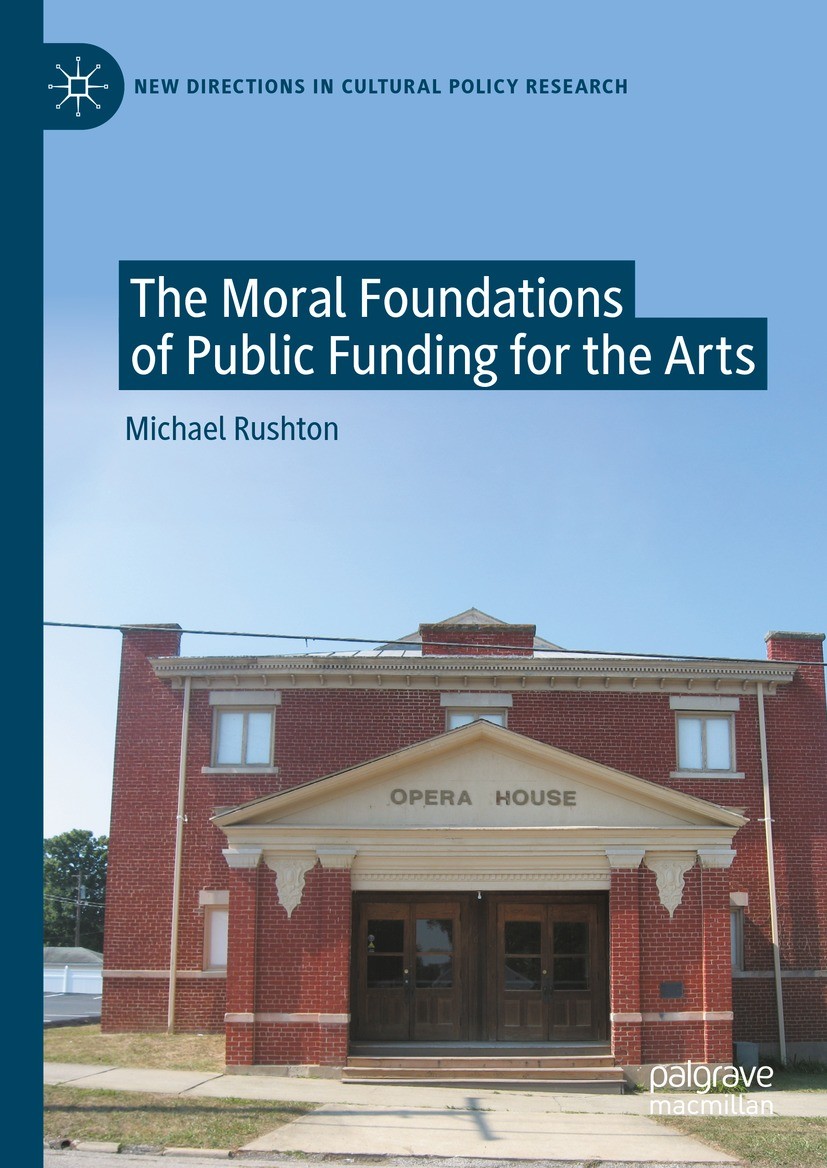
Erişim Adresi
ISBN
9783031351068
Dil Kodu
İngilizce
Yer Numarası
EK/4762
Yazar
Basım Bildirimi
1st ed. 2023.
Yayın Bilgisi
Cham : Springer International Publishing : Imprint: Palgrave Macmillan, 2023.
Fiziksel Niteleme
XIII, 185 p. online resource.
Dizi
New Directions in Cultural Policy Research, 2730-9258
İçindekiler Notu
1 Introduction -- 2 The Economic Method -- 3 Liberalism, Neutrality, and the Arts -- 4 Egalitarianism and Public Funding for the Arts -- 5 Communitarianism -- 6 Conservatism -- 7 Multiculturalism -- 8 Keynes’s Grandchildren.
Özet, vb.
"This book is an essential contribution to our field; it offers both a synthesis of the moral foundations of arts funding through different philosophical traditions, and an original outlook and interpretation of the subject matter." ─Jonathan Paquette, University of Ottawa, Ontario, Canada This book provides a detailed account, and critique, of diverse approaches to the arts funding question, with a focus on the arm’s length arts councils that are the norm in the Anglo-American world. It builds on economic methods, the liberal-egalitarian framework of John Rawls, the communitarian opposition to the liberal framework, the capabilities approach to equality, and the cultural conservatism of Roger Scruton and others. In each case, the book considers the very practical aspect of public funding of the arts, namely, what are the implications for what ought to receive priority, and what parts of the cultural world are best left to their own, private sector, devices. It is nota work of “arts advocacy”. Rather, the book challenges assumptions, and sparks critical debate in the field. Michael Rushton teaches in the Arts Administration program in the O’Neill School of Public and Environmental Affairs at Indiana University, and is Co-Director of its Center for Cultural Affairs. He is the author of Strategic Pricing for the Arts (2014) and the editor of Creative Communities: Art Works in Economic Development (2013), and has published articles on all aspects of cultural affairs, including copyright, freedom of expression, public funding of the arts, the role of nonprofit organizations, tax policy and the arts, authors’ legal rights, and the arts and local economic development, spanning a career in this subject area of twenty-five years.
Konu
Communication and traffic.
Cultural policy.
Mass media __ Political aspects.
Political ethics.
Media Industries.
Cultural Policy and Politics.
Media Policy and Politics.
Political Ethics.
Cultural policy.
Mass media __ Political aspects.
Political ethics.
Media Industries.
Cultural Policy and Politics.
Media Policy and Politics.
Political Ethics.
Kurum Adı
Eseri Alıntıla
Referansları kullanmadan önce gözden geçirmeniz ve varsa gerekli düzeltmeleri yapmanız önerilir.
Dijital Kaynak
MARC Görünümü
LEADER 05097nam a22006615i 4500
001 841489
003 TR_AnAIT
005 20260715025834
007 cr nn 008mamaa
008 230626s2023 sz | s |||| 0|eng d
020 |a9783031351068|9978-3-031-35106-8
024 7 |a10.1007/978-3-031-35106-8|2doi
041 |aeng
049 |aTürk Dil Kurumu Kütüphanesi
050 4|aHE1-9900
050 4|aP87-96
072 7|aKNT|2bicssc
072 7|aBUS070060|2bisacsh
072 7|aKNT|2thema
082 04|a338.4730223|223
090 |aEK/4762
100 1 |aRushton, Michael.|eauthor.|4aut|4http://id.loc.gov/vocabulary/relators/aut
245 14|aThe Moral Foundations of Public Funding for the Arts|h[electronic resource] /|cby Michael Rushton.
250 |a1st ed. 2023.
264 1|aCham :|bSpringer International Publishing :|bImprint: Palgrave Macmillan,|c2023.
300 |aXIII, 185 p.|bonline resource.
336 |atext|btxt|2rdacontent
337 |acomputer|bc|2rdamedia
338 |aonline resource|bcr|2rdacarrier
341 0 |bTable of contents navigation|2onix
341 0 |bSingle logical reading order|2onix
341 0 |bUse of color is not sole means of conveying information|2onix
341 0 |bUse of high contrast between text and background color|2onix
341 0 |bNext / Previous structural navigation|2onix
341 0 |bAll non-decorative content supports reading without sight|2onix
347 |atext file|bPDF|2rda
490 1 |aNew Directions in Cultural Policy Research,|x2730-9258
505 0 |a1 Introduction -- 2 The Economic Method -- 3 Liberalism, Neutrality, and the Arts -- 4 Egalitarianism and Public Funding for the Arts -- 5 Communitarianism -- 6 Conservatism -- 7 Multiculturalism -- 8 Keynes’s Grandchildren.
520 |a"This book is an essential contribution to our field; it offers both a synthesis of the moral foundations of arts funding through different philosophical traditions, and an original outlook and interpretation of the subject matter." ─Jonathan Paquette, University of Ottawa, Ontario, Canada This book provides a detailed account, and critique, of diverse approaches to the arts funding question, with a focus on the arm’s length arts councils that are the norm in the Anglo-American world. It builds on economic methods, the liberal-egalitarian framework of John Rawls, the communitarian opposition to the liberal framework, the capabilities approach to equality, and the cultural conservatism of Roger Scruton and others. In each case, the book considers the very practical aspect of public funding of the arts, namely, what are the implications for what ought to receive priority, and what parts of the cultural world are best left to their own, private sector, devices. It is nota work of “arts advocacy”. Rather, the book challenges assumptions, and sparks critical debate in the field. Michael Rushton teaches in the Arts Administration program in the O’Neill School of Public and Environmental Affairs at Indiana University, and is Co-Director of its Center for Cultural Affairs. He is the author of Strategic Pricing for the Arts (2014) and the editor of Creative Communities: Art Works in Economic Development (2013), and has published articles on all aspects of cultural affairs, including copyright, freedom of expression, public funding of the arts, the role of nonprofit organizations, tax policy and the arts, authors’ legal rights, and the arts and local economic development, spanning a career in this subject area of twenty-five years.
532 8 |aAccessibility summary: This PDF does not fully comply with PDF/UA standards, but does feature limited screen reader support, bookmarks for easy navigation and searchable, selectable text. Users of assistive technologies may experience difficulty navigating or interpreting content in this document. We recognize the importance of accessibility, and we welcome queries about accessibility for any of our products. If you have a question or an access need, please get in touch with us at accessibilitysupport@springernature.com.
532 8 |aNo reading system accessibility options actively disabled
532 8 |aPublisher contact for further accessibility information: accessibilitysupport@springernature.com
650 0|aCommunication and traffic.
650 0|aCultural policy.
650 0|aMass media|xPolitical aspects.
650 0|aPolitical ethics.
650 14|aMedia Industries.
650 24|aCultural Policy and Politics.
650 24|aMedia Policy and Politics.
650 24|aPolitical Ethics.
710 2 |aSpringerLink (Online service)
773 0 |tSpringer Nature eBook
776 08|iPrinted edition:|z9783031351051
776 08|iPrinted edition:|z9783031351075
776 08|iPrinted edition:|z9783031351082
830 0|aNew Directions in Cultural Policy Research,|x2730-9258
856 40|uhttps://doi.org/10.1007/978-3-031-35106-8
912 |aZDB-2-LCM
912 |aZDB-2-SXL
950 |aLiterature, Cultural and Media Studies (SpringerNature-41173)
950 |aLiterature, Cultural and Media Studies (R0) (SpringerNature-43723)
001 841489
003 TR_AnAIT
005 20260715025834
007 cr nn 008mamaa
008 230626s2023 sz | s |||| 0|eng d
020 |a9783031351068|9978-3-031-35106-8
024 7 |a10.1007/978-3-031-35106-8|2doi
041 |aeng
049 |aTürk Dil Kurumu Kütüphanesi
050 4|aHE1-9900
050 4|aP87-96
072 7|aKNT|2bicssc
072 7|aBUS070060|2bisacsh
072 7|aKNT|2thema
082 04|a338.4730223|223
090 |aEK/4762
100 1 |aRushton, Michael.|eauthor.|4aut|4http://id.loc.gov/vocabulary/relators/aut
245 14|aThe Moral Foundations of Public Funding for the Arts|h[electronic resource] /|cby Michael Rushton.
250 |a1st ed. 2023.
264 1|aCham :|bSpringer International Publishing :|bImprint: Palgrave Macmillan,|c2023.
300 |aXIII, 185 p.|bonline resource.
336 |atext|btxt|2rdacontent
337 |acomputer|bc|2rdamedia
338 |aonline resource|bcr|2rdacarrier
341 0 |bTable of contents navigation|2onix
341 0 |bSingle logical reading order|2onix
341 0 |bUse of color is not sole means of conveying information|2onix
341 0 |bUse of high contrast between text and background color|2onix
341 0 |bNext / Previous structural navigation|2onix
341 0 |bAll non-decorative content supports reading without sight|2onix
347 |atext file|bPDF|2rda
490 1 |aNew Directions in Cultural Policy Research,|x2730-9258
505 0 |a1 Introduction -- 2 The Economic Method -- 3 Liberalism, Neutrality, and the Arts -- 4 Egalitarianism and Public Funding for the Arts -- 5 Communitarianism -- 6 Conservatism -- 7 Multiculturalism -- 8 Keynes’s Grandchildren.
520 |a"This book is an essential contribution to our field; it offers both a synthesis of the moral foundations of arts funding through different philosophical traditions, and an original outlook and interpretation of the subject matter." ─Jonathan Paquette, University of Ottawa, Ontario, Canada This book provides a detailed account, and critique, of diverse approaches to the arts funding question, with a focus on the arm’s length arts councils that are the norm in the Anglo-American world. It builds on economic methods, the liberal-egalitarian framework of John Rawls, the communitarian opposition to the liberal framework, the capabilities approach to equality, and the cultural conservatism of Roger Scruton and others. In each case, the book considers the very practical aspect of public funding of the arts, namely, what are the implications for what ought to receive priority, and what parts of the cultural world are best left to their own, private sector, devices. It is nota work of “arts advocacy”. Rather, the book challenges assumptions, and sparks critical debate in the field. Michael Rushton teaches in the Arts Administration program in the O’Neill School of Public and Environmental Affairs at Indiana University, and is Co-Director of its Center for Cultural Affairs. He is the author of Strategic Pricing for the Arts (2014) and the editor of Creative Communities: Art Works in Economic Development (2013), and has published articles on all aspects of cultural affairs, including copyright, freedom of expression, public funding of the arts, the role of nonprofit organizations, tax policy and the arts, authors’ legal rights, and the arts and local economic development, spanning a career in this subject area of twenty-five years.
532 8 |aAccessibility summary: This PDF does not fully comply with PDF/UA standards, but does feature limited screen reader support, bookmarks for easy navigation and searchable, selectable text. Users of assistive technologies may experience difficulty navigating or interpreting content in this document. We recognize the importance of accessibility, and we welcome queries about accessibility for any of our products. If you have a question or an access need, please get in touch with us at accessibilitysupport@springernature.com.
532 8 |aNo reading system accessibility options actively disabled
532 8 |aPublisher contact for further accessibility information: accessibilitysupport@springernature.com
650 0|aCommunication and traffic.
650 0|aCultural policy.
650 0|aMass media|xPolitical aspects.
650 0|aPolitical ethics.
650 14|aMedia Industries.
650 24|aCultural Policy and Politics.
650 24|aMedia Policy and Politics.
650 24|aPolitical Ethics.
710 2 |aSpringerLink (Online service)
773 0 |tSpringer Nature eBook
776 08|iPrinted edition:|z9783031351051
776 08|iPrinted edition:|z9783031351075
776 08|iPrinted edition:|z9783031351082
830 0|aNew Directions in Cultural Policy Research,|x2730-9258
856 40|uhttps://doi.org/10.1007/978-3-031-35106-8
912 |aZDB-2-LCM
912 |aZDB-2-SXL
950 |aLiterature, Cultural and Media Studies (SpringerNature-41173)
950 |aLiterature, Cultural and Media Studies (R0) (SpringerNature-43723)
Materyaller
Depodan talep edilen materyal sadece kütüphane içerisinde kullanılmaktadır.
Materyal dışarıya ödünç verilmemektedir.
Materyal dışarıya ödünç verilmemektedir.
