LEADER 03521nam a22006255i 4500
001 841535
003 TR_AnAIT
005 20260715025753
007 cr nn 008mamaa
008 211025s2021 sz | s |||| 0|eng d
020 |a9783030870744|9978-3-030-87074-4
024 7 |a10.1007/978-3-030-87074-4|2doi
041 |aeng
049 |aTürk Dil Kurumu Kütüphanesi
050 4|aPN695-779
072 7|aDSBH|2bicssc
072 7|aLIT024000|2bisacsh
072 7|aDSBH|2thema
082 04|a809.05|223
090 |aEK/4808
100 1 |aWatson, David Riddle.|eauthor.|0(orcid)0000-0002-1580-4242|1https://orcid.org/0000-0002-1580-4242|4aut|4http://id.loc.gov/vocabulary/relators/aut
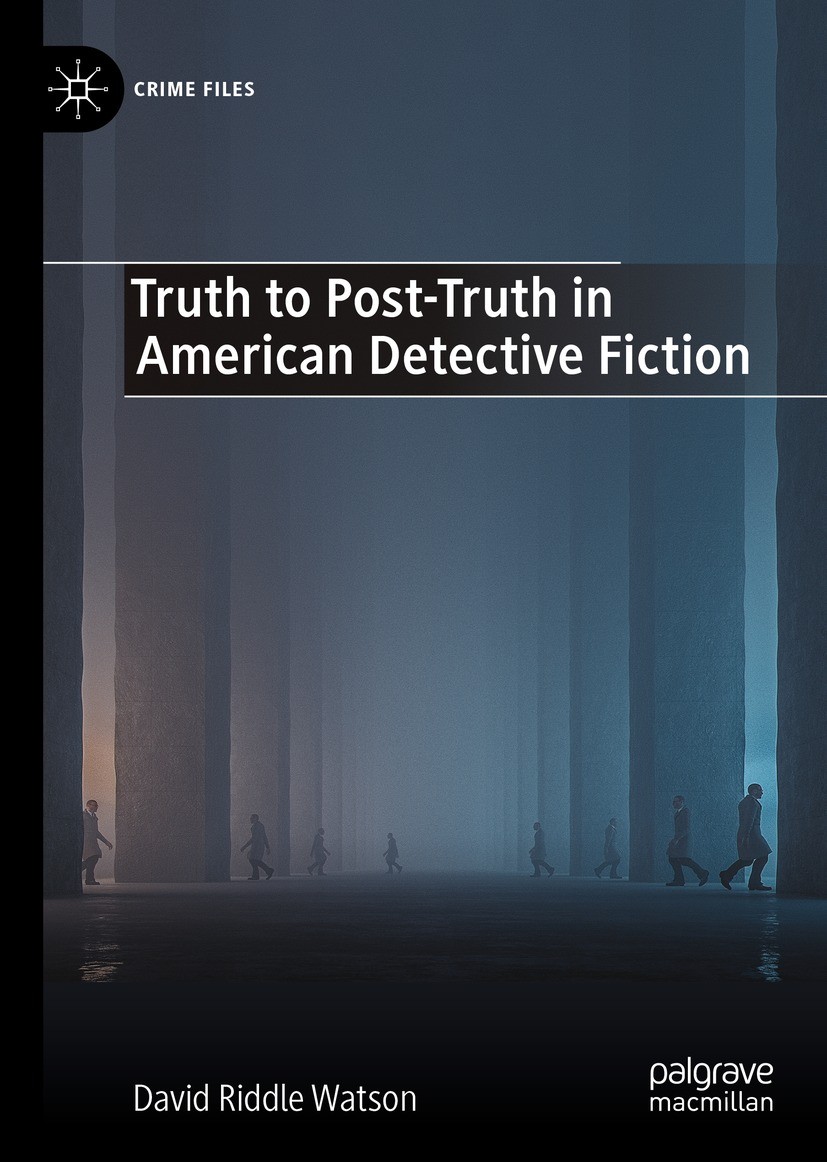
245 10|aTruth to Post-Truth in American Detective Fiction|h[electronic resource] /|cby David Riddle Watson.
250 |a1st ed. 2021.
264 1|aCham :|bSpringer International Publishing :|bImprint: Palgrave Macmillan,|c2021.
300 |aXVII, 218 p.|bonline resource.
336 |atext|btxt|2rdacontent
337 |acomputer|bc|2rdamedia
338 |aonline resource|bcr|2rdacarrier
347 |atext file|bPDF|2rda
490 1 |aCrime Files,|x2947-8359
505 0 |a1. Introduction: From Clear Speaking to Misunderstanding -- 2. Closed Worlds and Cold Detectives -- 3. Cold Wars and Porous Borders -- 4. The Bleak and the Dread: From Existential Angst to Postmodern Paranioa -- 5. The Flat-Earth Society: Tracing Networks in the Contemporary World -- 6. Living in Two Separate Worlds: The Feral Detective, The City and The City, and the Problem of Relativism -- 7. The United States of V, White, and Q.
520 |aTruth to Post-Truth in American Detective Fiction examines questions of truth and relativism, turning to detectives, both real and imagined, from Poe’s C. Auguste Dupin to Robert Mueller, to establish an oblique history of the path from a world where not believing in truth was unthinkable to the present, where it is common to believe that objective truth is a remnant of a simpler, more naïve time. Examining detective stories both literary and popular including hard-boiled, postmodern, and twenty-first century novels, the book establishes that examining detective fiction allows for a unique view of this progression to post-truth since the detective’s ultimate job is to take the reader from doubt to belief. David Riddle Watson shows that objectivity is intersubjectivity, arguing that the belief in multiple worlds is ultimately what sustains the illusion of relativism.
650 0|aLiterature, Modern|x20th century.
650 0|aLiterature, Modern|x21st century.
650 0|aAmerica|xLiteratures.
650 0|aLanguage and languages|xStyle.
650 0|aRhetoric.
650 0|aMetaphysics.
650 0|aMass media and crime.
650 0|aEthnology|xAmerica.
650 0|aCulture.
650 14|aContemporary Literature.
650 24|aNorth American Literature.
650 24|aRhetorics.
650 24|aMetaphysics.
650 24|aCrime and the Media.
650 24|aAmerican Culture.
710 2 |aSpringerLink (Online service)
773 0 |tSpringer Nature eBook
776 08|iPrinted edition:|z9783030870737
776 08|iPrinted edition:|z9783030870751
776 08|iPrinted edition:|z9783030870768
830 0|aCrime Files,|x2947-8359
856 40|uhttps://doi.org/10.1007/978-3-030-87074-4
912 |aZDB-2-LCM
912 |aZDB-2-SXL
950 |aLiterature, Cultural and Media Studies (SpringerNature-41173)
950 |aLiterature, Cultural and Media Studies (R0) (SpringerNature-43723)